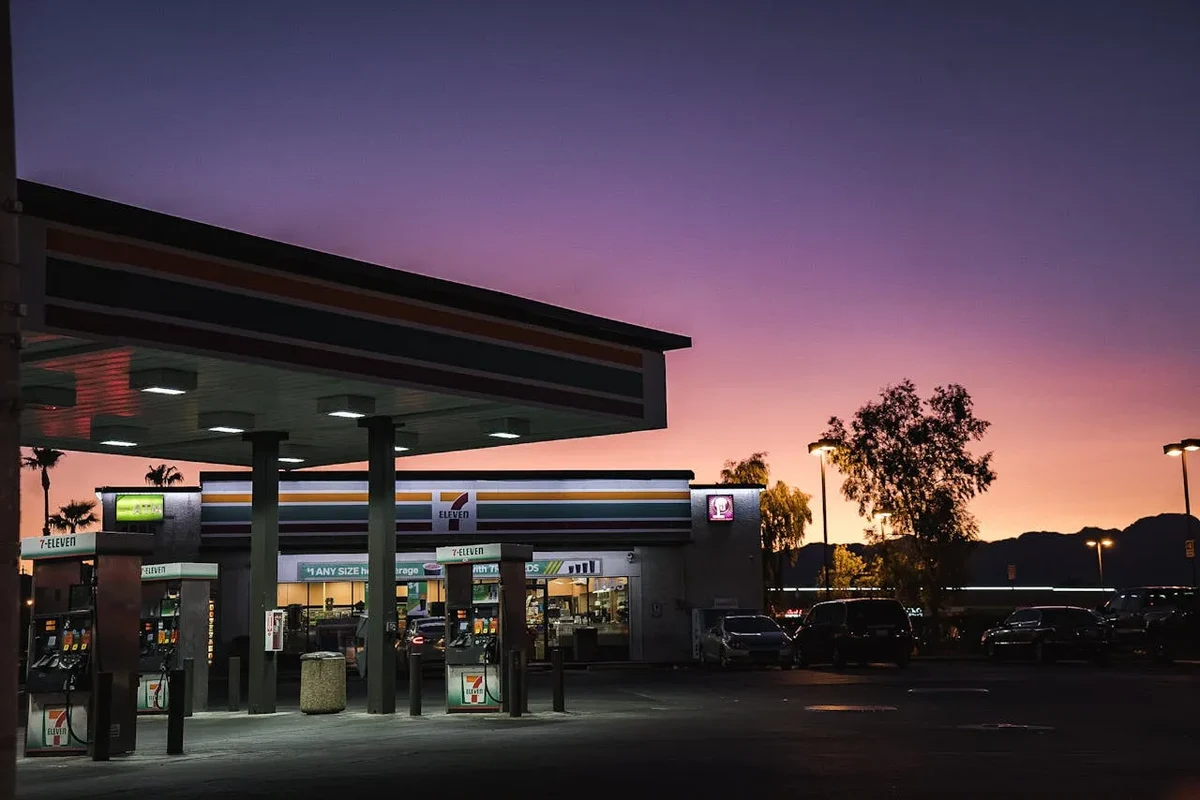
As of 2026, 7-Eleven is finalizing a massive North American restructuring that involves the closure of 444 underperforming locations and a complete overhaul of its retail model. This shift marks the transition from a traditional cigarette-and-fuel convenience store to a "Food-Forward" destination, emphasizing fresh-prepared meals and digital-first "New Standard" store formats to combat declining tobacco sales and evolving consumer habits.
The convenience store landscape in 2026 looks fundamentally different than it did even three years ago. For decades, 7-Eleven served as a reliable, if predictable, stop for fuel, tobacco, and shelf-stable snacks. However, a combination of macroeconomic pressures—including persistent inflation impacting low-income households and a generational decline in nicotine consumption—forced the hand of its parent company, Seven & i Holdings.
The 2026 retail environment is defined by "efficiency over ubiquity." While the closure of hundreds of stores may seem like a retreat, it is actually a concentrated effort to reallocate capital into high-performing "Evolution" stores. These newer locations are designed to compete not just with other gas stations, but with quick-service restaurants (QSRs) like McDonald’s or Subway.
The Drivers Behind the 2026 Store Closures
The decision to shutter 444 stores, which began in late 2024 and concluded its physical phase in early 2026, was not a knee-jerk reaction. It was the result of a rigorous audit of the North American portfolio. Several specific factors converged to make these specific locations non-viable in the current economic climate.
The Decline of the Cigarette Category
Historically, tobacco products were a primary driver of foot traffic and high-margin sales for 7-Eleven. By 2026, the decline in traditional cigarette sales has accelerated significantly. Regulatory changes, increased taxation, and a cultural shift toward nicotine alternatives have left many older, smaller 7-Eleven footprints without their primary revenue engine. Stores that relied heavily on "smokes and soda" are the ones that have largely vanished from the map this year.
Inflation and Consumer Pullback
The "pull-back" effect from low-income consumers has been a defining characteristic of the mid-2020s. As the cost of living remained high through 2025, the casual "basket size" of the average 7-Eleven shopper decreased. Consumers became more intentional, opting for discount grocers or skipping the convenience store markup entirely. The 444 closed stores were primarily located in areas where this decrease in discretionary spending hit the hardest, rendering the overhead of 24/7 operations unsustainable.
Strategic Asset Pruning
Seven & i Holdings faced significant pressure from activist investors and a high-profile takeover bid from Alimentation Couche-Tard (the parent company of Circle K). To prove its value as a standalone entity, 7-Eleven had to demonstrate "financial discipline." This meant cutting the "long tail" of underperforming assets—stores that were either too small to house modern food service equipment or too close to newer, more efficient locations.
The "New Standard" Store Format: What Replaces the Old Model?
If you visit a 7-Eleven in 2026, the experience is likely different from the "grab-and-go" culture of the past. The closures allowed the company to pivot toward the "New Standard" or "Evolution" format. These stores are the centerpiece of 7-Eleven’s survival strategy.
Fresh Food and Proprietary Brands
The "Food-Forward" strategy is no longer a pilot program; it is the core business. 7-Eleven has invested billions in its supply chain, partnering with fresh-food providers like Warabeya USA to bring high-quality, daily-delivered items to the shelves. This includes:
- Bistro-style sandwiches and salads: Moving away from plastic-wrapped, long-life sandwiches toward fresh, café-quality options.
- 7-Select Expansion: The private-label brand now covers everything from premium electrolytes to gourmet snacks, offering higher margins for the company and lower prices for the consumer.
- In-Store Kitchens: Many 2026 locations feature Laredo Taco Company or Raise the Roost Chicken and Biscuits brands, turning the convenience store into a multi-concept food hall.
Digital Integration and 7NOW
The physical store is now acting as a micro-fulfillment center. With the 7NOW delivery app reaching peak maturity in 2026, stores that survived the "optimization" are those capable of handling high-volume delivery orders. This requires more back-of-house space for staging and dedicated parking for delivery drivers—features that many of the 444 closed stores lacked.
Understanding the Operational Pivot: 2026 vs. 2020
The following table outlines the material changes in 7-Eleven’s operational focus between the start of the decade and the current 2026 landscape.
| Feature | 2020 Traditional Model | 2026 Modernized Model |
|---|---|---|
| Primary Revenue Driver | Tobacco and Fuel | Fresh Prepared Food and Private Label |
| Store Footprint | Small, high-density urban/suburban | Larger "Evolution" hubs with seating |
| Digital Presence | Basic loyalty app | Integrated 7NOW delivery/Mobile Checkout |
| Food Offering | Roller grill and shelf-stable snacks | On-site kitchens and daily fresh delivery |
| Fuel Focus | Standard petroleum priority | Increasing integration of EV charging hubs |
| Staffing Role | Cashiers and stockers | Food prep specialists and delivery coordinators |
Corporate Restructuring and the Seven & i Split
Beyond the storefronts, the most significant change in 2026 is the corporate structure of 7-Eleven’s parent company, Seven & i Holdings. After years of pressure to unlock value, the company has undergone a massive reorganization to focus almost exclusively on global convenience.
The Spin-off of Non-Core Assets
In 2025 and 2026, Seven & i moved to divest its supermarket and department store businesses (such as Ito-Yokado and York-Benimaru) into a separate holding company, tentatively named "York Holdings." This allows the 7-Eleven brand to operate with more agility. For North American stores, this means faster decision-making and a more direct pipeline of investment for store renovations.
The Couche-Tard Factor
The shadow of the Alimentation Couche-Tard (ACT) merger attempt still looms over 2026. While the initial hostile bids were rebuffed, they forced 7-Eleven to adopt many of the efficiencies that ACT is known for. This includes more aggressive cost-cutting and a "cluster" management style, where groups of stores are managed as single logistical units rather than individual islands.
Impact on Consumers: What to Expect in Your Neighborhood
For the average shopper, the "7-Eleven store closures" narrative might sound like a brand in decline, but the reality on the ground is more about quality over quantity.
- Relocation to "Super" Sites: In many cases, a small, cramped 7-Eleven on a corner has closed only to be replaced by a larger "Evolution" store a few blocks away that features more pumps, EV charging, and a full-service kitchen.
- Technological Frictionlessness: 2026 marks the widespread rollout of "Grab & Go" technology in high-traffic urban 7-Elevens, similar to Amazon Go. Customers can scan their app, take their items, and walk out, reducing the need for traditional checkout lines.
- The "Japanese-Style" Influence: 7-Eleven is finally successfully importing the "Konbini" culture from Japan to North America. This means higher standards for cleanliness, a focus on high-quality seasonal food (like limited-edition onigiri or seasonal pastries), and a more diverse range of services, including parcel pickup and financial service kiosks.
Challenges and Unresolved Issues
Despite the strategic pivot, 2026 is not without its hurdles. The convenience store industry remains highly sensitive to labor costs and energy prices.
- Labor Shortages: Moving to a food-centric model requires more skilled labor (cooks and food safety supervisors) than a traditional retail model. Finding and retaining this talent in 2026 remains a significant overhead challenge.
- EV Transition: While many of the 2026 store redesigns include Electric Vehicle (EV) charging, the ROI on these chargers is still being debated as the grid and charging habits evolve.
- The "Convenience Gap": In some rural or low-income urban areas, the closure of a 7-Eleven has created a "food desert" or a lack of access to basic services. The company is experimenting with "7-Eleven Pick-Up" lockers in these areas, but it hasn't fully replaced the presence of a 24-hour store.
Frequently Asked Questions
Are all 7-Eleven stores closing in 2026?
No. 7-Eleven is not going out of business. The closures affect roughly 444 stores out of a North American total of over 13,000. This is a "portfolio optimization" designed to close underperforming, older locations and focus resources on modernizing the remaining fleet.
Why is 7-Eleven focusing so much on food lately?
The profit margins on cigarettes and fuel have shrunk significantly due to regulation and competition. Fresh food and private-label products (7-Select) offer much higher margins and act as a stronger "destination" draw for younger consumers who are less likely to smoke or own a gas-powered car.
What happens to my 7Rewards points if my local store closes?
Your 7Rewards points and status are tied to your digital account, not a specific location. You can continue to use your points at any other 7-Eleven, Speedway, or Stripes location. The 7-Eleven app remains the central hub for all loyalty benefits regardless of physical store shifts.
Is the merger with Circle K still happening?
As of early 2026, 7-Eleven remains an independent entity under Seven & i Holdings. While Alimentation Couche-Tard (Circle K) made several bids in 2024 and 2025, 7-Eleven has focused on its "value-enhancement plan" to remain independent and prove it can generate higher returns for shareholders on its own.
Will the price of items increase at the new "Evolution" stores?
While the "Evolution" stores offer more premium food options, the core "convenience" items remain competitively priced. In fact, the expansion of the 7-Select private-label line is specifically designed to provide a more affordable alternative to national brands, helping to offset the effects of inflation for budget-conscious shoppers.
Summary of the 2026 Retail Landscape
The 2026 7-Eleven store closures represent a "controlled burn"—clearing out stagnant assets to make room for a more resilient, food-focused future. For customers, this means fewer "dingy" corner stores and more high-tech, culinary-focused "Evolution" hubs. The brand is betting that by becoming a destination for fresh meals and digital convenience, it can transcend the declining tobacco and fuel markets that sustained it for the last century.
If your local 7-Eleven has closed, it is likely that the company is shifting its focus to a larger regional hub with better amenities. To stay informed, customers should utilize the 7-Eleven app to find the nearest "New Standard" store and take advantage of 7NOW delivery options, which have become the primary way the company services areas without a traditional brick-and-mortar presence.