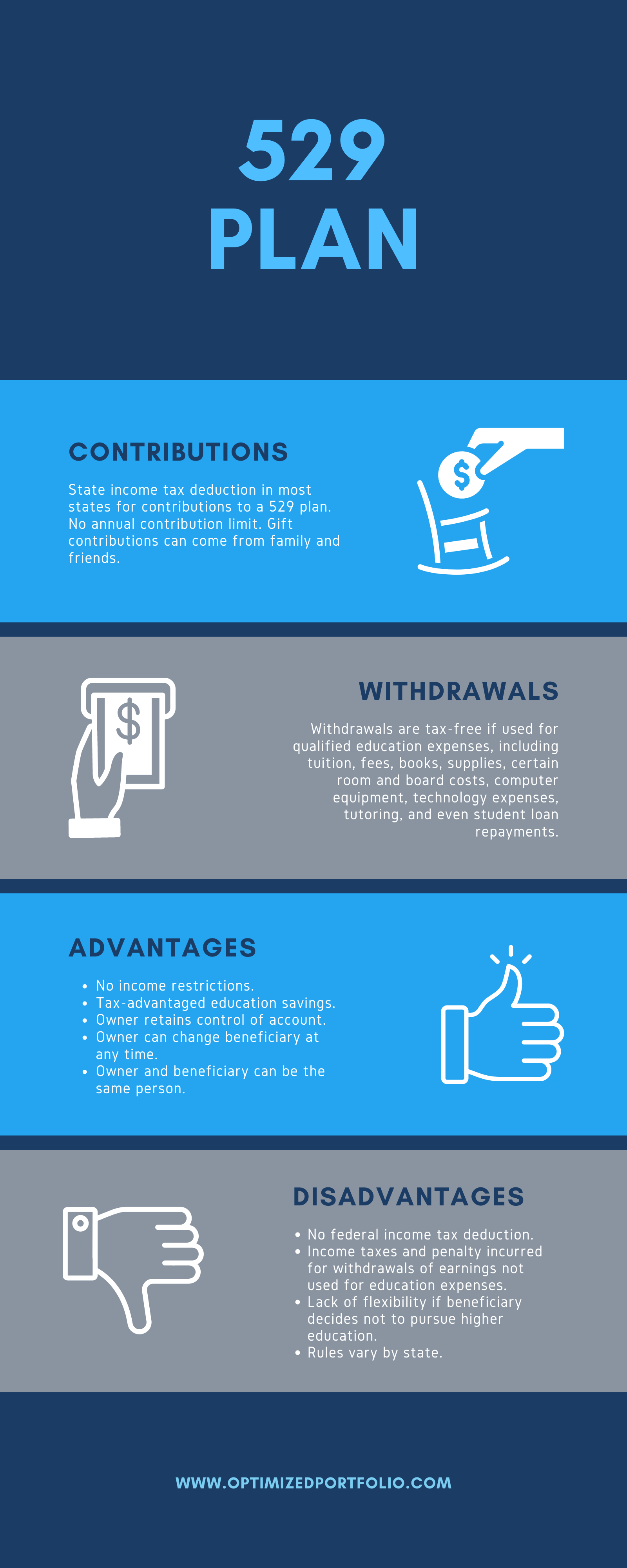
To take a 529 plan distribution, you must withdraw funds from your education savings account to pay for qualified education expenses. If used for tuition, fees, books, or room and board, the earnings portion of the withdrawal is tax-free. However, non-qualified distributions incur federal income tax and a 10% penalty on earnings.
Understanding the Mechanics of 529 Plan Distributions
As we navigate the financial landscape of 2026, 529 plans remain the most potent tool for education savings due to their unique tax advantages. A 529 plan distribution is essentially the act of "spending" the money you have diligently saved and invested. While the contribution side of these plans is relatively straightforward, the distribution side is governed by strict Internal Revenue Service (IRS) regulations that dictate what constitutes a "qualified" use of funds.
The core benefit of a 529 plan is that while contributions are made with after-tax dollars (at the federal level), the growth within the account is tax-deferred. When it comes time to pay for school, the distributions—including all the investment gains—are entirely tax-free, provided they are used for qualified higher education expenses (QHEE).
In 2026, the complexity of these distributions has increased due to several legislative updates over the past few years, including the full implementation of the SECURE 2.0 Act provisions. Understanding how to timing your withdrawals, who should receive the check, and how to document your spending is critical to avoiding unnecessary taxes and penalties.
Qualified Higher Education Expenses (QHEE) in 2026
The definition of what constitutes a "qualified" expense is the most important factor in determining whether your distribution is tax-free. The IRS is specific about these categories, and straying outside of them can trigger a 10% penalty on the earnings portion of the withdrawal.
Tuition and Mandatory Fees
This is the most common use for 529 funds. It covers the actual cost of enrollment and the required fees charged by the institution for all students. This applies to undergraduate programs, graduate schools, professional degrees, and even certain vocational schools.
Room and Board
Distributions can cover room and board, but there are caveats. The student must be enrolled at least half-time (as defined by the institution). Furthermore, the amount you can withdraw tax-free for room and board is limited to the "cost of attendance" (COA) figures published by the school’s financial aid office. If a student lives off-campus, the 529 distribution can still cover rent and food, but only up to the amount the school would have charged for on-campus housing and a meal plan.
Books, Supplies, and Equipment
This category includes textbooks, lab supplies, and specific equipment required for a course of study. Since 2015, the definition has also included computers, peripheral equipment (like printers), internet access, and educational software used primarily by the beneficiary during any of the years the beneficiary is enrolled at an eligible educational institution.
Special Needs Services
For students with special needs, 529 distributions can cover expenses for special needs services incurred in connection with enrollment or attendance at an eligible institution.
K-12 Tuition
While 529 plans were originally designed for college, current law allows for up to $10,000 per year, per beneficiary, to be used for tuition at elementary or secondary (K-12) public, private, or religious schools. Note that this expansion only applies to tuition; it does not cover room and board or other expenses for K-12 students.
Registered Apprenticeship Programs
Distributions can be used for fees, books, supplies, and equipment required for participation in a registered apprenticeship program under the National Apprenticeship Act.
Student Loan Repayment
Under the SECURE Act, individuals can use 529 plan funds to pay down student loans. There is a lifetime limit of $10,000 per individual (including the beneficiary and their siblings). This provides a valuable "exit ramp" for families who find they have over-saved in their 529 accounts.
The SECURE 2.0 Act and 529-to-Roth IRA Rollovers
As of 2026, the 529-to-Roth IRA rollover has become a standard strategy for handling "leftover" funds in a 529 account. This provision, which became effective in 2024, allows account owners to roll over unused 529 funds into a Roth IRA for the beneficiary without tax or penalty. However, there are several strict requirements:
- Lifetime Limit: The total amount that can be rolled over is capped at $35,000 per beneficiary.
- Account Age: The 529 account must have been open for at least 15 years.
- Recent Contributions: Any contributions (and the earnings on those contributions) made within the last five years are ineligible for rollover.
- Annual Limits: The rollover amount is subject to annual Roth IRA contribution limits (e.g., if the limit is $7,000 in 2026, you can only roll over $7,000 that year, and the beneficiary must have earned income at least equal to that amount).
This development has significantly reduced the "fear of overfunding" that previously deterred some parents from maximizing their 529 contributions.
Comparing Distribution Types and Tax Impacts
| Expense Type | Qualified Status | Tax/Penalty Treatment |
|---|---|---|
| College Tuition & Fees | Qualified | Tax-Free & Penalty-Free |
| Room & Board (at least half-time) | Qualified | Tax-Free & Penalty-Free |
| Computers & Internet | Qualified | Tax-Free & Penalty-Free |
| K-12 Tuition (up to $10k/year) | Qualified | Tax-Free & Penalty-Free |
| Student Loan Paydown (up to $10k) | Qualified | Tax-Free & Penalty-Free |
| Student Health Insurance | Non-Qualified | Income Tax + 10% Penalty on Earnings |
| Transportation & Travel | Non-Qualified | Income Tax + 10% Penalty on Earnings |
| Personal Electronics (Gaming) | Non-Qualified | Income Tax + 10% Penalty on Earnings |
| Roth IRA Rollover | Special Qualified | Tax-Free (Subject to $35k cap/rules) |
The Distribution Process: Who Receives the Funds?
When you request a distribution from a 529 plan, you usually have three options for who receives the payment. Each has different implications for tax reporting.
1. Payment to the Account Owner
The check or electronic transfer goes to the parent (or whoever owns the account). The account owner is responsible for paying the school or the student. The Form 1099-Q (the tax form reporting the distribution) will be issued under the account owner's Social Security number.
2. Payment to the Beneficiary (Student)
The funds go directly to the student. In this case, the 1099-Q is issued under the student’s Social Security number. This is often the preferred method for non-qualified distributions because the student is typically in a lower tax bracket than the parent, meaning the tax impact on the earnings portion will be smaller.
3. Payment Directly to the Institution
The 529 plan administrator sends the funds directly to the college or university. This is the cleanest method for tuition and mandatory fees, as it creates a clear paper trail for the IRS. The 1099-Q for direct payments to the school is generally issued in the student’s name and Social Security number.
Critical Timing: The Tax Year Rule
One of the most common mistakes with 529 distributions is failing to align the withdrawal with the actual expense within the same calendar year. For tax purposes, the IRS matches 529 distributions against qualified expenses paid during the same tax year.
For example, if you receive a tuition bill in December 2025 for the semester starting in January 2026, you have a choice. If you pay the bill in December 2025, you must take the 529 distribution in 2025. If you wait and pay it in January 2026, you must take the distribution in 2026. Taking a distribution in December to pay a bill in January can lead to a mismatch if the payment doesn't clear until the new year, potentially resulting in a non-qualified distribution for the year the money was withdrawn.
Coordination with Education Tax Credits
A major pitfall for 529 plan owners is "double-dipping" with federal education tax credits, such as the American Opportunity Tax Credit (AOTC) or the Lifetime Learning Credit (LLC). You cannot use the same $1 of expense to justify both a tax-free 529 distribution and a tax credit.
To maximize your benefits, you should strategically allocate expenses. For example, if you are eligible for the AOTC, you might want to pay $4,000 of tuition out-of-pocket (or from a non-529 account) to claim the maximum $2,500 credit. You would then use the 529 plan only for the remaining tuition and room and board. If you use 529 funds to pay for the first $4,000 of tuition, you forfeit the ability to claim the AOTC on those same dollars.
Handling Non-Qualified Distributions and Exceptions
If you withdraw 529 funds for something that isn't a qualified expense—such as buying a car for the student or taking a graduation trip—you will owe federal (and potentially state) income tax on the portion of the withdrawal that represents investment earnings. Additionally, a 10% federal penalty is applied to those earnings.
However, the 10% penalty is waived (though income tax still applies) in certain specific circumstances:
- Scholarships: If the beneficiary receives a tax-free scholarship, you can withdraw an equivalent amount from the 529 plan without the 10% penalty.
- Military Academy: Attendance at a U.S. military academy allows for penalty-free withdrawals.
- Disability or Death: If the beneficiary becomes disabled or passes away, the penalty is waived for the account owner.
Documentation and Record Keeping
The IRS does not require you to submit receipts with your tax return to prove a 529 distribution was qualified. However, you must keep these records in your personal files. If you are audited, the burden of proof is on you to show that the $20,000 you withdrew matched $20,000 in tuition, books, and board.
Recommended documentation includes:
- Invoices and statements from the college or university.
- Receipts for textbooks and required supplies.
- The school’s official "Cost of Attendance" figures for the relevant year (to justify off-campus room and board).
- Records of computer and internet-related purchases.
Common Pitfalls to Avoid
- Including Travel Costs: Flights home for the holidays or gas for a commute are not qualified expenses, despite being necessary for education.
- Overestimating Room and Board: Withdrawing more than the school’s official COA for rent when living off-campus is a frequent cause of non-qualified distributions.
- Health Insurance: Even if the school requires students to have health insurance and bills them for it, it is not a qualified 529 expense.
- The "Gap" Year: If a student takes a gap year, ensure no distributions are taken during that calendar year unless they are for K-12 or loan repayments, as there are no higher education expenses to offset them.
Frequently Asked Questions
Can I use a 529 distribution for a laptop?
Yes. Since 2015, the IRS has allowed 529 distributions to be used for the purchase of a computer, peripheral equipment, internet access, and software, provided they are used primarily by the beneficiary during any of the years the beneficiary is enrolled at an eligible educational institution.
What happens if I withdraw too much from my 529 plan?
The portion of the excess withdrawal that represents earnings will be subject to federal income tax and a 10% penalty. To minimize the impact, you can try to "rollover" the excess into another 529 plan for a different family member or into a Roth IRA (if the account meets the 15-year/SECURE 2.0 requirements) within 60 days of the withdrawal.
Does a 529 distribution affect financial aid (FAFSA)?
In 2026, the FAFSA (Free Application for Federal Student Aid) rules have shifted. Generally, distributions from a parent-owned or student-owned 529 plan do not count as income for the student on the FAFSA. This is a significant advantage over grandparent-owned plans, which previously had more complex reporting requirements, though recent "FAFSA Simplification" has largely removed the penalty for grandparent-owned 529 distributions as well.
Can I pay for my child's student loans with a 529 plan?
Yes, up to a lifetime limit of $10,000 per individual. This applies to the designated beneficiary and any of their siblings. It is a qualified expense, meaning no taxes or penalties apply to this amount.
What is Form 1099-Q?
Form 1099-Q is the tax document issued by the 529 plan provider at the end of the year. It shows the total amount of distributions, broken down into the "principal" (what you contributed) and "earnings" (the growth). You only need to report the earnings on your tax return if the distribution was non-qualified.
Recommendation for Next Actions
If you are planning a 529 distribution for the upcoming 2026 academic year, your first step should be to log into your account and review your current balance versus the projected "Cost of Attendance" for the student's institution. Contact the school's bursar's office to confirm the exact tuition deadlines. To ensure the most favorable tax treatment, coordinate the distribution so that the funds are withdrawn in the same calendar year the bills are paid. Finally, consult with a tax professional if you plan to utilize the SECURE 2.0 Roth IRA rollover provision, as the 15-year account age and 5-year contribution rules are strictly enforced and require careful verification of the account's history.
For more detailed information on specific qualified expenses, you can refer to IRS Publication 970: Tax Benefits for Education, which provides the definitive federal guidelines on 529 distributions.