Purchasing a life insurance policy at age 40 provides a vital financial safety net during your peak earning years, offering a balance between manageable premium costs and robust coverage for dependents. However, it also introduces higher monthly expenses compared to younger decades and necessitates a more rigorous medical underwriting process as age-related health risks begin to emerge.
Entering your 40s in 2026 marks a significant milestone in personal financial planning. For many, this decade represents the "sandwich generation" era—a period where individuals are simultaneously supporting growing children and aging parents. This unique pressure makes the decision to secure or increase life insurance coverage both more urgent and more complex. At 40, you are often at the height of your career, carrying your largest mortgage balance, and looking toward a retirement that is no longer in the distant future.
The landscape of life insurance has evolved significantly by 2026, with more flexible riders and "living benefits" becoming standard. However, the fundamental math of mortality remains. This guide explores the five primary advantages and five significant drawbacks of securing life insurance at age 40, helping you determine how to best protect your family’s future.
5 Pros of Life Insurance for a 40 Year Old
1. Securing the "Sandwich Generation" Safety Net
At age 40, your financial footprint is typically at its largest. You likely have a significant mortgage, car loans, and perhaps most importantly, children who will soon be entering higher education. A life insurance policy acts as a guaranteed completion fund for these financial goals. If the primary breadwinner were to pass away, the policy ensures that the surviving spouse is not forced to sell the family home or sacrifice the children's educational future.
Furthermore, many 40-year-olds in 2026 are providing care for elderly parents. Life insurance can be structured to provide for the continued care of these dependents, ensuring that your passing does not leave vulnerable seniors without the professional assistance or housing they require. This multi-generational protection is a cornerstone of mid-life financial stability.
2. Locking in Favorable Premiums Before the "Age 50 Jump"
While 40 is more expensive than 30, it is considerably more affordable than 50. Actuarial tables show that the cost of life insurance begins to climb more steeply once an applicant crosses the age 50 threshold. By securing a 20-year or 30-year level-term policy at 40, you lock in a rate that remains unchanged even as your health naturally declines over the next two decades.
In the 2026 market, a healthy 40-year-old can still qualify for "Preferred Plus" or "Preferred" rating tiers. These tiers offer significantly lower rates than the "Standard" rates often assigned to those in their 50s who may have developed common age-related conditions like hypertension or elevated cholesterol. Starting now allows you to benefit from your current health status for the long term.
3. Tax-Advantaged Wealth Transfer and Estate Liquidity
Life insurance remains one of the most efficient tools for transferring wealth in 2026. The death benefit paid to beneficiaries is generally free from federal income tax. For a 40-year-old building a significant estate, life insurance provides the liquidity necessary to pay for estate taxes or final expenses without forcing the liquidation of other assets, such as real estate or a family business.
If you opt for a permanent policy, such as Whole Life or Indexed Universal Life (IUL), the policy also serves as a tax-deferred savings vehicle. The cash value grows over time, and in 2026, many policyholders use these funds via tax-free loans to supplement retirement income or fund major purchases. Starting at 40 gives the policy enough time (20–25 years) to accumulate meaningful cash value before retirement begins.
4. Access to Modern Living Benefits and Accelerated Riders
One of the greatest advantages of buying a policy in 2026 is the prevalence of "Living Benefits." Unlike older policies that only paid out upon death, modern policies often include riders for chronic, critical, or terminal illness at no or low additional cost. For a 40-year-old, this is a crucial hedge against the risk of a mid-career health crisis.
If you are diagnosed with a covered condition—such as a heart attack, stroke, or invasive cancer—these riders allow you to access a portion of your death benefit while you are still alive. This capital can be used to pay for medical treatments not covered by health insurance, replace lost income during recovery, or modify your home for accessibility. At an age where the risk of such illnesses begins to tick upward, this "double-duty" protection is invaluable.
5. Portability and Supplementing Limited Employer Coverage
Many 40-year-olds rely solely on "Group Life" insurance provided by their employers. While this is a nice benefit, it is often insufficient and, more importantly, not portable. If you change careers or face a layoff—common occurrences in the dynamic 2026 job market—you lose that coverage exactly when you might need it most.
Purchasing a private policy at age 40 ensures that your family's protection is not tied to your employment status. Additionally, most employer-provided policies cap coverage at 1x or 2x your annual salary. For a 40-year-old with a family, industry experts generally recommend coverage of 10x to 15x your annual income. A private policy allows you to bridge that gap and maintain control over your coverage.
5 Cons of Life Insurance for a 40 Year Old
1. Substantial Premium Increase Over Younger Decades
The most immediate drawback of waiting until 40 to buy life insurance is the cost. Statistically, a 40-year-old will pay approximately 30% to 50% more for the same amount of coverage than someone who secured a policy at age 30. This "waiting tax" is a direct reflection of the increased mortality risk that comes with each passing decade.
For those on a tight budget, these higher premiums can be a deterrent. In a household already balancing a mortgage and childcare costs, adding a substantial monthly insurance premium can feel like a burden. This often leads 40-year-olds to under-insure themselves, choosing a lower death benefit than they actually need just to keep the monthly cost manageable.
2. Rising Friction in the Medical Underwriting Process
At age 25, medical underwriting is often a formality. By age 40, the process becomes more rigorous. Even if you feel healthy, "wear and tear" often begins to show up in the blood work and physical exams required by insurers. Minor issues like slightly elevated blood pressure, a high BMI, or a family history of cardiovascular disease can lead to a "Standard" or "Substandard" rating.
In 2026, while some insurers use "accelerated underwriting" (data-driven algorithms), they still pull your medical records from the MIB (Medical Information Bureau). Any health concerns documented in your 30s will impact your 40-year-old rates. This friction can result in higher-than-quoted premiums or, in some cases, exclusions for certain conditions.
3. Capital Lock-up and the Opportunity Cost of Premiums
For those considering permanent life insurance, the "opportunity cost" is a significant disadvantage. The premiums for Whole Life or Universal Life are substantially higher than Term insurance. For a 40-year-old, the question becomes: Would that money perform better if invested in the stock market or a diversified portfolio?
If you pay $500 a month into a permanent life policy, a large portion of those early payments goes toward commissions and administrative fees rather than the cash value. Over a 20-year horizon, an aggressive investor might find that "buying term and investing the difference" yields a higher net worth by age 60. At 40, you still have a long enough investment horizon that this opportunity cost must be carefully weighed.
4. Complexity and the Risk of Policy Mismanagement
By age 40, many individuals have complex financial lives. Adding a complex life insurance product like an Indexed Universal Life (IUL) or Variable Life policy can add unwanted layers of management. These policies require an understanding of participation rates, caps, and sub-account performance.
If the policy is not structured correctly—or if the market performs poorly—the policy could "implode," requiring significantly higher premiums in later years to keep it in force. For a busy 40-year-old professional, the risk of purchasing a product they don't fully understand can lead to financial frustration or a lapsed policy, which would leave the family unprotected.
5. The "Fixed Benefit" vs. Inflation Challenge
A policy purchased at age 40 with a $1 million death benefit might seem like a massive sum today. However, if that policy pays out when you are 65 or 70, the purchasing power of that $1 million will be significantly eroded by inflation. In the 2026 economic environment, inflation remains a persistent concern for long-term planning.
While your premiums remain level (in a term policy), your coverage effectively shrinks in value every year. For a 40-year-old planning for their family's needs 20 years down the road, they must over-insure today to ensure the payout is sufficient tomorrow. This necessity further drives up the cost of the policy.
Comparing Policy Options for a 40-Year-Old
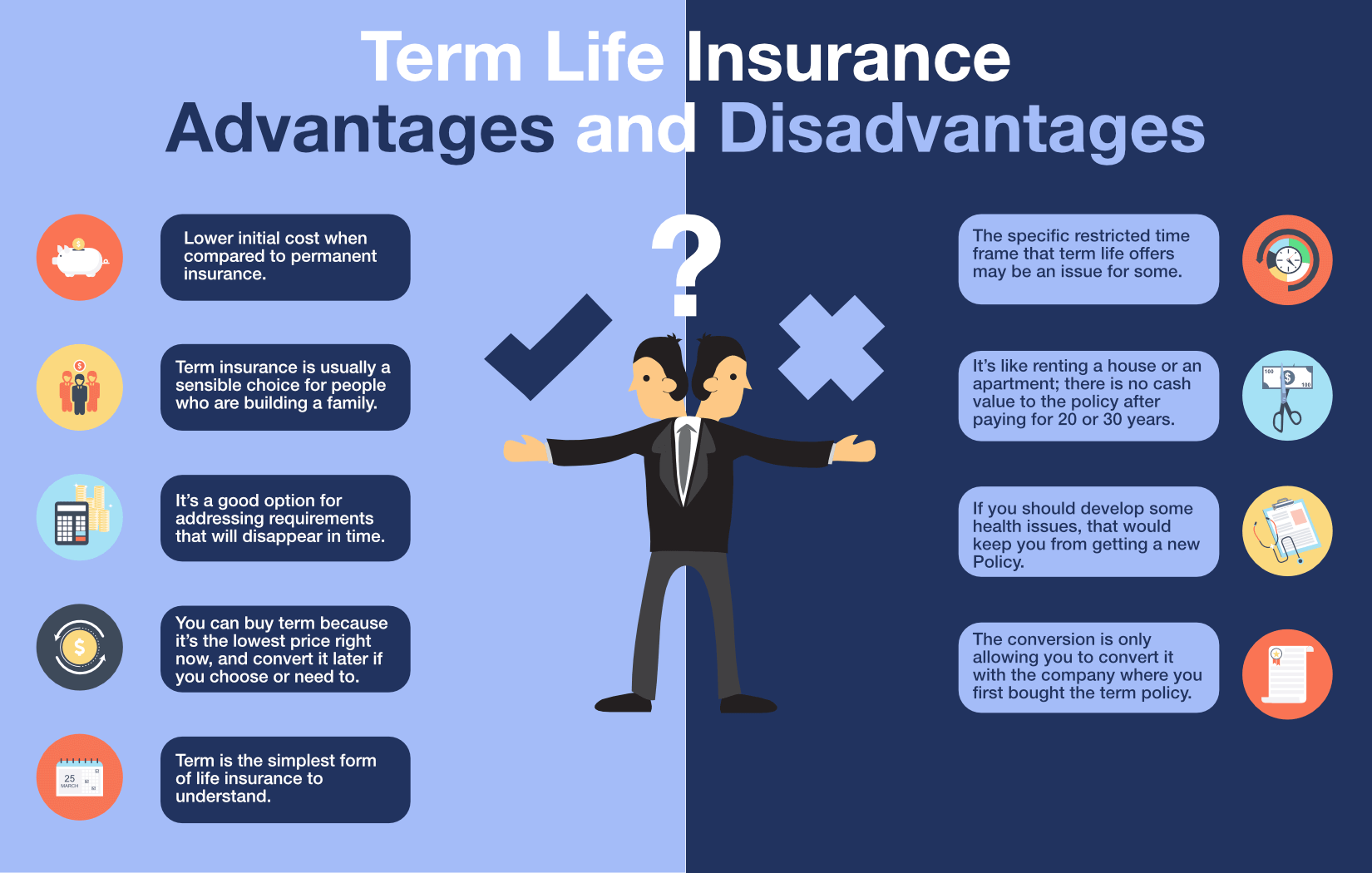
Choosing between Term and Permanent insurance is the most critical decision at this age. The following table compares the typical characteristics of these options for a 40-year-old applicant in 2026.
| Feature | Term Life Insurance (20-30 Year) | Permanent (Whole/Universal) |
|---|---|---|
| Primary Goal | Pure protection during high-debt years. | Life-long protection and wealth accumulation. |
| Relative Cost | Low (approx. $40–$100/mo for $500k). | High (approx. $400–$800/mo for $500k). |
| Cash Value | None. | Yes, grows tax-deferred over time. |
| Duration | Ends after a set term (e.g., age 60 or 70). | Guaranteed for life as long as premiums are paid. |
| Flexibility | Limited; can sometimes be converted. | High; can borrow against cash value or adjust premiums. |
| Underwriting | Required (Standard or Accelerated). | Required (Generally more intensive). |
Determining Your Coverage Needs at 40
When you are 40, the "standard" advice of "10 times your salary" is often too simplistic. To get an accurate figure, financial planners in 2026 recommend the DIME formula, which stands for:
- Debt: Sum up all your non-mortgage debts (credit cards, car loans, personal loans).
- Income Replacement: Multiply your annual salary by the number of years your family would need that income (e.g., 15 years until the youngest child is independent).
- Mortgage: Include the total payoff amount for your primary residence and any other properties.
- Education: Estimate the future cost of college for all children.
By adding these four components, a 40-year-old can see a clearer picture of their liability. For many, this number lands between $1.5 million and $2.5 million. While this may sound high, securing a 20-year term policy for this amount at age 40 is often the most cost-effective way to manage this massive risk.
Common Mistakes to Avoid
- Waiting for "Perfect" Health: Many 40-year-olds delay applying because they want to lose 20 pounds or lower their cholesterol first. In reality, the "age increase" often costs more than the "health improvement" saves. It is better to secure coverage now and ask for a rate reconsideration later if your health improves.
- Buying Too Short a Term: A 10-year term policy is cheap, but it expires when you are 50. If you still have a mortgage or children in school at 50, buying a new policy will be exponentially more expensive. Aim for a term that covers you until your youngest child graduates or your mortgage is paid.
- Neglecting the Non-Working Spouse: If a stay-at-home parent passes away, the surviving spouse faces massive costs for childcare, transportation, and household management. Always ensure both partners are covered.
Frequently Asked Questions
Is 40 too old to get affordable life insurance?
No. While premiums are higher than at 30, age 40 is still considered "young" by insurance companies. Healthy 40-year-olds can still find very competitive rates, especially for term insurance. The key is to apply before any major health issues are officially diagnosed.
Can I get life insurance at 40 if I have a pre-existing condition?
Yes, but it depends on the condition. In 2026, many insurers have become more sophisticated in "clinical underwriting," which looks at how well you are managing a condition rather than just the diagnosis itself. Controlled Type 2 diabetes or managed hypertension may still qualify for reasonable rates.
Should I choose a 20-year or 30-year term at age 40?
A 20-year term is often the "sweet spot" for 40-year-olds, as it covers them until age 60—usually the point where the mortgage is nearly paid and children are grown. However, if you have a young child or a 30-year mortgage, the 30-year term provides coverage until age 70, which offers a more complete safety net through your transition into retirement.
Are "no-exam" policies a good idea at 40?
No-exam (or accelerated underwriting) policies are excellent if you are in good health. They use your digital footprint and medical databases to approve you in minutes. However, if you have health issues, a traditional exam might actually help you get a better rate by proving your condition is well-managed through blood work.
Does life insurance at 40 help with retirement?
Only if you purchase a permanent policy with a cash-value component. While term insurance is better for pure protection, permanent policies can act as a "volatility buffer" in retirement. You can draw from the cash value when the stock market is down, allowing your invested assets time to recover.
Final Recommendation
For most 40-year-olds, the optimal strategy is to prioritize a high-death-benefit term policy first. This ensures that your largest risks—your family's lifestyle, the mortgage, and college education—are fully covered during your highest-risk years. Once that foundation is set, you can explore permanent insurance if you have additional needs for estate planning or tax-advantaged savings.
Do not wait. The cost of life insurance at 40 increases with every birthday and every new medical diagnosis. Contact a broker or use an online comparison tool today to lock in your current age and health status.