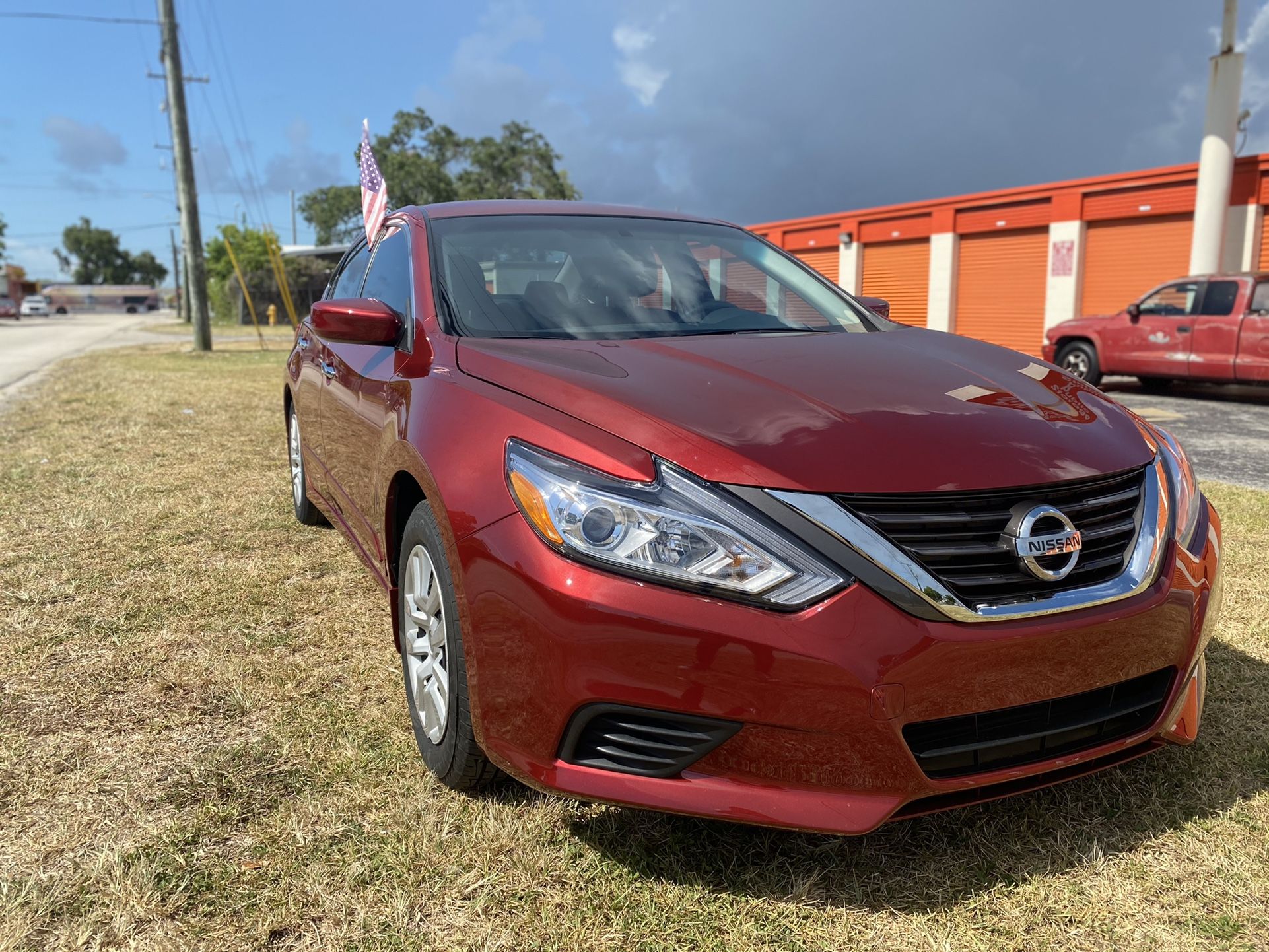
In independent instrumented acceleration testing, the 2016 Nissan Altima equipped with the 3.5-liter V6 engine recorded a 0-to-60 mph time of 5.9 seconds. This performance demonstrated a distinct dynamic advantage over the base 2.5-liter four-cylinder model, offering superior highway passing power, refined engine acoustics, and robust acceleration while retaining midsize sedan practicalities.
Understanding the 5.9-Second 0–60 Test Benchmark
When automotive publication testing revealed that the V6-powered 2016 Nissan Altima could sprint from a standstill to 60 mph in just 5.9 seconds, it repositioned the mainstream sedan as one of the quicker midsize options in its class for that model year. The standard four-cylinder version of the same era posted 0-to-60 mph times between 7.8 and 8.2 seconds. The nearly two-second disparity fundamentally transformed how the car responded during real-world driving situations.
Achieving a sub-six-second 0-to-60 time in a front-wheel-drive midsize sedan requires a combination of strong low-to-mid-range torque, aggressive throttle response, and effective traction management. During acceleration runs, the 2016 Altima 3.5 V6 delivered prompt power transfer through its front wheels. This performance placed it in direct competition with contemporary V6 rivals like the Honda Accord 3.5L V6 and Toyota Camry 3.5L V6, both of which occupied the upper tier of family sedan performance before turbocharged four-cylinders became the industry norm.
The test results highlighted how engine displacement and cylinder count provided effortlessness in daily driving. Merging onto high-speed highways, executing short-distance passes on two-lane roads, and ascending steep grades required far less engine strain in the 3.5 V6 compared to its four-cylinder sibling.
Engine Specifications: 3.5L V6 (VQ35DE) vs. 2.5L 4-Cylinder (QR25DE)
The core reason behind the 5.9-second performance test result lies under the hood. Nissan offered two distinct powertrains for the 2016 Altima lineup: the entry-level 2.5-liter naturally aspirated four-cylinder and the flagship 3.5-liter naturally aspirated V6.
The 3.5-Liter VQ35DE V6 Engine
The engine powering the top-tier 2016 Altima 3.5 SR and 3.5 SL trims was Nissan’s celebrated VQ35DE. This 3.5-liter naturally aspirated double-overhead-cam (DOHC) 24-valve V6 engine was continuously refined across multiple generations of Nissan and Infiniti vehicles.
- Horsepower: 270 hp @ 6,400 RPM
- Torque: 251 lb-ft @ 4,400 RPM
- Bore x Stroke: 95.5 mm x 81.4 mm
- Compression Ratio: 10.3:1
- Fuel Requirement: Regular unleaded (87 octane recommended)
The VQ35DE utilized aluminum alloy engine blocks and cylinder heads, molybdenum-coated pistons, and continuously variable valve timing control (CVTCS) on the intake valves. The engine yielded a linear power curve, providing immediate throttle response without the spool lag associated with turbocharged powertrains.
The 2.5-Liter QR25DE Inline-4 Engine
By contrast, the majority of 2016 Nissan Altimas delivered to dealerships contained the QR25DE 2.5-liter inline-four engine.
- Horsepower: 182 hp @ 6,000 RPM
- Torque: 180 lb-ft @ 4,000 RPM
- Bore x Stroke: 89.0 mm x 100.0 mm
- Compression Ratio: 9.6:1
- Fuel Requirement: Regular unleaded
While the 2.5-liter four-cylinder was engineered to maximize fuel efficiency and lower the entry price point, it produced 88 fewer horsepower and 71 fewer pound-feet of torque than the V6. That power gap accounted directly for the two-second difference in 0-to-60 acceleration.
Xtronic CVT Performance and D-Step Shift Logic
A major point of discussion in the 2016 Altima 0-to-60 tests involved the transmission. Nissan paired both the 2.5L four-cylinder and the 3.5L V6 with its Xtronic Continuously Variable Transmission (CVT). Historically, early CVTs were criticized for creating an unappealing "rubber-band" sensation, where engine RPM climbed to a high peak and remained pinned there while the vehicle gathered speed.
For the mid-cycle refresh of the fifth-generation Altima in 2016, Nissan implemented enhanced D-Step Shift Logic software into the Xtronic CVT.
- Throttle Input
- CVT Control Unit
- Simulated Ratio Steps
- Traditional "Shift" Feel
How D-Step Shift Logic Impacted Acceleration
- Simulated Gear Ratios: Under moderate-to-heavy acceleration (above 38% throttle opening), the transmission control module actively changed pulley ratios in discrete increments, mimicking the stepped gear shifts of a conventional automatic transmission.
- Reduced Engine Drone: By dropping engine speed slightly between simulated gear shifts, the system eliminated the relentless high-RPM engine hum that alienated traditional driving enthusiasts.
- Optimum Powerband Retention: Despite simulating shift points, the CVT held the VQ35DE engine close to its peak horsepower threshold (6,400 RPM) during wide-open-throttle acceleration, allowing the car to maintain constant forward momentum.
- Paddle Shifters: On the 3.5 SR and 3.5 SL trims, steering-wheel-mounted paddle shifters allowed drivers to manually select seven pre-programmed pulley ratios, giving the driver greater manual control over engine braking and cornering gear selection.
2016 Nissan Altima Powertrain & Performance Comparison
The table below contrasts the technical specifications, acceleration figures, and mechanical features of the two engine options available for the 2016 Nissan Altima.
| Feature / Specification | 2.5L Inline-4 (QR25DE) | 3.5L V6 (VQ35DE) |
|---|---|---|
| Engine Configuration | 2.5L DOHC 16-Valve 4-Cylinder | 3.5L DOHC 24-Valve V6 |
| Peak Horsepower | 182 hp @ 6,000 RPM | 270 hp @ 6,400 RPM |
| Peak Torque | 180 lb-ft @ 4,000 RPM | 251 lb-ft @ 4,400 RPM |
| Transmission Type | Xtronic CVT | Xtronic CVT with D-Step & Paddle Shifters |
| 0–60 mph Time (Tested) | 7.8 – 8.2 seconds | 5.9 seconds |
| Quarter-Mile Time | ~16.0 seconds @ 88 mph | ~14.2 seconds @ 101 mph |
| EPA Fuel Economy (City/Hwy) | 27 / 39 mpg | 22 / 32 mpg |
| Curb Weight (Approximate) | 3,180 – 3,250 lbs | 3,460 – 3,470 lbs |
| Wheel Sizes Offered | 16-inch or 17-inch steel/alloy | 18-inch aluminum-alloy |
| Front/Rear Stabilizer Bars | Standard diameter | Stiffer tuned (SR trim: +25% front, +22% rear) |
Driving Dynamics, Chassis Tuning, and Handling
The 5.9-second 0-to-60 acceleration test highlighted engine power, but the overall performance of the 2016 Nissan Altima V6 was equally defined by chassis structural improvements and suspension tuning introduced for that model year.
Structural and Aerodynamic Updates
The 2016 model year marked a significant mid-cycle update for the fifth-generation (L33) Altima platform. Nissan updated the front fascia with its signature "V-Motion" grille, revised active grille shutters, and redesigned underbody shielding. These modifications reduced the aerodynamic coefficient of drag ($C_d$) from 0.29 to 0.26, improving high-speed stability and lowering wind noise inside the cabin.
Additionally, acoustic laminated glass was used for the windshield to suppress engine vibration and road harshness, ensuring that when the 3.5L V6 surged toward its redline, engine noise remained refined rather than coarse.
SR Performance Suspension Tuning
Nissan introduced the SR trim for the 2016 model year to cater to drivers seeking sportier dynamics. Available with both engines, the 3.5 SR combined the strong V6 engine with specific chassis enhancements:
- Thicker Anti-Roll Bars: The 3.5 SR received front stabilizer bars that were 25% stiffer and rear stabilizer bars that were 22% stiffer compared to standard 2.5 models.
- Revised Damper Rates: Damping forces were increased to control body roll during rapid direction changes.
- 18-Inch Alloy Wheels: Fitted with 235/45R18 all-season tires, providing a wider contact patch than the baseline 215/60R16 setup.
These suspension tweaks allowed the 3.5 SR to maintain balance under aggressive cornering, helping translate the V6 engine's 251 lb-ft of torque into controlled acceleration without excessive wheel hop or understeer.
Fuel Economy, Operating Costs, and Reliability
While performance testing proved the V6 was the fastest option in the Altima lineup, potential buyers must weigh those speed advantages against long-term operational costs and maintenance considerations.
Real-World Fuel Economy
The EPA rated the 2016 Nissan Altima 3.5 V6 at 22 mpg city / 32 mpg highway / 26 mpg combined. By contrast, the four-cylinder 2.5L model delivered an impressive 27 mpg city / 39 mpg highway / 31 mpg combined.
- Highway Range: With an 18.0-gallon fuel tank, the V6 model offers a theoretical cruising range of up to 576 highway miles per fill-up.
- Fuel Type: Both engines run on standard 87-octane regular unleaded gasoline, avoiding the requirement for premium fuel often associated with high-output or turbocharged engines.
Maintenance Considerations for the VQ35DE V6
The 3.5-liter VQ35DE is widely regarded by automotive technicians as a robust, long-lasting engine architecture when properly maintained. Key maintenance areas include:
- CVT Fluid Service: The high torque output of the V6 engine (251 lb-ft) puts additional load on the continuous variable transmission. Regular fluid inspection and replacement using genuine Nissan NS-3 CVT fluid (typically every 30,000 to 60,000 miles) is essential to preserve transmission life.
- Timing Chain Endurance: The VQ35DE utilizes a durable timing chain rather than a timing belt, eliminating the need for periodic belt replacements under standard operation.
- Spark Plug Access: Replacing spark plugs on the transverse V6 requires removing the intake plenum to reach the rear cylinder bank (cylinders 1, 3, and 5), resulting in higher labor costs compared to the exposed inline-four cylinder engine.
2016 Nissan Altima V6 vs. Segment Rivals
To contextualize why the 5.9-second 0-to-60 result mattered, it is helpful to look at how the 2016 Altima 3.5 V6 compared against its primary midsize competitors during the same era.
0–60 mph Acceleration Comparison (2016 Midsize V6 Sedans):
- Nissan Altima 3.5 V6: 5.9 seconds
- Honda Accord 3.5 V6: 5.7 seconds
- Toyota Camry 3.5 V6: 5.8 seconds
- Ford Fusion 2.0T EcoB: 6.7 seconds
Honda Accord V6 (3.5L)
The 2016 Honda Accord V6 utilized a 3.5-liter engine producing 278 hp paired with a conventional six-speed automatic transmission. Instrumented tests routinely placed its 0-to-60 time around 5.7 to 5.8 seconds. While the Accord shifted through traditional gear ratios, the Altima V6 matched its acceleration pace closely while offering smoother linear power delivery via its CVT.
Toyota Camry V6 (3.5L)
Toyota’s 2016 Camry V6 used the 2GR-FE 3.5-liter engine generating 268 hp, completing 0-to-60 runs in approximately 5.8 seconds. The Camry prioritized a softer ride and quiet cabin over sporty chassis tuning. In comparison, the Altima 3.5 SR offered a noticeably firmer, more engaging suspension setup.
Ford Fusion 2.0L EcoBoost
Ford opted for a 2.0-liter turbocharged four-cylinder producing 240 hp in the Fusion. While providing strong low-end torque, the turbocharged Fusion took roughly 6.7 seconds to reach 60 mph, making the naturally aspirated V6 Altima nearly a full second faster off the line.
Evaluating a Used 2016 Nissan Altima V6
When shopping for a 2016 Nissan Altima 3.5 V6 on the pre-owned market, evaluating vehicle condition, service history, and powertrain health is critical. Because V6 models accounted for a smaller percentage of total Altima production compared to 2.5L models, finding a well-maintained 3.5 SR or 3.5 SL requires diligent searching.
Pre-Purchase Checklist
- Transmission Inspection: Test drive the vehicle under both light and wide-open throttle. Verify that the D-Step shift logic transitions smoothly without severe shuddering, delayed engagement, or high-RPM slippage. Check service logs to confirm routine CVT fluid changes.
- Suspension Wear: Inspect front struts, lower control arm bushings, and sway bar links, particularly on 3.5 SR models equipped with stiffer sport suspension components.
- Oil Leak Inspection: Examine the V6 engine's valve cover gaskets, front main seal, and oil cooler o-rings for signs of oil weeping, which can occur on higher-mileage VQ-series engines.
- Recall Verification: Confirm with an authorized dealer or via the NHTSA Recalls Database that all safety recalls—such as hood latch assembly inspections or occupant classification system software updates—have been completed.
Frequently Asked Questions
Is the 2016 Nissan Altima 3.5 V6 faster than the 2.5 four-cylinder?
Yes. Independent testing shows the 2016 Nissan Altima 3.5 V6 achieves 0 to 60 mph in 5.9 seconds, whereas the 2.5-liter four-cylinder model takes approximately 7.8 to 8.2 seconds. The V6 provides an extra 88 horsepower and 71 lb-ft of torque.
Does the 2016 Altima V6 require premium gasoline?
No. The 3.5-liter VQ35DE engine in the 2016 Altima is calibrated to run on regular unleaded 87-octane fuel. While higher-octane fuel can be used, it is not required by the manufacturer to achieve its rated 270 horsepower.
Which trim levels came with the V6 engine in 2016?
For the 2016 model year, the 3.5-liter V6 engine was offered exclusively on two upper-tier trims: the sport-focused 3.5 SR and the feature-loaded luxury 3.5 SL.
How reliable is the Xtronic CVT paired with the 3.5L V6 engine?
The Xtronic CVT paired with the V6 is capable of handling the engine's 251 lb-ft of torque when properly maintained. To maximize reliability, owners should follow recommended transmission fluid replacement intervals using genuine Nissan NS-3 fluid every 30,000 to 50,000 miles and avoid pulling heavy trailers.
What is the real-world fuel economy difference between the V6 and 4-cylinder?
The 2.5L four-cylinder Altima carries an EPA rating of 27 mpg city / 39 mpg highway, while the 3.5L V6 is rated at 22 mpg city / 32 mpg highway. Drivers can expect to burn roughly 3 to 5 more gallons of fuel per 100 miles in mixed driving with the V6 engine.
Recommendation and Final Verdict
The 5.9-second 0-to-60 test validated that the V6-powered 2016 Nissan Altima was the definitive performance choice in the lineup. By pairing the proven 270-horsepower 3.5-liter VQ35DE V6 engine with re-tuned suspension hardware and updated CVT shift programming, Nissan created a midsize sedan that combined strong straight-line acceleration with everyday practicality.
For buyers considering a midsize sedan on the secondary market, prioritizing the 3.5 SR or 3.5 SL trim delivers a noticeably more responsive driving experience than the baseline four-cylinder models. To ensure long-term mechanical health, buyers should verify a complete maintenance record—paying special attention to routine CVT fluid service and overall engine maintenance.