The bolt pattern for a 2002 Ford Expedition depends directly on whether your vehicle is a two-wheel-drive (4x2) or a four-wheel-drive (4x4) model. Factory-equipped 4x2 models feature a 5x135mm bolt pattern, while factory-equipped 4x4 and All-Wheel Drive (AWD) models utilize a heavier-duty 5x135mm or 7-lug (7x150mm) configuration depending on the exact submodel, heavy-duty towing packages, or specific axle configurations, though the standard 4x2 uses 5x135mm and the standard 4x4 often shifts to the 5x135mm pattern as well for the first-generation refresh, making direct physical measurement essential before purchasing aftermarket wheels.
Understanding Automotive Bolt Patterns and Wheel Specifications
When you set out to replace the wheels, upgrade the rims, or install custom spacers on a first-generation Ford Expedition, understanding the factory specifications is critical. A bolt pattern, often referred to as the pitch circle diameter (PCD), dictates how many lugs secure the wheel to the hub and the imaginary circle's diameter that those lug holes form. For the 2002 model year—which marked the final year of the popular first-generation body style before the transition to the completely redesigned second-generation trucks for 2003—Ford utilized specific heavy-duty truck platforms shared closely with the F-150.
Selecting the wrong bolt pattern means your wheels will not mount safely, leading to misaligned hub assemblies, compromised stud integrity, excessive vibration, and potentially catastrophic wheel detachment while driving. Beyond just the bolt pattern numbers, you must account for other critical dimensions such as the center bore diameter, thread pitch, offset, and backspacing. Ignoring any single one of these variables can cause clearance issues against brake calipers, suspension components, or the inner wheel well liners.
Factory Bolt Pattern Variations for the 2002 Ford Expedition
The 2002 Ford Expedition presents a unique scenario for automotive enthusiasts and mechanics because Ford utilized distinct axle configurations across drivetrain options and payload packages during this production run. To avoid purchasing expensive, non-returnable aftermarket wheels that do not fit, you must verify your exact factory setup.
The 5-Lug Pattern (5x135mm)
The vast majority of standard 2002 Ford Expedition models, particularly standard 4x2 variants and many standard-duty 4x4 editions, utilize a 5-lug configuration. Specifically, this is expressed as 5x135mm.
- Number of Lugs: 5 lug nuts secured onto wheel studs.
- Circle Diameter: 135 millimeters, which translates to approximately 5.31 inches.
- Application Context: This pattern is shared heavily with Ford F-150 trucks of the same era (specifically 1997 through 2003 for standard models, and through 2004 for heritage models), as well as Lincoln Navigators from 1998 to 2002.
The Heavy-Duty 7-Lug Pattern (7x150mm) Exception
While the standard Expedition utilized the 5x135mm layout, buyers should remain aware that certain heavy-duty F-150 variations (often called the F-150 7700 payload package) utilized a rare 7x150mm configuration. Although the Expedition itself rarely left the factory with a 7-lug setup unless tied to rare special fleet or heavy-payload configurations, aftermarket mix-ups happen frequently when previous owners swap axles or documentation mixes up Expedition and F-150 parts. Always measure your actual hub rather than relying exclusively on generic online lookup tools.
| Drivetrain / Model | Factory Bolt Pattern | Thread Pitch | Center Bore Diameter |
|---|---|---|---|
| 2002 Expedition 4x2 | 5 x 135mm | M14 x 2.0 | 87.1 mm |
| 2002 Expedition 4x4 | 5 x 135mm | M14 x 2.0 | 87.1 mm |
| Navigator (Same Era) | 5 x 135mm | M14 x 2.0 | 87.1 mm |
How to Accurately Measure Your 2002 Ford Expedition Bolt Pattern
If you are unsure whether your vehicle has aftermarket modifications, axle swaps, or factory variations, measuring the bolt pattern yourself is a straightforward task with a tape measure or a dedicated PCD gauge tool. Because the 5x135mm pattern has an odd number of lugs, measuring it is different from measuring a standard 4-lug or 6-lug wheel.
Measuring a 5-Lug Wheel
With an even-lug wheel, you can measure directly across the center from the outer edge of one hole to the center of the opposite hole. With a 5-lug pattern like the 2002 Expedition's, there is no directly opposing hole. Follow these steps to measure accurately:
- Identify the Starting Point: Select the center of any lug hole on the wheel.
- Measure to the Opposite Edge: Measure from the center of your starting lug hole to the outer edge (or outer border) of the lug hole furthest away on the opposite side.
- Verify in Millimeters: Convert your measurement to millimeters if using an imperial tape measure. If the measurement reads roughly 135mm, you have confirmed the standard Ford 5x135mm pattern.
Critical Supporting Dimensions: Center Bore and Thread Pitch
Knowing the bolt pattern is only half the battle when fitting new wheels to a 2002 Ford Expedition. Ignoring secondary dimensions can result in severe installation headaches or dangerous mechanical failures.
Center Bore
The center bore is the machined hole in the exact center of the wheel that centers the wheel onto the vehicle's hub.
- The factory center bore for the 2002 Ford Expedition is 87.1 mm.
- If you purchase aftermarket wheels with a larger center bore than 87.1mm, the wheel will center on the lug studs rather than the hub, which can cause high-speed vibrations and steering wheel shimmy. To solve this, you must use hub-centric rings that bridge the gap between the vehicle hub and the wheel center bore.
- If the aftermarket wheel has a smaller center bore, it will not slide over the Expedition's hub at all. Never machine or drill out a wheel's center bore yourself unless performed by a certified machinist.
Thread Pitch and Lug Nuts
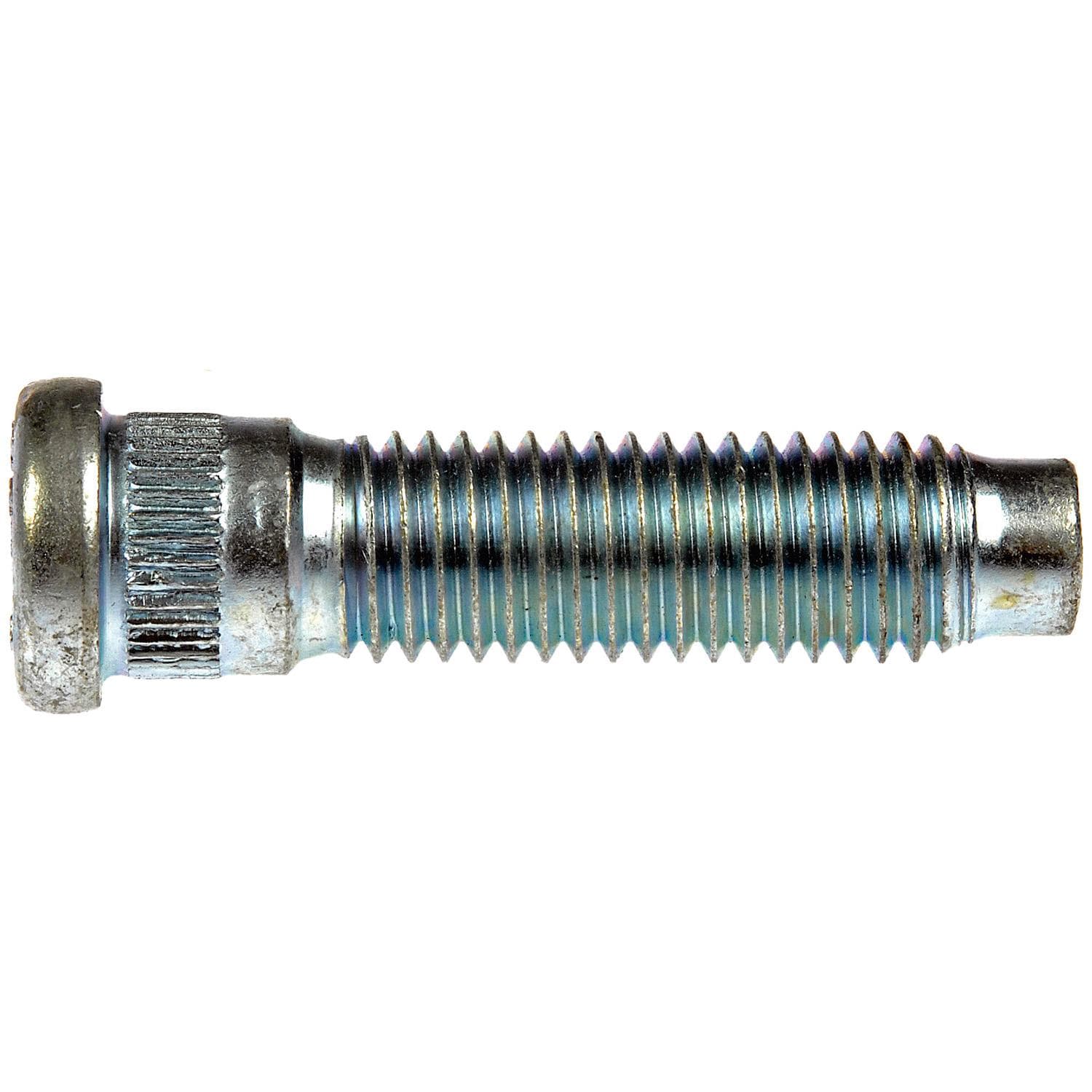
The wheel studs on a 2002 Ford Expedition use a M14 x 2.0 thread pitch. When installing new wheels, ensure your lug nuts match this precise thread pitch. Using incorrect thread pitches will strip the wheel studs, destroying the hub assembly and creating a severe safety hazard. Furthermore, verify whether your wheels require acorn-style (conical), flat-seat, or bulge-acorn lug nuts to match the chamfered seating holes in the wheel.
Common Mistakes When Replacing 2002 Ford Expedition Wheels
Modifying or upgrading truck wheels requires strict attention to detail. Avoiding common pitfalls saves time, money, and prevents dangerous driving conditions.
- Confusing 5x135mm with 5x5.5 (5x139.7mm): Many people mistakenly assume older Ford truck patterns (like the classic 5x5.5 inch pattern found on older Broncos and F-100s) match the 2002 Expedition. They do not. While 135mm is mathematically close to 139.7mm, forcing a 5x139.7mm wheel onto a 5x135mm hub (or vice versa) will cross-thread studs, bend components, or cause loose wheel syndrome.
- Overlooking Brake Caliper Clearance: First-generation Expeditions feature substantial factory brake calipers. Even if a wheel shares the correct 5x135mm bolt pattern and center bore, an incorrect wheel offset or barrel design can cause the inner spokes to strike the brake calipers, locking the wheel in place when tightened.
- Neglecting Load Ratings: The 2002 Ford Expedition is a heavy, full-size SUV with a high Gross Vehicle Weight Rating (GVWR) and substantial towing capacity. Passenger car wheels or light-duty crossover rims will fail under the weight and stress of an Expedition. Always verify that replacement wheels possess an adequate load rating certified for full-size truck and SUV applications.
Frequently Asked Questions
Will wheels from a newer Ford F-150 fit my 2002 Ford Expedition?
No. While older F-150 trucks (1997-2003) share the same 5x135mm bolt pattern, Ford changed the F-150 bolt pattern to 6x135mm starting with the 2004 model year. Wheels from a 2004 or newer F-150 will physically not fit a 2002 Expedition.
Can I use wheel spacers on my 2002 Ford Expedition?
Yes, you can use wheel spacers to correct offset or achieve a wider stance, but you must purchase hub-centric spacers specifically engineered for the 5x135mm bolt pattern and 87.1mm center bore. Avoid cheap, universal lug-centric spacers, as they induce dangerous vibrations and place excessive shear stress on the factory wheel studs.
Do Lincoln Navigator wheels of the same year fit the Expedition?
Yes. The first-generation Lincoln Navigator (1998–2002) shares the exact same platform, suspension geometry, and 5x135mm bolt pattern with the 2002 Ford Expedition. Factory or aftermarket wheels designed for that era's Navigator are fully interchangeable.
How do I know if my wheels are hub-centric or lug-centric?
Factory Ford Expedition wheels are hub-centric, meaning the weight of the vehicle rests directly on the center hub ring rather than solely on the lug studs. When buying aftermarket wheels, check the manufacturer specifications. If the wheel center bore is larger than the 87.1mm hub, it is considered lug-centric unless you install hub-centric conversion rings.
Final Recommendations for Wheel Upgrades
Before ordering custom rims or replacement factory wheels for your 2002 Ford Expedition, take the time to pull off at least one existing wheel and measure the hub assembly directly. Confirm the 5x135mm bolt pattern, verify the 87.1mm center bore, and check your intended wheel's offset and load rating. Consulting a professional wheel and tire specialist before purchase ensures a safe, vibration-free installation that protects your suspension and keeps your full-size SUV tracking smoothly on the road.