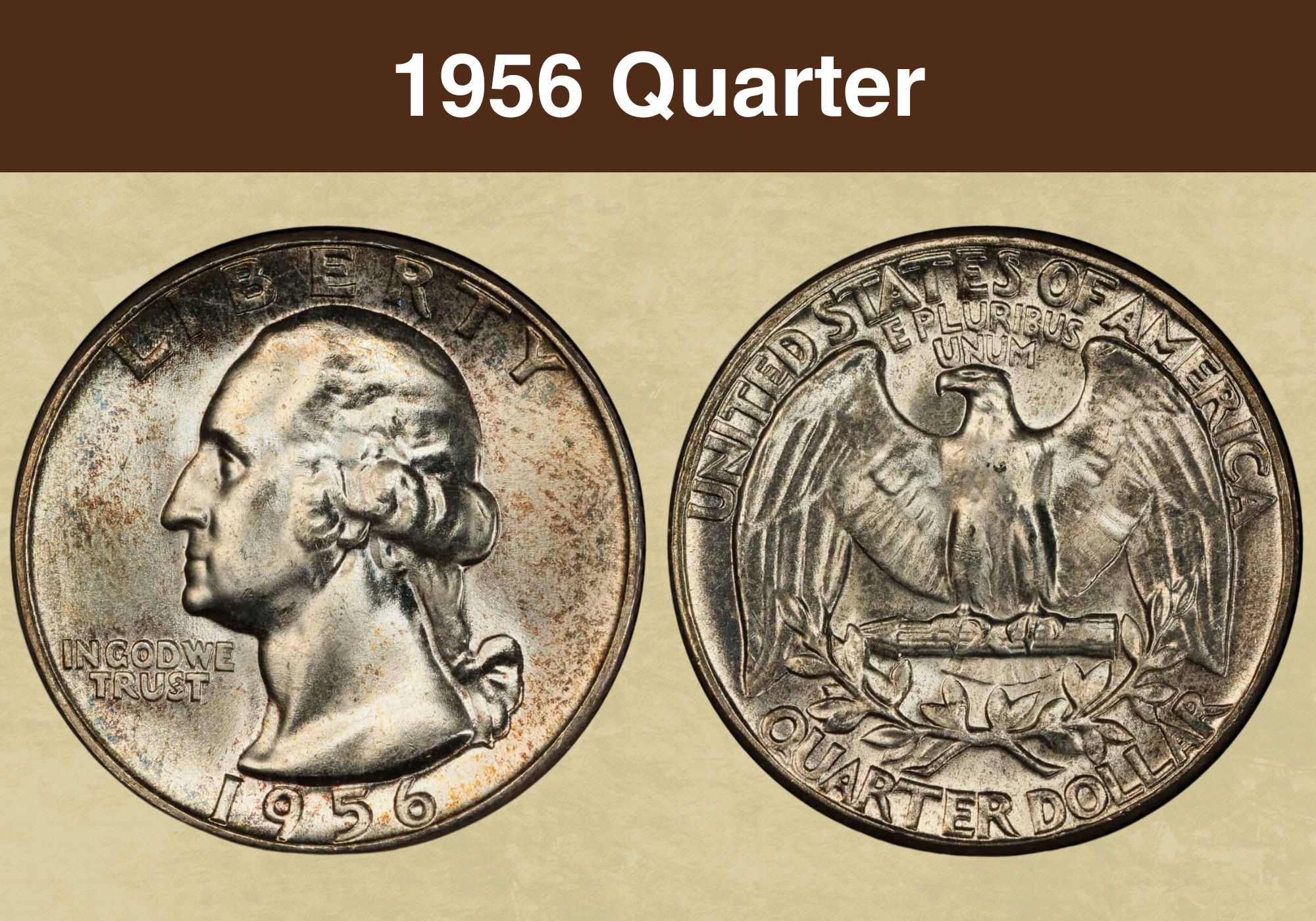
A standard 1969 Washington quarter minted for circulation is generally worth only its face value of 25 cents in worn condition, but uncirculated specimens, proof coins, and rare mint errors can command prices ranging from $5 to several hundred dollars depending on their preservation state, mint mark, and grading certification.
Evaluating the true market worth of a 1969 quarter requires a thorough understanding of U.S. numismatic history, modern coin composition, minting techniques, and grading standards. While earlier decades of American coinage feature silver content that guarantees a baseline precious metal value, quarters struck in 1969 occupy a distinct transitional era in United States Mint history. This comprehensive guide explores everything collectors, hobbyists, and casual finders need to know about determining the financial and historical value of a 1969 quarter.
Historical Context and Composition of the 1969 Quarter
To understand why a 1969 quarter holds a specific market value, one must first examine its metallic composition. Prior to 1965, circulating U.S. quarters—specifically the Washington quarter series introduced in 1932—were struck from a composition of 90% silver and 10% copper. However, soaring global silver prices and hoarding during the early 1960s forced the United States government to pass the Coinage Act of 1965. This legislation eliminated silver from circulating dimes and quarters entirely, replacing the precious metal with a clad composition.
A 1969 quarter is composed of a outer layer of 75% copper and 25% nickel bonded to a pure copper core. Because of this clad sandwich structure, a typical 1969 circulation-strike quarter contains absolutely no silver. Its intrinsic metal value is limited to the scrap value of its base metals, which is typically worth mere fractions of a cent. Therefore, unlike 1964 and earlier quarters that possess a reliable silver floor price, the value of a 1969 quarter depends almost entirely on its numismatic desirability—meaning its scarcity, condition, and market demand among collectors.
Mint Marks and Production Locations
The United States Mint produced quarters across different facilities in 1969, and identifying where a coin was struck is a critical step in valuation. For the year 1969, quarters were manufactured at two primary locations for circulation, along with a specialized facility for collector sets:
- Philadelphia Mint (No Mint Mark): Quarters struck for circulation in Philadelphia do not feature a mint mark. Millions of these coins entered commerce, making standard circulated examples extremely common.
- Denver Mint (D Mint Mark): Quarters struck in Denver feature a small "D" letter located on the obverse (front) side of the coin, just to the right of the ribbon tied at the base of the wreath. Denver-minted coins are also common in lower grades.
- San Francisco Mint (S Mint Mark): Quarters bearing an "S" mint mark in 1969 were exclusively struck as proof coins intended for specialized annual collector sets. These coins were produced using highly polished dies and specially prepared planchets, resulting in a mirror-like finish.
Grading Standards and Their Impact on Value
In numismatics, condition is everything. A coin evaluated under the Sheldon Coin Grading Scale—which ranges from 1 (Poor) to 70 (Perfect Mint State)—can experience massive swings in market value based on microscopic differences in surface preservation and wear.
Circulated Coins (G-4 to AU-58)
Quarters retrieved from pocket change, cash registers, or piggy banks generally fall into the circulated category.
- Good to About Fine (G-4 to F-12): These coins show heavy wear. The fine details in Washington's hair and the eagle's breast feathers on the reverse are smoothed flat. These are worth face value ($0.25).
- Extremely Fine to About Uncirculated (EF-40 to AU-58): These specimens display minor friction on the highest points of the design, such as Washington's hair above his ear and the tips of the eagle's wings. While they have entered circulation briefly, their details remain sharp. Common date circulated coins in this range rarely exceed $0.50 to $1.00 in value.
Uncirculated Mint State Coins (MS-60 to MS-70)
An uncirculated coin has never entered general commerce. It retains its original factory mint luster, with no wear on the high points of the design.
- MS-60 to MS-63: These uncirculated coins may exhibit minor bag marks, hairline scratches, or dull luster from contact with other coins during the minting and transport process. A typical 1969 or 1969-D quarter in MS-63 condition generally trades for $2 to $5.
- MS-65 and Higher: Gems with exceptional eye appeal, brilliant luster, and virtually no distracting marks become increasingly scarce. A 1969 quarter graded MS-66 can command $15 to $35, while ultra-high-grade specimens certified as MS-67 by professional grading services like PCGS or NGC can realize $100 to $300 or more at specialized auctions due to the difficulty of finding them without contact marks.
| Grade Category | Sheldon Scale Range | Typical Physical Condition | Estimated Market Value (1969 / 1969-D) |
|---|---|---|---|
| Circulated | G-4 to VF-20 | Heavy wear, flattened details, no mint luster | $0.25 (Face Value) |
| About Uncirculated | AU-50 to AU-58 | Light friction on high points, faint remaining luster | $0.50 – $1.50 |
| Choice Uncirculated | MS-60 to MS-63 | No wear, minor bag marks and abrasions, good luster | $2.00 – $6.00 |
| Gem Uncirculated | MS-65 to MS-66 | Minimal marks, strong cartwheel luster, sharp strike | $15.00 – $50.00 |
| Superb Gem | MS-67+ | Flawless surfaces, exceptional eye appeal, extreme rarity | $100.00 – $300+ |
Proof Quarters (1969-S)
Collectors seeking higher-value modern quarters often look toward the 1969-S proof issues. The San Francisco Mint struck over 2.9 million proof quarters in 1969, packaged inside official U.S. Mint Proof Sets. Because these sets were carefully preserved by collectors, the vast majority of 1969-S proof quarters survive in high grades today.
Standard 1969-S proof quarters typically trade between $3 and $10. However, a specialized subset known as Cameo (CAM) or Deep Cameo / Ultra Cameo (DCAM / UCAM) features a striking visual contrast between frosted raised devices (Washington's bust and lettering) and mirror-like fields. Proof coins with heavy, uniform frosting verified by grading services command higher premiums, occasionally selling for $20 to $50 depending on the depth of the cameo contrast and numerical grade (such as PR-68 or PR-69).
Errors and Varieties to Watch For
When evaluating any modern U.S. coinage, error collectors look for anomalies occurring during the striking process. While a standard 1969 quarter is common, verified mint errors can elevate a mundane 25-cent piece into a prized numismatic find.
Doubled Die Obverse (DDO)
A doubled die error occurs when the hub presses the design into the coin die multiple times, resulting in doubled text or design elements on the finished coin. While prominent doubled dies are famous in other years (such as the 1932 or 1950 variants), minor mechanical doubling can occasionally be found on 1969 issues. True doubled dies display crisp, separated lettering; flat, shelf-like doubling is usually mechanical strike doubling and adds no numismatic value.
Off-Center Strikes and Planchet Errors
Occasionally, a coin planchet is not properly aligned in the striking chamber, resulting in an off-center strike where a crescent-shaped blank area appears alongside the design. Additionally, wrong-planchet errors—such as a quarter struck on a dime planchet or a foreign coin blank—are exceptionally rare and command substantial sums at auction.
Clipped Planchets
During the blanking process, if the metal strip is improperly fed through the punching machine, a curved clip or straight clip error can occur on the resulting coin blank. These errors feature a distinct missing curved edge and often display the characteristic "Blix" or weakness on the opposite rim. Authentic clipped planchets from 1969 typically trade between $10 and $50 depending on the size of the clip and overall coin grade.
How to Examine and Store Your 1969 Quarter
If you discover a 1969 quarter in a collection or inheritance, handling it correctly prevents accidental damage that could ruin its financial value.
- Do Not Clean the Coin: Cleaning or polishing a coin leaves micro-scratches across the surfaces, which professional grading services instantly detect and penalize. A cleaned coin is often deemed "Details" graded, destroying its market value. Always hold coins by their smooth edges rather than touching the obverse and reverse faces.
- Evaluate Under Magnification: Use a quality jeweler's loupe (5x to 10x magnification) under bright, angled lighting to inspect the high points of Washington's hair and the cheek for friction marks or hairline scratches.
- Determine Mint Marks: Check the reverse for an "S" or the obverse for a "D". Absence of a mark indicates Philadelphia production.
- Assess Protective Storage: Place valuable uncirculated or proof specimens into inert, PVC-free coin flips, coin capsules, or specialized numismatic holders to protect them from environmental moisture and atmospheric corrosion.
Frequently Asked Questions
Are any 1969 quarters made of silver?
No. Standard circulating 1969 quarters minted in Philadelphia and Denver, as well as 1969-S proof quarters, are made of a copper-nickel clad composition (75% copper, 25% nickel bonded to a pure copper core). The U.S. Mint ceased using 90% silver for circulating quarters after 1964.
What is the most expensive 1969 quarter ever sold?
While standard 1969-S proof and mint state Philadelphia/Denver quarters sell for modest amounts, ultra-high-grade certified specimens in pristine condition (such as MS-67) have realized several hundred dollars at specialized numismatic auctions due to their extreme scarcity in top-tier preservation.
How can I tell if my 1969 quarter is uncirculated?
An uncirculated quarter will display no wear on the highest points of the design, such as the strands of hair above Washington's ear and the eagle's breast feathers. Furthermore, it will retain an original, unbroken cartwheel metallic luster that rotates in a circular pattern when tilted beneath a light source.
Is it worth paying to have a 1969 quarter graded?
Generally, no. Because millions of 1969 quarters were produced, grading fees charged by third-party services like PCGS or NGC typically exceed the market value of all but the absolute finest known Mint State or error specimens. Professional grading is only financially viable if a coin exhibits flawless, museum-quality characteristics or a major mint error.
What should I do if I find a rare mint error on a 1969 quarter?
If you suspect your coin features a significant error like a broadstrike, double denomination, or major off-center strike, store it securely in a protective holder. Consider consulting a reputable local coin dealer or submitting clear, high-resolution photographs to an established online numismatic forum before investing in formal certification.
Identifying the true worth of a 1969 quarter requires careful observation of its mint mark, surface preservation, and absence of wear. While most circulated specimens remain common pocket change worth 25 cents, discovering an immaculate mint-state coin or a verified error provides an exciting glimpse into the meticulous world of American numismatics.