Investing in the S&P 500 can be accomplished through various financial instruments, including exchange-traded funds (ETFs), mutual funds, index funds, futures contracts, options, and direct fractional or whole shares of the index's constituent companies. Each method offers distinct advantages regarding costs, liquidity, tax efficiency, and operational complexity, allowing investors to match their specific portfolio goals and account types.
Understanding the S&P 500 Index
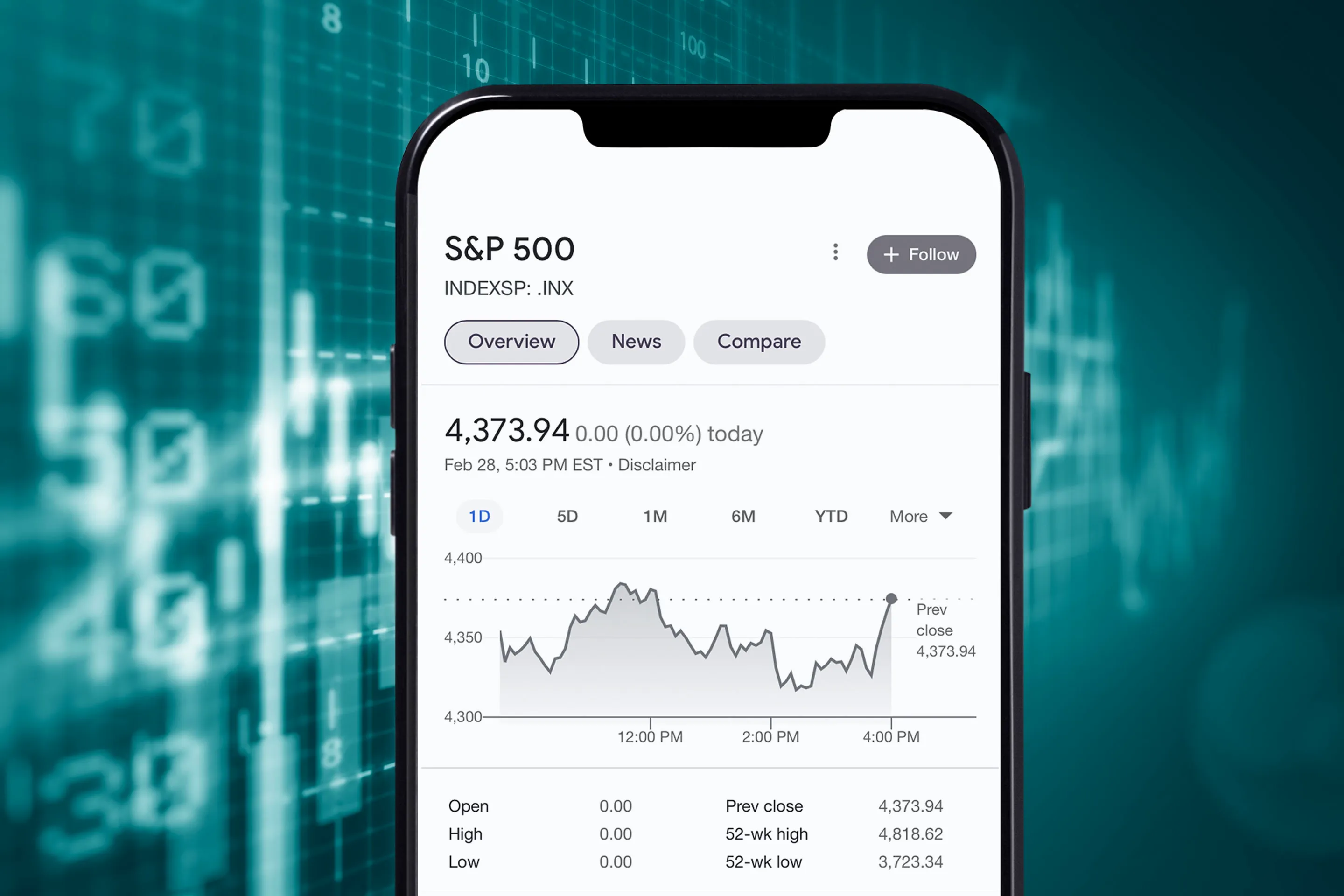
The S&P 500, or Standard & Poor's 500 Index, is a stock market index tracking the stock performance of roughly 500 of the largest companies listed on stock exchanges in the United States. Maintained by S&P Dow Jones Indices, it is widely regarded as one of the best gauges of large-cap U.S. equities and the broader American economy. Because it is market-capitalization-weighted, companies with larger market values have a higher representation in the index's overall performance.
Investors cannot buy an index directly because it is simply a statistical benchmark. Instead, they must utilize investment products that replicate or track the performance of the index. Choosing the right vehicle depends on factors such as account minimums, trading frequency, expense ratios, and individual tax strategies. Below are 10 distinct ways to gain exposure to the S&P 500, ranging from passive long-term vehicles to advanced derivative strategies.
1. Exchange-Traded Funds (ETFs)
Exchange-Traded Funds represent one of the most popular and accessible methods for retail and institutional investors to track the S&P 500. An S&P 500 ETF holds a basket of stocks that mirrors the index and trades on a public stock exchange throughout the normal trading day just like an individual stock.
- Mechanics: You purchase shares of the ETF through a standard brokerage account at real-time market prices.
- Cost Efficiency: Major S&P 500 ETFs feature exceptionally low expense ratios, often dipping below 0.05% annually.
- Liquidity and Flexibility: Because they trade on secondary markets, investors can execute limit orders, stop-loss orders, and even engage in options trading against their ETF positions.
- Examples: Vanguard S&P 500 ETF (VOO), SPDR S&P 500 ETF Trust (SPY), and iShares Core S&P 500 ETF (IVV).
2. Index Mutual Funds
Index mutual funds pool money from multiple investors to purchase a portfolio of stocks designed to match the financial performance of the S&P 500. Unlike ETFs, mutual funds are priced only once per business day after the market closes.
- Mechanics: Transactions are executed directly through a mutual fund provider or brokerage at the Net Asset Value (NAV) calculated at the end of the trading session.
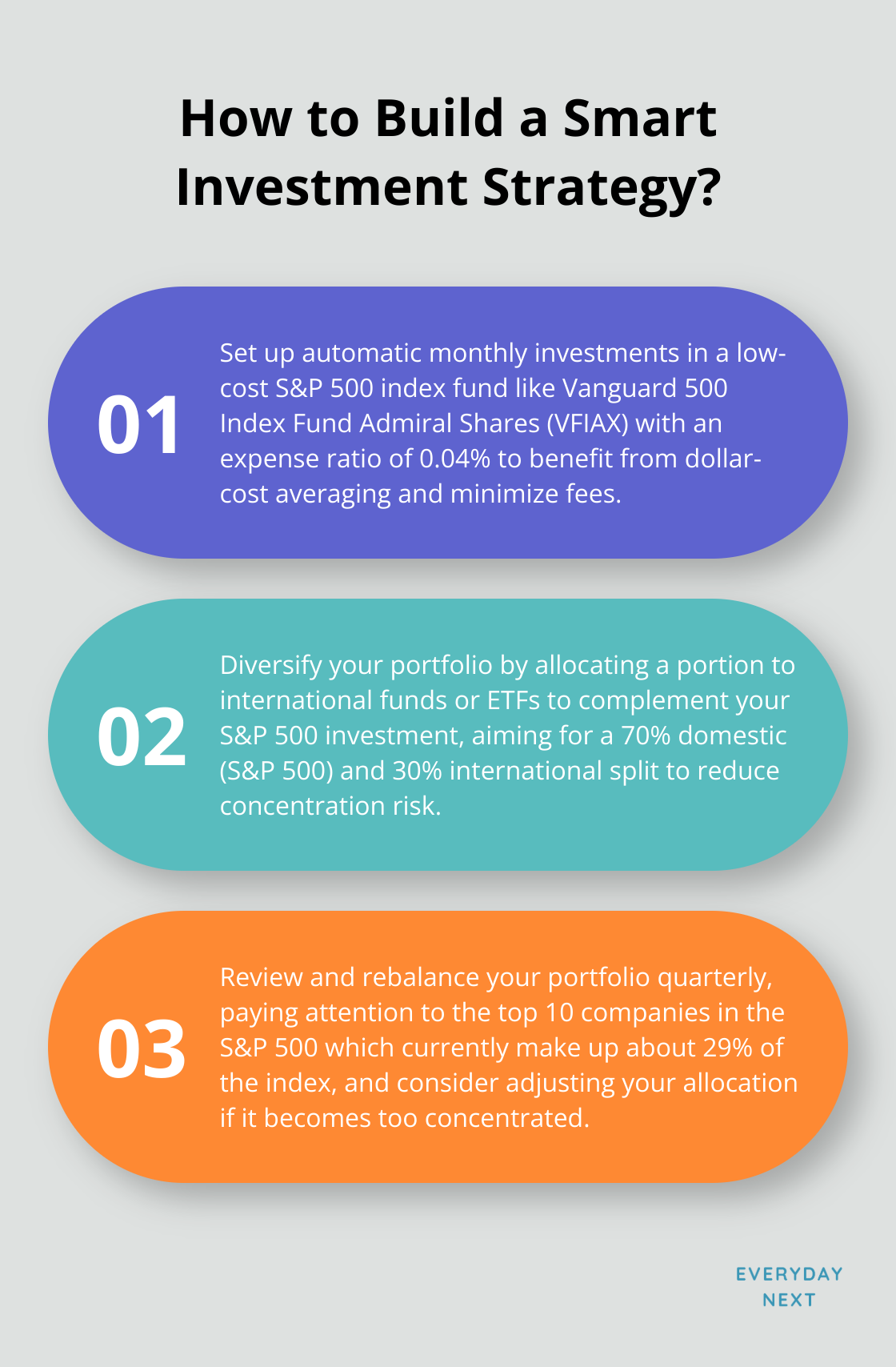
- Automation: Index mutual funds excel at enabling automatic recurring investments, making them a cornerstone for disciplined, hands-off dollar-cost averaging strategies.
- Dividend Reinvestment: Dividends are automatically reinvested without transaction friction, helping compound returns over decades.
- Examples: Vanguard 500 Index Fund Admiral Shares (VFIAX) and Fidelity 500 Index Fund (FXAIX).
3. Direct Indexing (Buying All 500 Stocks)
Direct indexing involves purchasing the individual stocks that comprise the S&P 500 in their exact index weights, rather than buying a bundled fund. While historically restricted to ultra-high-net-worth individuals with substantial capital, modern fractional-share trading and specialized robo-advisors have brought this strategy within reach of everyday investors.
- Customization: Investors can tailor their holdings to exclude specific sectors or companies for ethical, personal, or risk-management reasons.
- Tax-Loss Harvesting: Direct indexing allows software platforms to harvest individual stock losses throughout the year to offset capital gains, potentially improving after-tax returns compared to a single monolithic fund.
- Complexity and Maintenance: Rebalancing a 500-stock portfolio requires significant capital to avoid fractional share constraints and demands robust software automation to track index adjustments.
4. Fractional Shares of S&P 500 Component Stocks
If purchasing the entire index or even a single high-priced share of certain blue-chip index constituents is cost-prohibitive, fractional share investing offers an alternative. Many modern online brokerages allow investors to buy fractions of a share based on a dollar amount rather than whole-share counts.
- Accessibility: An investor can allocate a small sum (e.g., $10 or $50) to purchase fractional slices of top index constituents like Microsoft, Apple, or Nvidia.
- Targeted Exposure: Investors can hand-pick top performers or heavyweights within the S&P 500 rather than holding the entire index, though this introduces single-stock risk that deviates from true index tracking.
5. S&P 500 Futures Contracts
For institutional investors, sophisticated traders, or those seeking leverage, S&P 500 futures contracts provide a direct derivative avenue. Standard futures contracts (ticker: ES) and micro E-mini futures contracts (ticker: MES) trade on the Chicago Mercantile Exchange (CME).
- Leverage: Futures require a margin deposit that represents only a fraction of the total contract value, magnifying both potential gains and losses.
- Extended Hours: Futures markets trade nearly 24 hours a day during the workweek, allowing investors to hedge against overnight market movements.
- Expiration Dates: Unlike stocks or ETFs, futures contracts have expiration dates and must be rolled over to future contract months to maintain a long-term position.
6. S&P 500 Options
Options contracts give the buyer the right, but not the obligation, to buy or sell S&P 500 index products (such as SPY ETFs or cash-settled SPX index options) at a predetermined strike price before a specified expiration date.
- Hedging: Investors use options, such as buying protective puts, to insure their underlying portfolios against sudden market downturns.
- Income Generation: Strategies like selling covered calls or cash-secured puts allow investors to generate premium income from their existing S&P 500 exposure.
- High Risk: Options decay in value over time (theta decay) and can expire worthless, requiring advanced risk management and technical knowledge.
7. Unit Investment Trusts (UITs)
A Unit Investment Trust is an investment company that buys and holds a fixed portfolio of securities—such as the stocks of the S&P 500—for a specified lifespan. Unlike mutual funds or ETFs, UITs have a fixed termination date and generally do not actively trade their portfolio contents.
- Fixed Portfolio: The portfolio remains static from creation to termination, providing absolute transparency regarding holdings.
- Historical Context: The most famous S&P 500 UIT is SPY (SPDR S&P 500 ETF Trust), which technically operates under a UIT structure, though most modern retail investors interact with it as a standard ETF.
- Fees and Structure: UITs often carry higher upfront sales charges or termination fees compared to modern open-ended index funds and ETFs.
8. S&P 500 Index Annuities (Registered Index-Linked Annuities / RILAs)
Registered Index-Linked Annuities (RILAs) and fixed index annuities are insurance contracts tied to the performance of the S&P 500. They offer a compromise between market participation and downside protection.
- Principal Protection: Many structures offer a buffer or floor that absorbs a certain percentage of market losses (e.g., protecting against the first 10% or 20% of losses), limiting severe portfolio drawdowns.
- Upside Caps: In exchange for downside protection, insurance companies cap the maximum returns an investor can receive during a given period.
- Fees and Illiquidity: Annuities often feature complex surrender charges, administrative fees, and high surrender periods, making them less suitable for liquid, short-term capital.
9. Sector-Specific ETFs (Replicating the S&P 500 via Segments)
Investors can approximate the performance of the S&P 500 by purchasing a combination of sector-specific Select Sector SPDR ETFs that break the index down into its constituent Global Industry Classification Standard (GICS) sectors.
- Granular Control: Allows investors to overweight sectors they believe will outperform (such as Information Technology or Healthcare) while underweighting lagging sectors.
- Strategic Tilting: Requires manual rebalancing to match the exact weightings of the broader S&P 500 if true index replication is desired.
- Examples: Technology Select Sector SPDR Fund (XLK), Financial Select Sector SPDR Fund (XLF), and Health Care Select Sector SPDR Fund (XLV).
10. Robo-Advisors and Managed Portfolios
Robo-advisors are automated digital platforms that build and manage investment portfolios based on an individual's risk tolerance, time horizon, and financial goals. Most robo-advisors utilize low-cost S&P 500 or total-stock-market ETFs as the foundational building blocks of their portfolios.
- Hands-Off Management: The platform automatically handles dividend reinvestment, portfolio rebalancing, and tax-loss harvesting.
- Management Fees: Robo-advisors typically charge a small annual management fee (usually around 0.25% of assets under management) on top of the underlying ETF expense ratios.
- Accessibility: Low or zero account minimums make this an ideal starting point for absolute beginners entering the market.
Comparison of Common S&P 500 Investment Vehicles
| Investment Method | Typical Expense Ratio | Liquidity | Best Suited For | Complexity Level |
|---|---|---|---|---|
| S&P 500 ETFs | Very Low (0.03% - 0.09%) | High (Intraday) | Active and passive retail investors | Low |
| Index Mutual Funds | Very Low (0.01% - 0.15%) | End-of-Day | Long-term retirement savers, automated investing | Low |
| Direct Indexing | Variable (Platform dependent) | Varies | High-net-worth investors seeking tax customization | High |
| Fractional Shares | Dependent on Brokerage | High (Market hours) | Small-budget investors building custom baskets | Moderate |
| S&P 500 Futures | Low commission, high margin | Extremely High | Institutional traders and hedgers | Expert |
Frequently Asked Questions
What is the absolute cheapest way to invest in the S&P 500?
The cheapest methods are typically low-cost index funds and ETFs offered by major institutions such as Vanguard, Fidelity, and Schwab. Expense ratios for these core funds often range from 0.01% to 0.03%, meaning you pay $1 to $3 annually for every $10,000 invested. Choosing a broker with zero commission fees on stock and ETF trades further minimizes transaction overhead.
Can I lose money investing in the S&P 500?
Yes. The S&P 500 consists entirely of equities, which fluctuate in value based on market conditions, economic cycles, and corporate earnings. While the index has historically generated positive annualized returns over multi-decade horizons, severe bear markets can cause temporary portfolio drawdowns exceeding 20% to 30%. Investors should align their time horizons accordingly.
Which is better for beginners: an S&P 500 ETF or a mutual fund?
Both vehicles offer identical underlying stock exposure, but they operate differently. ETFs trade throughout the day and require manual purchases, whereas mutual funds process orders once daily and excel at setting up automatic recurring deposits. Beginners desiring a set-it-and-forget-all retirement contribution schedule often prefer mutual funds or automated ETF platforms, while those who want intraday execution prefer ETFs.
Do S&P 500 funds pay dividends?
Yes. The companies within the S&P 500 frequently distribute quarterly dividends to their shareholders. When you own an S&P 500 ETF or mutual fund, the fund collects these dividends and either distributes them to you in cash or automatically reinvests them to purchase additional fractional shares of the fund, depending on your account settings.
Do I need a large amount of money to start investing in the S&P 500?
No. Thanks to fractional share trading, zero-minimum index funds, and low-cost ETFs, an investor can begin purchasing exposure to the S&P 500 with as little as $1 or $5. This accessibility has democratized long-term wealth building for retail investors at all income levels.
Next Steps for Investors
To begin investing in the S&P 500, select a reputable brokerage firm that aligns with your trading style and account requirements (such as a taxable brokerage account, Traditional IRA, or Roth IRA). Fund your account, choose between an ETF or index fund for low-cost, diversified exposure, and establish a consistent contribution schedule to harness the power of long-term compounding.