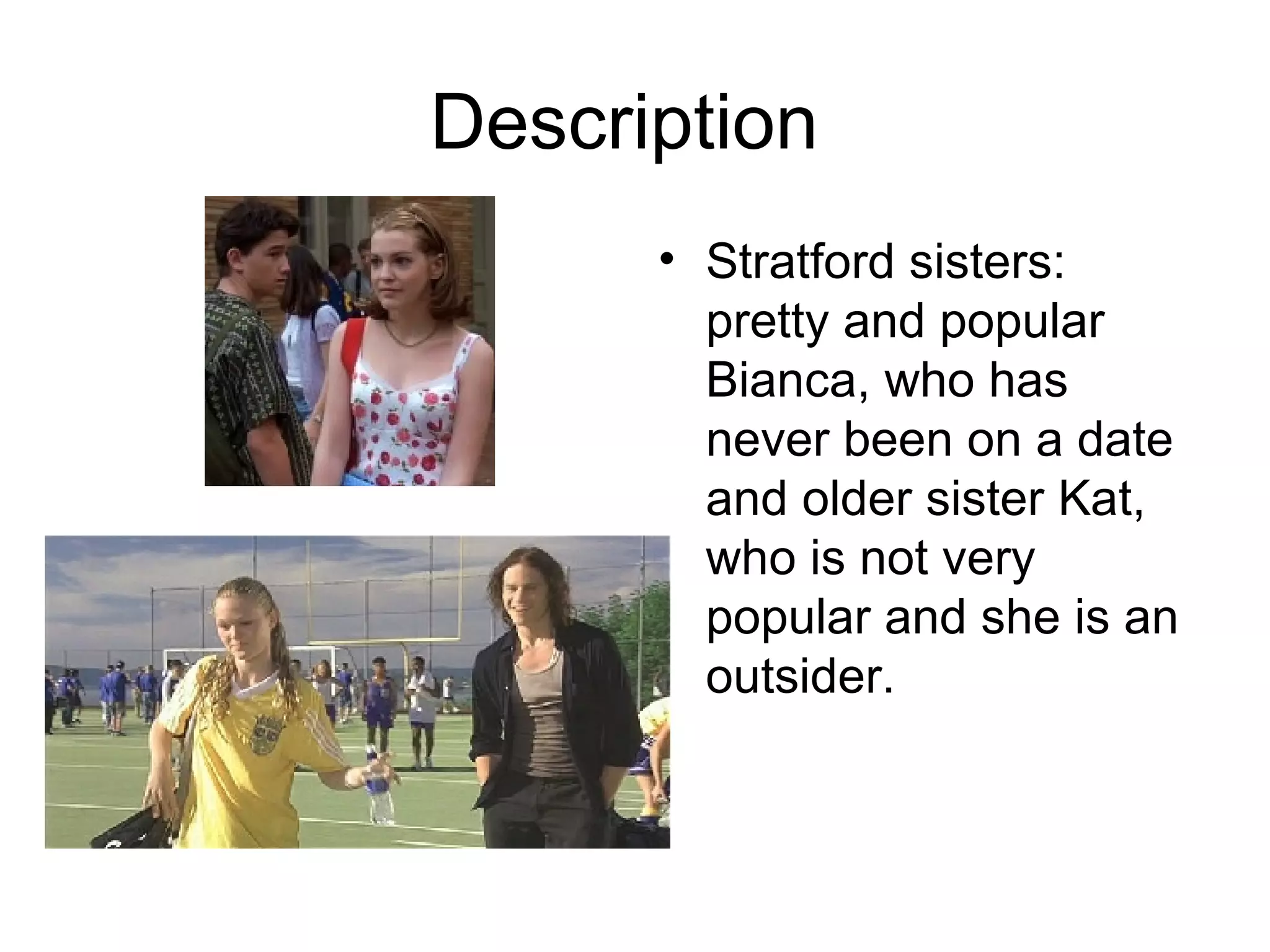
The famous poem delivered by Kat Stratford in the 1999 teen comedy classic 10 Things I Hate About You remains one of the most memorable moments in modern cinematic history. While the title of this cultural touchstone often gets playfully inverted or referenced as "10 things Bianca hates about you"—nodding to Bianca Stratford, Kat’s hyper-popular, status-driven younger sister—the core emotional architecture of the film's climax centers on Kat’s raw, unfiltered grievances. Examining the grievances, the dynamics between the sisters, and the cinematic context reveals why this text continues to resonate deeply with audiences across generations.
The Cinematic Context: Understanding the Stratford Sisters
To understand the weight of the list, one must first look at the dynamic between Kat and Bianca Stratford at Padua High School. Directed by Gil Junger and loosely based on William Shakespeare’s The Taming of the Shrew, the film establishes a stark contrast between the two siblings from the opening scenes.
Bianca embodies high school social hierarchy, popularity, and normative romantic aspirations. She cares deeply about fashion, dating protocols, and fitting in. Kat, conversely, is an unapologetic feminist, an independent thinker, an avid reader of Sylvia Plath and Riot Grrrl zines, and entirely unconcerned with adolescent social validation.
When a complex web of high school matchmaking forces Patrick Verona to court Kat as part of a paid scheme so that Cameron James can date Bianca, the stage is set for an emotional collision. The climax of the film hinges on Kat discovering the financial arrangement behind Patrick's initial attention, leading to her public, tearful recitation of her poem in front of her English class.
Breaking Down the Grievances: Themes in Kat’s List
While the movie features a comedic framing of teenage romance, Kat's poem touches on authentic vulnerabilities. The grievances she lists are not merely petty complaints about a boyfriend's habits; they are a defense mechanism designed to mask deep emotional pain. When she recites lines highlighting the way Patrick talks to her, the way he cuts his hair, and how she hates that she cannot stay mad at him, the subtext is clear: she hates him because she loves him, and that vulnerability terrifies her.
If one were to reverse the perspective and imagine a hypothetical list of "things Bianca hates about you," the framing would shift dramatically away from literary introspection and toward social navigation. Bianca’s grievances would likely involve violations of high school etiquette, failures to secure proper social standing, or disruptions to her carefully managed dating life.
Comparison of Character Perspectives and Grievances
| Character | Core Motivation | Primary Source of Frustration | Approach to Conflict |
|---|---|---|---|
| Kat Stratford | Authenticity, intellectual independence, emotional self-preservation | Conformity, superficiality, betrayal of trust | Confrontational, articulate, deeply emotional |
| Bianca Stratford | Social acceptance, popularity, romantic validation | Embarrassment, social isolation, rigid parental rules | Manipulative, adaptive, image-conscious |
| Patrick Verona | Financial gain shifting into genuine affection | Emotional walls, unpredictable variables | Stoic, persistent, performative bravado |
The Cultural Legacy of the Poem
The poem recited by Julia Stiles in the role of Kat has transcended the film itself, becoming a template for parody, homage, and analysis in popular culture. It captures a specific brand of teenage angst that avoids feeling entirely trite because it is anchored in genuine literary and emotional references.
The structure of the poem relies on a rhetorical device where negative statements ("I hate the way you talk to me") gradually peel back to reveal a singular, overwhelming positive truth ("I hate you so much it makes me ill... even a little bit, even at all"). This emotional turnaround transforms what starts as a public shaming into a profound romantic confession.
Practical Lessons on Vulnerability and Communication
Beyond its entertainment value, the climax of 10 Things I Hate About You offers valid insights into interpersonal communication and emotional defense mechanisms:
- Recognizing Defense Mechanisms: People often use anger or feigned hatred to push away those who have the power to hurt them. Identifying this pattern helps in both personal relationships and media analysis.
- The Danger of Transactional Relationships: The conflict in the film arises because Patrick's courtship begins as a paid transaction. True emotional intimacy cannot be sustained on hidden motives or financial backing.
- Authenticity Over Conformity: Kat’s refusal to compromise her values makes her an enduring cinematic role model. She demonstrates that standing firm in one's beliefs does not preclude experiencing deep affection or romantic connection.
Frequently Asked Questions
What is the actual poem recited in 10 Things I Hate About You?
The poem is an original piece written for the film by screenwriter Karen McCullah. It consists of ten distinct grievances about Patrick Verona, concluding with the admission that Kat hates him because she loves him too much to stay away.
Is Bianca the main focus of the movie's climax?
No. While Bianca drives much of the secondary plot regarding who can date whom, the emotional climax belongs entirely to Kat and her realization of betrayal and subsequent vulnerability regarding Patrick.
How does the film adapt Shakespeare's The Taming of the Shrew?
The movie modernizes the plot of Shakespeare's play by setting it in an American high school. Kat represents the shrewish Katherina, Bianca plays the sought-after Bianca, and Patrick Verona takes on the role of Petruchio, tamed not by force, but by mutual respect and vulnerability.
Why do people reference "things Bianca hates"?
References to Bianca usually play on her status-obsessed, highly social persona from the first half of the film, creating a humorous contrast to Kat's brooding, intellectual intensity.
Final Recommendation
When revisiting 10 Things I Hate About You or analyzing its iconic literary moments, look past the romantic comedy tropes to examine how character motivations drive the narrative. Appreciating the nuance between Kat's protective cynicism and Bianca's social aspirations provides a richer understanding of late-90s teen cinema and its enduring appeal.