As global markets adapt to tightening environmental regulations, shifting consumer preferences, and accelerating weather volatility, climate change has transformed from an ethical imperative into a massive engine for commercial innovation. The businesses gaining traction today are those moving beyond basic carbon offsets to build scalable, economically viable infrastructure that addresses decarbonization, adaptation, and resource efficiency. Examining these emerging sectors reveals how entrepreneurs are turning environmental challenges into long-term enterprise value.
1. Direct Air Capture and Carbon Removal Services
Direct Air Capture (DAC) technologies utilize chemical or physical processes to extract carbon dioxide ($CO_2$) directly from ambient air. Once captured, this gas can be permanently stored in deep geological formations or upcycled into synthetic fuels and building materials.
While heavy capital expenditure has historically limited DAC to large industrial players, the business model is shifting toward modular, scalable units. Companies are now offering Carbon Removal as a Service (CRaaS) to corporate clients looking to neutralize hard-to-abate emissions.
- Primary Revenue Streams: Corporate carbon credit sales, licensing of capture units, and government grants.
- Operational Challenges: High energy consumption per ton of $CO_2$ removed and the need for dedicated renewable energy integration.
- Key Growth Driver: Escalating corporate net-zero commitments coupled with tightening compliance standards under frameworks like the European Union's Corporate Sustainability Reporting Directive (CSRD).
2. Next-Generation AgTech and Soil Carbon Sequestration
Agriculture is both a major contributor to global greenhouse gas emissions and one of the sectors most vulnerable to climate disruption. Next-generation AgTech ventures are bridging this gap by commercializing precision farming tools that optimize fertilizer use, reduce methane emissions from livestock, and incentivize soil carbon sequestration.
Startups in this space deploy Internet of Things (IoT) sensors, satellite telemetry, and AI-driven soil testing to verify how much carbon a farmer stores through regenerative practices. This verified data is then packaged into high-integrity carbon credits sold to corporate buyers.
- Primary Revenue Streams: Software-as-a-Service (SaaS) subscription fees for farm management platforms, marketplace commissions on carbon credit transactions, and hardware sales.
- Operational Challenges: High fragmentation among smallholder farmers and the verification costs associated with measuring soil carbon persistence over decades.
- Key Growth Driver: Increasing demand for traceable supply chains from food conglomerates seeking to lower their Scope 3 agricultural emissions.
3. Circular Economy and Textile Recycling Tech
The fashion and textile industries account for a significant share of global waste and water pollution. Circular economy business models focus on eliminating waste entirely through closed-loop systems, but the real technological bottleneck has been automated textile sorting and chemical recycling.
New ventures are developing enzymatic and hydrothermal processes to break blended fabrics (such as cotton-polyester blends) back into their original virgin-quality monomers. This allows apparel brands to manufacture new garments from post-consumer waste without relying on virgin petroleum or cotton farming.
| Recycling Method | Primary Input | Output Quality | Main Operational Limitation |
|---|---|---|---|
| Mechanical Recycling | Sorted mono-materials | Lower tensile strength | Degrades fiber length over repeated cycles |
| Chemical/Enzymatic | Blended fabrics | Virgin-equivalent | High chemical and energy input requirements |
| Thermal Processing | Mixed municipal textiles | Syn-gas or oils | Requires large-scale industrial facilities |
4. Climate Resilience and Adaptation Consulting
As extreme weather events increase in frequency and severity, businesses can no longer focus solely on mitigation; they must adapt to physical climate risks. Climate resilience consulting firms use predictive climate modeling, geographic information systems (GIS), and financial risk analysis to help real estate developers, municipalities, and financial institutions protect their physical assets.
These firms evaluate flood risks, heat stress vulnerabilities, and sea-level rise projections over 30-to-50-year horizons, translating climate data into actionable capital expenditure blueprints.
- Primary Revenue Streams: Retainer-based consulting, specialized risk-assessment software licensing, and engineering design services.
- Operational Challenges: Shortage of specialized climate scientists and data modelers who understand both macro-climate physics and corporate finance.
- Key Growth Driver: Mandatory climate risk disclosures required by financial regulators and stock exchanges globally.
5. Decentralized Microgrids and Virtual Power Plants
The transition to intermittent renewable energy sources like solar and wind places immense strain on traditional centralized electrical grids. Decentralized microgrids combined with Virtual Power Plants (VPPs) aggregate distributed energy resources—such as rooftop solar panels, home battery storage systems, and electric vehicle (EV) chargers—into a cohesive, software-managed energy network.
When grid demand spikes, VPP software dispatches stored energy back into the main grid or coordinates load-shifting among participating households and commercial buildings, compensating consumers for their participation.
- Primary Revenue Streams: Software platform fees, grid-balancing service contracts with utility companies, and energy arbitrage margins.
- Operational Challenges: Complex regulatory frameworks across different utility jurisdictions and legacy grid infrastructure that lacks bidirectional communication capabilities.
- Key Growth Driver: Rapid electrification of transport and heating combined with grid instability caused by extreme weather events.
6. Sustainable Cold Chain and Green Logistics
Global supply chains consume vast amounts of energy for refrigeration and long-haul freight transport. Sustainable logistics businesses are redesigning the cold chain—the temperature-controlled supply chain essential for food and pharmaceuticals—using phase-change materials, solar-powered refrigeration units, and AI-optimized routing software.
Additionally, startups are introducing electric and hydrogen-fuel-cell heavy-duty trucks paired with smart-charging depots, drastically cutting Scope 1 emissions in freight transport.
- Primary Revenue Streams: Freight service contracts, hardware leasing of eco-friendly refrigerated containers, and fleet management software subscriptions.
- Operational Challenges: High upfront capital costs for electric or hydrogen heavy-duty vehicles and underdeveloped refueling infrastructure outside major corridors.
- Key Growth Driver: Retailer commitments to decarbonize Scope 3 logistics and tighter fuel-efficiency standards for commercial fleets.
7. Alternative Proteins and Cellular Agriculture
Livestock farming is responsible for a substantial portion of global methane emissions and land-use change. Alternative protein companies are tackling this challenge through plant-based innovations, precision fermentation (using micro-organisms to produce dairy and egg proteins), and cellular agriculture (growing real meat from animal cells).
These technologies bypass the resource-intensive feed-to-meat conversion ratio of traditional livestock farming, significantly reducing water use and greenhouse gas output.
- Primary Revenue Streams: Wholesale distribution to food service operators, direct-to-consumer sales, and ingredient licensing to major food brands.
- Operational Challenges: Scaling manufacturing bioreactors, navigating complex regulatory approval processes for novel foods, and achieving price parity with conventional meat.
- Key Growth Driver: Changing consumer dietary preferences toward health-conscious and lower-carbon food options.
8. Building Retrofitting and Energy Efficiency PropTech
Existing buildings account for a major share of global energy consumption, largely due to inefficient heating, ventilation, air conditioning (HVAC), and poor insulation. Property Technology (PropTech) startups are providing hardware-software integrations that automate energy management in commercial and multi-family residential buildings.
These platforms monitor occupancy patterns, adjust climate controls dynamically, and identify structural thermal leaks using infrared drone imaging, helping building owners reduce operational carbon and utility expenditures simultaneously.
- Primary Revenue Streams: SaaS subscription fees based on square footage managed, hardware installation margins, and shared-savings contracts where the vendor takes a percentage of reduced utility bills.
- Operational Challenges: Split incentives between landlords (who pay for capital upgrades) and tenants (who pay utility bills), along with the friction of retrofitting older, historical structures.
- Key Growth Driver: Municipal building performance standards and carbon penalties levied on properties exceeding specific emissions thresholds.
9. Water Scarcity and Advanced Desalination Solutions
Water scarcity is intensifying across numerous global regions, threatening agricultural yields and municipal stability. Traditional desalination methods are energy-intensive and produce hypersaline brine waste that damages marine ecosystems.
Innovative water tech businesses are deploying energy-efficient membrane technologies, such as graphene-oxide filters, and modular, solar-powered desalination units. Others are pioneering closed-loop industrial wastewater recycling systems that allow factories to purify and reuse their water intake indefinitely.
- Primary Revenue Streams: Equipment sales, build-own-operate-transfer (BOOT) contracts with municipal governments, and industrial water-as-a-service agreements.
- Operational Challenges: High capital expenditure for large-scale water treatment plants and strict environmental permitting regarding brine discharge.
- Key Growth Driver: Declining groundwater reserves and prolonged drought conditions in major agricultural and metropolitan centers.
10. Biodiversity and Natural Capital Accounting
While carbon has dominated environmental markets, biodiversity loss poses an equally severe systemic risk to the global economy. A new category of climate businesses is emerging around natural capital accounting—platforms that use remote sensing, acoustic monitoring, and eDNA (environmental DNA) sampling to measure, value, and trade biodiversity credits.
These businesses enable corporations and landowners to quantify ecosystem restoration projects, creating verifiable credits that can be used to meet corporate nature-positive targets.
- Primary Revenue Streams: Assessment and auditing fees, platform subscriptions for biodiversity monitoring, and marketplace transaction fees for biodiversity credits.
- Operational Challenges: Lack of standardized global metrics for biodiversity and early-stage regulatory recognition compared to carbon markets.
- Key Growth Driver: The Taskforce on Nature-related Financial Disclosures (TNFD) framework and growing investor awareness of ecological dependencies.
Frequently Asked Questions
What are the main drivers for climate change businesses?
The primary drivers include tightening government regulations, investor pressure through ESG (Environmental, Social, and Governance) mandates, corporate net-zero commitments, and shifting consumer demand for sustainable products and services.
How do climate businesses generate reliable revenue?
Many climate ventures utilize recurring revenue models such as Software-as-a-Service (SaaS) for energy management, long-term corporate offtake agreements for carbon removal, or performance-based contracts where earnings are tied directly to verified energy or emissions reductions.
Are climate tech startups considered high-risk investments?
Yes, many climate tech ventures—particularly those involving physical infrastructure, hardware, or deep tech like DAC and cellular agriculture—require substantial upfront capital and longer development timelines compared to traditional software startups, though government grants and venture capital syndicates help mitigate these risks.
What is the difference between climate mitigation and climate adaptation businesses?
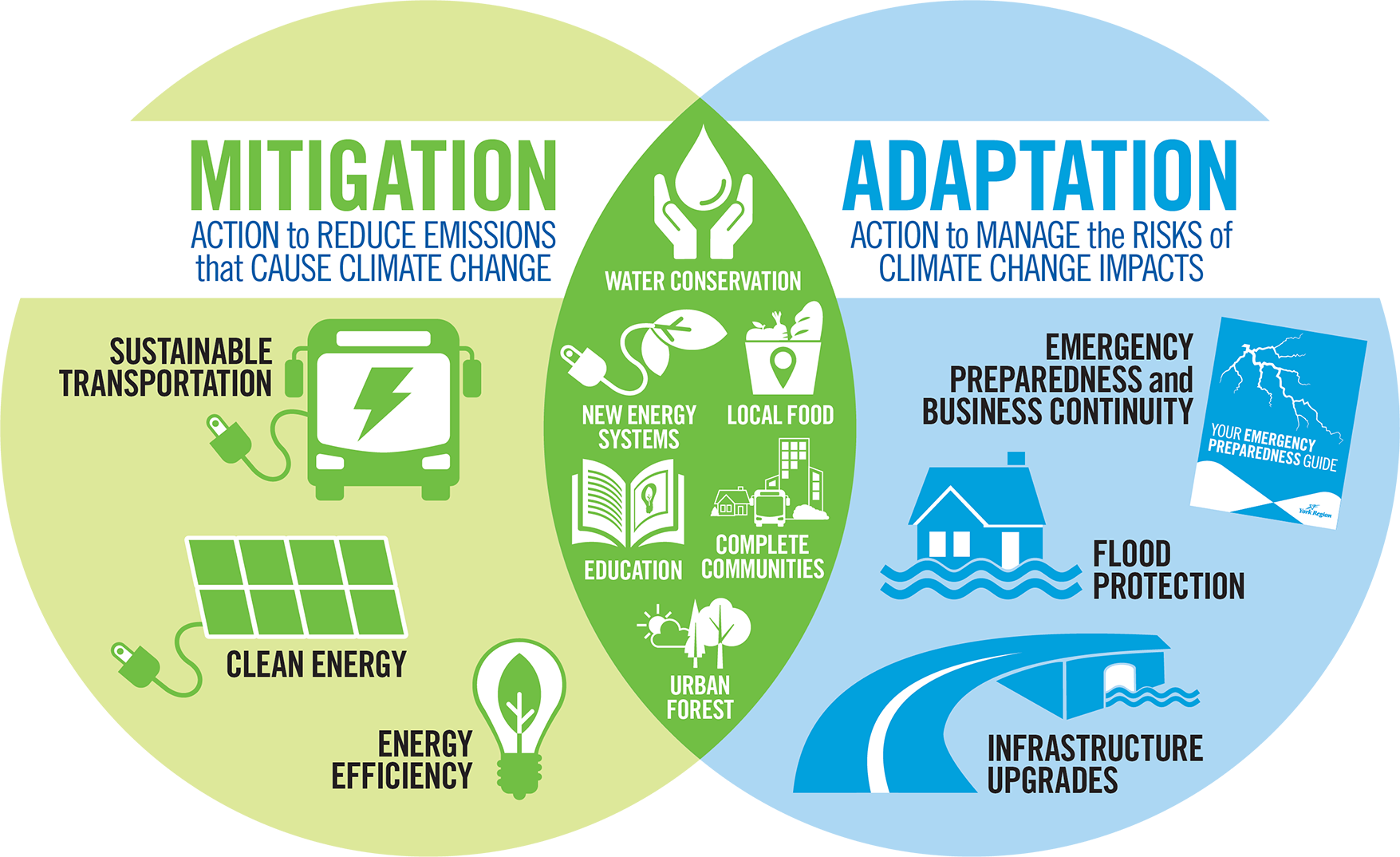
Climate mitigation businesses focus on reducing greenhouse gas emissions to prevent further warming (e.g., renewable energy, carbon capture), whereas climate adaptation businesses help society and infrastructure cope with the unavoidable physical impacts of climate change that are already occurring (e.g., flood defenses, resilient agriculture).
How can small businesses participate in the climate economy?
Small businesses can participate by auditing their own supply chains, adopting energy-efficient building technologies, offering eco-friendly product lines, and utilizing carbon-accounting software to measure and reduce their operational footprint.
Next Action for Entrepreneurs and Investors
Evaluating opportunities in the climate sector requires looking beyond general trends to identify specific technological bottlenecks where regulatory pressure meets commercial viability. Conduct a thorough regulatory assessment in your target jurisdiction, verify the scalability of the underlying technology, and prioritize business models that offer immediate cost-saving or compliance benefits to enterprise customers.