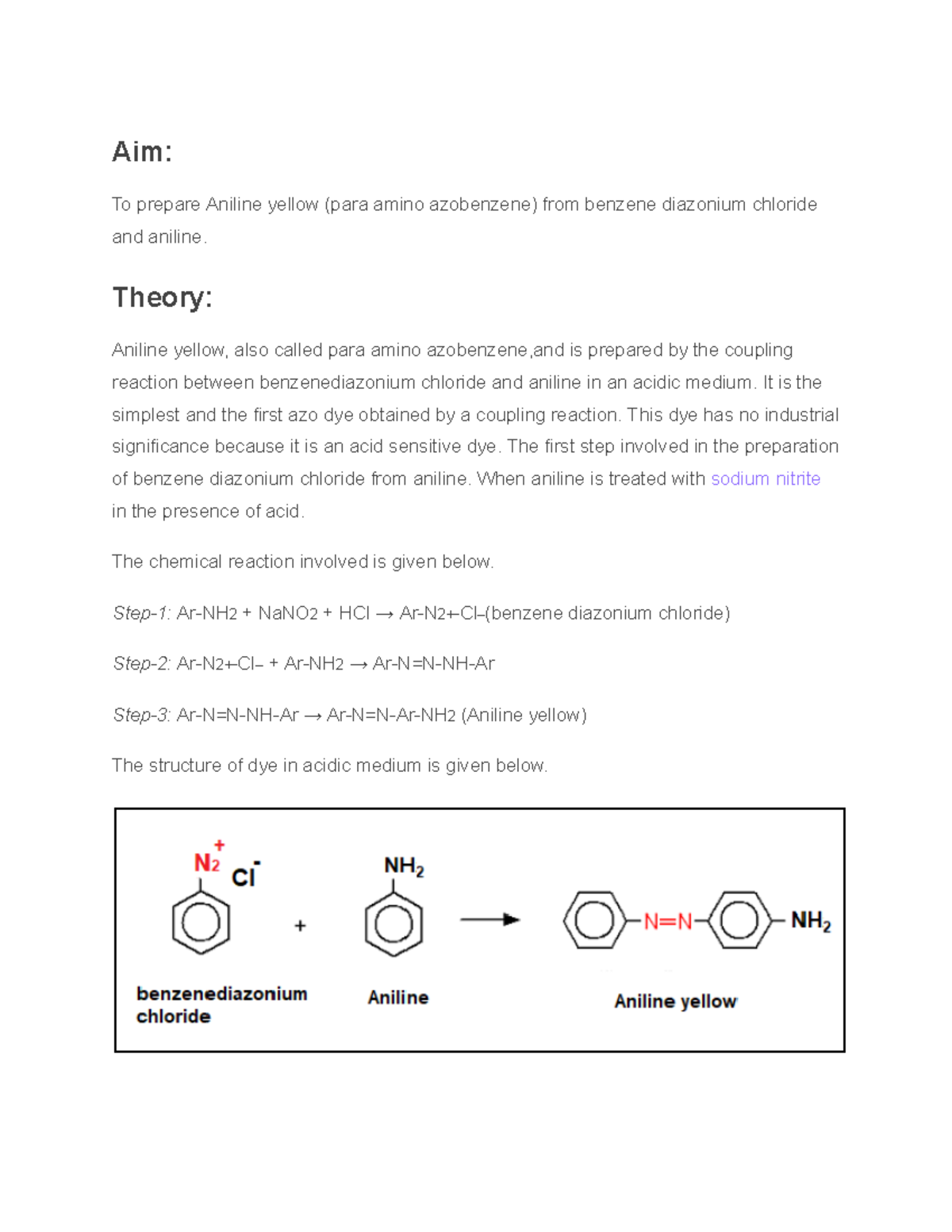
The chemical compound described as 1-NH2 benzene is more commonly and officially known as aniline. In systematic IUPAC nomenclature, it is referred to as aminobenzene or phenylamine, representing a benzene ring where a single hydrogen atom has been replaced by a functional amino group (-NH2).
Aniline serves as the simplest aromatic amine and functions as a foundational building block in the global chemical industry. As of 2026, it remains an indispensable precursor for the production of polyurethanes, synthetic dyes, rubber processing chemicals, and various pharmaceuticals. Understanding the relationship between the structure of 1-NH2 benzene and its chemical behavior is essential for students of organic chemistry and professionals in industrial manufacturing.
The Nomenclature and Structure of 1-Aminobenzene
To understand why 1-NH2 benzene is aniline, one must look at the rules of organic nomenclature. Benzene ($C_6H_6$) is a hexagonal ring of six carbon atoms with delocalized pi electrons. When we speak of "1-NH2 benzene," the "1" indicates the position on the ring where the substituent—in this case, the amino group—is attached. Since all positions on a standalone benzene ring are equivalent, the "1" is often omitted in shorthand, making "aminobenzene" the standard systematic term.
The Phenyl and Amine Relationship
Aniline consists of a phenyl group ($C_6H_5-$) attached to an amino group ($-NH_2$). This combination creates a molecule with the molecular formula $C_6H_7N$. The presence of the nitrogen atom, which possesses a lone pair of electrons, fundamentally changes the electronics of the benzene ring. Unlike aliphatic amines (like methylamine), the lone pair on the nitrogen in aniline is not entirely "available" for bonding because it undergoes resonance with the delocalized pi system of the benzene ring.
Molecular Geometry and Hybridization
In a perfectly isolated environment, the nitrogen in an amine group might be expected to be $sp^3$ hybridized with a pyramidal shape. However, in 1-NH2 benzene, the interaction between the nitrogen lone pair and the aromatic ring leads to a flatter, more planar geometry. This partial $sp^2$ character is a result of the lone pair's conjugation with the ring's orbital system. This delocalization is the primary reason why aniline is a significantly weaker base than its aliphatic counterparts.
Physical and Chemical Properties of Aniline
As of 2026, the physical characterization of aniline remains consistent with historical data, though our methods of measurement and purification have reached unprecedented precision. Pure aniline is a colorless, oily liquid, but it is notorious for darkening to a reddish-brown hue upon exposure to air and light due to oxidation.
Key Physical Constants
Aniline possesses a characteristic, somewhat unpleasant odor often described as "fishy" or "musty," similar to many other amines. It is slightly soluble in water (approximately 3.4g/100mL at 20°C) but is completely miscible with most organic solvents, including ethanol, benzene, and ether.
| Property | Value/Description |
|---|---|
| Molecular Formula | $C_6H_7N$ |
| Molar Mass | 93.13 g/mol |
| Boiling Point | 184.1 °C (363.4 °F) |
| Melting Point | -6.3 °C (20.7 °F) |
| Density | 1.0217 g/cm³ |
| Refractive Index | 1.586 |
| pKa of Conjugate Acid | ~4.6 |
Chemical Reactivity: The Activating Effect
In the context of electrophilic aromatic substitution, the -NH2 group is a powerful activating group and an ortho/para director. Because the nitrogen atom donates electron density into the ring through resonance, the ring becomes much more nucleophilic than benzene itself.
For example, when reacting aniline with bromine water, the reaction occurs so rapidly that it does not require a catalyst (like $FeBr_3$) and typically results in trisubstitution, forming 2,4,6-tribromoaniline. This high reactivity necessitates the use of "protecting groups," such as the acetyl group in the synthesis of acetanilide, when a chemist wishes to perform a controlled monosubstitution on the ring.
Industrial Synthesis of Aniline
The production of aniline is a high-volume industrial process. While laboratory-scale synthesis might involve the reduction of nitrobenzene using tin and hydrochloric acid, industrial methods in 2026 favor efficiency and catalytic sustainability.
1. Catalytic Hydrogenation of Nitrobenzene
The most common industrial route involves the vapor-phase hydrogenation of nitrobenzene. Nitrobenzene ($C_6H_5NO_2$) is reacted with hydrogen gas ($H_2$) in the presence of a metal catalyst, typically copper, silica, or a noble metal like palladium.
- Reaction: $C_6H_5NO_2 + 3H_2 \rightarrow C_6H_5NH_2 + 2H_2O$
- Advantage: This process is highly exothermic and allows for significant heat recovery, which is used to power other parts of the chemical plant.
2. The Bechamp Reduction
Though older, the Bechamp reduction—using iron filings and water in the presence of a small amount of hydrochloric acid—is still utilized in specific regions or for producing certain grades of aniline where the iron oxide byproduct ($Fe_3O_4$) can be sold as a pigment. This reflects the "circular economy" goals of 2026, where byproducts are integrated into secondary supply chains.
3. Amination of Phenol
A less common but still relevant route is the reaction of phenol with ammonia. This requires high temperatures and the presence of a catalyst like silica-alumina. While it bypasses the need for nitric acid (used to make nitrobenzene), the cost of phenol often makes this route less economically viable unless a plant has a direct surplus of phenol.
Primary Industrial Applications
The global demand for aniline is driven primarily by the polymer industry. Approximately 75% to 85% of all aniline produced is converted into methylene diphenyl diisocyanate (MDI).
MDI and Polyurethanes
Aniline reacts with formaldehyde to produce 4,4'-diaminodiphenylmethane (MDA), which is then phosgenated to create MDI. MDI is the critical precursor for rigid polyurethane foams. These foams are the gold standard for thermal insulation in 2026, used extensively in high-efficiency appliances, "green" building construction, and refrigerated transport.
Rubber Processing Chemicals
Aniline-derived chemicals are essential for the vulcanization of rubber. Antioxidants and accelerators such as mercaptobenzothiazoles and diphenylguanidine are synthesized from aniline. These additives ensure that rubber products—especially automotive tires—remain durable, heat-resistant, and flexible over their lifespan.
The Dye and Pigment Industry
The history of synthetic chemistry began with aniline (William Henry Perkin’s "Mauveine" in 1856). Today, aniline remains the backbone of the azo dye industry. Azo dyes, characterized by the $-N=N-$ linkage, provide a vast spectrum of colors for textiles, inks, and plastics. The process begins with the diazotization of aniline to form a benzene diazonium salt, which is then coupled with various aromatic compounds to create vibrant pigments.
Agricultural and Pharmaceutical Use
In 2026, aniline derivatives are vital for the synthesis of herbicides and fungicides. In the pharmaceutical sector, while aniline itself is toxic, its derivatives are found in many drugs. The most famous derivative is paracetamol (acetaminophen), which is synthesized via the acetylation of p-aminophenol, which can be derived from aniline.
Health, Safety, and Environmental Considerations
As a senior technical subject, it is imperative to address the toxicity of 1-NH2 benzene. Aniline is a systemic toxicant that can be absorbed through the skin, inhalation, or ingestion.
Methemoglobinemia
The most significant acute health effect of aniline exposure is methemoglobinemia. Aniline oxidizes the iron in hemoglobin from the ferrous ($Fe^{2+}$) state to the ferric ($Fe^{3+}$) state. This form of hemoglobin, called methemoglobin, cannot effectively bind or transport oxygen, leading to cyanosis (a bluish tint to the skin), dizziness, and in severe cases, respiratory failure.
2026 Regulatory Landscape
Current environmental standards require strict monitoring of aniline levels in industrial wastewater. Because it is biodegradable but toxic to aquatic life in high concentrations, plants utilize advanced oxidation processes (AOPs) or specialized biological treatment beds to neutralize aniline before discharge. Workplace safety protocols emphasize the "Hierarchy of Controls," prioritizing closed-loop systems to prevent any atmospheric release or dermal contact.
Common Chemical Reactions of Aniline
To further explore the "how" of aniline's utility, one must look at its laboratory-defining reactions.
- Oxidation: Unlike many hydrocarbons, aniline is easily oxidized. Depending on the oxidizing agent, products can range from p-benzoquinone to "aniline black," a complex polymer used as a pigment.
- Acylation: Reaction with acetic anhydride or acetyl chloride yields acetanilide. This reaction is frequently used to reduce the reactivity of the amine group for subsequent ring substitutions.
- Diazotization: Treatment with nitrous acid ($HNO_2$) at low temperatures (0–5°C) produces benzene diazonium chloride ($C_6H_5N_2^+ Cl^-$). This salt is a versatile intermediate that can be converted into phenols, halides, or nitriles via the Sandmeyer reaction.
Frequently Asked Questions
Is aniline a primary, secondary, or tertiary amine?
Aniline is a primary aromatic amine. The "primary" designation refers to the fact that the nitrogen atom is bonded to only one carbon atom (the carbon atom in the benzene ring) and two hydrogen atoms. This structure allows it to participate in reactions like the carbylamine test and diazotization, which are characteristic of primary amines.
Why is aniline less basic than ammonia?
Aniline is a weaker base than ammonia because the lone pair of electrons on the nitrogen atom is delocalized into the aromatic benzene ring through resonance. This makes the electrons less available to accept a proton ($H^+$) compared to the lone pair in ammonia, which is localized entirely on the nitrogen atom.
Can aniline be used in food products?
No, aniline is strictly prohibited from use in food products due to its toxicity and potential carcinogenicity. While aniline-derived dyes (azo dyes) are used in some food colorings, these dyes are highly regulated, chemically distinct molecules that have undergone rigorous safety testing to ensure they do not break down into harmful amounts of free aniline in the body.
How should an aniline spill be handled?
In a professional laboratory or industrial setting in 2026, an aniline spill requires immediate evacuation of the area if vapor concentrations are high. Responders must use chemical-resistant suits (Level B or C) and self-contained breathing apparatus. The liquid should be absorbed with inert materials like sand or universal binders and placed in sealed containers for hazardous waste disposal. The area must be decontaminated using a solution of diluted acids followed by detergent washing.
Is "1-NH2 benzene" the same as "phenylamine"?
Yes, 1-NH2 benzene, aminobenzene, and phenylamine are all synonyms for aniline. "Phenylamine" emphasizes the molecule as a substituent (phenyl) on an amine base, while "aminobenzene" treats the amine as a substituent on a benzene base. In modern industrial and academic contexts, "aniline" remains the most frequently used name.
Final Recommendations for Handling and Study
For students and researchers working with 1-NH2 benzene in 2026, the primary directive is prevention of exposure. Always conduct reactions involving aniline or its volatile derivatives in a certified fume hood. Utilize nitrile or Viton gloves, as standard latex provides insufficient protection against aromatic amines.
When synthesizing derivatives, pay close attention to the electronic effects of the -NH2 group. Its ability to strongly activate the ring is a powerful tool for building complex molecules, but it requires careful temperature control and reagent stoichiometry to avoid unwanted side products. Whether you are pursuing the synthesis of a new pharmaceutical or optimizing a polyurethane catalyst, a deep understanding of aniline’s dual nature—as both a nucleophilic amine and an electron-rich aromatic ring—is the key to success in organic chemistry.