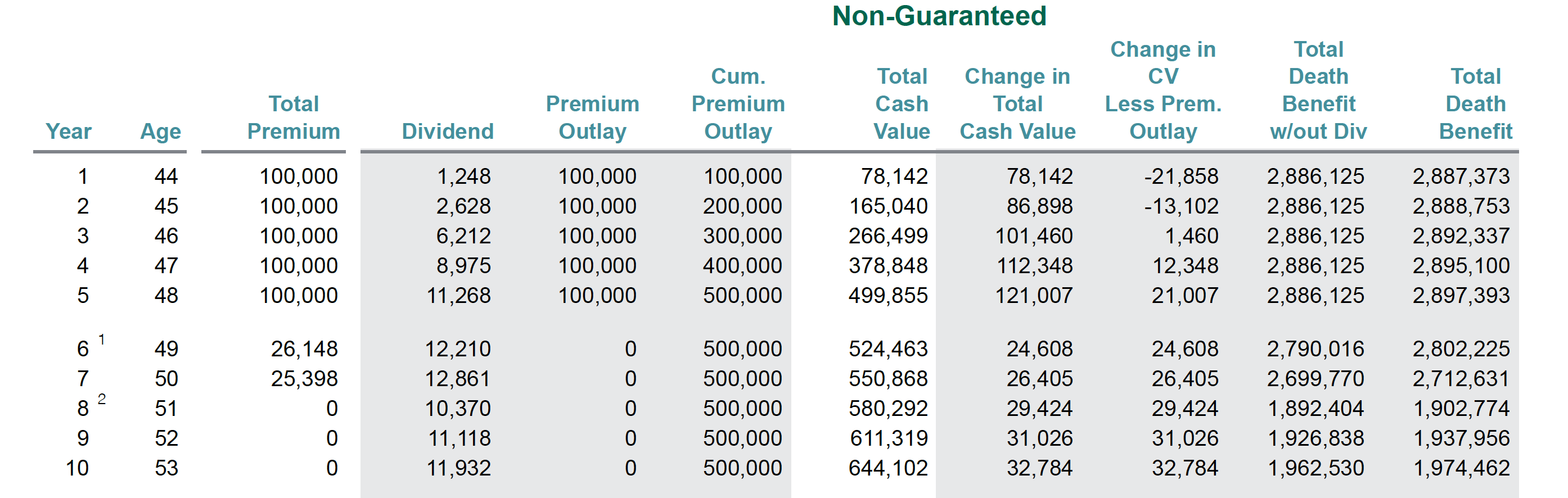
For a healthy 40-year-old in 2026, a $1 million term life insurance policy typically costs between $45 and $95 per month for a 20-year term. In contrast, a $1 million whole life insurance policy is significantly more expensive, often ranging from $1,100 to $1,800 per month, as it builds cash value and provides lifelong coverage.
Securing a $1 million life insurance policy at age 40 is a common financial milestone. By this age, many individuals are in their peak earning years, carrying significant mortgage debt, and supporting growing families. The choice between term and whole life insurance depends heavily on whether the goal is temporary protection during high-risk years or a permanent financial asset that doubles as a wealth-transfer vehicle.
As we navigate the insurance landscape of 2026, underwriting has become more precise, utilizing real-time health data and predictive modeling. However, the fundamental mechanics of these two product types remains the constant foundation of any robust financial plan.
The Financial Logic of $1 Million in Coverage
Why is the $1 million mark so significant for a 40-year-old? In the context of 2026 inflation and the rising cost of living, $1 million is often the baseline for "income replacement." If a primary earner passes away, the surviving family needs a lump sum that, when invested conservatively, can generate a reliable annual income.
Income Replacement and the "Rule of 10"
A standard rule of thumb in financial planning is to carry 10 to 15 times your annual salary in life insurance. For a professional earning $100,000 a year, a $1 million policy covers the bare minimum. At age 40, you likely have 20 to 25 years of work left. A $1 million death benefit ensures that your family can maintain their standard of living, pay for rising university tuitions, and eliminate debt without the immediate pressure of replacing your salary.
Debt Obligations
By age 40, many homeowners still have 15 to 20 years remaining on their mortgages. In many metropolitan areas, a $1 million policy might only cover the mortgage and a few years of expenses. When calculating your coverage needs, it is essential to look at the "total liability" picture: the mortgage balance, car loans, personal debts, and the projected cost of your children’s education.
$1 Million Term Life Insurance: Cost and Mechanics
Term life insurance is the most straightforward and affordable way to obtain $1 million in coverage. It is designed to provide protection for a specific period, or "term"—usually 10, 15, 20, or 30 years.
Premium Estimates for 40-Year-Olds
In 2026, premiums remain highly competitive for healthy applicants. Because 40-year-olds are statistically likely to outlive a 20-year term, the insurance company takes on relatively low risk, resulting in lower premiums for the consumer.
- 20-Year Term (Male, Preferred Plus): $55 – $75 per month.
- 20-Year Term (Female, Preferred Plus): $45 – $65 per month.
- 30-Year Term (Male, Preferred Plus): $90 – $120 per month.
- 30-Year Term (Female, Preferred Plus): $75 – $100 per month.
Note: "Preferred Plus" refers to the best possible health rating, typically reserved for non-smokers with ideal height-to-weight ratios and no major health history.
Why Term is the "Purest" Form of Insurance
Term insurance provides "death benefit only" protection. It does not have a savings account or investment component. If the policyholder dies within the term, the $1 million is paid out tax-free to the beneficiaries. If the policyholder survives the term, the coverage simply ends unless it is renewed at a much higher "attained age" rate. For a 40-year-old, a 20-year term covers the "danger zone"—the years until the kids are grown and the house is paid off.
$1 Million Whole Life Insurance: The Permanent Alternative
Whole life insurance is a permanent policy that remains in force for the policyholder’s entire life, provided premiums are paid. Unlike term insurance, it includes a "cash value" component that grows over time, tax-deferred.
Why the Premiums are Substantially Higher
The premiums for a $1 million whole life policy are 10 to 20 times higher than term insurance. This is because the insurer is guaranteed to pay out the death benefit eventually, as long as the policy stays active. Part of your premium goes toward the insurance cost, part toward administrative fees, and a significant portion toward the cash value account.
- Whole Life (Male, Age 40, Healthy): $1,200 – $1,600 per month.
- Whole Life (Female, Age 40, Healthy): $1,000 – $1,400 per month.
Cash Value Accumulation and Dividends
A major draw of whole life insurance for high-net-worth 40-year-olds is the cash value. This account grows at a guaranteed rate set by the insurer. Additionally, if the policy is "participating" and issued by a mutual insurance company, the policyholder may receive annual dividends. These dividends can be taken as cash, used to reduce premiums, or reinvested to buy "paid-up additions," which increase the total death benefit and cash value over time.
Policy Loans and Liquidity
By the time a 40-year-old reaches age 55 or 60, a $1 million whole life policy will likely have accrued significant cash value. The policyholder can take out loans against this cash value for any purpose—funding a business, supplementing retirement income, or paying for a wedding—without a credit check. While these loans accrue interest and reduce the death benefit if not repaid, they offer a level of liquidity that term insurance cannot match.
Comparative Overview: $1 Million Coverage Options
The following table summarizes the estimated monthly costs and features for a healthy 40-year-old seeking $1 million in coverage in 2026.
| Policy Type | Estimated Monthly Premium (Male) | Estimated Monthly Premium (Female) | Coverage Duration | Cash Value? | Best Suited For |
|---|---|---|---|---|---|
| 10-Year Term | $35 - $45 | $30 - $40 | 10 Years | No | Short-term debt or business loans |
| 20-Year Term | $55 - $75 | $45 - $65 | 20 Years | No | Young families, mortgage protection |
| 30-Year Term | $90 - $120 | $75 - $100 | 30 Years | No | Long-term income replacement |
| Whole Life | $1,200 - $1,600 | $1,000 - $1,400 | Lifetime | Yes | Estate planning, high-net-worth wealth |
| Universal Life | $600 - $900 | $500 - $800 | Flexible/Lifetime | Yes | Flexible premiums, permanent needs |
Estimates are based on 2026 market averages for "Preferred" health classes. Actual rates vary by carrier and specific medical history.
Factors Influencing 2026 Premiums at Age 40
At age 40, you are at a "pricing cliff." While insurance is still affordable, every year you wait beyond 40 typically results in an 8% to 12% increase in annual premiums. In 2026, several specific factors determine where your premium lands within the ranges mentioned above.
1. Accelerated Underwriting and Biological Data
In 2026, many $1 million policies no longer require a physical medical exam (blood draw/urine sample) if the applicant is healthy. Insurers now use "accelerated underwriting," which analyzes your pharmacy records, motor vehicle reports, and even data from wearable health devices (with permission). A 40-year-old who can demonstrate a consistent history of exercise and sleep through verified data may secure "Ultra-Preferred" rates that are lower than standard market averages.
2. Smoking and Vaping Status
The distinction between smokers and non-smokers remains the largest single factor in premium costs. A 40-year-old smoker will pay 200% to 300% more for the same $1 million policy than a non-smoker. In 2026, most insurers treat vaping and nicotine replacement therapies with the same severity as traditional cigarettes, though some specialized carriers offer "non-tobacco" rates for occasional cigar smokers or those who have successfully quit for more than 12 months.
3. Family Health History
Insurers look closely at the health history of your parents and siblings. If a parent passed away from heart disease or cancer before age 60, it might prevent you from getting the "Preferred Plus" tier, even if you are currently in perfect health. At age 40, these family history markers become more significant in the eyes of an actuary.
Strategies for Age 40: The "Laddering" Approach
Many 40-year-olds find that they need a high amount of coverage now, but won't need it forever. Instead of buying a single $1 million whole life policy (which is expensive) or a single $1 million 30-year term policy (which may be more than they need later), they "ladder" their coverage.
Example of a Laddered Strategy:
- Policy 1: $500,000 10-year term. (To cover the mortgage while it's at its peak).
- Policy 2: $300,000 20-year term. (To cover children through college).
- Policy 3: $200,000 Whole Life. (To provide a permanent legacy and funeral expenses).
By 2026, this "laddering" strategy has become easier to manage through digital insurance platforms. It allows the 40-year-old to have $1 million in total coverage today when the need is highest, but as the 10-year and 20-year terms expire, the total premium cost drops significantly, leaving only the permanent whole life policy in place for the senior years.
Term vs. Whole Life: Which is Better at 40?
There is no universal "best" policy, but there are clear indicators for which path to choose based on your financial profile.
Choose Term Life If:
- You have a limited budget: You want the most "bang for your buck" to protect your family.
- Your needs are temporary: You only need coverage until your mortgage is paid off or your children are financially independent.
- You are a disciplined investor: You prefer to "buy term and invest the difference" in the stock market or retirement accounts like a 401(k) or IRA.
Choose Whole Life If:
- You have maximized other tax-advantaged accounts: You've already hit the limit on your 401(k) and are looking for another tax-deferred growth vehicle.
- You have a lifelong dependent: You have a child with special needs who will require financial support long after you are gone.
- You want a "forced savings" component: You struggle to save consistently and want a policy that builds equity over time.
- Estate Planning: You want to provide your heirs with a tax-free cash injection to pay for estate taxes or to equalize an inheritance (e.g., giving one child a business and the other the $1 million life insurance payout).
Frequently Asked Questions
Can I convert my term policy to whole life later?
Yes, most term life policies issued in 2026 include a "conversion rider." This allows you to turn some or all of your $1 million term coverage into a permanent whole life policy without undergoing a new medical exam. This is a valuable feature for a 40-year-old whose health might decline over the next decade. However, you must convert before the deadline (often age 65 or the end of the term) and your premiums will jump to the permanent rate based on your age at the time of conversion.
Is $1 million enough coverage for a 40-year-old in 2026?
While $1 million sounds like a large sum, it may be insufficient depending on your location and lifestyle. If you have four children and a $700,000 mortgage in a high-cost-of-living area, $1 million will be exhausted quickly. Many experts now suggest that $1.5 million to $2 million is the new standard for middle-class families to ensure true long-term security.
Does a 40-year-old need a medical exam for $1 million in coverage?
Not necessarily. In 2026, "no-exam" or "accelerated underwriting" is common for $1 million policies for applicants under age 50. If your digital health records, pharmacy history, and motor vehicle records are clean, the insurer may approve your application within minutes or days without a nurse visit. However, if you have a pre-existing condition, a traditional exam may still be required to get the best rate.
What happens if I outlive my 20-year term?
When the term ends at age 60, the coverage expires. You will have the option to renew it annually, but the cost will be prohibitively expensive (often 10x the original premium) because you are now being insured as a 60-year-old. This is why it is crucial to choose a term length that covers your longest financial obligation.
Are life insurance payouts taxable?
In almost all cases, the $1 million death benefit from both term and whole life insurance is paid to your beneficiaries completely tax-free. This is one of the greatest advantages of life insurance. However, if the death benefit is paid to your "estate" rather than a named person or a trust, it could potentially be subject to estate taxes if your total estate exceeds federal or state limits.
Practical Recommendation: Next Actions
If you are 40 years old and looking for $1 million in coverage, your first step should be to secure a term life policy immediately. Because life insurance rates are based on your age at your nearest birthday, even a few months of delay can increase your lifetime costs.
- Calculate Your Gap: Total your debts and 15 years of income. If the number is above $1 million, consider a $1.5 million policy—the price difference is often negligible at age 40.
- Audit Your Health: If you have minor health issues (like high blood pressure or cholesterol) that are well-controlled with medication, ensure you work with an independent agent who knows which carriers are "friendly" toward those specific conditions.
- Prioritize the 20-Year Term: For most 40-year-olds, the 20-year term is the most efficient choice, protecting you until age 60.
- Review Whole Life Only if Necessary: Only consider whole life insurance if your "surplus" income is high and your traditional retirement accounts are already fully funded.
By taking action now, you lock in 2026 rates and provide your family with a $1 million safety net that ensures their future is never compromised by the unexpected.