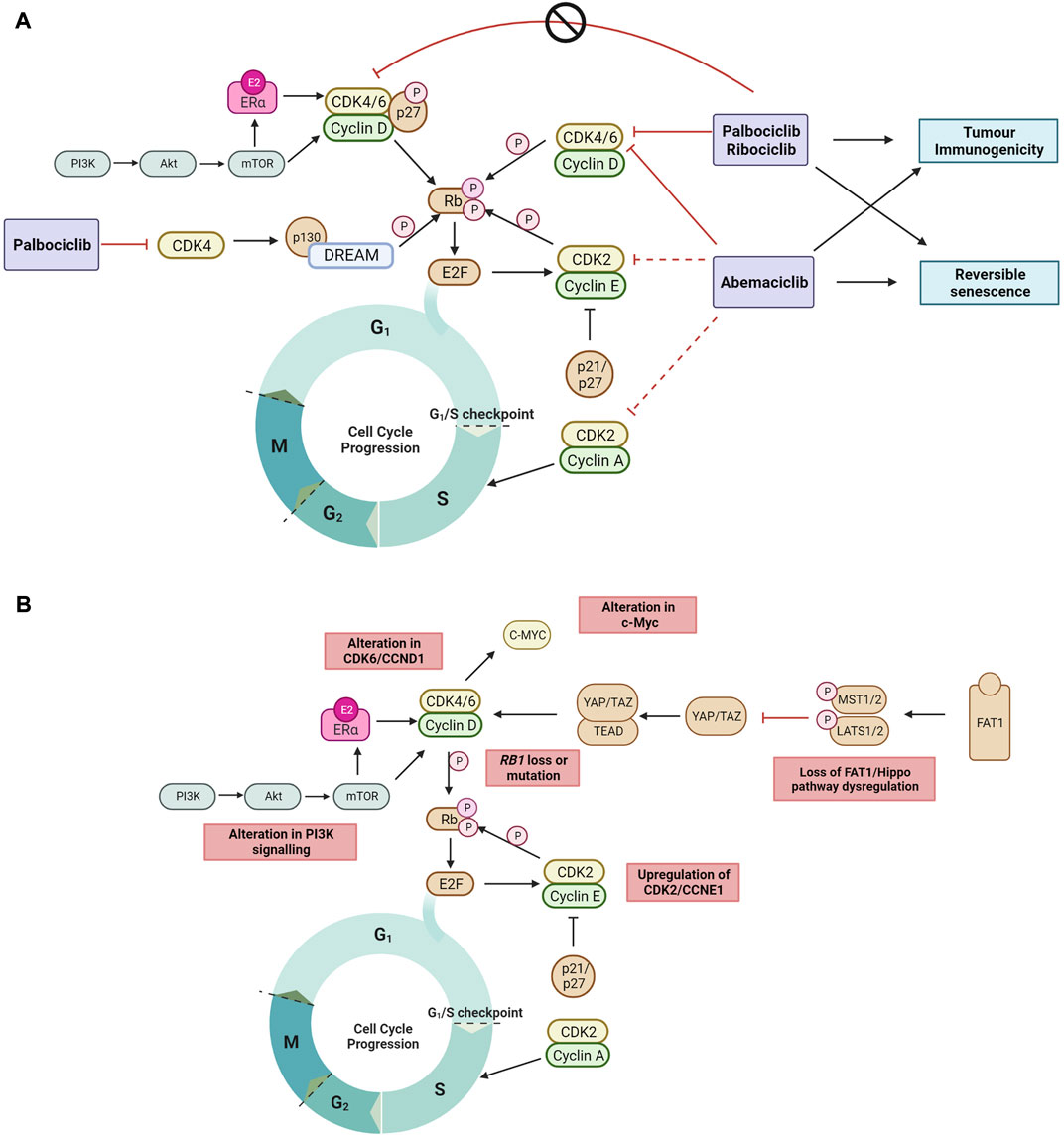
As of 2026, cyclin-dependent kinase 4 and 6 (CDK4/6) inhibitors represent the cornerstone of therapy for hormone receptor-positive (HR+), human epidermal growth factor receptor 2-negative (HER2-) breast cancer. These agents—palbociclib, ribociclib, and abemaciclib—have transitioned from breakthrough metastatic treatments to essential components of the adjuvant setting, significantly improving progression-free and overall survival rates for millions of patients worldwide.
The landscape of oncology has been fundamentally altered by the introduction and refinement of CDK4/6 inhibitors. These oral targeted therapies work by inhibiting the enzymes CDK4 and CDK6, which are critical drivers of the cell cycle. In HR+ breast cancer, the signaling pathway involving these kinases is often overactive, leading to uncontrolled cellular proliferation. By blocking these targets, CDK4/6 inhibitors effectively "brake" the cell cycle, inducing G1-phase arrest and preventing the replication of malignant cells.
While the "Big Three" agents share a primary mechanism of action, their pharmacological profiles, clinical trial outcomes, and toxicity signatures have led to distinct roles in clinical practice. In 2026, the focus has shifted from mere implementation to optimization—understanding which patients benefit most in the adjuvant setting, managing long-term toxicities, and navigating the complex terrain of endocrine resistance.
The Mechanism of Action: Arresting the Cell Cycle
To understand the current landscape, one must first grasp the biochemical foundation of these drugs. The cell cycle is governed by a series of checkpoints. The transition from the G1 phase (growth) to the S phase (DNA synthesis) is a critical juncture. This transition is mediated by the D-type cyclins, which bind to and activate CDK4 and CDK6.
Once activated, the cyclin D-CDK4/6 complex phosphorylates the retinoblastoma (Rb) protein. In its unphosphorylated state, Rb acts as a tumor suppressor by binding to E2F transcription factors. When Rb is phosphorylated, it releases E2F, which then activates the transcription of genes required for S-phase entry. CDK4/6 inhibitors competitively bind to the ATP-binding pocket of the kinases, preventing Rb phosphorylation and thereby maintaining the "brake" on the cell cycle.
By 2026, research has further elucidated that these drugs do more than just stop growth; they may also enhance anti-tumor immune responses and induce cellular senescence. This multifaceted impact explains why they are so effective when combined with endocrine therapies (ET) like aromatase inhibitors (AIs) or fulvestrant, as these combinations provide a dual-pronged attack on the estrogen receptor (ER) signaling pathway and the downstream cell cycle machinery.
Comparative Analysis of the Primary CDK4/6 Inhibitors
Although palbociclib, ribociclib, and abemaciclib are often grouped together, their clinical trajectories have diverged based on the strength of their overall survival (OS) data and their utility in the adjuvant setting.
Palbociclib (Ibrance)
Palbociclib was the first-in-class inhibitor to receive FDA approval. Its initial success in the PALOMA-1 and PALOMA-2 trials established the standard of care for first-line metastatic HR+/HER2- breast cancer. However, by 2026, its role has become more nuanced. While it remains a widely used agent due to its manageable safety profile—primarily characterized by reversible neutropenia—it faced challenges when PALOMA-2 failed to demonstrate a statistically significant OS benefit, despite a robust progression-free survival (PFS) advantage. In the adjuvant setting, the PALLAS and PENELOPE-B trials did not meet their primary endpoints, largely limiting palbociclib's current use to the metastatic stage.
Ribociclib (Kisqali)
Ribociclib has emerged as a leader in terms of survival data. The MONALEESA trial program (MONALEESA-2, -3, and -7) consistently demonstrated significant OS benefits across various patient populations, including postmenopausal women, premenopausal women, and those receiving either first-line or second-line therapy. In 2026, ribociclib is frequently preferred for patients where maximizing OS is the primary clinical objective. Furthermore, the NATALEE trial successfully expanded its use into the adjuvant setting for a broad population of patients with early breast cancer (Stage II and III), including those without nodal involvement, provided they meet specific high-risk criteria.
Abemaciclib (Verzenio)
Abemaciclib is distinguished by its unique dosing schedule and potency. Unlike palbociclib and ribociclib, which are typically dosed on a "3 weeks on, 1 week off" schedule to allow for bone marrow recovery, abemaciclib is administered continuously. It has a higher affinity for CDK4 than CDK6, which results in less severe neutropenia but a higher incidence of gastrointestinal side effects, specifically diarrhea. The MONARCH trials confirmed its efficacy in the metastatic setting, but its most significant impact has been in the adjuvant setting. The MONARCHE trial demonstrated that two years of abemaciclib combined with endocrine therapy significantly reduced the risk of recurrence in patients with high-risk, node-positive early breast cancer.
Comparative Clinical Features (2026 Status)
| Feature | Palbociclib | Ribociclib | Abemaciclib |
|---|---|---|---|
| Dosing Schedule | 125 mg (21 days on / 7 days off) | 600 mg (21 days on / 7 days off) | 150 mg (Twice daily, continuous) |
| Pivotal Metastatic Trials | PALOMA-2, PALOMA-3 | MONALEESA-2, -3, -7 | MONARCH 2, MONARCH 3 |
| Overall Survival (OS) | PFS benefit; OS not significant in P2 | Significant OS benefit across trials | Significant OS benefit in MONARCH 2 |
| Adjuvant Approval | No (PALLAS/PENELOPE-B failed) | Yes (NATALEE criteria) | Yes (MONARCHE criteria) |
| Primary Toxicity | Neutropenia | Neutropenia, QTc prolongation | Diarrhea, Neutropenia, VTE |
| Monitoring Requirements | CBC counts | CBC, ECG, Electrolytes, LFTs | CBC, LFTs, Bowel movements |
The Shift to the Adjuvant Setting: Redefining Early Breast Cancer
The most significant evolution in the CDK4/6 inhibitor landscape between 2020 and 2026 has been the transition from treating incurable metastatic disease to preventing recurrence in early-stage patients. This shift was driven by the realization that even with standard endocrine therapy, a significant portion of patients with high-risk HR+/HER2- breast cancer experience late recurrence.
The Impact of MONARCHE
Abemaciclib was the pioneer in this space. The MONARCHE trial enrolled patients with high-risk features, such as four or more positive axillary lymph nodes, or one to three nodes with additional risk factors like a Grade 3 tumor or a tumor size of at least 5 cm. The data in 2026 confirms that the benefit of abemaciclib persists long after the two-year treatment period is completed, suggesting a "carry-over" effect that may potentially increase the cure rate.
The NATALEE Expansion
Ribociclib's entry into the adjuvant space via the NATALEE trial was a landmark event. Unlike MONARCHE, NATALEE included a broader patient population, including those with Stage IIA disease and no nodal involvement but with other high-risk features (e.g., high Ki-67 or Grade 3). This has expanded the pool of patients eligible for CDK4/6 inhibition in the early setting. Clinicians in 2026 now have to choose between abemaciclib and ribociclib based on the specific risk profile of the patient and their ability to tolerate different toxicity profiles (e.g., diarrhea vs. neutropenia and the need for ECG monitoring).
Managing Toxicities and Quality of Life
The long-term use of CDK4/6 inhibitors—often spanning years in the adjuvant setting—requires meticulous toxicity management to ensure adherence and maintain quality of life.
Hematologic Toxicity
Neutropenia is a class effect, most pronounced with palbociclib and ribociclib. Unlike chemotherapy-induced neutropenia, CDK4/6-induced neutropenia is rapidly reversible and rarely associated with fever (febrile neutropenia). In 2026, the standard protocol involves monthly blood counts for the first few cycles, followed by less frequent monitoring. Dose interruptions and reductions are effective strategies that do not appear to compromise the efficacy of the treatment.
Gastrointestinal Toxicity
Abemaciclib is uniquely associated with diarrhea, which occurs in the majority of patients, typically within the first month of treatment. Management in 2026 focuses on proactive patient education and the early use of anti-diarrheal medications like loperamide. For many patients, the severity of diarrhea decreases over time as the body adapts to the medication.
Cardiac and Hepatic Monitoring
Ribociclib requires specific monitoring for QTc interval prolongation and hepatotoxicity. In 2026, baseline and periodic ECGs are mandatory, along with regular liver function tests (LFTs). While these side effects are relatively rare, they necessitate a higher level of clinical surveillance compared to palbociclib.
Resistance Mechanisms and the Post-CDK4/6 Era
Despite the success of these agents, resistance eventually develops in the metastatic setting. Understanding why this happens is a major focus of oncology research in 2026. Resistance can be "primary" (intrinsic) or "acquired" (developing over time).
Key mechanisms of resistance include:
- Loss of Rb Protein: Since Rb is the primary target, its loss renders the inhibitors ineffective.
- CCNE1 Amplification: Overexpression of Cyclin E1 can bypass the CDK4/6 block by activating CDK2.
- ESR1 Mutations: Mutations in the estrogen receptor gene can make the tumor independent of traditional endocrine therapy, often requiring a switch to next-generation SERDs (Selective Estrogen Receptor Degraders).
- PIK3CA/AKT/mTOR Pathway Activation: Mutations in this pathway can drive cell growth regardless of CDK4/6 inhibition.
In 2026, the standard of care following progression on a CDK4/6 inhibitor involves molecular profiling—often via liquid biopsy (ctDNA)—to identify these mutations. For instance, the detection of an ESR1 mutation may lead to the use of elacestrant, while a PIK3CA mutation might indicate the use of alpelisib or capivasertib.
Future Directions: Beyond the Big Three
The landscape is not static. By 2026, several new developments have begun to emerge:
- Selective CDK4 Inhibitors: These are designed to minimize hematologic toxicity (which is largely driven by CDK6 inhibition in the bone marrow) while maintaining potent anti-tumor activity. Early trials suggest these may be better tolerated and potentially more effective in combination with other agents.
- CDK2 Inhibitors: As CDK2 is a primary bypass mechanism for CDK4/6 resistance, several CDK2-specific or pan-CDK inhibitors are currently in clinical trials to be used "post-CDK4/6."
- Trilaciclib (Cosela): While not used for breast cancer treatment per se, this CDK4/6 inhibitor is used as a myeloprotective agent, administered intravenously before chemotherapy to protect the bone marrow from damage. Its role in wider oncological applications continues to be explored.
Frequently Asked Questions
Which CDK4/6 inhibitor is considered the "best" in 2026?
There is no single "best" inhibitor; the choice depends on the clinical setting. Ribociclib currently has the most robust overall survival data in the metastatic setting. Abemaciclib was the first approved for adjuvant use in high-risk patients, while ribociclib later expanded into a broader adjuvant population. Palbociclib remains a popular choice for metastatic disease due to its well-tolerated safety profile.
Can I switch from one CDK4/6 inhibitor to another if I have side effects?
Yes, switching is common in clinical practice. For example, a patient experiencing severe diarrhea on abemaciclib may be switched to ribociclib or palbociclib. However, switching due to disease progression (resistance) is generally not recommended, as there is significant cross-resistance between the three drugs.
How long is the treatment duration in the adjuvant setting?
As of 2026, the standard treatment duration for adjuvant abemaciclib (MONARCHE) is two years, whereas for adjuvant ribociclib (NATALEE), it is three years. Both are taken in conjunction with at least five to ten years of endocrine therapy.
Are there any dietary restrictions while taking these medications?
Patients should generally avoid grapefruit and pomegranate products, as these can interfere with the enzymes (CYP3A4) that metabolize CDK4/6 inhibitors, potentially leading to toxic levels of the drug in the bloodstream.
Does every patient with HR+ breast cancer need a CDK4/6 inhibitor?
No. In the metastatic setting, they are almost universally recommended. However, in the early (adjuvant) setting, they are reserved for patients with high-risk features. Patients with small, node-negative, low-grade tumors may not derive enough benefit to justify the potential side effects and costs.
Practical Recommendation for 2026
For clinicians and patients navigating this landscape, the priority should be personalized risk stratification. In the early-stage setting, utilize the specific criteria from the MONARCHE and NATALEE trials to determine eligibility for adjuvant therapy. In the metastatic setting, prioritize agents with proven overall survival benefits. Always perform baseline molecular testing (and repeat testing at progression) to identify targetable resistance mechanisms. Adherence is paramount; therefore, proactive management of side effects—especially the early intervention for abemaciclib-related diarrhea and the monitoring of counts for ribociclib—is essential for therapeutic success.