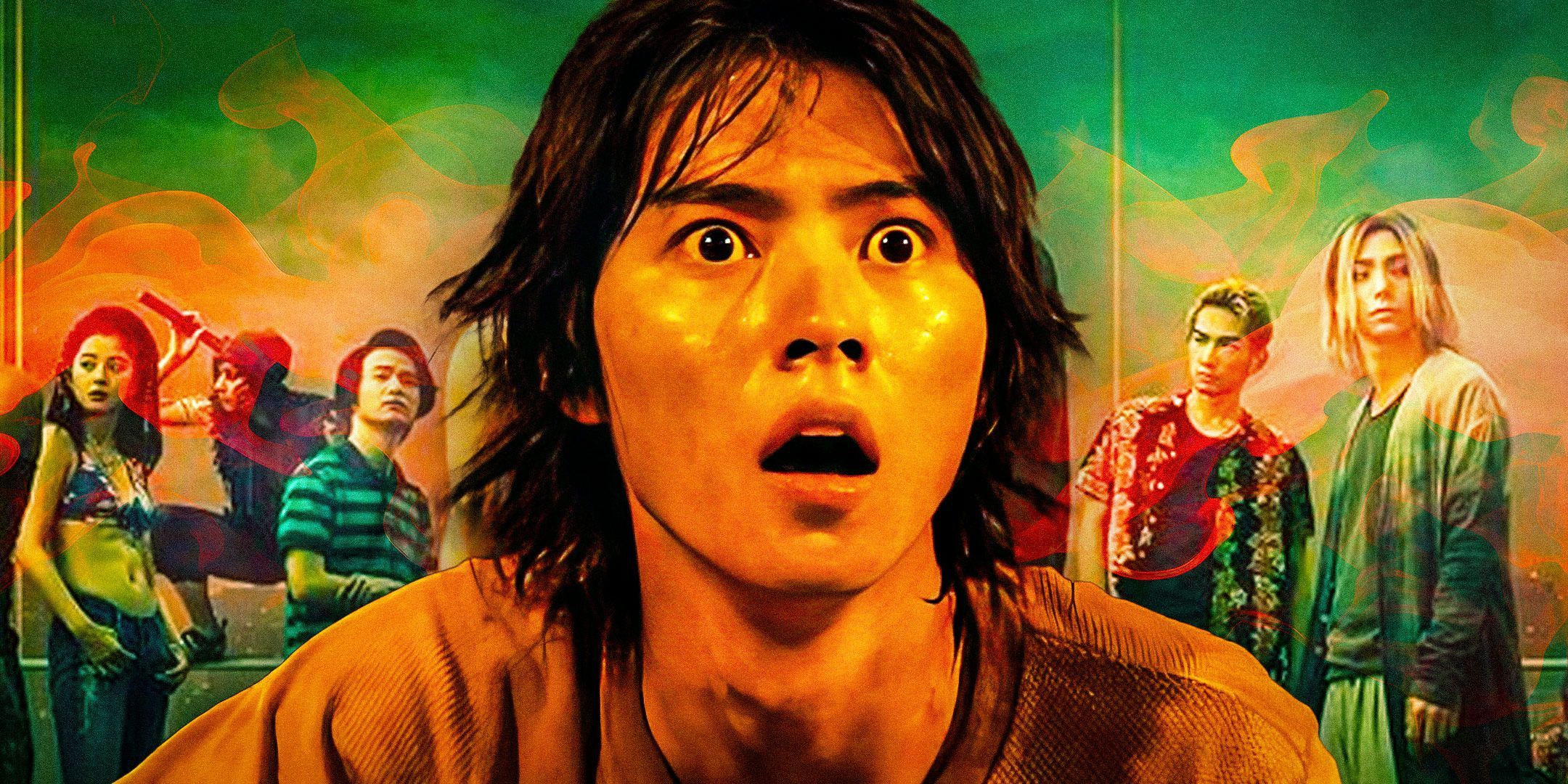
Alice in Borderland Season 3 shifts the series beyond the original manga’s conclusion, primarily adapting the Alice in Borderland: Retry arc and introducing original Netflix-exclusive narratives. The main changes involve Arisu’s re-entry into the games despite the Season 2 finale’s "real-world" resolution, sparking controversy over narrative necessity versus commercial expansion.
The announcement and subsequent release of Alice in Borderland Season 3 have polarized the fanbase and critics alike. While the first two seasons of the hit Netflix series followed the trajectory of Haro Aso’s original manga with relative fidelity, the third installment ventures into territory that is both a sequel and a reimagining. As of 2026, the discussion surrounding the series has evolved from simple excitement to a complex debate about the "Joker" card’s significance, the canonical weight of the Retry manga, and the challenges of sustaining a high-stakes death-game premise after a seemingly definitive ending.
The Context of Season 3 and the "Retry" Transition
To understand the changes in Season 3, one must look at the source material's history. The original Alice in Borderland manga concluded with the players choosing between becoming permanent residents or returning to the "real world." Ryohei Arisu and Yuzuha Usagi returned to a Tokyo reeling from a meteorite strike, suffering from amnesia regarding their time in the Borderlands.
However, Haro Aso later penned a short sequel titled Alice in Borderland: Retry. This arc sees a slightly older Arisu, now a counselor and expecting a child with Usagi, being pulled back into the Borderlands following an accident. Season 3 utilizes this framework but expands it significantly to fill a multi-episode season. The primary controversy stems from the fact that the Retry manga is brief—only two volumes—which necessitated a significant amount of original content from the Netflix writing team. This expansion has led to accusations of "narrative padding," while others praise the show for deepening the lore beyond the manga’s restricted scope.
Major Narrative Changes from the Manga
The transition from the page to the screen for Season 3 involved several structural adjustments. In the live-action adaptation, the production team faced the challenge of bringing back a larger ensemble cast, even though the Retry manga focuses almost exclusively on Arisu.
The Expansion of the Supporting Cast
In the manga version of the sequel, Arisu is largely isolated from his previous allies. Netflix, recognizing the star power of its ensemble, has integrated original subplots to keep fan-favorite characters involved. While this pleases viewers who want to see more of Chishiya or Kuina, it fundamentally changes the tone of the "Retry" experience. In the original text, the isolation emphasized Arisu’s personal growth and his fear of leaving his pregnant wife behind. The show’s choice to re-assemble the "dream team" softens the psychological impact of the isolation but increases the spectacle of the games.
The Role of the Joker Card
The Season 2 finale ended on a lingering shot of a Joker card, which was not how the main manga ended (the Joker appears as a brief, ethereal figure but not as a physical cliffhanger). Season 3 treats the Joker not just as a philosophical psychopomp or a "ferryman" between life and death, but as an active participant or a looming threat. This change has been a major point of contention. Purists argue that the Joker should remain an abstract concept representing the randomness of fate, whereas the series leans into the Joker as a "final boss" or a game master, a shift that aligns more with traditional television tropes than the manga’s existentialist roots.
The Controversy of the "Real World" Resolution
One of the most significant controversies surrounding Season 3 is the perceived undermining of the Season 2 finale. For many, the ending of the Face Cards arc was a perfect resolution: the Borderlands were revealed to be a collective near-death experience, and the characters’ survival was a testament to their will to live.
By pulling Arisu back in for Season 3, critics argue that the emotional weight of his previous journey is diluted. If the Borderlands can be revisited whenever a character experiences a new trauma or accident, the "stakes" of the initial 16 episodes feel less permanent. To combat this, the showrunners have introduced the concept of "The Second Stage of Limbo," suggesting that the Borderlands are not a one-time destination but a persistent dimension that certain individuals are "tuned" to. This pseudo-scientific explanation has received mixed reviews, with some finding it a clever expansion of the lore and others viewing it as a convenient plot device to keep a profitable franchise running.
Evolution of the Games: Physicality vs. Psychology
Season 3 introduces a distinct shift in the nature of the games. While Seasons 1 and 2 featured a mix of Spades (physical), Diamonds (intelligence), Clubs (teamwork), and Hearts (betrayal), Season 3 leans heavily into psychological horror and moral dilemmas. This is a direct reflection of Arisu's older, more cynical mindset in the 2026 timeline of the show.
Increased Stakes and Moral Complexity
The "Retry" game in the manga, the "Nine of Hearts," is a game of trust and psychological manipulation involving an alien-like creature and a series of electrical shocks. The Netflix adaptation scales this up, transforming a single-room game into a city-wide event. The change allows for higher production value but risks losing the intimate, suffocating tension of the source material. The controversy here lies in the "action-fication" of the series. Fans of the manga’s intellectual puzzles often find the show’s reliance on explosions and high-speed chases to be a distraction from the core themes of human nature.
Comparison of Manga and Netflix Season 3 Elements
The following table outlines the primary differences observed in the 2026 landscape of the franchise, comparing the established manga canon with the Netflix adaptation's choices.
| Feature | Manga Canon (Retry) | Netflix Season 3 |
|---|---|---|
| Main Protagonist | Arisu (Solo focus) | Arisu & Ensemble Cast |
| The Joker's Presence | A symbolic, silent entity | A central antagonistic force |
| Game Diversity | Limited to the Nine of Hearts | Multiple new "Face Card" style games |
| Narrative Length | Very short (13 chapters) | Extended (approx. 8 episodes) |
| Thematic Focus | Fatherhood and grief | Survival and the nature of reality |
| Visual Style | Minimalist and gritty | High-budget, CGI-heavy spectacle |
Technical Production and Direction Changes
Directing Season 3, Shinsuke Sato had to reconcile the high expectations of a global audience with the limitations of the new story arc. One of the technical changes involves the representation of the "Empty Tokyo." In the first two seasons, the city was a desolate wasteland. In Season 3, the environment is more fluid—frequently shifting between the ruins and a distorted, dream-like version of the city.
This visual shift was intended to represent the instability of Arisu’s mind as he suffers from PTSD and the "Borderland sickness." However, the use of more aggressive CGI has led to debates regarding the show's aesthetic. The practical effects of the early seasons were a hallmark of its quality; the move toward a more digital, surrealist landscape in 2026 has been described by some as a departure from the show's "survival thriller" roots into the realm of "dark fantasy."
Casting Dynamics: Returning Stars and New Faces
The return of Kento Yamazaki (Arisu) and Tao Tsuchiya (Usagi) was essential for the show's continuity. However, their roles in Season 3 are fundamentally different. Arisu is no longer the wide-eyed youth; he is a man who has experienced the "end" and must now protect a family he barely remembers from his previous stint in the games.
The Conflict of Memory
A major plot point and source of fan discussion is the "Amnesia Mechanic." In the manga, characters do not remember the Borderlands upon returning to reality. Season 3 changes this slightly, suggesting that "residue memories" or "gut feelings" remain. This allows for more dramatic reunions between characters who "feel" like they know each other but can't quite place why. While this adds a layer of romanticism to the Arisu-Usagi relationship, some viewers find it to be a repetitive trope that slows down the pacing of the action-oriented episodes.
Critical Reception and Audience Impact in 2026
By 2026, the "death game" genre has become highly saturated, with numerous imitators following the success of Alice in Borderland and Squid Game. Season 3 had to work harder to maintain its relevance. The controversy over its existence—whether it was an organic story or a "cash grab"—has colored much of the critical discourse.
Professional critics have praised the performances, particularly Yamazaki’s portrayal of a more mature, haunted Arisu. However, the narrative "stretching" required to turn a short manga sequel into a full season is frequently cited as a weakness. The pacing in the middle episodes, which often feature original games not found in any manga, has been a point of contention for those who prefer the tight, high-stakes storytelling of the first season.
Common Misconceptions About Season 3
There are several misunderstandings regarding the production and intent of this season that deserve clarification:
- It is not a reboot: Some viewers initially feared Season 3 would restart the timeline. It is a direct chronological sequel.
- The manga didn't "end" early: The main manga ended exactly where the author intended. Season 3 is an adaptation of the sequel and original ideas, not a fix for a "cancelled" story.
- It isn't just about Arisu: Despite the manga's focus, the show remains an ensemble piece, which is a deliberate change by Netflix to capitalize on the popularity of the side characters.
FAQ: Understanding the Nuances of Season 3
Does Arisu regain his memories of the first two seasons?
In Season 3, Arisu does not have a "total recall" moment immediately. Instead, his journey involves piecing together fragments of the past triggered by the games. The controversy lies in how this affects his character development; some fans feel that relearning the same lessons about the value of life is redundant, while the showrunners argue it highlights the cyclical nature of human trauma.
Who is the "main villain" of Season 3?
While the Joker is the overarching mystery, Season 3 introduces "The Citizens of the Second Stage." These are original characters who chose to stay in the Borderlands during the Season 2 finale. Their inclusion is a major change from the manga, providing a more tangible human antagonist than the abstract "system" of the previous seasons.
Is Season 3 the final season?
As of 2026, Netflix has labeled Season 3 as the "Final Act," suggesting it will conclude Arisu’s journey. However, the introduction of elements from the spinoff Alice on Border Road has led to speculation that the universe could continue with a different cast, a prospect that remains controversial among those who believe the story should end with Arisu.
How does the "Joker Card" cliffhanger resolve?
The resolution of the Joker card is the most debated aspect of the season. Rather than being a simple game, the Joker is revealed to be the personification of the "Borderland" itself. The show depicts the card as a choice: the ultimate gamble where the player bets their soul rather than their life. This high-concept ending has divided the audience between those who love the philosophical depth and those who find it too "meta" for a survival show.
Are there any new game types in Season 3?
Yes, the series introduces "Void Games." These are games with no clear rules provided at the start, forcing players to deduce the objective while under immediate threat. This is a technical departure from the card-based logic of the previous seasons and represents the chaotic influence of the Joker on the Borderland's structure.
Next Steps for Fans and New Viewers
If you are following the development or watching Season 3, it is highly recommended to read the Alice in Borderland: Retry manga to understand the foundations of the narrative. To fully grasp the controversies, compare the manga’s philosophical conclusion with the show’s more action-oriented approach. For those interested in the broader lore, exploring the Alice on Border Road spinoff will provide context for some of the new locations and "Citizens" introduced in the 2026 episodes. Always verify episode guides through official Netflix portals to avoid spoilers regarding the Joker’s true identity and the ultimate fate of the survivors.