In economic theory, a perfectly elastic good is one where the quantity demanded changes infinitely in response to any change in price. This results in a horizontal demand curve, typically observed in models of perfect competition where products are identical and consumers possess perfect information, such as a single farmer selling standardized wheat in a global market.
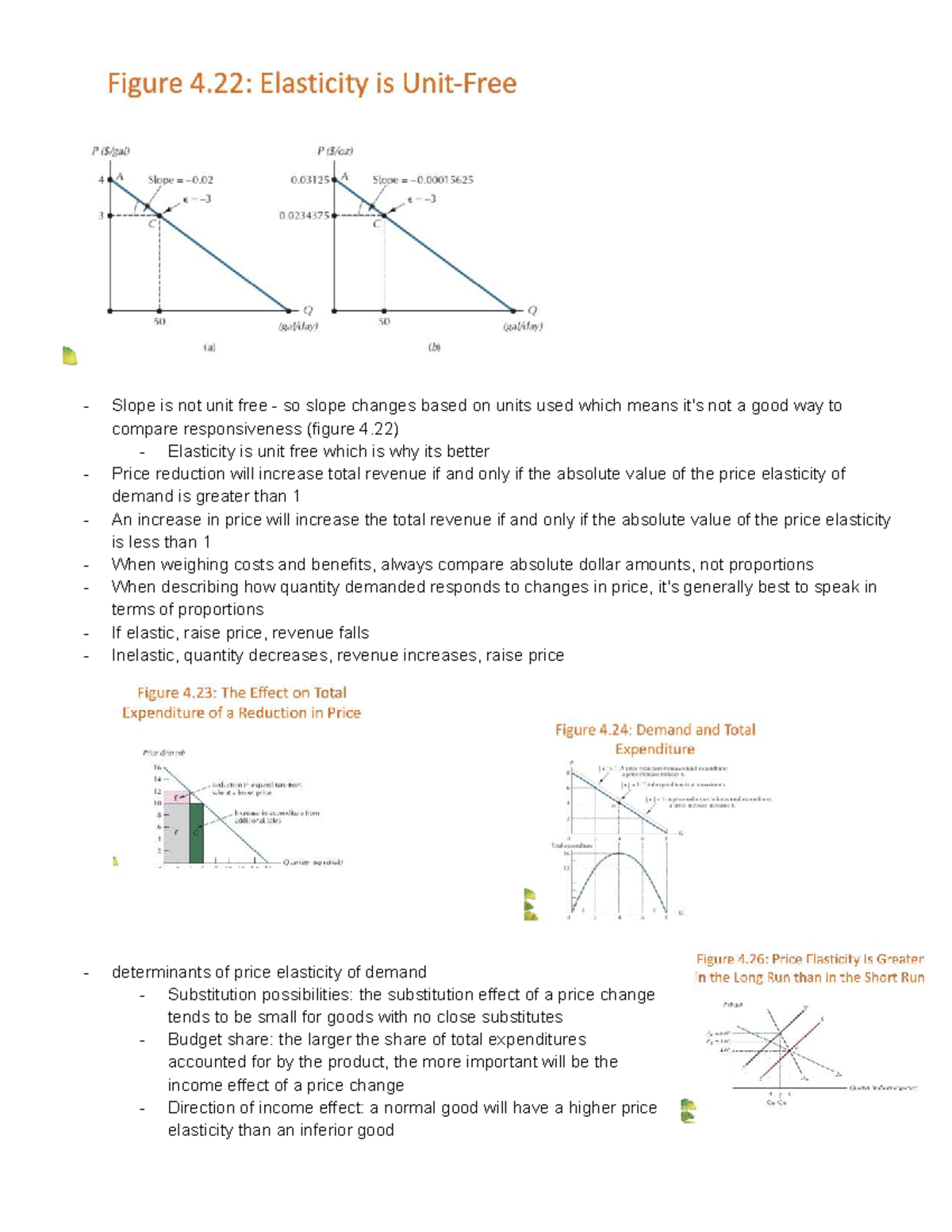
Price elasticity of demand (PED) is a fundamental metric used by economists to measure how sensitive the quantity demanded of a specific good is to a change in its price. While most goods in the real world exhibit some degree of price sensitivity—ranging from relatively inelastic (like life-saving medication) to relatively elastic (like luxury cars)—the concept of a perfectly elastic good represents an extreme theoretical boundary. In this scenario, the elasticity coefficient is infinite ($\infty$).
The Mathematical Foundation of Perfect Elasticity
To understand the theoretical example of a perfectly elastic good, one must first grasp the underlying mathematical formula for Price Elasticity of Demand:
$$PED = \frac{% \text{ Change in Quantity Demanded}}{% \text{ Change in Price}}$$
In the case of perfect elasticity, any increase in price, no matter how microscopic, causes the quantity demanded to drop to zero. Conversely, at the prevailing market price, consumers will purchase an infinite quantity of the good (or at least, all that the specific firm can produce). When you plug these values into the formula, the denominator (percentage change in price) becomes a value greater than zero, while the numerator represents a total collapse of demand, or the ratio leads toward an undefined, infinite value.
In a graphical representation, this creates a perfectly horizontal line on a standard supply and demand chart, where the Y-axis represents Price and the X-axis represents Quantity. This horizontal line indicates that the price is fixed by the market, and the individual seller has no power to influence it.
The Classic Theoretical Example: The Individual Farmer in a Global Market
The most cited example of a perfectly elastic good in economic textbooks is an individual producer of a standardized agricultural commodity, such as wheat, corn, or soybeans, operating within a state of perfect competition.
Consider a single wheat farmer in 2026. This farmer produces a product that is identical (homogeneous) to the wheat produced by millions of other farmers globally. The global market sets the price of wheat based on aggregate supply and demand. If the market price is $5.00 per bushel, the farmer can sell every single bushel they produce at that price.
Why Demand is Perfectly Elastic for the Farmer
- Product Homogeneity: To a buyer, one bushel of Grade A winter wheat is exactly the same as any other. There is no brand loyalty or perceived quality difference that allows the farmer to charge a premium.
- Small Market Share: The individual farmer’s output is so small relative to the global supply that whether they produce 1,000 bushels or 10,000 bushels, it has zero impact on the global price.
- Perfect Information: In 2026, global commodity exchanges provide real-time pricing data to all buyers. If the farmer attempts to sell wheat for $5.01, buyers will instantly see that the market price is $5.00 and will refuse to buy from that specific farmer. Demand for that farmer’s wheat immediately drops to zero.
- No Incentive to Lower Price: The farmer has no reason to sell for $4.99 because they can already sell their entire inventory at the market price of $5.00. Selling lower would simply result in a loss of potential revenue.
Requirements for a Perfectly Elastic Market
For a good to behave with perfect elasticity in theory, the market environment must satisfy several rigorous criteria. These conditions are rarely met in reality but serve as a "north star" for economic modeling and anti-trust analysis.
Homogeneous Products
The goods must be perfectly substitutable. If there is even a slight difference in packaging, location, service, or quality, the good is no longer perfectly elastic. For example, while "gasoline" might seem like a commodity, the location of the gas station (convenience) gives the owner some "price-making" power, meaning the demand is not perfectly elastic.
Large Number of Buyers and Sellers
There must be so many participants that no single agent can influence the price through their individual actions. This prevents monopolies or oligopolies from forming. In a perfectly elastic scenario, the firm is a "price taker," not a "price maker."
Perfect Information and Transparency
Buyers must have immediate access to all prices offered by all sellers. In the 2026 economy, AI-driven procurement bots and transparent blockchain ledgers bring us closer to this theoretical ideal in the digital commodity space, as price discrepancies are identified and closed almost instantly by automated systems.
Absence of Transaction Costs
The theory assumes there are no costs associated with switching from one seller to another. If it costs a buyer time or money to find a new seller, the original seller gains a small amount of price-setting power, breaking the perfect elasticity.
Theoretical Examples in the 2026 Digital Economy
While agricultural commodities are the traditional examples, modern economic theory has identified new frontiers that approximate perfect elasticity more closely than physical goods ever could.
Standardized Compute Credits
In 2026, the market for "standardized compute units" (a metric for cloud processing power) has become highly commodified. When different providers offer identical processing capabilities that are accessible via the same API standards, the demand for an individual provider's credits becomes nearly perfectly elastic. If Provider A raises the price per giga-flop by a fraction of a cent, automated load-balancing software shifts all demand to Provider B instantly.
Currency and Foreign Exchange
On a micro-scale, the demand for a specific unit of currency at a specific exchange rate is perfectly elastic. If you are selling USD for EUR on a global exchange, you cannot sell your USD for more than the current mid-market rate. If you try to "price" your dollars higher, the global market (the demand) will ignore your offer entirely, as identical dollars are available at the lower market price.
Tokenized Assets
Digital assets that represent a specific weight of gold or a specific share of a highly liquid stock also exhibit these traits. Because the underlying asset is identical and the trading environment is frictionless, the individual seller faces a horizontal demand curve.
Perfectly Elastic vs. Perfectly Inelastic Goods
To better understand the "example in theory," it is helpful to contrast it with its opposite: the perfectly inelastic good.
| Feature | Perfectly Elastic Good (Theory) | Perfectly Inelastic Good (Theory) |
|---|---|---|
| PED Value | Infinite ($\infty$) | Zero (0) |
| Demand Curve | Horizontal | Vertical |
| Price Sensitivity | Extreme; any change ends demand. | None; price changes do not affect quantity. |
| Consumer Behavior | Will only buy at one specific price. | Will buy the same amount regardless of price. |
| Example (Theoretical) | A single farmer's wheat. | Life-saving medicine with no substitutes. |
| Firm Power | Price Taker (Zero Power). | Price Maker (Maximum Power). |
The Impact on Revenue and Profit
For a firm facing perfectly elastic demand, the relationship between price, marginal revenue, and total revenue is unique. Because the price is constant ($P$), every additional unit sold adds exactly the price of that unit to the total revenue.
- Marginal Revenue (MR): This is the change in total revenue from selling one more unit. In perfect elasticity, $MR = Price$.
- Average Revenue (AR): Total revenue divided by quantity. In perfect elasticity, $AR = Price$.
Consequently, for these firms, the demand curve is identical to the Marginal Revenue and Average Revenue curves ($D = MR = AR$). From a management perspective, the firm’s only decision is how much to produce to minimize costs, as they have no control over the selling price. If they can produce a unit for less than the market price, they should theoretically produce as much as their capacity allows until their marginal costs rise to meet the market price.
Why Perfect Elasticity is Primarily a Theoretical Tool
Critics of classical economic models often point out that "perfectly elastic" goods do not exist in the real world. Several factors prevent real-world goods from achieving this status:
1. Brand and Reputation
Even in commodities, "Brand" exists. A farmer might have a reputation for reliability or easier logistics, which allows for a tiny bit of price flexibility. This shifts the demand from "perfectly elastic" to "highly elastic."
2. Supply Constraints
The theory of perfect elasticity assumes that at the market price, demand is infinite. However, in the real world, supply is never infinite. If a firm could sell an infinite amount at $5.00, they would eventually run out of resources, land, or labor to produce that good, leading to a shift in market dynamics.
3. Geographical Barriers
Transporting goods costs money. A bushel of wheat in Kansas is not the same as a bushel of wheat in Cairo if you are a baker in Cairo. The cost of shipping creates "local monopolies" or "spatial differentiation," which gives sellers the ability to raise prices slightly without losing all customers.
4. Non-Instantaneous Adjustments
Human consumers do not always react instantly. While bots in 2026 might react in milliseconds, human buyers might take days or weeks to realize a price has changed, providing a "buffer" that prevents demand from dropping to zero instantly.
Frequently Asked Questions
What is the primary characteristic of a perfectly elastic good?
The primary characteristic is that the quantity demanded is infinitely sensitive to price changes. A firm can sell any amount it wants at the prevailing market price, but if it raises the price even by the smallest margin, demand falls to zero.
Why is the demand curve for a perfectly elastic good horizontal?
The curve is horizontal because the price remains constant regardless of the quantity sold. Since the price ($Y$-axis) does not change as the quantity ($X$-axis) increases, the resulting line is perfectly flat.
Is air a perfectly elastic good?
No. Air is generally considered a "free good" in most contexts because it is not scarce. However, in specific economic contexts (like compressed air for diving), it is a private good. It does not fit the "perfectly elastic" definition because there isn't a single market price where demand is infinite and then zero; it follows more traditional supply and demand curves based on availability and cost of compression.
How does a firm in a perfectly elastic market maximize profit?
A firm maximizes profit by producing at the point where its Marginal Cost (MC) equals the Market Price (P). Since the firm cannot change the price, it must focus entirely on operational efficiency and cost control to ensure its marginal costs do not exceed the revenue generated by the last unit sold.
Can a monopoly ever have perfectly elastic demand?
No. By definition, a monopoly is the sole seller of a product with no close substitutes. Because consumers have no other options, the monopolist has "market power" and faces a downward-sloping demand curve, meaning they can raise prices and still retain some customers.
Practical Recommendations for 2026 Market Analysis
For businesses and investors operating in markets that approximate perfect elasticity—such as high-frequency trading, agricultural commodities, or standardized digital services—the following strategies are essential:
- Focus on Cost Leadership: Since you cannot influence the price, your only path to higher margins is through reducing the "Cost of Goods Sold" (COGS). Innovation should be directed toward process efficiency rather than product differentiation.
- Monitor Global Benchmarks: In these markets, localized data is less important than global indexes. Use real-time monitoring of primary exchanges (like the Chicago Board of Trade or digital commodity ledgers) to inform production levels.
- Hedge Against Supply Shocks: While demand is perfectly elastic at the market price, the market price itself can be highly volatile. Use futures contracts or options to lock in prices and protect against the inherent instability of commodity markets.
- Evaluate "Friction" Points: If you are a buyer, look for sellers who lack perfect information or have higher transaction costs. These "inefficiencies" are the only places where the rules of perfect elasticity break down, offering opportunities for arbitrage or better-than-market deals.