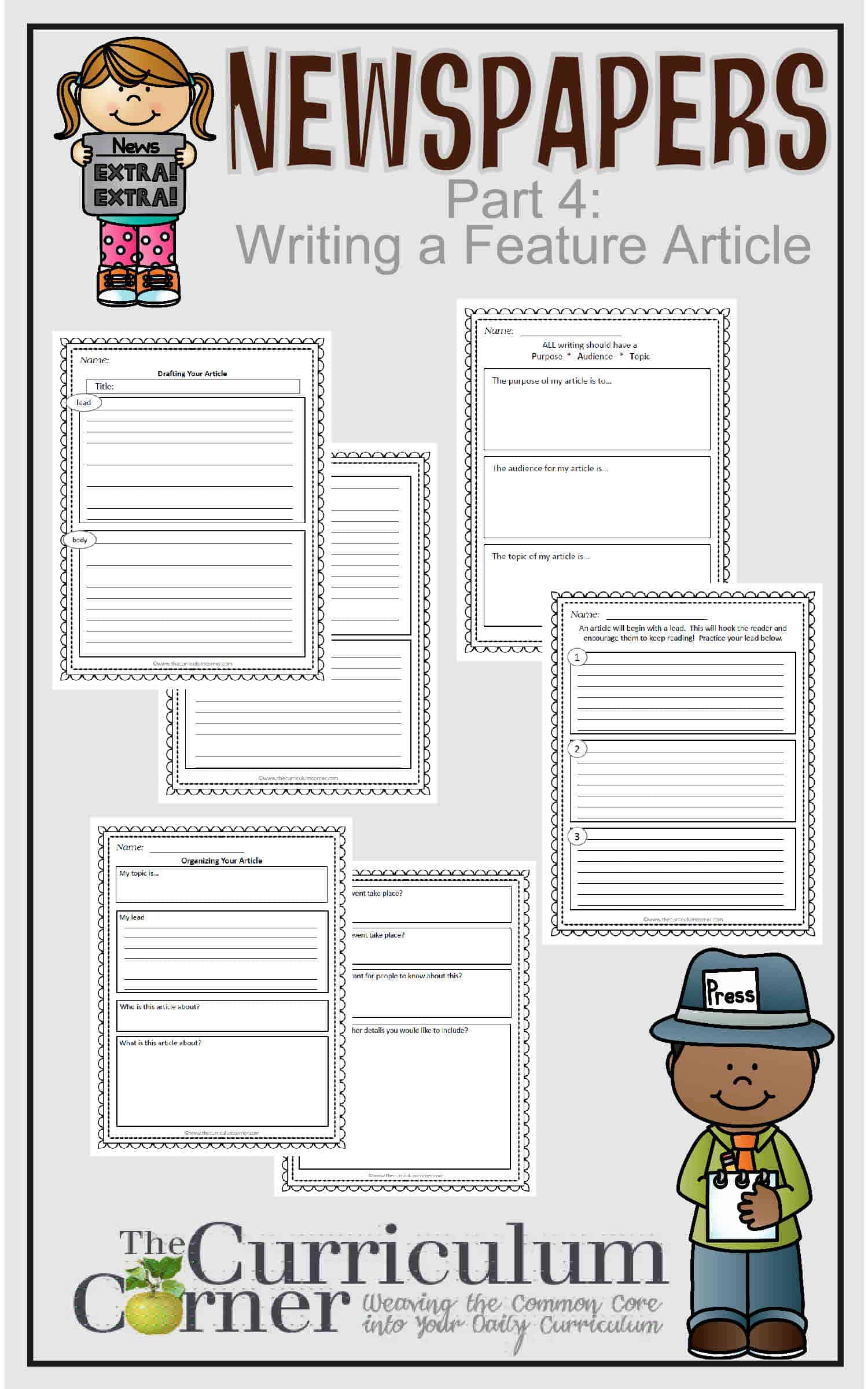
A newspaper feature article is a non-deadline-driven piece of creative journalism that explores a subject in depth, focusing on human interest, atmosphere, and detailed storytelling. Unlike a hard news report, which prioritizes the immediate "who, what, where, and when," a feature article emphasizes the "why" and "how," using narrative structure to engage the reader emotionally and intellectually.
Defining the Feature Article: Beyond Hard News
In the landscape of 2026 journalism, the distinction between hard news and feature writing remains central to editorial operations. Hard news—often referred to as straight reporting—is designed to inform the reader of recent events as efficiently as possible. It is compressed, objective, and front-loaded with the most critical information.
A feature article, by contrast, operates under a different set of rules. It is often described as "narrative journalism" or "literary journalism." Its primary purpose is to provide context, color, and emotional resonance. While hard news informs, a feature article experiences the story with the reader. These articles can range from personality profiles and human-interest stories to lifestyle pieces, investigative exposés, and long-form trend reporting. The defining characteristic of a feature is its staying power; because it is not tied strictly to a 24-hour news cycle, it remains relevant to the reader long after the initial publication date.
The Architecture of a Feature Article
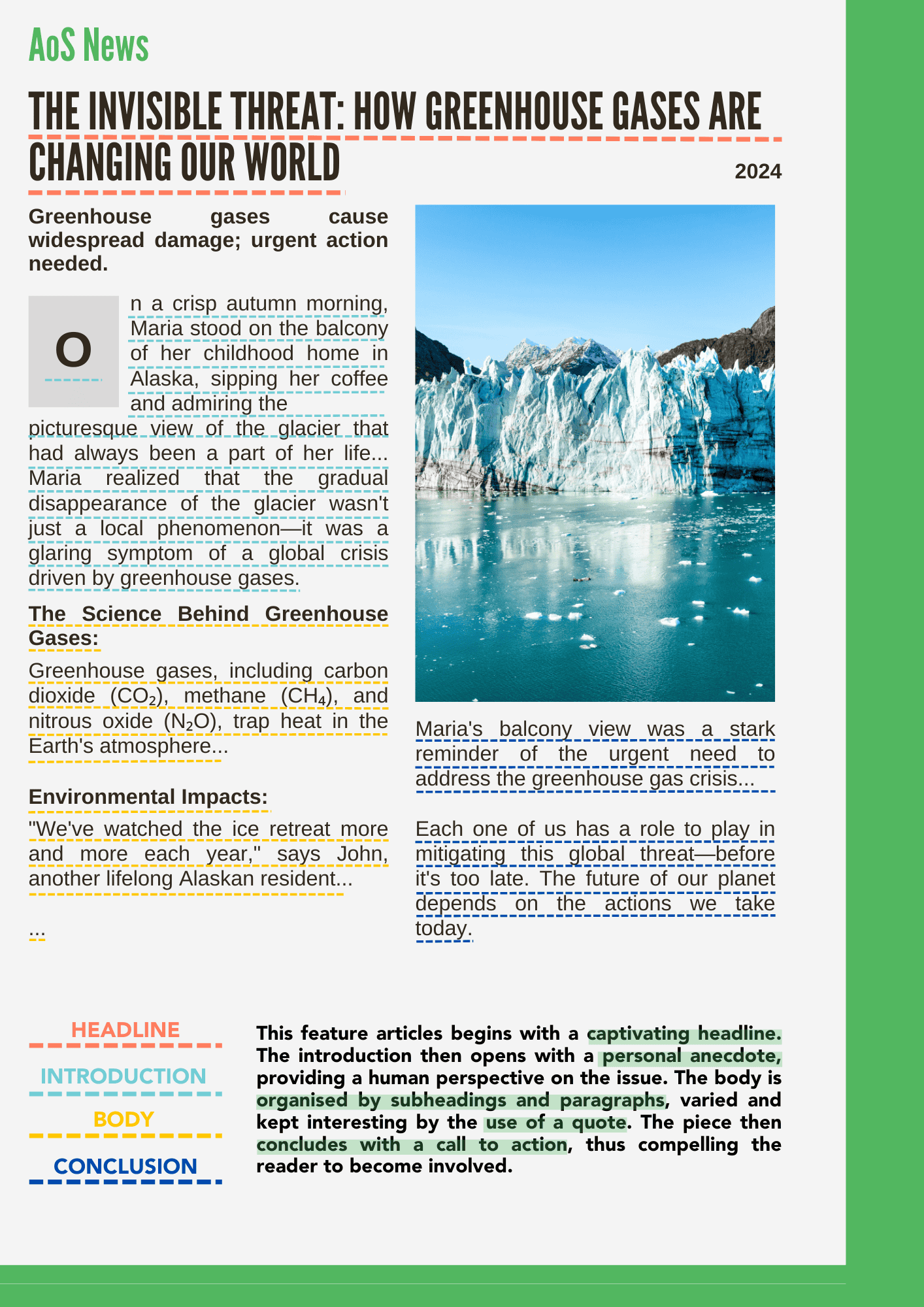
While a standard news story uses the "inverted pyramid" structure—placing the most critical facts at the very top—a feature article is often built like a short story or a novel. It requires a different architectural approach to keep the reader engaged throughout the piece.
The Lead: The Hook
The lead of a feature article must do more than summarize; it must transport. A feature lead often begins with a scene, an anecdote, a startling statistic, or a descriptive passage that establishes the atmosphere. It sets the tone for the entire narrative. The goal is to create an "open loop" in the reader’s mind, encouraging them to continue reading to resolve the tension introduced in the opening paragraphs.
The Body: Narrative Arc and Sustained Interest
Once the hook is established, the body of the feature article develops the narrative. This section requires a careful balance between primary research, expert commentary, and personal observation. Writers often use the "nut graf"—a paragraph that summarizes the "so what?"—to transition from the narrative lead into the meat of the story. This prevents the article from feeling like a random collection of anecdotes and provides a clear direction.
The Conclusion: The Full Circle
A strong feature conclusion often returns to the element introduced in the lead. If the story began with a specific person’s struggle, the ending might revisit that person to show how their situation has evolved or remains unchanged. It provides a sense of closure while leaving the reader with a final, lingering thought or takeaway.
Essential Components for Successful Feature Writing
Writing a high-quality feature article involves a specific workflow that differentiates it from quick-turn reporting. Understanding these components is critical for those seeking to contribute to professional publications.
- Immersive Research: Features rely on depth. This involves not only formal interviews but also "field reporting"—observing the subject in their natural environment.
- Characterization: In features, subjects are treated as characters. Writers must describe their surroundings, mannerisms, and speech patterns to build a three-dimensional portrait.
- Active Voice: Feature writing thrives on active, descriptive language. Using strong verbs and minimizing passive construction helps maintain the momentum of the narrative.
- The "Nut Graf": As mentioned, this is the essential bridge. It answers the reader’s question: "Why am I reading this now?"
- Pacing: Good features alternate between "scene" (where the reader sees the action) and "summary" (where the writer explains the context or background).
Comparison: Hard News vs. Feature Articles
| Feature | Hard News |
|---|---|
| Primary Goal | Engagement and context |
| Structure | Narrative (arc-based) |
| Deadline Pressure | Generally lower |
| Tone | Often personal/descriptive |
| Length | Flexible, often long-form |
| Priority | Inverted pyramid |
| Focus | High (immediate relevance) |
| Language | Neutral/objective |
The Role of Evidence and Research
A common misconception is that the "creative" nature of a feature article allows for loose adherence to facts. This is false. A feature article must be as rigorous in its fact-checking as a hard news story. In 2026, editorial standards for feature writers remain stringent. Every quote, statistic, and observation must be verifiable.
When using interviews, ensure you have accurate transcripts or notes. When citing studies, ensure you are referencing the primary source or the institution that conducted the research. If you are describing a location, ensure your physical observations are accurate to the period of writing. Accuracy establishes authority; without it, the narrative impact is lost, and the credibility of the publication is compromised.
Overcoming Common Writing Pitfalls
Even experienced writers can fall into traps when shifting from hard news to feature writing. Avoiding these mistakes is essential for creating compelling work.
1. The "Data Dump"
A common mistake is including every interview note and fact found during research. A feature should be curated. If a detail does not serve the narrative or explain the main point, it should be cut. Quality is measured by what you choose to leave out as much as what you include.
2. Lack of Focus
Without a strong central theme, a feature becomes a wandering essay. If you find yourself struggling to explain the point of your article in a single sentence, your focus is likely too broad. Tighten the scope until the narrative feels deliberate.
3. Over-editorializing
While features allow for more "voice" than hard news, they are not opinion pieces. Avoid inserting personal biases or unnecessary judgment. Let the facts and the subjects’ own words tell the story; if you have reported it well, the reader will naturally reach the conclusion you intend.
Practical Steps to Launching Your Feature Article
If you are currently working on a feature assignment, follow this professional workflow to ensure a polished final product:
- Establish the Angle: What is the one, singular story you are telling? Define this before you begin writing a single word.
- Organize Your Assets: Group your interview transcripts, research documents, and field notes by theme or chronological order.
- Draft the "Nut Graf" First: Before worrying about the introduction, write out the paragraph that contains the heart of your message. This will act as your anchor throughout the writing process.
- Write the Lead and the Conclusion: These are the bookends of your story. Knowing how you want to start and end provides a map for the body of the text.
- Refine and Tighten: During the editing phase, remove repetitive adjectives and replace weak verbs. Ensure the transition between scenes is smooth and logical.
Frequently Asked Questions
What is the ideal length for a feature article?
There is no "perfect" length, as it depends on the subject matter and the publication's house style. In 2026, standard newspaper features often range from 800 to 2,000 words. Long-form features can extend beyond 3,000 words, but these require a complex narrative arc to sustain reader interest.
Can a feature article have a bias?
While features are more subjective in their storytelling style than hard news, they must remain fair. You may choose which characters to focus on, but you must represent their perspectives accurately. Avoid taking a personal stance; present the evidence and allow the reader to make their own informed judgment.
How do I balance quotes and description?
A good rule of thumb is to use quotes for emotion and opinion, and your own voice for scene-setting and context. Do not use quotes to convey basic facts that you could state more clearly yourself. If a quote is long and repetitive, paraphrase it to maintain the pace of your narrative.
How do I handle sensitive subjects?
When writing about sensitive or controversial topics, transparency is key. Ensure you have obtained consent for sensitive interviews and verify your facts against multiple, independent sources. If a subject is vulnerable, be mindful of the potential impact of the publication on their life and maintain professional integrity above all else.
Next Steps for Aspiring Feature Writers
To refine your skills, begin by analyzing your favorite long-form features in reputable newspapers. Dissect their structure: identify the lead, locate the "nut graf," and note how they transition between scenes. Practice writing short-form profiles of people or events in your local community, focusing on narrative techniques rather than just reporting the facts. By consistently applying these structures to your work, you will develop the ability to tell stories that inform, resonate, and endure.