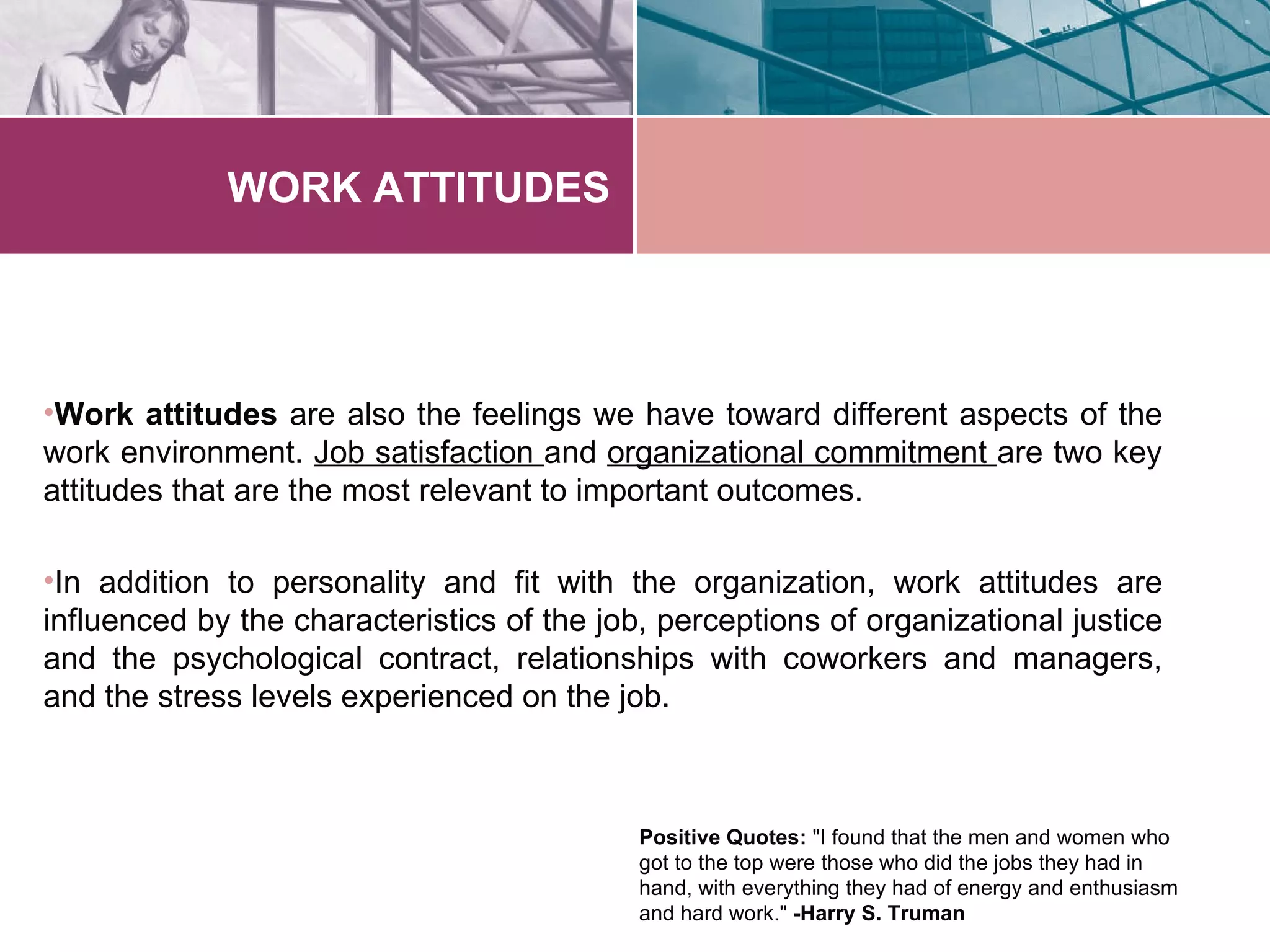
Attitudes in modern organizations function as the psychological bedrock driving employee engagement, team collaboration, and overall productivity, directly shaping how individuals interpret policies, react to organizational change, and interact with peers. Understanding and managing these workplace dispositions allows leaders to cultivate positive environments, mitigate resistance, and align individual mindsets with corporate objectives.
Defining Attitudes in the Workplace
To understand how attitudes work in modern organizations, one must first define what an attitude is within an organizational context. In organizational psychology, an attitude is a learned predisposition to respond in a consistently favorable or unfavorable manner with respect to a given object, person, policy, or event. Unlike transient emotions, which are intense, short-lived, and often lack a specific clear trigger, attitudes are relatively stable evaluations that persist over time.
An attitude is traditionally understood through the lens of the ABC model, which comprises three core components:
- Affective Component: The emotional or feeling segment of an attitude. For example, "I dislike my job because my supervisor is unsupportive."
- Behavioral Component: An intention to behave in a certain way toward someone or something. For example, "I am going to look for another job because of my poor working conditions."
- Cognitive Component: The opinion, belief, or knowledge segment of an attitude. For example, "My job does not offer adequate pathways for professional growth."
In contemporary workplaces, these three components interact dynamically. When an employee holds a strong cognitive belief that their organization values diversity, it typically generates positive affective feelings of pride and organizational loyalty, which subsequently manifest in supportive behavioral outcomes such as mentoring junior staff or advocating for the company externally. Conversely, cognitive dissonance—the psychological discomfort a person feels when holding two or more contradictory beliefs, ideas, or values—occurs when organizational mandates clash with an employee's personal ethics. Resolving this dissonance requires targeted interventions from human resources and operational leadership.
Key Types of Work Attitudes and Their Organizational Impact
Modern organizational research focuses heavily on specific job attitudes that predict performance, turnover, and well-being. While hundreds of distinct attitudes exist, organizational behavior specialists typically prioritize a few major categories.
Job Satisfaction
Job satisfaction refers to a positive feeling about one's job resulting from an evaluation of its characteristics. It is perhaps the most widely studied attitude in organizational research. High job satisfaction correlates with lower absenteeism, lower turnover intentions, and elevated customer satisfaction metrics in service environments. Employees who report high satisfaction feel that their compensation is fair, their work is intellectually stimulating, and their physical working conditions are supportive.
Job Involvement
Job involvement measures the degree to which a person identifies psychologically with their job and considers their perceived performance level important to self-worth. Employees with a high level of job involvement strongly care about the kind of work they do, often investing discretionary effort to ensure project success. This attitude is distinct from organizational commitment, as it focuses specifically on the work itself rather than the employing institution.
Organizational Commitment
Organizational commitment is the degree to which an employee identifies with a particular organization and its goals, wishing to maintain membership within it. This construct is frequently broken down into three dimensions:
- Affective Commitment: An emotional attachment to the organization and a belief in its values.
- Continuance Commitment: An awareness of the economic and social costs associated with leaving the organization.
- Normative Commitment: A moral obligation to continue employment based on a sense of duty or loyalty.
The table below summarizes these primary work attitudes, highlighting their core definitions and primary organizational impacts.
| Attitude Type | Core Definition | Primary Organizational Impact |
|---|---|---|
| Job Satisfaction | Evaluative judgment of one's job characteristics and overall work environment. | Reduces voluntary turnover and day-to-day absenteeism; elevates service quality. |
| Job Involvement | Psychological identification with the specific tasks and performance outcomes of a role. | Increases intrinsic motivation, discretionary effort, and task ownership. |
| Organizational Commitment | Emotional, normative, or calculated attachment to the employing company and its mission. | Enhances institutional stability, long-term retention, and organizational citizenship behaviors. |
| Perceived Organizational Support | Employee belief regarding how much the company values their contributions and well-being. | Boosts psychological safety, innovation, and resilience during operational pivots. |
Psychological Mechanisms Governing Attitude Formation
Attitudes are not innate; they are formed and modified through socialization, direct experience, and social learning within the workplace ecosystem. Recognizing these mechanisms helps managers understand why some teams embrace modernization initiatives while others resist them.
Social Learning and Peer Influence
Employees spend a significant portion of their waking hours interacting with colleagues. According to Albert Bandura’s social learning theory, individuals acquire attitudes by observing the behaviors and expressed opinions of peers, mentors, and senior leaders. If a respected veteran employee frequently expresses cynicism toward new software implementations, newer team members are statistically more likely to adopt a similarly cynical attitude without examining the software's actual utility.
Psychological Contracts
The psychological contract represents the unwritten set of expectations, beliefs, and obligations operating between an employee and their organization. This encompasses implicit agreements regarding job security, career advancement, workload reasonableness, and mutual respect. When an organization violates this contract—such as through sudden layoffs following assurances of stability—employee attitudes shift rapidly from trust and commitment to cynicism, alienation, and active disengagement.
Role Stressors and Environmental Pressures
Modern workplaces are characterized by rapid digital transformation, hybrid schedules, and heightened productivity demands. Role ambiguity (unclear job expectations) and role conflict (contradictory demands from different stakeholders) directly erode positive work attitudes. Prolonged exposure to these stressors triggers emotional exhaustion, which degrades both job satisfaction and organizational commitment over time.
Managing and Shaping Attitudes in the Contemporary Enterprise
Because attitudes directly predict behavior, progressive organizations treat attitude management not as a manipulative exercise, but as an integral component of organizational development and human resource strategy.
Fostering Psychological Safety
Originally popularized by Harvard Business School professor Amy Edmondson, psychological safety is a shared belief that the team is safe for interpersonal risk-taking. When employees feel secure that expressing dissenting views, reporting errors, or suggesting unconventional ideas will not lead to punishment or humiliation, their underlying attitudes toward change become far more constructive. Leaders build psychological safety by actively soliciting feedback, admitting their own mistakes, and responding to bad news with curiosity rather than retribution.
Implementing Structured Feedback Loops
Annual performance reviews are insufficient for monitoring and improving work attitudes. Modern organizations utilize continuous listening strategies, including pulse surveys, anonymous feedback channels, and regular one-on-one check-ins. These tools allow management to detect early warning signs of declining morale, disengagement, or rising cynicism before these attitudes harden into toxic behaviors or resignation letters.
Aligning Purpose and Corporate Values
Modern workers—particularly younger generational cohorts—place a high premium on meaningful work and value alignment. Organizations that clearly articulate their social impact, ethical standards, and long-term vision cultivate higher levels of normative and affective commitment. When employees see a direct line of sight between their daily tasks and a larger, positive purpose, their professional attitudes transition from transactional compliance to genuine dedication.
Common Pitfalls in Workplace Attitude Management
Attempting to engineer or manage workplace attitudes without strategic discipline often leads to counterproductive outcomes. Leaders must navigate several well-documented pitfalls:
- Treating Symptoms Rather Than Root Causes: Forcing employees to attend positivity workshops while ignoring systemic issues like unmanageable workloads, unfair compensation, or broken operational processes creates deep cynicism. Attitudes are symptoms of organizational reality; they cannot be permanently altered while the underlying stressors remain unaddressed.
- Ignoring Cultural Subgroups: Treating an organization as a monolith is a strategic error. Attitudes vary wildly across departments, geographic locations, and hierarchical levels. A change initiative that is embraced by corporate headquarters may generate intense resistance in operational field units due to differing daily realities.
- Overlooking Leadership Misalignment: Employees watch executive behavior far more closely than they read mission statements. If senior leaders preach transparency and collaboration while practicing siloed, autocratic decision-making, employee attitudes will rapidly sour into distrust.
Frequently Asked Questions
Can negative work attitudes be successfully changed?
Yes, but changing an attitude requires addressing its underlying root causes rather than demanding superficial compliance. If an employee's negative attitude stems from role ambiguity, clarifying their responsibilities and providing appropriate training can shift their cognitive evaluation. Management must focus on altering the environmental factors—such as communication gaps, unfair workloads, or lack of recognition—that generated the negative attitude in the first place.
How do remote and hybrid work models affect employee attitudes?
Remote and hybrid models introduce both benefits and challenges to work attitudes. On one hand, schedule flexibility often increases job satisfaction and perceived organizational support. On the other hand, isolation can erode organizational commitment and weaken interpersonal trust among peers. Organizations combat this by intentional communication, establishing clear asynchronous norms, and designing purposeful in-person collaboration moments.
What is the difference between employee satisfaction and employee engagement?
While related, satisfaction and engagement are distinct constructs. Job satisfaction measures an employee's contentment or happiness with their job conditions, compensation, and environment. Employee engagement goes a step further, measuring an individual's discretionary effort, passion, and psychological investment in the organization's success. A satisfied employee may simply do their required tasks and go home, whereas an engaged employee actively advocates for the company and innovates within their role.
How can managers measure workplace attitudes effectively?
Managers measure workplace attitudes primarily through validated quantitative instruments, such as employee net promoter scores (eNPS), pulse surveys, and job satisfaction inventories, combined with qualitative insights gathered from focus groups and exit interviews. To ensure honest responses, these assessments must maintain strict anonymity and be paired with transparent communication regarding how the data will be used to drive organizational improvements.
Strategic Next Actions
To apply these insights within your own organizational context, begin by conducting a comprehensive audit of current employee sentiment using anonymous pulse surveys focused on psychological safety, role clarity, and perceived organizational support. Identify the primary friction points driving negative attitudes—whether structural, operational, or cultural—and prioritize addressing the top two issues with cross-functional working groups. Maintain transparent, two-way communication channels throughout the remediation process to rebuild trust, align team purpose, and foster long-term organizational commitment.