A structured ASO plan is a systematic, data-driven framework designed to improve a mobile application’s visibility and conversion rate within the Apple App Store and Google Play Store. By integrating keyword intelligence, creative asset optimization, and technical performance monitoring, this approach ensures sustainable organic growth and reduces reliance on paid user acquisition.
In the competitive landscape of 2026, launching a mobile app without a rigorous App Store Optimization (ASO) strategy is equivalent to opening a retail store in a basement with no signage. With millions of apps vying for attention, the "build it and they will come" philosophy has been replaced by sophisticated algorithmic targeting. A structured ASO plan moves beyond simple keyword placement; it is a holistic cycle of research, implementation, testing, and refinement. To succeed, developers must treat ASO as an ongoing product requirement rather than a one-time marketing task.
The Foundations of a Modern ASO Framework
Before executing specific tactics, it is essential to understand that ASO is bifurcated into two primary objectives: Visibility and Conversion. A structured plan must address both simultaneously, as high visibility with low conversion results in wasted impressions, while high conversion with low visibility leads to stagnation.
Visibility: The Discovery Pillar
Visibility refers to how easily users find your app when searching for specific terms or browsing through categories. In 2026, discovery is heavily influenced by the store’s semantic understanding of your app’s purpose. This involves:
- Search Rankings: Appearing in the top results for high-intent keywords.
- Browse/Explore: Being featured in "Similar Apps" or "You Might Also Like" sections.
- Category Rankings: Maintaining a high position within specific niches (e.g., Productivity, Finance).
Conversion: The Persuasion Pillar
Once a user finds your app, the conversion aspect—often referred to as Conversion Rate Optimization (CRO)—takes over. This involves convincing the user that your app provides the best solution to their problem. Elements influencing this include your app icon, screenshots, video previews, and the cumulative sentiment of your ratings and reviews.
Phase 1: Research and Keyword Intelligence
The first step in a structured ASO plan is the "Discovery Phase." You cannot optimize what you do not understand. This requires a deep dive into your target audience's language and your competitors' strategies.
Intent-Based Keyword Mining
Keyword research in 2026 focuses on "intent clusters" rather than isolated strings. You must identify:
- Core Keywords: Terms that describe exactly what the app does (e.g., "budget tracker").
- Problem-Solving Keywords: Terms users search for when they have a pain point (e.g., "stop overspending").
- Competitor Keywords: Terms for which your direct rivals are ranking.
Utilize tools like the Apple Search Ads (ASA) storefront to identify search popularity scores. These scores provide an objective measure of how often a term is searched, allowing you to prioritize high-volume, low-competition keywords.
Competitor Benchmarking
Analyze the top five competitors in your niche. Examine their update frequency, the "What’s New" section, and their creative evolution. If a competitor has used the same screenshot style for six months, it may indicate a winning formula; if they change it every two weeks, they are likely still testing. Pay close attention to their "Review Highlights" to see what features users praise or complain about, as these can become your unique selling points (USPs).
Phase 2: On-Metadata Optimization
On-metadata refers to the elements you can control directly within the App Store Connect or Google Play Console. These are the primary signals the store algorithms use to index your app.
Textual Elements and Hierarchy
The weight assigned to different text fields varies between the two major platforms. A structured plan must adapt accordingly:
- App Title: This is the most heavily weighted field. It should contain your brand name and your most important keyword.
- Subtitle (iOS) / Short Description (Android): These provide additional context and should include secondary keywords while remaining highly readable.
- Keyword Field (iOS Only): A hidden 100-character field where you list keywords separated by commas. Avoid spaces and do not repeat words already used in the title or subtitle.
- Long Description: While the Apple App Store algorithm does not index the long description for search rankings, Google Play’s algorithm relies on it heavily. For Android, you should maintain a keyword density of roughly 2-3% without "stuffing" the text.
Visual Asset Strategy
Visuals are the primary drivers of conversion. In 2026, the trend has shifted toward "Social-Proof Centric" designs.
- Icons: Should be simple, recognizable, and tested against various background colors (Light and Dark mode).
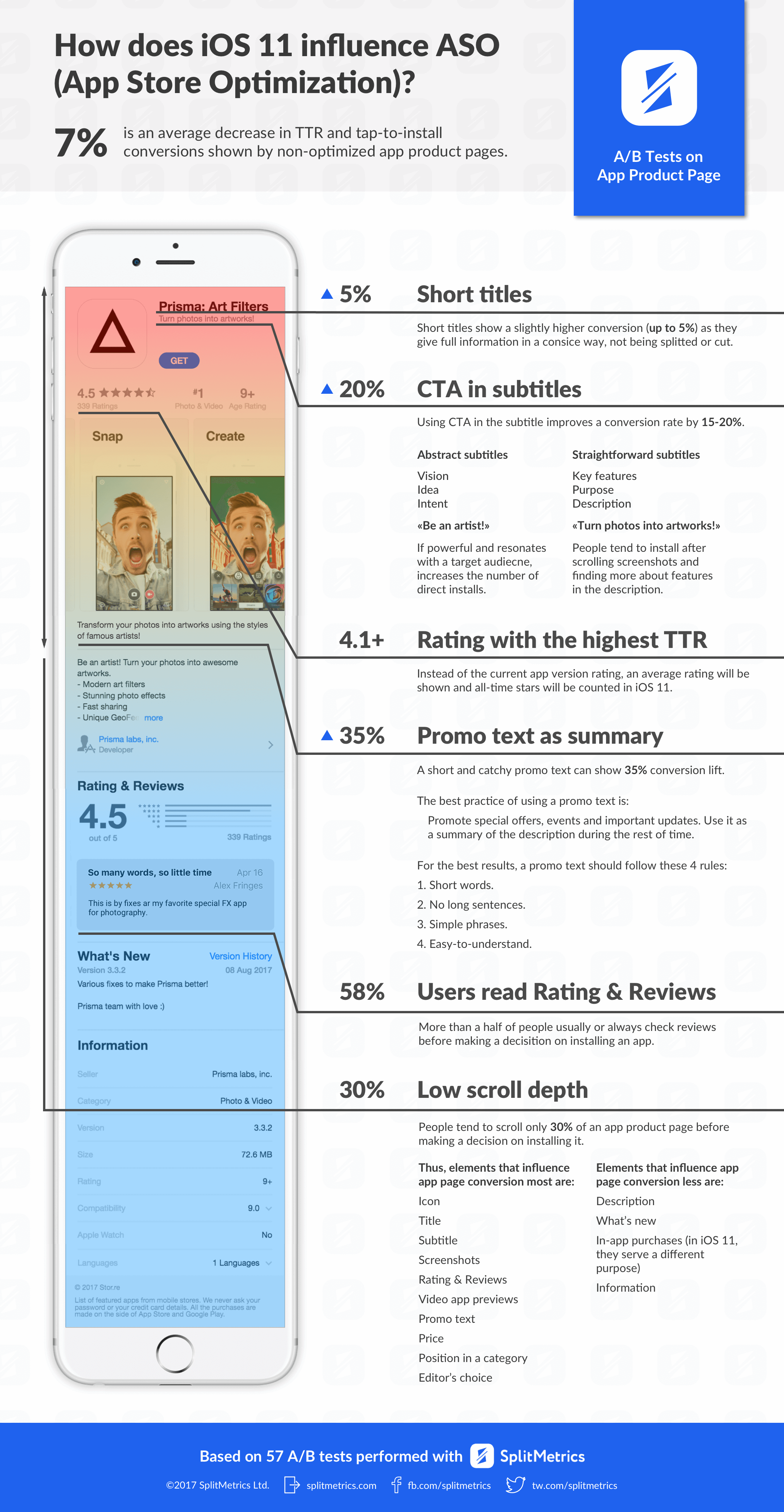
- Screenshots: The first two screenshots must communicate your value proposition instantly. Use large captions and high-contrast imagery.
- App Previews/Promotional Videos: These should focus on the user interface (UI) and the "time-to-value"—how quickly the user can achieve their goal using your app.
Phase 3: Technical Signals and Off-Metadata
Algorithm updates in 2026 have placed increasing importance on "App Quality" as a ranking factor. No amount of keyword optimization can save an app with poor technical performance.
Performance Metrics
Both Apple and Google prioritize apps that provide a stable user experience. Key metrics include:
- Crash Rate: High crash rates lead to immediate de-prioritization in search rankings.
- ANR (App Not Responding): Specifically for Google Play, ANR rates are a critical health signal.
- App Size: Smaller apps tend to have higher conversion rates, especially in regions with limited data connectivity.
The Feedback Loop: Ratings and Reviews
Ratings are a quantitative signal (the number), while reviews are a qualitative signal (the content). Algorithms scan reviews for keywords, meaning if users frequently describe your app as a "great meditation tool," your ranking for "meditation tool" may increase organically.
A structured plan must include a Review Management Protocol:
- Prompting: Use the native API prompts at "high-five moments" (e.g., after a user successfully completes a task).
- Replying: Respond to negative reviews within 24-48 hours. This not only satisfies the frustrated user but demonstrates to prospective users that the developer is active and helpful.
Phase 4: Measurement, Testing, and Iteration
ASO is not a "set it and forget it" project. It is a continuous loop. Once you implement your metadata, you must monitor the impact.
A/B Testing (PPO and CSL)
Use Product Page Optimization (PPO) on iOS and Custom Store Listings (CSL) on Android to run split tests on your icons, screenshots, and videos. Only test one variable at a time to ensure the results are statistically significant. For example, test a "Blue" icon against a "Green" icon for 14 days before drawing conclusions.
Analyzing the "ASO Uplift"
Measure the ratio of organic installs to paid installs. A successful ASO plan should see an "ASO Uplift," where paid marketing efforts also drive organic discovery. As your app gains more downloads through paid ads, its category ranking improves, leading to more organic visibility.
Platform Comparison: iOS vs. Android
While the core principles remain the same, the execution differs significantly between the two major app stores.
| Feature | Apple App Store (iOS) | Google Play Store (Android) |
|---|---|---|
| Title Length | 30 Characters | 30 Characters |
| Primary Ranking Factor | App Title & Keyword Field | App Title & Long Description |
| Keywords Field | Yes (100 Characters) | No (Uses Description Indexing) |
| Short Description | Subtitle (30 Characters) | Short Description (80 Characters) |
| A/B Testing Tool | Product Page Optimization (PPO) | Google Play Experiments |
| Backlinks | Minimal Impact | Significant Impact (SEO Influence) |
| Review Indexing | Medium Weight | High Weight (Keywords in Reviews) |
Advanced Strategy: Custom Product Pages (CPPs)
In 2026, the use of Custom Product Pages (CPPs) has become a cornerstone of structured ASO. CPPs allow developers to create up to 35 different versions of a product page, each with different screenshots and promotional text.
By linking specific CPPs to tailored marketing campaigns (such as social media ads or influencer partnerships), you can ensure that the user’s journey is seamless. For example, if you are running an ad specifically about "Expense Tracking" for a general finance app, the user should land on a CPP that highlights the expense tracking interface, rather than a generic home page. This alignment drastically increases the conversion rate and lowers the Cost Per Install (CPI).
Common Pitfalls in ASO Planning
Despite having a plan, many developers fail by falling into these common traps:
- Keyword Stuffing: Attempting to force too many keywords into a title makes the app look unprofessional and can lead to rejection or penalties from the store editors.
- Ignoring Seasonality: An ASO plan must account for seasonal trends. For example, fitness apps should shift their keyword focus toward "resolutions" and "weight loss" in January, while retail apps must optimize for "deals" and "gifting" in November.
- Neglecting Localization: Simply translating keywords via automated tools is insufficient. Cultural nuances dictate different search behaviors. A "football" app in the UK needs to be a "soccer" app in the US, and creative assets should reflect local demographics and aesthetics.
- Static Creative Assets: Consumer tastes change. A screenshot style that worked in 2024 may look dated in 2026. Refreshing creatives every quarter helps maintain a "freshness" signal in the algorithm.
Troubleshooting Low Visibility
If your structured ASO plan is not yielding results after 4–6 weeks, consider the following troubleshooting steps:
- Re-evaluate Keyword Difficulty: You may be targeting terms that are too competitive for your app’s current authority level. Move toward long-tail keywords (e.g., instead of "Fitness," try "Yoga for Beginners at Home").
- Check "Vitals": Visit the Google Play Console Vitals or Apple App Analytics to ensure your crash rate is not suppressing your rankings.
- Analyze Conversion Drop-off: If impressions are high but downloads are low, your screenshots or app icon are likely the weak link.
FAQ
How long does it take to see results from an ASO update?Typically, it takes the store algorithms 1 to 2 weeks to fully index new text metadata. However, the impact on rankings and organic downloads is usually measured over a 30-day period to account for weekly fluctuations in user behavior.
Can I use the same keywords for both iOS and Android?While the core keywords will remain the same, the implementation must differ. On iOS, you use a dedicated keyword field. On Android, you must integrate those keywords naturally into a long-form description. Furthermore, users on different platforms may use different terminology.
Does increasing paid spend improve ASO?Indirectly, yes. Higher download velocity (the speed at which an app gains new users) is a significant ranking factor. When you run paid ads, your total downloads increase, which can push your app higher in category rankings and search results, thereby increasing organic visibility.
How often should I update my ASO plan?A structured ASO plan should be reviewed monthly and updated at least once per quarter. Significant changes to the store algorithms or the entry of a major new competitor may require more frequent adjustments.
Are ratings more important than keywords?They serve different purposes. Keywords help you be "found," while ratings help you be "chosen." However, in 2026, low ratings (below 4.0 stars) can actively penalize your search visibility, making them a foundational requirement for any ASO success.
Final Recommendation
To achieve long-term success, developers should implement a "Test-Measure-Learn" cycle within their ASO plan. Start by optimizing your "on-metadata" for high-intent keywords, then move to rigorous A/B testing of your visual assets using native store tools. By maintaining a focus on technical excellence and user sentiment, you create a virtuous cycle where high-quality users drive better rankings, which in turn attract more high-quality users. Continuous iteration is the only way to maintain a competitive edge in the ever-evolving 2026 app economy.