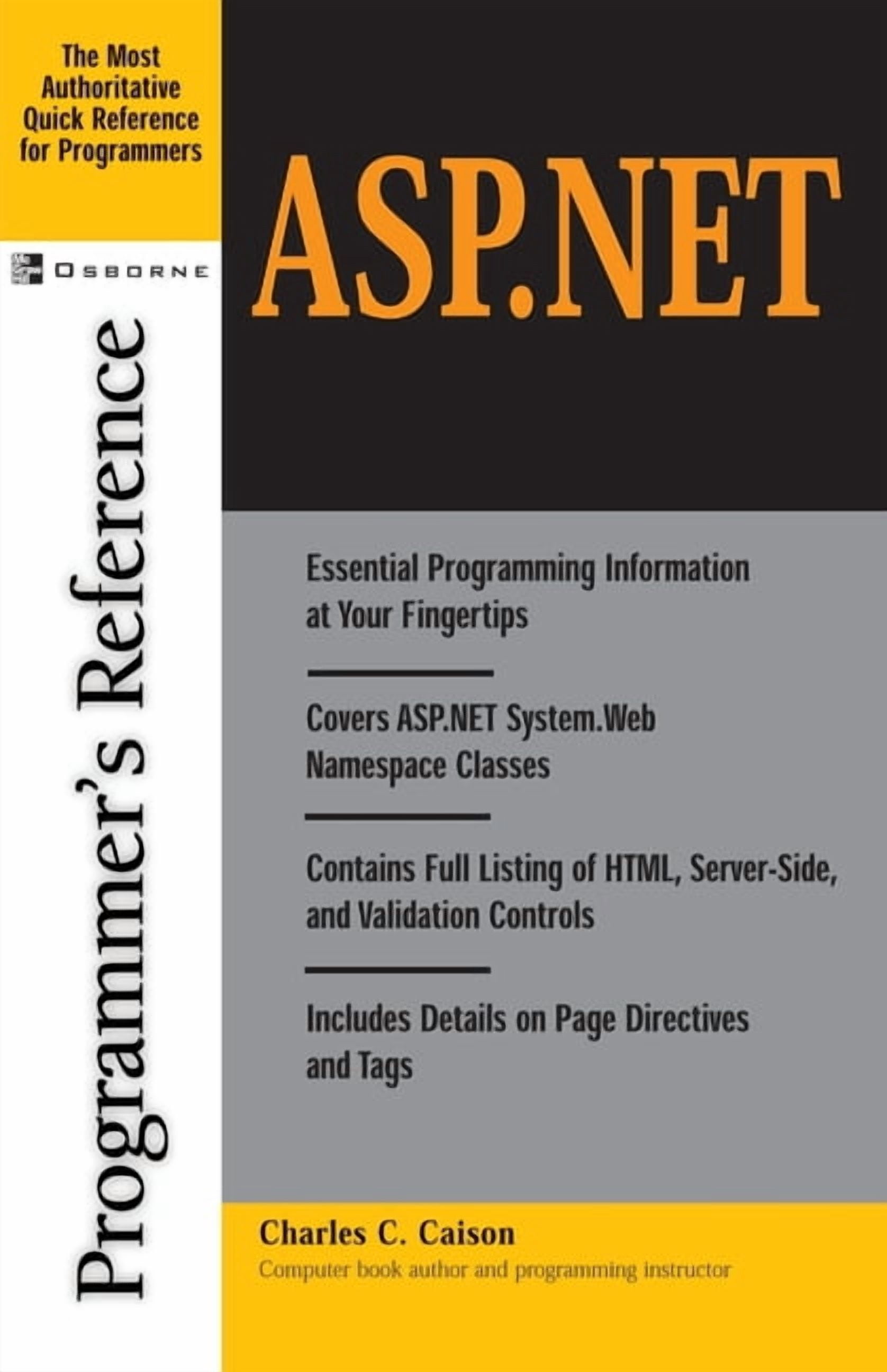
An ASP.NET programmer is a specialized software engineer who designs, builds, and maintains web applications using Microsoft’s .NET ecosystem. These professionals leverage languages like C#, frameworks such as ASP.NET Core, and cloud platforms like Azure to create scalable, secure, and high-performance solutions ranging from enterprise-level APIs to interactive front-end web interfaces.
The role of an ASP.NET programmer has undergone a massive transformation over the last decade. As we navigate 2026, the distinction between "web developer" and "systems architect" has blurred. Today’s ASP.NET specialist is expected to manage cross-platform environments, integrate sophisticated artificial intelligence models, and optimize applications for high-frequency cloud deployments. This guide explores the essential skills, career paths, and technical requirements for mastering the ASP.NET landscape in 2026.
Defining the Modern ASP.NET Programmer Role
In 2026, being an ASP.NET programmer means working within the unified .NET ecosystem (specifically .NET 10 and the emerging .NET 11). The legacy "Framework" era is a distant memory for most modern builds, though some maintenance roles still exist. The contemporary programmer focuses on ASP.NET Core, a high-performance, open-source framework designed for building modern, cloud-enabled, internet-connected apps.
The modern role is characterized by versatility. You are no longer restricted to Windows servers; you are building applications that run on Linux, macOS, and in Docker containers. The focus has shifted from simple "server-side rendering" to a hybrid approach involving Minimal APIs, Blazor for client-side interactivity, and Native AOT (Ahead-of-Time) compilation for lightning-fast startup times in serverless environments.
Professional ASP.NET programmers are usually categorized by their specific focus:
- Back-End Specialists: Focus on data integrity, API design (REST and gRPC), and complex business logic.
- Full-Stack Developers: Utilize Blazor or integrate ASP.NET back-ends with JavaScript frameworks like React or Angular.
- Cloud-Native Developers: Specialize in microservices, distributed caching, and serverless functions within the Microsoft Azure ecosystem.
Essential Technical Skill Set for 2026
The technical requirements for an ASP.NET programmer are rigorous. Proficiency is not merely about writing code that works; it is about writing code that is maintainable, testable, and optimized for the cloud.
Mastery of C# and the .NET Runtime
The primary language of the ASP.NET programmer is C#. By 2026, versions 14 and 15 have introduced advanced features that simplify code while increasing performance. A senior programmer must understand:
- Asynchronous Programming: Deep knowledge of
Task,async, andawaitto prevent thread blocking. - LINQ (Language Integrated Query): Efficiently querying collections and databases.
- Memory Management: Understanding how the Garbage Collector (GC) works and utilizing
SpanandMemoryfor high-performance scenarios.
ASP.NET Core Framework Deep-Dive
The framework itself is the "bread and butter" of the role. You must be comfortable with the following core components:
- Dependency Injection (DI): The built-in DI container is central to how ASP.NET Core operates. You must know how to manage service lifetimes (
Transient,Scoped,Singleton). - Middleware Pipeline: Understanding how requests flow through the application and how to inject custom logic for logging, authentication, and error handling.
- Entity Framework Core (EF Core): The dominant Object-Relational Mapper (ORM). Programmers must know how to optimize migrations, use "Code-First" approaches, and write efficient raw SQL when necessary.
Front-End Evolution: Blazor and Beyond
While many ASP.NET programmers focus on the back-end, the rise of Blazor has revolutionized the front-end for C# developers. In 2026, Blazor provides a unified model where you can write client-side logic in C# using WebAssembly (Wasm). This allows for code sharing between the server and the browser, drastically reducing the "context switching" previously required when moving between C# and JavaScript.
Architectural Patterns and Best Practices
A successful ASP.NET programmer understands that architecture is just as important as syntax. In the current landscape, moving beyond the traditional Model-View-Controller (MVC) pattern is often necessary.
Clean Architecture and DDD
Modern enterprise applications frequently utilize Clean Architecture (or Onion Architecture). This approach separates the core business logic from external concerns like databases or UI frameworks. By using Domain-Driven Design (DDD) principles, programmers ensure that the software reflects the real-world business problems it is meant to solve.
Microservices and Distributed Systems
With the maturity of Dapr (Distributed Application Runtime) and .NET Aspire, building microservices has become a standard requirement for senior ASP.NET roles. Programmers must understand:
- Service Discovery: How services find and communicate with each other.
- Resiliency Patterns: Implementing retries, circuit breakers, and timeouts using libraries like Polly.
- Message Brokers: Using RabbitMQ or Azure Service Bus for asynchronous communication between services.
Security-First Development
Security is no longer an afterthought. An ASP.NET programmer must be proficient in:
- OAuth2 and OpenID Connect: Utilizing identity providers like Microsoft Entra ID (formerly Azure AD) or Auth0.
- Data Protection: Implementing encryption at rest and in transit.
- OWASP Top 10: Proactively defending against common web vulnerabilities like SQL injection and Cross-Site Scripting (XSS).
The 2026 Career Path: From Junior to Lead
The journey of an ASP.NET programmer is a continuous learning process. The following table outlines the typical expectations and salary ranges (estimated for the 2026 global market context) for different seniority levels.
| Role Level | Primary Focus | Key Technologies | Estimated Annual Salary (USD) |
|---|---|---|---|
| Junior Programmer | Feature implementation, bug fixes | C#, ASP.NET Core Basics, SQL | $75,000 – $95,000 |
| Intermediate | API design, Unit testing, EF Core | Microservices, Redis, Docker | $100,000 – $135,000 |
| Senior Programmer | System architecture, Performance tuning | Azure/AWS, CI/CD, Security | $140,000 – $185,000 |
| Lead / Architect | Strategic planning, Team mentoring | Kubernetes, Multi-tenant Design | $190,000 – $250,000+ |
Educational Requirements and Certifications
While many programmers hold a Computer Science degree, the field is increasingly open to those with equivalent experience or specialized certifications. In 2026, the Microsoft Certified: Azure Developer Associate remains the "gold standard" for ASP.NET professionals, as it validates both coding skills and cloud proficiency.
Modern Development Tools and Workflow
The productivity of an ASP.NET programmer is heavily tied to their tooling. In 2026, the environment is highly integrated with AI-assisted coding tools.
- Visual Studio 2022/2025: Still the premier Integrated Development Environment (IDE) for heavy enterprise work, offering deep debugging and profiling tools.
- Visual Studio Code (VS Code): Often the preferred choice for cross-platform development on Linux or macOS, especially when paired with the C# Dev Kit.
- GitHub Copilot and AI Extensions: Modern programmers use AI to generate boilerplate, write unit tests, and explain complex legacy code. This is not a replacement for logic but a powerful "co-pilot" for speed.
- Azure DevOps & GitHub Actions: The standard for Continuous Integration and Continuous Deployment (CI/CD). A programmer must know how to automate the build, test, and deployment phases of their application.
ASP.NET vs. The Competition: A 2026 Comparison
Choosing a career in ASP.NET often involves comparing it to other popular stacks. Below is a comparison of how ASP.NET Core stacks up against its primary rivals in 2026.
| Feature | ASP.NET Core (.NET 10+) | Node.js (TypeScript) | Python (Django/FastAPI) |
|---|---|---|---|
| Performance | Exceptionally high (Native AOT) | High (Event-driven) | Moderate (Better for AI/Data) |
| Type Safety | Strong (C#) | Strong (with TypeScript) | Dynamic (Type hints help) |
| Enterprise Support | Best-in-class (Microsoft) | High (Community/Open Source) | High (Academic/Scientific) |
| Development Speed | High (Integrated tooling) | Very High (Large NPM library) | High (Batteries-included) |
| Scalability | Vertical & Horizontal | Horizontal focus | Horizontal focus |
Common Challenges and Troubleshooting
The life of an ASP.NET programmer is not without its hurdles. Understanding how to navigate common roadblocks is a sign of maturity in the role.
Performance Bottlenecks
One of the most frequent tasks for an ASP.NET programmer is diagnosing slow requests. This often involves:
- Database Profiling: Using tools like EF Core Interceptors or SQL Server Profiler to identify "N+1" query problems.
- Memory Leaks: Utilizing the .NET Diagnostic tools (
dotnet-counters,dotnet-dump) to find objects that aren't being collected by the GC.
Integration Complexity
As systems become more distributed, "integration hell" becomes a real risk. Programmers often struggle with versioning APIs. Implementing API Versioning strategies and using Swagger/OpenAPI for documentation are essential troubleshooting steps to ensure different systems can still communicate as they evolve independently.
Keeping Up with the Release Cycle
Microsoft now follows a predictable yearly release cycle for .NET. For a programmer, this means a constant need to update projects. The challenge lies in determining when to move to the latest version (Current) versus staying on the Long-Term Support (LTS) version. In 2026, .NET 10 is the primary LTS version, providing stability for enterprise applications.
Frequently Asked Questions
Do I need to know JavaScript to be an ASP.NET programmer?
While not strictly necessary for pure back-end roles, having a working knowledge of JavaScript or TypeScript is highly recommended. Even if you use Blazor for the majority of your front-end work, you will likely encounter scenarios requiring "JS Interop" to access specific browser APIs or legacy libraries.
Is ASP.NET still relevant in 2026 with the rise of AI?
Yes, it is more relevant than ever. AI models need robust, scalable, and secure "skeletons" to live in. ASP.NET programmers are the ones building the APIs that serve these models to users. Furthermore, Microsoft’s Semantic Kernel allows .NET developers to integrate Large Language Models (LLMs) directly into their applications, making C# a premier language for AI-driven software development.
Can I build mobile apps as an ASP.NET programmer?
Absolutely. Using .NET MAUI (Multi-platform App UI), you can use your C# and XAML skills to build native apps for Android, iOS, macOS, and Windows. This cross-pollination of skills is one of the biggest advantages of the .NET ecosystem; the logic you write for your ASP.NET web app can often be reused in a mobile context.
What is the difference between .NET and ASP.NET?
.NET is the entire developer platform, which includes the runtime, libraries, and languages (C#, F#, VB.NET). ASP.NET is a specific part of that platform—a set of tools and libraries specifically designed for building web applications. Think of .NET as the foundation of the house and ASP.NET as the kitchen, specifically designed for "cooking" web content.
How do I start if I have no experience?
Start by downloading the .NET SDK and Visual Studio Community (which is free). Focus on learning the fundamentals of C# first. Once you are comfortable with logic and syntax, follow Microsoft's "Learn" paths for ASP.NET Core MVC or Minimal APIs. Building a simple CRUD (Create, Read, Update, Delete) application, such as a task manager or a personal blog, is the best first project.
Final Recommendations for Aspiring Programmers
To excel as an ASP.NET programmer in 2026, you must embrace a mindset of continuous evolution. The framework is no longer a static tool but a rapidly advancing ecosystem.
- Prioritize Fundamentals: Don't just learn the "how," learn the "why." Understand how the .NET Runtime manages memory and how HTTP protocols work at a low level.
- Go Cloud-Native: If you haven't already, get comfortable with Docker and Azure. The majority of ASP.NET roles in 2026 require developers to understand how their code is deployed and orchestrated.
- Contribute to Open Source: ASP.NET Core is open-source. Reviewing the source code on GitHub or contributing to small libraries can provide insights that documentation alone cannot offer.
- Network within the Community: Join .NET User Groups or attend conferences like Microsoft Build or .NET Conf. The community is a vast resource for solving niche technical problems and discovering unadvertised career opportunities.