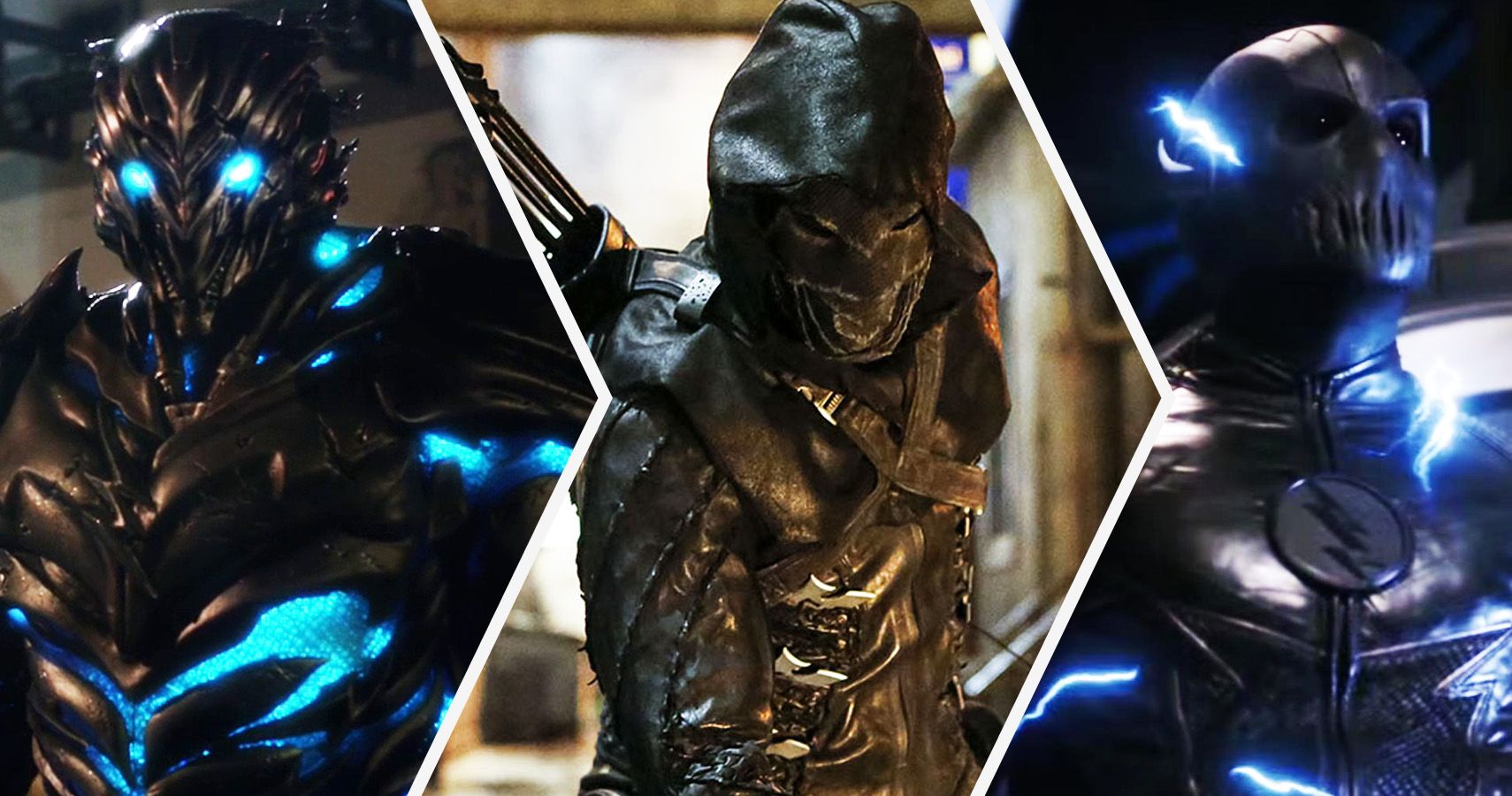
The villains of the television series Arrow acted as the primary catalysts for the evolution of the "Arrowverse," transforming Oliver Queen from a vengeful vigilante into a multiversal martyr. By challenging the protagonist’s morality, destroying his support systems, and forcing global shifts in power, these antagonists created "ripple effects" that dictated the narrative trajectory of over eight spin-off series and a decade of television history.
To understand the ripple effects of these villains, one must look beyond their immediate crimes. Each major antagonist represented a specific challenge to Oliver Queen’s philosophy, forcing him to adapt, recruit allies, and eventually sacrifice his own life for the survival of the multiverse. From the socio-economic destruction of the Glades to the psychological deconstruction of the "Green Arrow" persona, these ripples moved outward, affecting characters like Barry Allen, Sara Lance, and even the literal fabric of reality.
The Foundation of Chaos: Malcolm Merlyn and the Socio-Economic Ripple
Malcolm Merlyn, the Dark Archer, served as the inaugural blueprint for the high-stakes antagonism that would define the series. His plan, known as "The Undertaking," was not merely a criminal enterprise but a radical attempt at urban renewal through mass casualty.
The Destruction of the Glades
The immediate ripple effect of Merlyn’s success—yes, he actually succeeded in his primary goal—was the leveling of the Glades. This event fundamentally changed the geography and social hierarchy of Starling City. It created a power vacuum that later villains, like Sebastian Blood and Ricardo Diaz, would exploit. Furthermore, it established a precedent for the series: the hero could lose. This loss forced Oliver Queen to rethink his "list" and realize that checking off names was insufficient to save a city.
The Genetic Legacy
Merlyn’s influence extended into the personal lives of the Queen family. The revelation that he was Thea Queen’s biological father created a permanent rift in the family structure. This ripple led to Thea’s eventual training as an assassin, her struggle with the Lazarus Pit’s bloodlust, and her transformation into the hero Speedy. Without Merlyn’s interference, the "Team Arrow" dynamic of later seasons would never have included a trained Queen sibling, altering the tactical capabilities of the group.
Slade Wilson and the Psychological Cost of Heroism
While Merlyn attacked the city’s infrastructure, Slade Wilson (Deathstroke) attacked Oliver’s soul. The ripple effects of the Season 2 conflict were arguably the most devastating of the entire series, transitioning the show from a street-level crime drama into a high-stakes tragedy.
The Death of Moira Queen
The execution of Moira Queen was a turning point for the show's narrative structure. By killing the matriarch of the Queen family, Slade effectively ended the "civilian" side of Oliver's life. The ripple effect was twofold: it removed the last vestige of Oliver’s childhood innocence and forced him to become a parental figure to Thea. This shift in responsibility made Oliver a more cautious leader, a trait that would both help and hinder him in later conflicts with the League of Assassins.
The Mirakuru Legacy
The introduction of the Mirakuru serum introduced the concept of "super-powered" threats to a previously grounded world. This forced Oliver to seek help from outside his immediate circle, leading to the introduction of Barry Allen. The ripple effect of Slade Wilson’s army was the literal birth of The Flash. Barry’s involvement in the hunt for Cyrus Gold and his subsequent exposure to the particle accelerator explosion occurred because the threats in Starling City had scaled beyond what a normal human could handle.
Ra’s al Ghul and the Transformation of Identity
The third season introduced the League of Assassins as a primary antagonist force. Ra’s al Ghul did not want to kill Oliver Queen; he wanted to replace himself with him. This psychological and spiritual assault had ripples that extended across time and space.
The Near-Death of Oliver Queen
Oliver’s defeat on the mountain top was a "death and rebirth" moment. The ripple effect of this loss was the temporary dissolution of Team Arrow, forcing Diggle, Felicity, and Laurel to operate without their leader. This period proved that the mission was larger than one man, a realization that allowed for the eventual expansion of the team into a multi-member strike force.
The Black Canary Evolution
The League of Assassins' involvement directly led to the death of Sara Lance (at the hands of a drugged Thea, orchestrated by Merlyn to force Oliver to fight Ra's). This tragedy was the catalyst for Laurel Lance’s transition into the Black Canary. The ripple effect here was the creation of a legacy; Laurel’s death in a later season (at the hands of Damien Darhk) would then inspire the recruitment of Dinah Drake and the Earth-2 Laurel Lance (Black Siren). The villainous actions of Ra's al Ghul effectively created a lineage of female heroes that defined the show's middle years.
Prometheus and the Deconstruction of the Hero
By Season 5, the "Arrow" formula risked becoming repetitive. Enter Adrian Chase (Prometheus). Unlike previous villains who wanted power or revenge, Chase wanted to prove that Oliver Queen was a murderer who brought ruin to everyone he touched.
The Truth of the List
Chase’s ripple effect was internal. He forced Oliver to admit he "liked" killing, a confession that fundamentally altered Oliver’s self-perception. This psychological deconstruction meant that for the remainder of the series, Oliver moved away from the "Judge, Jury, and Executioner" model and toward a path of true redemption.
The Destruction of Lian Yu
The Season 5 finale ended with the literal explosion of Lian Yu, the island where the show began. This ripple effect served as a narrative "cleansing." It killed off several supporting characters (like Samantha Clayton, William’s mother) and forced Oliver into the role of a single father. The transition to "Father Oliver" changed the stakes for the final three seasons; every decision was no longer just about the city, but about the future of his son.
Comparison of Major Villains and Their Ripple Effects
| Villain | Primary Motivation | Immediate Consequence | Long-term Ripple Effect |
|---|---|---|---|
| Malcolm Merlyn | Urban Cleansing | Destruction of the Glades | Thea Queen's transformation into a hero. |
| Slade Wilson | Revenge | Death of Moira Queen | Arrival of Barry Allen; birth of the Flash. |
| Ra's al Ghul | Succession | Oliver becomes "Al Sah-him" | The League of Assassins' influence on Legends of Tomorrow. |
| Damien Darhk | Global Rebirth | Death of Laurel Lance | Introduction of magic; Darhk's role in the Legends series. |
| Prometheus | Deconstruction | Destruction of Lian Yu | Oliver's evolution into a father and legitimate hero. |
| Ricardo Diaz | Power / Control | Oliver goes to prison | Public outing of the Green Arrow's identity. |
| Anti-Monitor | Universal Erasure | Death of Oliver Queen | Rebirth of the Multiverse (Earth-Prime). |
The Global and Multiversal Ripple: Damien Darhk and the Anti-Monitor
As the series progressed, the villains moved from city-wide threats to existential ones. Damien Darhk introduced magic, a ripple that initially felt out of place in the grounded world of Arrow. However, this ripple expanded into the spin-off series DC’s Legends of Tomorrow, where Darhk became a recurring, fan-favorite antagonist across multiple timelines.
The ultimate ripple effect came from the Anti-Monitor during the Crisis on Infinite Earths event. While technically a crossover villain, his impact on the Arrow narrative was final. He was the force that required the "ripple" of Oliver Queen’s entire life to culminate in the mantle of the Spectre. The ripple effect of this conflict was the merging of Earth-1, Earth-38, and Black Lightning’s Earth into Earth-Prime. The entire reality of the 2026 Arrowverse landscape exists only because of the specific way Oliver Queen was hardened and prepared by his previous villains.
Technical Analysis of Villainous Impact on Narrative Pacing
From a screenwriting perspective, the "ripple effects" of Arrow villains were used to solve the "power creep" problem common in superhero media. Instead of simply making each villain physically stronger, the writers made them more personally invasive.
- Isolation: Villains like Prometheus and Ricardo Diaz focused on isolating Oliver from his resources. This ripple effect allowed for "back-to-basics" episodes that refreshed the show's tone.
- Legacy: Villains like Emiko Queen (The Ninth Circle) focused on the Queen family's hidden sins. This ripple effect allowed the show to explore the "past vs. present" theme, mirroring the flashback structure that was the show's hallmark.
- Legal and Social: Ricardo Diaz’s greatest ripple wasn't a physical wound but a legal one. By forcing Oliver to reveal his identity and serve time in Slabside Prison, the show shifted into a legal drama/prison thriller for a significant portion of Season 7. This changed the public's perception of "vigilantes" in the Arrowverse forever, leading to the "Anti-Vigilante Act."
Frequently Asked Questions
Which Arrow villain had the most permanent impact on the show?
While Slade Wilson caused significant personal trauma, Prometheus (Adrian Chase) arguably had the most permanent impact. His actions led to the destruction of Lian Yu and the death of William’s mother, which forced Oliver to change his lifestyle from a bachelor vigilante to a father. This shift dictated the emotional core of the series' final three seasons.
How did Arrow's villains influence other shows like The Flash?
The ripple effects were often "backdoor pilots." For example, the threat of Slade Wilson's Mirakuru soldiers required the expertise of STAR Labs scientists (Caitlin Snow and Cisco Ramon), who were introduced in Arrow before their own show launched. Similarly, the threat of Vandal Savage in Arrow Season 4 served as the primary setup for Legends of Tomorrow.
Did any villain's ripple effect actually help Star City?
Ironically, Malcolm Merlyn's Undertaking led to a massive influx of federal aid and redevelopment efforts in later seasons. While his methods were genocidal, the tragedy forced the city to modernize its infrastructure. Additionally, Ricardo Diaz’s corruption of the police force eventually led to a "clean sweep" of the department, resulting in a more honest—albeit smaller—police force under Dinah Drake.
Why was Laurel Lance's death considered a controversial ripple effect?
The death of Laurel Lance (Black Canary) at the hands of Damien Darhk was controversial because it removed a central character from the comics' mythos. However, the ripple effect was massive: it motivated the team for years, led to the introduction of the Multiverse version of Laurel (Black Siren), and cemented the "anybody can die" stakes of the show.
What was the ripple effect of Oliver's secret being revealed?
In Season 6, Ricardo Diaz orchestrated the outing of Oliver Queen as the Green Arrow. The ripple effect was the end of the "secret identity" trope for the show. From that point on, Oliver had to operate as a public figure, leading to a storyline where he worked with the SCPD as a deputized officer rather than an outlaw.
Practical Recommendation for Narrative Analysis
For those studying the structure of long-form television, Arrow provides a masterclass in how to use antagonists to drive character growth. When analyzing these "ripple effects," one should focus on the cost of victory. In Arrow, every time the hero "won," a villainous ripple ensured he lost something irreplaceable—be it a parent, a friend, his anonymity, or his life.
If you are a writer or creator, use the Arrow model: ensure your antagonist’s actions have consequences that outlast their screen time. A villain who is defeated but leaves the world exactly as they found it is a failure of narrative design. The "ripple" is what makes the hero's journey meaningful.