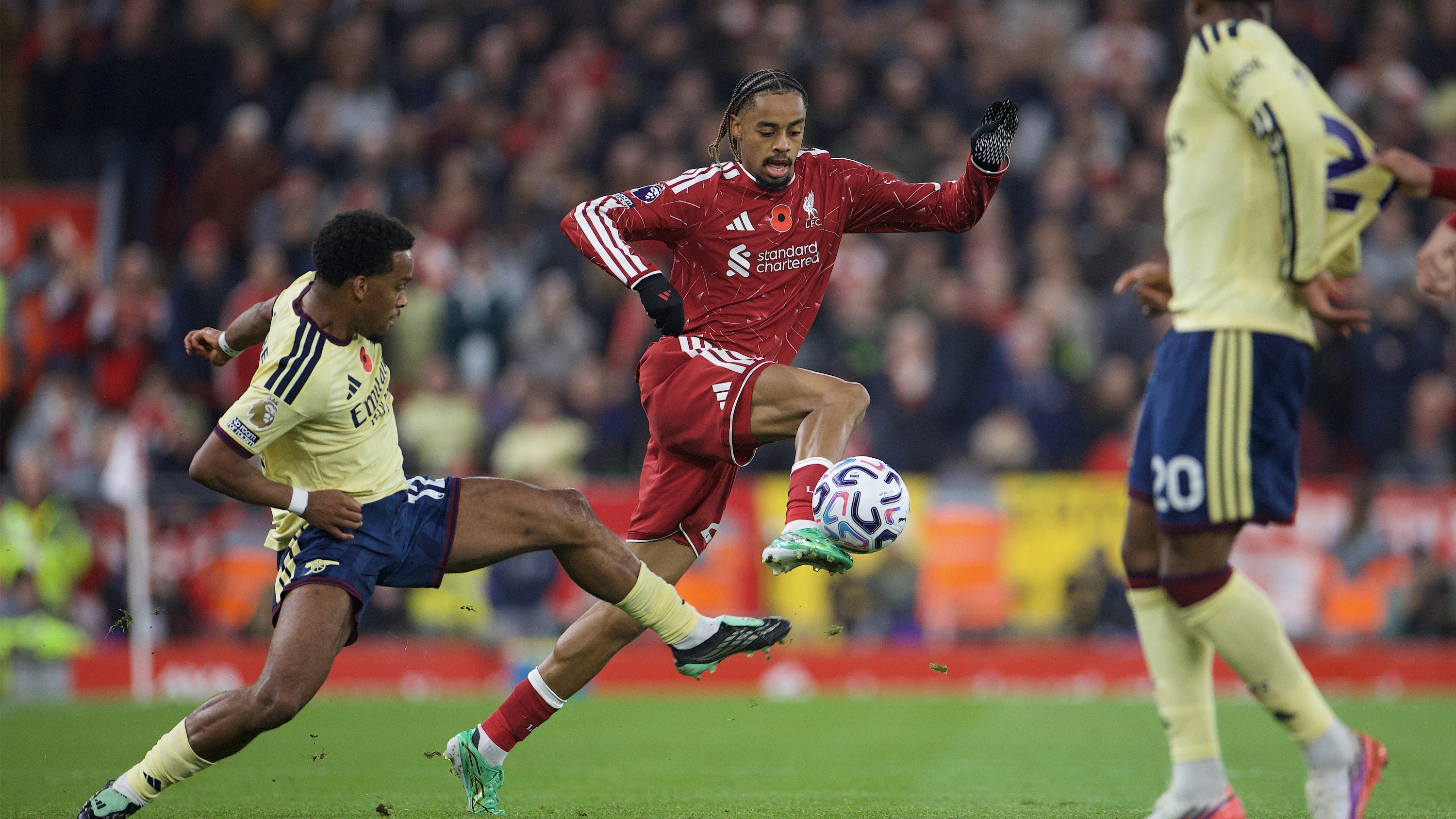
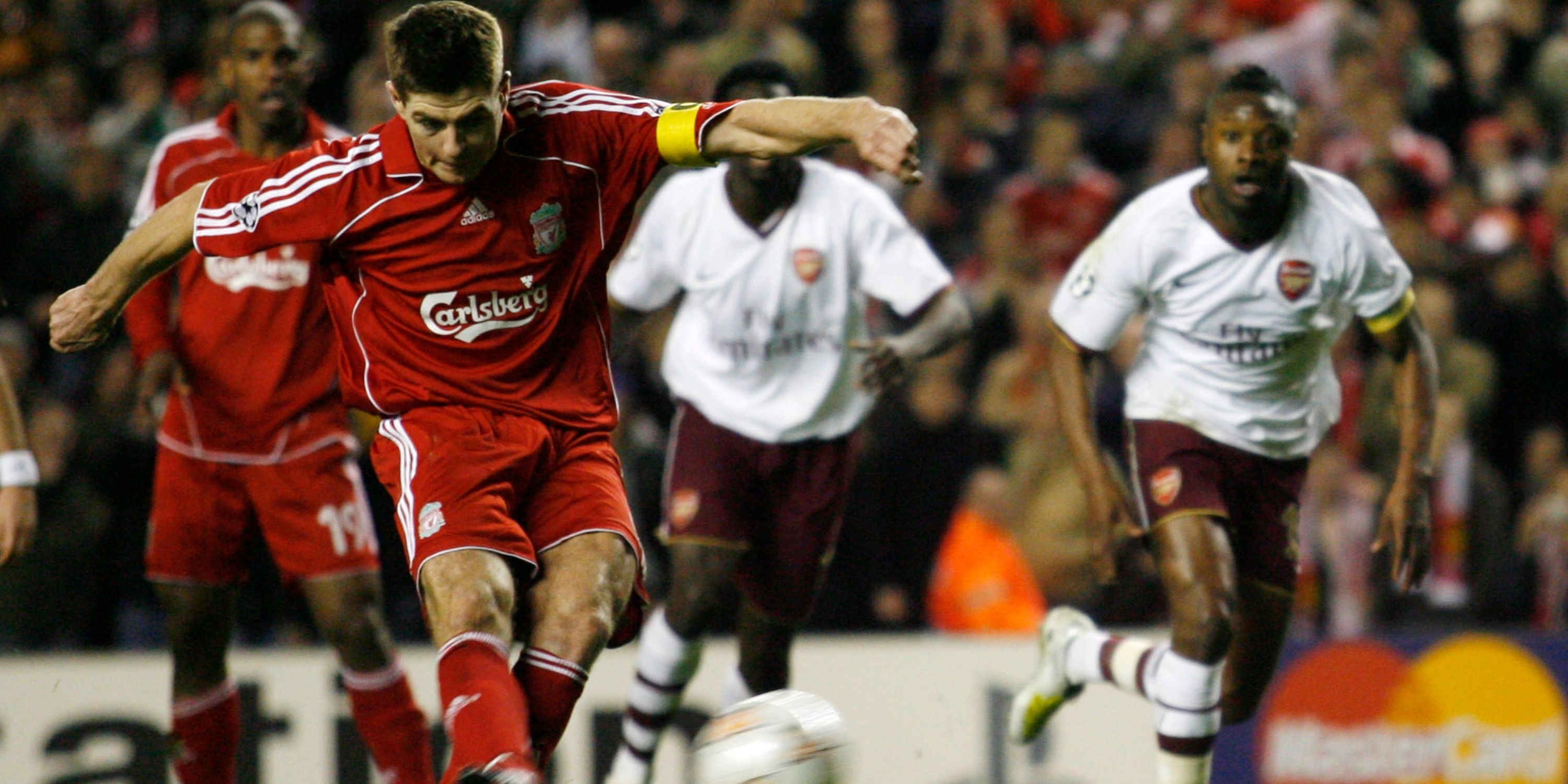
The legendary 4-4 draw between Arsenal and Liverpool on April 21, 2009, remains one of the most iconic fixtures in Premier League history. This high-octane encounter at Anfield is best remembered for Andrey Arshavin’s historic four-goal haul, which significantly damaged Liverpool’s title aspirations while cementing the match as a gold standard for neutral entertainment in English football.
The Context of the 2008/09 Premier League Title Race
To understand the weight of the 4-4 draw, one must revisit the intense pressure cooker of the 2008/09 Premier League season. Heading into the match in late April, Liverpool were locked in a fierce battle with Manchester United for the title. Rafael Benítez’s side was playing some of the most cohesive football in the club's modern era, spearheaded by the formidable partnership of Steven Gerrard and Fernando Torres.
Arsenal, led by Arsène Wenger, were in a period of transition. While they were no longer the "Invincibles" of 2004, they remained a potent attacking force capable of dismantling any defense on their day. They sat in fourth place, looking to solidify their Champions League qualification, but they were missing key players, including their primary striker Robin van Persie and goalkeeper Manuel Almunia.
For Liverpool, the stakes were binary: win to keep pace with Manchester United, or drop points and effectively hand the advantage to Sir Alex Ferguson’s men. The atmosphere at Anfield was electric, a mixture of desperate hope and the anxiety that often accompanies a title run-in.
Pre-Match Tactical Setup and Team Selections
The tactical battle between Benítez and Wenger was a study in contrasts. Benítez was known for his rigid, organized 4-2-3-1 system, which relied on a solid defensive base and quick transitions to Torres. Wenger, conversely, preferred a more fluid 4-4-2 or 4-2-3-1 that prioritized possession and intricate passing in the final third.
Liverpool’s Approach
Liverpool started with Pepe Reina in goal, protected by a back four of Álvaro Arbeloa, Jamie Carragher, Daniel Agger, and Fábio Aurélio. In the absence of the injured Steven Gerrard, the midfield was anchored by Javier Mascherano and Xabi Alonso, with Yossi Benayoun and Albert Riera providing width. Dirk Kuyt played just behind Fernando Torres. The absence of Gerrard was a massive blow, but Liverpool’s recent form—including a 4-1 win over Manchester United and a 4-0 drubbing of Real Madrid—suggested they had the depth to cope.
Arsenal’s Strategy
Arsenal’s lineup was hampered by injuries. Łukasz Fabiański started in goal, a decision that would prove pivotal given his shaky performance that evening. The defense consisted of Bacary Sagna, Kolo Touré, Mikaël Silvestre, and Kieran Gibbs. The midfield featured Samir Nasri, Denílson, Alex Song, and Cesc Fàbregas. Up front, Andrey Arshavin—the club’s record signing from January—partnered with Nicklas Bendtner.
Arshavin had only arrived from Zenit Saint Petersburg a few months prior. While he had shown flashes of brilliance, few expected him to produce the single most clinical performance by an away player in the history of the Premier League.
Play-by-Play: The Eight-Goal Thriller
The match did not immediately hint at the chaos to follow. The first half-hour was a tense affair, with Liverpool dominating possession and Arsenal looking to exploit spaces on the counter.
The First Breakthrough (36th Minute)
The deadlock was broken ten minutes before halftime. Javier Mascherano, usually so reliable, was caught in possession by Samir Nasri deep in the Liverpool half. Nasri squared the ball to Cesc Fàbregas, who picked out Arshavin in the box. The Russian fired a powerful shot off the underside of the crossbar to make it 1-0. It was Arsenal’s first shot of the game.
The Liverpool Response (49th and 56th Minutes)
Liverpool came out for the second half with renewed intensity. In the 49th minute, Dirk Kuyt capitalized on a poor clearance from Bacary Sagna, crossing for Fernando Torres, who headed home the equalizer. Seven minutes later, Liverpool took the lead. Another cross from Kuyt found Yossi Benayoun, whose header was parried by Fabiański, but only after it had crossed the line. Anfield erupted; the title charge was back on track.
The Arshavin Explosion (67th and 70th Minutes)
The lead lasted barely ten minutes. In the 67th minute, Arshavin dispossessed Arbeloa 25 yards from goal and unleashed a dipping, swerving strike that flew past Pepe Reina. It was a moment of pure individual brilliance.
Three minutes later, the Russian completed his hat-trick. Fábio Aurélio attempted a clearance but succeeded only in gifting the ball to Arshavin inside the area. He made no mistake, drilling the ball into the net to put Arsenal 3-2 up.
The Final Pendulum Swings (72nd to 93rd Minutes)
The game had now descended into beautiful anarchy. In the 72nd minute, Fernando Torres showcased his world-class ability, turning Silvestre on the edge of the box and firing a low shot past Fabiański to level the score at 3-3.
As the clock ticked toward the 90th minute, Liverpool committed everyone forward in search of a winner. This proved fatal. Following a Liverpool corner, Theo Walcott (who had come on as a substitute) sprinted the length of the pitch on a devastating counter-attack. He played a perfectly timed pass to Arshavin, who smashed the ball into the top corner for his fourth goal of the night. Arshavin famously held up four fingers in disbelief at his own achievement.
Deep into stoppage time, Liverpool managed one final salvation. A goalmouth scramble saw the ball fall to Yossi Benayoun, who poked it home to make it 4-4. The final whistle blew shortly after, ending a game that felt more like a fever dream than a professional football match.
Analyzing the Statistical Impact
The match was a statistical anomaly in several ways. Arsenal’s efficiency was unprecedented, while Liverpool’s defensive unravelling was uncharacteristic for a Benítez team.
| Statistic | Liverpool | Arsenal |
|---|---|---|
| Goals Scored | 4 | 4 |
| Total Shots | 26 | 8 |
| Shots on Target | 15 | 4 |
| Possession | 56% | 44% |
| Corners | 10 | 1 |
| Goalkeeper Saves | 0 | 11 |
The most jarring statistic is that Arsenal scored four goals from just four shots on target. Andrey Arshavin finished the game with a 100% conversion rate of shots on target to goals. Conversely, Liverpool’s 26 shots highlighted their dominance, but Łukasz Fabiański, despite some errors, made 11 saves to keep Arsenal in the contest until the very end.
The Consequences: Why the 4-4 Draw Mattered
The immediate impact of the result was felt in the league standings. The single point moved Liverpool to the top of the table on goal difference, but Manchester United had two games in hand. Ferguson’s side did not stumble, winning their remaining fixtures to clinch the title by four points. For many Liverpool fans, the 4-4 draw is pinpointed as the night the dream died.
For Arsenal and Arshavin
For Andrey Arshavin, this was the pinnacle of his career in England. While he remained a productive player for several seasons, he never again reached the heights of that night at Anfield. It remains the only time an away player has scored four goals in a single Premier League match at that stadium. For Arsenal, it was a display of their "flawed genius" era—brilliant in attack but catastrophically fragile in defense.
For Liverpool and Torres
Fernando Torres reaffirmed his status as arguably the best striker in the world at the time. His two goals were masterclasses in movement and finishing. However, the game also exposed the limitations of Liverpool’s squad depth without Gerrard and the defensive lapses that occasionally plagued them under pressure.
Tactical Breakdown: Defensive Failures vs. Clinical Finishing
Why did a game between two of the league's top four defenses end in eight goals?
- Individual Errors: Almost every goal was preceded by a significant individual mistake. Mascherano’s loss of possession, Sagna’s poor clearance, Arbeloa’s hesitation, and Aurélio’s misplaced pass all led directly to goals.
- The Absence of Anchors: Without Steven Gerrard to dictate the tempo and Manuel Almunia to provide a steady hand in goal, both teams lacked their usual composure.
- High Defensive Lines: Both managers refused to "park the bus" even when leading. Liverpool’s desperate need for three points forced them to push their defensive line almost to the halfway line, leaving them wide open to the pace of Walcott and the clinical positioning of Arshavin.
- Psychological Momentum: The "Anfield Factor" worked both ways. It spurred Liverpool to relentless attacking but also created a frantic atmosphere where tactical discipline was discarded in favor of emotional urgency.
Frequently Asked Questions
Who scored the goals in the Arsenal 4-4 Liverpool match?
For Arsenal, all four goals were scored by Andrey Arshavin (36', 67', 70', 90'). For Liverpool, the scorers were Fernando Torres (49', 72') and Yossi Benayoun (56', 90+3').
What was the date of the 4-4 draw?
The match took place on Tuesday, April 21, 2009. It was a midweek fixture that was broadcast globally, adding to its legendary status.
Did Liverpool win the Premier League in 2008/09?
No. Despite losing only two games the entire season and accumulating 86 points, Liverpool finished second. Manchester United won the title with 90 points. The 4-4 draw is often cited as a turning point where Liverpool lost control of the title race.
Is Arshavin the only player to score four goals at Anfield as an away player?
Yes, in the Premier League era, Andrey Arshavin is the only player to score four goals in a single match against Liverpool at Anfield as an opposition player. It remains one of the most celebrated individual performances in the league's history.
How many saves did Łukasz Fabiański make?
Fabiański made 11 saves during the match. Despite being criticized for his role in Liverpool's second and fourth goals, his volume of saves was instrumental in Arsenal leaving Anfield with a point.
Looking Back from 2026
Standing in 2026, the 4-4 draw is frequently included in "Hall of Fame" broadcasts and digital archives. It represents a specific era of football before the total dominance of data-driven, low-variance tactics became the norm. In 2009, the game was slightly more chaotic, and the 4-4 draw at Anfield is the ultimate monument to that chaos.
For fans wanting to relive the magic, the full match is often available on the Premier League's official "Retro" streaming services or through the Arsenal and Liverpool club media archives. Watching the match back reveals nuances often missed in highlights, such as Xabi Alonso's midfield masterclass and the sheer physical exhaustion of both sets of players by the 90th minute.
Practical Recommendation: If you are a student of football tactics or a fan of sports history, analyze the 20-minute window between the 70th and 90th minutes of this match. It offers a perfect case study on how "Game State" (the current score and time remaining) can completely override a manager's pre-match tactical instructions, leading to the end-to-end spectacle that defined this encounter.