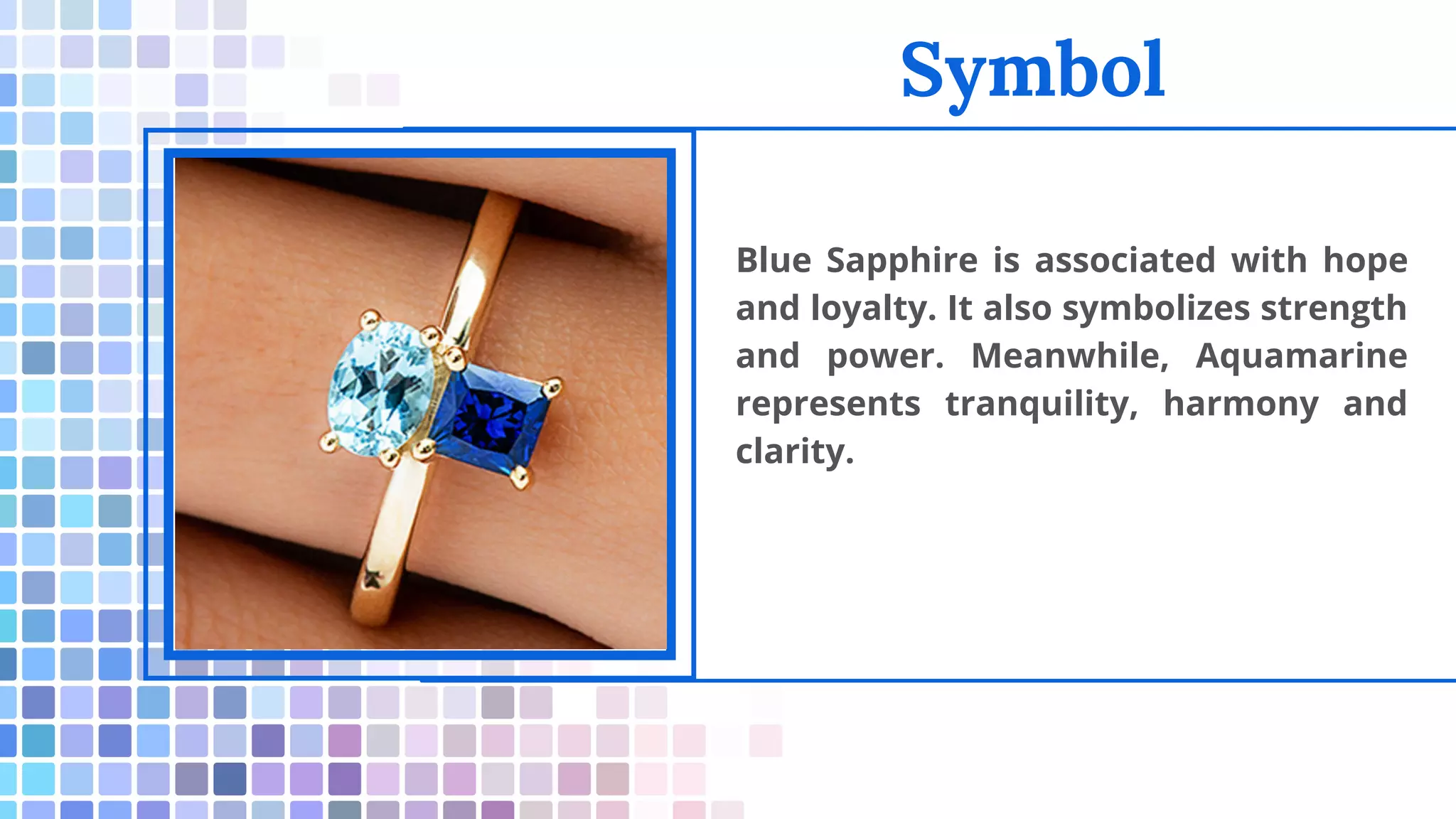
Aquamarine is a blue-to-green variety of the mineral beryl, characterized by its distinct aquatic coloration, high clarity, and impressive durability in jewelry applications. Historically valued as a talisman of protection for mariners, modern understanding of this gemstone focuses on its physical chemistry, geological origins, and specific criteria used to evaluate its quality, value, and structural integrity for use in fine jewelry.
Geological Definition and Physical Characteristics
Aquamarine, chemically represented as Be₃Al₂Si₆O₁₈, is a cyclosilicate mineral. It shares the same chemical base as emerald, morganite, and heliodor, all of which are varieties of beryl. The defining difference between these varieties lies in the trace elements present in the crystal lattice during formation. In aquamarine, the pale blue to blue-green color is primarily induced by the presence of ferrous iron (Fe²⁺) within the crystal structure.
From a technical perspective, aquamarine possesses several specific physical properties that dictate how it is cut, set, and maintained:
- Hardness: It rates between 7.5 and 8.0 on the Mohs scale. This relatively high hardness makes it suitable for everyday wear, as it resists surface scratching from common environmental abrasives like silica dust.
- Refractive Index: Its refractive index typically falls between 1.57 and 1.58. This range provides a moderate level of brilliance, though it does not possess the high "fire" or dispersion found in diamonds or zircon.
- Cleavage: Aquamarine exhibits poor cleavage, which means it is less likely to split along structural planes when subjected to impact. This contributes to its durability in ring settings, provided the stone is not struck directly on an edge.
- Crystal System: It grows in the hexagonal crystal system, often forming elongated, prismatic crystals. These crystals are frequently found in large sizes, which allows for the creation of substantial, high-clarity gemstones.
Historical Significance and Cultural Symbolism
The name "aquamarine" is derived from the Latin aqua marina, meaning "sea water." Its association with the ocean is not merely etymological; throughout history, the stone has been intrinsically linked to maritime safety.
Ancient lore suggested that aquamarine was the treasure of mermaids and was used by sailors as an amulet to ensure safe passage and protection against storms. While these attributions fall under the umbrella of folklore rather than physical science, they have had a lasting impact on how the stone is marketed. The "power" attributed to the stone in a historical sense remains a significant factor in its desirability for consumers interested in birthstones—specifically for the month of March—and for jewelry pieces intended as commemorative or symbolic gifts.
Factors Influencing Valuation and Quality
When assessing the quality of aquamarine, gemologists and dealers prioritize color, clarity, and the precision of the lapidary work. Unlike diamonds, which are often evaluated based on a strict set of cut grades, aquamarine is evaluated more fluidly based on the saturation of its blue pigment.
Color and Saturation
The most desirable aquamarine features a deep, intense blue hue, often referred to in the trade as "Santa Maria" blue, named after the Brazilian mine where this particular intensity was first observed. However, the majority of commercially available aquamarine is pale to medium-light blue. While lighter stones are less expensive, they are often preferred for their high transparency and ability to reflect light in large facet sizes.
Clarity and Inclusions
Aquamarine is naturally a very clean gemstone. Unlike emeralds, which almost always contain inclusions (known as jardin), aquamarine is expected to be eye-clean. The presence of significant internal flaws, fissures, or milky inclusions significantly reduces the market value of the stone.
Enhancement Processes
Most aquamarine on the market has undergone heat treatment. Gentle heating to temperatures between 350°C and 450°C is standard practice to remove yellow or green overtones, shifting the color toward the more desirable pure blue. This process is stable and permanent. Because it is widely accepted and expected, heat-treated aquamarine is not devalued unless the treatment is performed poorly or results in structural damage to the stone.
| Feature | Low-Quality Specification | High-Quality Specification |
|---|---|---|
| Color | Pale, washed-out green-blue | Saturated, deep "Santa Maria" blue |
| Clarity | Visible inclusions, hazy finish | Eye-clean, exceptional transparency |
| Cut | Asymmetric, poor facet alignment | Precision-cut, symmetrical, deep luster |
| Treatment | None or visible surface damage | Standard, stable heat treatment |
Care, Maintenance, and Durability
Despite its hardness, aquamarine requires specific care to maintain its appearance. The stone's primary vulnerability is not scratching, but rather the accumulation of oils and films on its pavilion (the lower portion of the stone). Because aquamarine is often cut in large, step-faceted shapes like emerald cuts, dirt can easily collect in the facets, which quickly mutes the gem's brilliance.
Cleaning Protocols
To restore the stone to its original luster, the following steps are recommended:
- Preparation: Mix a solution of warm water and a tiny amount of mild, grease-cutting dish soap. Avoid harsh chemical detergents or abrasive cleaners.
- Soaking: Immerse the jewelry in the solution for 5 to 10 minutes to loosen surface oils.
- Mechanical Cleaning: Use a soft-bristle toothbrush to gently clean the underside of the stone, where debris tends to accumulate.
- Rinsing: Rinse thoroughly in warm running water to ensure no soapy residue remains, which can attract further dust.
- Drying: Pat dry with a soft, lint-free cloth. Avoid the use of ultrasonic cleaners, which can cause internal fractures if the stone has pre-existing small inclusions or if it has been filled with resins—a practice rarely done with aquamarine but theoretically possible in lower-grade material.
Setting Considerations
When selecting a ring setting for aquamarine, protection is the priority. Bezel settings, which wrap metal around the entire perimeter of the stone, provide the highest level of security against accidental knocks. If a prong setting is preferred, ensure the prongs are checked by a jeweler at least once every 12 to 18 months to ensure they have not loosened through normal daily wear.
Identifying Synthetics and Imitations
Given its popularity, the market occasionally features simulants. Common imitations include light blue synthetic spinel, blue glass, or even dyed quartz. However, true synthetic aquamarine (hydrothermal beryl) is rare because it is generally more expensive to grow than the natural stone is to mine.
To verify a stone, look for the following:
- Refractive Index testing: A refractometer provides a definitive reading for beryl (1.57–1.58).
- Pleochroism: Aquamarine is dichroic, meaning it displays two different colors when viewed from different angles (usually blue and colorless or slightly greenish). This is a hallmark of natural beryl.
- Inclusions: Use a 10x jeweler’s loupe to look for gas bubbles, which indicate glass, or curved striae, which may indicate synthetic production. Natural aquamarine will show distinctive long, needle-like liquid inclusions (often called "rain" inclusions) that are characteristic of its growth environment.
Troubleshooting Common Jewelry Issues
Owners of aquamarine jewelry may encounter specific functional problems that are easily remedied with professional intervention.
Problem: The stone looks cloudy or "dull" despite regular cleaning.
- Cause: This is often caused by a buildup of residue on the back of the setting that is unreachable by home methods.
- Solution: Take the piece to a professional jeweler for an steam cleaning or an ultrasonic clean under expert supervision to ensure no structural issues are present.
Problem: The metal setting around the aquamarine is losing its plating (for silver or white gold settings).
- Cause: Daily wear and interaction with perfumes, lotions, or chlorinated water.
- Solution: Have the jewelry re-plated. This is a routine maintenance procedure that does not require removing the stone.
Problem: Small chips occurring on the girdle of the stone.
- Cause: The aquamarine may be set in a way that exposes the edges to impact.
- Solution: If the chip is minor, a professional lapidary can often re-polish the girdle. If the damage is significant, the stone may need to be recut, which will result in a slightly smaller carat weight.
Frequently Asked Questions
Is aquamarine suitable for daily wear rings like engagement bands? Yes, aquamarine is suitable for daily wear, provided the wearer understands it is a 7.5–8.0 on the Mohs scale. While durable, it should be removed during high-impact activities, such as weightlifting or gardening, to prevent accidental chipping.
Does the color of aquamarine fade over time? Natural aquamarine is color-stable when exposed to light. Unlike some varieties of kunzite or topaz that may fade under direct sunlight, aquamarine does not lose its color saturation through standard environmental exposure.
What is the difference between aquamarine and blue topaz? While they look similar, aquamarine is a mineral (beryl), while blue topaz is an aluminum silicate. Aquamarine is generally more expensive, has a higher refractive index, and typically displays a more "subtle" and natural blue compared to the often intense, uniform blue of irradiated topaz.
Can I wear aquamarine in the shower or swimming pool? It is advised to remove aquamarine jewelry before swimming in chlorinated pools or bathing. Chemicals can leave a film on the surface of the stone, and soaps can build up under the setting, quickly reducing the brilliance and clarity of the gem.
How should I store my aquamarine jewelry? Store aquamarine separately from other jewelry, particularly diamonds or corundum (sapphire and ruby). Because these other stones are harder than 8.0, they can easily scratch the surface of your aquamarine if stored in the same pouch or compartment.
Next Actions for Collectors and Buyers
When purchasing aquamarine, prioritize transparency from the seller regarding origin and treatment. For investment-grade pieces, request a report from an internationally recognized laboratory, such as the Gemological Institute of America (GIA), which verifies the identity of the stone as natural beryl. For those purchasing for aesthetic purposes, focus on the "eye-clean" standard and ensure the cut maximizes light return. Whether you are seeking a commemorative birthstone piece or a custom setting, ensure your jeweler conducts a setting-security inspection annually to protect the longevity of your investment.