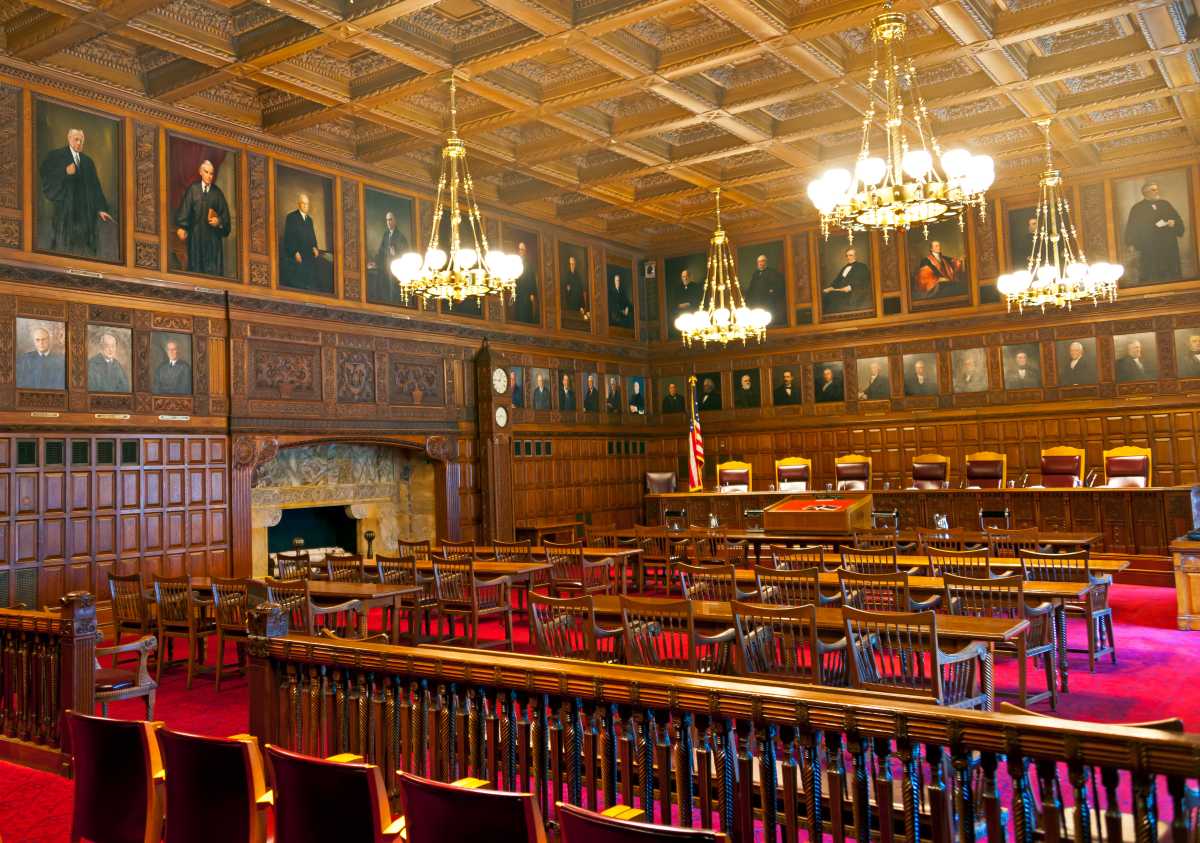
An appellate court workers' compensation division is a specialized judicial body or designated appellate panel responsible for hearing legal appeals originating from administrative workers' compensation decisions. Operating above initial trial courts or administrative law boards, this division reviews lower-level rulings to ensure statutory compliance, correct legal interpretations, and verify that factual findings are supported by substantial evidence.
Understanding the Appellate Court Workers' Compensation Division
The workers' compensation system was created as a statutory compromise between labor and management. In exchange for no-fault coverage of medical expenses and wage replacement, injured employees forfeit the right to sue their employers in traditional civil tort actions. When disputes arise regarding claim compensability, extent of disability, medical necessity, or benefit calculation, the initial resolution occurs within an administrative agency—such as a state Workers' Compensation Board, Industrial Commission, or Division of Workers' Compensation.
However, administrative rulings are not always final. When a party—either the injured worker, the employer, or the insurance carrier—believes the administrative decision contains an error of law or an unsupported factual finding, they must seek judicial review. This is where an appellate court workers' compensation division functions as the primary judicial gatekeeper.
Depending on the jurisdiction, this division may exist as a dedicated panel of an intermediate state appellate court (such as the Appellate Court Workers' Compensation Commission Division in Illinois or the New York Supreme Court, Appellate Division, Third Department) or as an independent statutory appellate board operating at the highest administrative-judicial interface. Regardless of specific structural nuances, the division’s core responsibility is to maintain consistency, fairness, and legal correctness across all work-injury disputes within its jurisdiction.
Disclaimer: Workers' compensation statutes and court structures vary significantly across states and federal jurisdictions. This guide provides general procedural and structural analysis for educational purposes and does not constitute formal legal counsel.
Organizational Structure and Jurisdictional Authority
To navigate an appeal successfully, litigants must understand where the appellate court workers' compensation division sits within the broader judicial framework. The path of a contested workers' compensation claim typically follows a defined multi-tier hierarchy:
Trial Level (Arbitration / Administrative Hearing): An Administrative Law Judge (ALJ), Arbitrator, or Hearing Officer hears live witness testimony, evaluates medical evidence, and renders an initial decision.
Internal Administrative Appeal: In many jurisdictions, an dissatisfied party must first appeal to a full Administrative Board or Commission (e.g., the Workers' Compensation Appeals Board).
Judicial Appellate Division: If the administrative remedies are exhausted and a party remains aggrieved, the dispute ascends to the state appellate court system. Here, a specialized workers' compensation division or designated judicial panel reviews the record.
State Supreme Court: The court of last resort in the state, which typically accepts workers' compensation cases only on a discretionary basis (via petition for leave to appeal or writ of certiorari) involving novel legal questions or constitutional challenges.
State Supreme Court (Discretionary Review / Novel Law Issues)
Appellate Court Workers' Compensation Division (Judicial Review of Records & Legal Errors)
State Workers' Compensation Commission or Full Administrative Board
Administrative Law Judge (ALJ) / Arbitrator (Evidentiary Trial & Facts)
Specialized Panels vs. General Appellate Benches
State legislatures organize workers' compensation appellate review in distinct ways to manage heavy caseloads efficiently while maintaining subject-matter expertise:
- Designated Five-Judge Panels: In states like Illinois, the Appellate Court maintains a dedicated Workers' Compensation Commission Division comprising five appellate judges selected from each judicial district. This structure prevents conflicting rulings across different geographical districts and ensures specialized expertise.
- Centralized Judicial Department: In New York, state law directs appeals from the Workers' Compensation Board exclusively to the Appellate Division, Third Department, located in Albany. This centralization concentrates workers' compensation jurisprudence within a single court bench.
- Statutory Appellate Divisions: Certain states employ an independent appellate division within the executive branch that functions with quasi-judicial authority, whose decisions are subsequently appealable directly to the state court of appeals.
Standards of Review Applied by Appellate Divisions
Appellate courts do not re-try cases. They do not call witnesses, hear fresh testimony, or weigh competing credibility claims from scratch. Instead, an appellate court workers' compensation division evaluates the existing record under strict standards of review. The standard of review determines how much deference the appellate judges must accord to the lower administrative decision.
1. Questions of Law (De Novo Review)
When an appeal centers on statutory interpretation, contract construction, or legal definition—such as whether an injury "arose out of and in the course of employment" under a specific statutory provision—the appellate court applies a de novo standard.
Under de novo review, the appellate court gives no deference to the lower tribunal's legal conclusions. The judges analyze the statutory text, legislative intent, and legal precedent independently. If the administrative body misinterpreted the law, the appellate court will reverse or modify the ruling regardless of how well-reasoned the rest of the decision may appear.
2. Questions of Fact (Substantial Evidence / Manifest Weight Standard)
Factual determinations include findings on whether an accident occurred, whether a claimant's testimony is credible, or which medical expert's opinion is more persuasive. Appellate divisions grant significant deference to administrative agencies on factual matters.
- Substantial Evidence Rule: Under this standard, the appellate court will affirm the lower tribunal's factual findings if they are supported by "substantial evidence"—meaning such relevant evidence as a reasonable mind might accept as adequate to support a conclusion. The court will not overturn a factual finding simply because the record could also support an opposite conclusion.
- Manifest Weight of the Evidence: Applied in several state appellate divisions, this standard requires the appellant to demonstrate that the lower decision is clearly wrong, unreasonable, or not based on the evidence. To reverse under this standard, the court must find that an opposite conclusion is clearly evident from the record.
3. Mixed Questions of Law and Fact
Many workers' compensation disputes involve mixed questions, where established facts must be measured against a legal standard (e.g., whether a traveling employee's specific conduct constituted a compensable deviation). In these cases, appellate divisions evaluate the factual components under a deferential standard while applying independent legal analysis to the statutory application.
Common Grounds for Filing an Appeal
Filing an appeal with the appellate court workers' compensation division requires identifying specific, legally recognized grounds for relief. Frivolous appeals or generalized dissatisfaction with a ruling are routinely dismissed and may trigger monetary sanctions. Valid grounds for appeal typically fall into four distinct categories:
Misinterpretation or Misapplication of Statutory Law
Administrative boards occasionally apply outdated legal standards, misread statutory definitions, or miscalculate statutory benefit caps. For example, if a tribunal misapplies the statutory formula for calculating Average Weekly Wage (AWW) or misinterprets the definition of a "pre-existing condition aggravation," an appeal to the appellate division is appropriate.
Absence of Substantial Competent Evidence
An administrative decision must be anchored in competent evidence. If an ALJ bases a finding of disability on unsworn hearsay, unverified documents, or speculative medical opinions that lack scientific foundation, the appellate division may overturn the ruling for lack of supporting evidence.
Arbitrary and Capricious Administrative Action
If the administrative body departs from its own established rules, ignores unrebutted medical testimony without explanation, or issues a ruling that contradicts prior binding administrative precedent without justification, the appellate court may vacate the decision as arbitrary, capricious, or an abuse of administrative discretion.
Procedural Due Process Violations
Litigants in workers' compensation proceedings are entitled to fundamental due process under the law. Procedural defects that justify appellate intervention include:
- Denying a party the opportunity to cross-examine a key medical expert.
- Admitting critical evidence after the evidentiary record has closed without notice to the opposing side.
- Evident bias or undisclosed conflicts of interest by the hearing officer or board member.
The Step-by-Step Appellate Court Procedure
Proceeding before an appellate court workers' compensation division follows formal judicial rules of appellate procedure. Strict compliance with timelines and formatting rules is mandatory; failing to meet a deadline typically results in an immediate dismissal of the appeal.
- STEP 1: Filing the Notice of Appeal / Petition for Judicial Review
- (Strict statutory deadline: typically 20 to 30 days post-board)
- STEP 2: Preparation and Certification of the Record on Appeal
- (Transcripts, exhibits, ALJ decisions, board findings)
- STEP 3: Appellate Briefing Phase
- Appellant's Opening Brief
- Appellee's Brief
- Reply Brief
- STEP 4: Oral Argument (Optional / Court's Discretion)
- (Attorneys present oral arguments before the judicial panel)
- STEP 5: Written Judicial Opinion and Judgment
- (Affirm, Reverse, Vacate, or Remand to Administrative Body)
Step 1: Filing the Notice of Appeal / Petition for Review
The appellate process begins with filing a formal Notice of Appeal or Petition for Judicial Review with both the appellate court clerk and the underlying administrative agency. The filing deadline is strictly enforced by statute—usually ranging between 20 and 30 calendar days from the date the final administrative board decision was mailed or served on the parties. Missing this deadline deprives the appellate court of jurisdictional authority to hear the case.
Step 2: Certification of the Record on Appeal
The record on appeal is the official compiled dossier of everything that occurred at the lower levels. The administrative board clerk prepares and certifies the record, which contains:
- Complete transcripts of all witness testimony and depositions.
- All physical and documentary exhibits admitted into evidence (medical records, payroll data, accident reports).
- Motions, pleadings, interlocutory orders, and written rulings from both the trial level and the administrative review board.
No new evidence, documents, or affidavit testimony may be submitted to the appellate court workers' compensation division. The review is strictly bounded by what exists within the certified record.
Step 3: Appellate Briefing Phase
The briefing phase represents the primary focus of appellate litigation. Both parties submit detailed legal memoranda drafted according to precise technical guidelines governing page length, margins, font sizes, citation styles, and structural sections.
- Appellant’s Brief: The appealing party (Appellant) files the initial brief detailing the procedural history, statement of facts (supported by exact page citations to the record), legal issues presented, standards of review, and legal arguments explaining why the lower decision must be reversed or modified.
- Appellee’s Brief: The responding party (Appellee or Respondent) files a responsive brief defending the administrative decision, refuting the appellant’s legal claims, and demonstrating how substantial evidence supports the original ruling.
- Appellant’s Reply Brief: The appellant may file a short reply brief addressing exclusively new arguments raised in the appellee’s brief.
Step 4: Oral Argument
Once briefing is complete, the appellate panel assigned to the workers' compensation division reviews the briefs and record. The court may schedule oral argument, allowing counsel for each side a limited period (typically 15 to 30 minutes) to present their legal arguments directly to the panel of judges and answer questions from the bench. In many jurisdictions, courts dispense with oral argument if the legal briefs thoroughly cover the issues and the legal principles are well-settled.
Step 5: Decision and Mandate
After deliberation, the panel issues a written judicial opinion. The court's ruling will take one or more of the following actions:
- Affirm: Uphold the underlying administrative decision in full.
- Reverse: Set aside the administrative decision and enter a contrary finding as a matter of law.
- Vacate and Remand: Nullify the administrative decision and send the case back to the administrative board or ALJ with specific instructions—such as taking additional testimony, clarifying findings of fact, or re-evaluating the claim under a correct legal standard.
- Modify: Alter a specific component of the order (such as adjusting the disability percentage or benefit calculation) while leaving the remainder intact.
Comparative Breakdown: Trial/Board Level vs. Judicial Appellate Division
Understanding how judicial appellate practice differs from trial court and administrative board practice is critical for managing expectations and procedural compliance.
| Parameter | Administrative Trial Level (ALJ / Arbitrator) | Administrative Board Level (Commission) | Appellate Court Workers' Compensation Division |
|---|---|---|---|
| Primary Focus | Fact-finding, witness credibility, initial evidentiary rulings | De novo or deferential review of ALJ fact-finding and legal rulings | Judicial review of legal errors and substantial evidence compliance |
| Evidence Accepted | Live testimony, depositions, medical records, physical exhibits | Record review; rarely admits new evidence | Strictly limited to certified record; zero new evidence |
| Triers of Fact | Single Administrative Law Judge or Arbitrator | Multi-member administrative commission/board | Panel of Appellate Court Judges (typically 3 to 5 judges) |
| Standard of Review | Preponderance of the evidence | Varied (De Novo or Deferential depending on state law) | De Novo for legal questions; Substantial Evidence for facts |
| Initiating Document | Application for Adjustment of Claim / Claim Petition | Application for Review / Notice of Appeal to Board | Petition for Judicial Review / Notice of Appeal to Court |
| Representation | Self-represented allowed; licensed attorneys standard | Self-represented allowed; licensed attorneys standard | Strictly requires licensed legal counsel for corporate entities |
Critical Rules, Timelines, and Legal Mechanics
Navigating an appeal through a workers' compensation division involves dealing with specialized legal mechanics that govern stays, financial security, and strict procedural deadlines.
Statutory Filing Deadlines and Jurisdictional Prerequisites
Unlike general civil litigation where deadlines may occasionally be extended for excusable neglect, appellate deadlines in statutory workers' compensation cases are jurisdictional. Courts hold that because workers' compensation is a creature of statute, failure to follow statutory appeal requirements precisely as written destroys the court's legal authority to hear the case.
- Exhaustion of Administrative Remedies: A party cannot skip the administrative appellate board and appeal directly from an ALJ decision to an appellate court workers' compensation division, unless explicit statutory provisions allow direct judicial review.
- Timely Payment of Review Fees: Many states require payment of specific court filing fees or certification fees within the exact statutory appeal window. Late payment of a fee can result in immediate dismissal.
Stays of Awards and Benefit Payments
A central question for both injured workers and employers during an appeal is whether filing an appeal pauses (stays) the payment of compensation and medical bills.
- Automatic Stays: In many jurisdictions, an employer or insurer's timely appeal to the appellate division automatically stays (suspends) the obligation to pay indemnity benefit awards until the appellate court renders a final judgment.
- Provisions for Ongoing Medical Care: Some states mandate that despite an ongoing appeal regarding indemnity benefits, emergency medical care or undisputed medical treatment must continue to be covered during pendency of the appeal.
- Penalties for Unreasonable Delay: If an employer files an appeal to the appellate court workers' compensation division primarily to delay payment without reasonable legal grounds, appellate courts possess statutory authority to assess monetary penalties, statutory interest on unpaid benefits, and reasonable attorney fees against the appealing party.
Appeal Bonds and Financial Security Requirements
To protect injured workers from frivolous appeals designed to wear down claimants financially, several state insurance codes require employers or insurance carriers appealing an administrative award to post an appeal bond or secure a financial guarantee.
The bond typically equals 100% to 150% of the accrued award plus estimated interest and costs. If the employer loses the appeal, the bond guarantees that funds are immediately available to satisfy the judgment, even if the employer faces insolvency during the litigation.
Post-Appellate Remedies: Appealing Beyond the Division
What happens if a party receives an unfavorable decision from the appellate court workers' compensation division? The avenue for further legal recourse becomes narrow.
Petitions for Leave to Appeal to the State Supreme Court
In nearly all state judicial systems, the decision of the specialized workers' compensation appellate division is final for the vast majority of cases. A party seeking to challenge the division's ruling must file a Petition for Leave to Appeal (or Petition for Writ of Certiorari) with the state's highest judicial body (State Supreme Court).
Supreme Courts exercise discretionary jurisdiction. They accept a fraction of filed petitions, reserving their review almost exclusively for cases that involve:
- Direct conflicts between different appellate decisions within the state.
- Novel constitutional questions regarding statutory provisions.
- Issues of significant public policy or broad statutory interpretation affecting state jurisprudence.
If the Supreme Court denies the petition for leave to appeal, the decision of the appellate court workers' compensation division becomes the final, non-appealable judgment in the case.
Frequently Asked Questions
What is the primary role of an appellate court workers' compensation division?
The primary role of an appellate court workers' compensation division is to conduct judicial review of final administrative decisions regarding work-related injury claims. The division evaluates whether the lower administrative board correctly interpreted statutory law and whether its factual determinations were supported by substantial, competent evidence within the trial record.
Can I introduce new evidence or medical records during an appellate court appeal?
No. An appellate court workers' compensation division operates strictly as a review court and does not accept new evidence, testimony, or medical records. The judicial panel reviews only the official certified record compiled during the original administrative hearings and board proceedings. If critical new evidence has been discovered that was unavailable at trial, a party must petition for a remand back to the administrative board.
What standard of review does the appellate court apply to factual findings?
Appellate court workers' compensation divisions apply a highly deferential standard of review to factual findings, usually referred to as the "substantial evidence standard" or "manifest weight of the evidence standard." The appellate court will uphold the administrative board's factual conclusions as long as reasonable evidence in the record supports them, even if the appellate judges might have weighed the evidence differently.
How long does an appeal before the workers' compensation appellate division take?
The timeline for an appeal before a specialized workers' compensation appellate division typically ranges from 6 to 18 months from the date the initial Notice of Appeal is filed. This timeframe accounts for certifying the lower record, establishing briefing schedules for both parties, scheduling oral arguments, and allowing the judicial panel sufficient time to draft a formal written opinion.
Does filing an appeal stop the payment of workers' compensation benefits?
In many jurisdictions, filing a timely appeal to the appellate court stays (temporarily pauses) the employer's or insurer's obligation to pay awarded monetary benefits until the appeal is resolved. However, some state statutes require employers to post an appeal bond or continue paying essential medical treatment benefits while the appeal is pending.
Do I need a lawyer for an appeal in the workers' compensation division?
While individuals may technically represent themselves (pro se) in court, navigating the appellate court workers' compensation division without legal counsel is highly unadvisable. Appellate practice involves strict adherence to complex court rules, technical standards of review, and detailed legal briefing. Furthermore, corporations, insurance carriers, and LLCs are legally required in most jurisdictions to be represented by a licensed attorney before appellate courts.
Summary and Practical Next Steps
An appellate court workers' compensation division serves as a critical bridge between executive administrative decisions and judicial oversight. Success at this legal level requires moving away from basic fact-finding and trial strategy toward technical legal analysis, rigorous statutory interpretation, and meticulous appellate briefing.
For litigants evaluating potential action before a workers' compensation appellate division:
- Verify Statutory Deadlines: Immediately verify the precise statutory deadline for filing a Notice of Appeal or Petition for Judicial Review upon receiving an adverse administrative board decision. Missing this date by even a single day terminates appellate rights.
- Conduct a Standard-of-Review Audit: Analyze the proposed grounds for appeal strictly through the lens of appellate standards of review. Determine whether the targeted issue is a question of law (de novo review) or a question of fact (substantial evidence deference).
- Audit the Administrative Record: Ensure all transcripts, medical exhibits, motion papers, and orders are completely accounted for in the trial record prior to certification by the administrative board clerk.
- Retain Specialized Legal Representation: Engage an attorney who specializes in judicial appellate advocacy within state workers' compensation law. Appellate work demands specialized skills distinct from administrative trial practice.