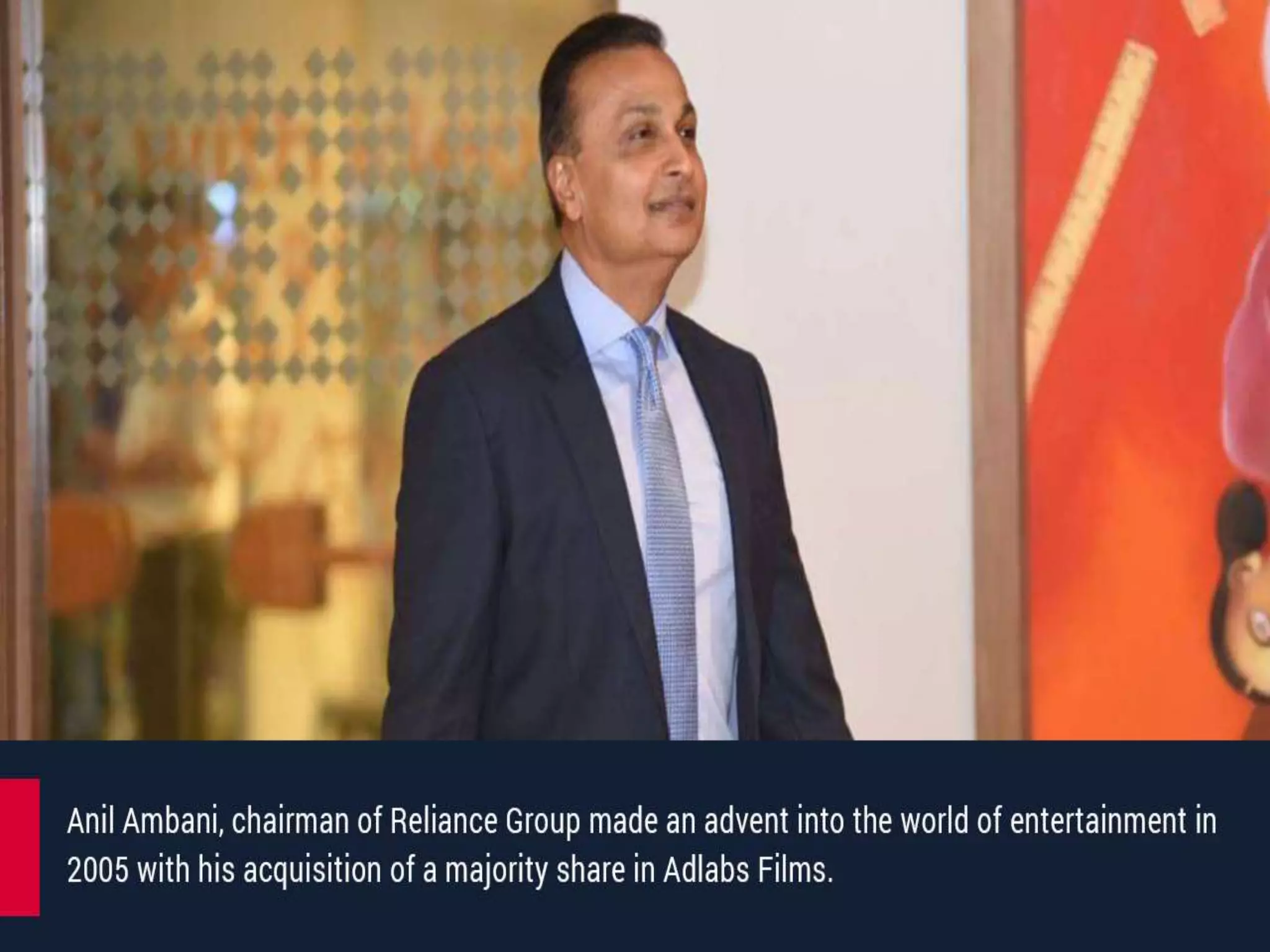
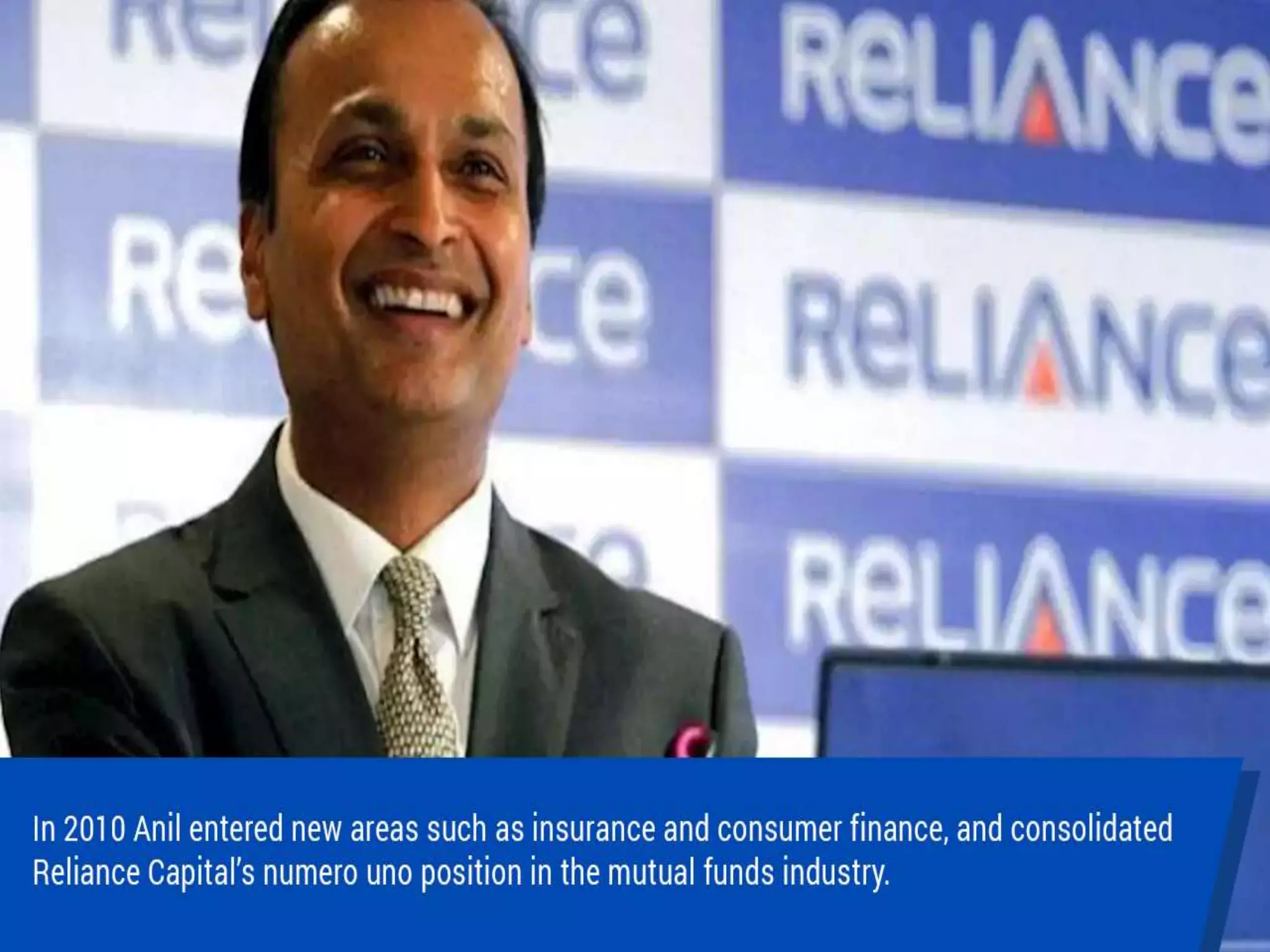
Anil Ambani, Chairman of the Reliance Group (often referred to as the Reliance Anil Dhirubhai Ambani Group or Reliance ADAG), is a prominent Indian industrialist whose business empire originated from the division of Reliance Industries Limited. His portfolio spans telecommunications, power generation, financial services, infrastructure, media, and defence manufacturing.
- Dhirubhai Ambani = Kokilaben Ambani
- Mukesh Ambani = Nita Ambani
- Akash
- Isha
- Anant
- Anil Ambani = Tina Munim
- Jai Anmol
- Jai Anshul
- Mukesh Ambani = Nita Ambani
Financial and Corporate Disclaimer: Corporate structures, equity stakes, and debt resolution proceedings under the Insolvency and Bankruptcy Code (IBC) undergo continuous regulatory and judicial updates. The analysis below reflects historical corporate divisions and documented governance frameworks.
The Ambani Family Lineage and Demerger History
Understanding Anil Ambani’s business trajectory requires examining the foundational history of the Ambani family. Reliance was established by Dhirubhai Ambani, who built a single-textile business into India's largest private-sector conglomerate, Reliance Industries Limited (RIL). Following Dhirubhai Ambani’s death in July 2002 without a formal will, a ownership struggle over the conglomerate emerged between his two sons, Mukesh Ambani and Anil Ambani.
Dhirubhai Ambani’s Legacy and the 2005 Demerger
To preserve corporate stability and family cohesion, their mother, Kokilaben Ambani, brokered a formal demerger agreement in June 2005. The non-binding family settlement carved up the original Reliance empire into two distinct corporate entities:
- Mukesh Ambani retained control over the core industrial sectors: oil refining, petrochemicals, oil and gas exploration, and textile manufacturing under Reliance Industries Limited (RIL).
- Anil Ambani assumed control of the high-growth, consumer-facing, and capital-intensive sunrise sectors: telecommunications, power, financial services, media, and infrastructure. These entities were rebranded under the umbrella of the Reliance Group (Reliance ADAG).
Immediate Family Structure
Anil Ambani’s immediate family has played active roles across various philanthropic, cultural, and corporate leadership positions within the group:
- Tina Ambani (née Munim): A former Hindi film actress, Tina Ambani married Anil Ambani in 1991. She serves as the Chairperson of the Kokilaben Dhirubhai Ambani Hospital in Mumbai, the Harmony Art Foundation, and the Harmony for Silvers Foundation. Her focus remains largely centered on healthcare management, corporate social responsibility (CSR), and modern Indian art promotion.
- Jai Anmol Ambani: The elder son of Anil and Tina Ambani, educated at Warwick Business School. He joined the board of Reliance Capital in 2016 and subsequently assumed executive roles within Reliance Infra and Reliance Nippon Life Asset Management, steering operational turnarounds and strategic portfolio investments.
- Jai Anshul Ambani: The younger son, educated in business management, who has served in operational roles within Reliance Group ventures, including training assignments across Reliance Infrastructure and Reliance Power.
Business Divisions of the Reliance Group (ADAG)
Following the 2005 settlement, Anil Ambani established a distinct corporate structure consisting of independently listed operating companies. Each division targeted a high-growth sector of the Indian economy.
- Reliance Group (Reliance ADAG)
- Telecom (RCom)
- Power (R-Power)
- Infrastructure (R-Infra)
- Financial Svc (R-Capital)
- Defence (R-Naval)
- Media (R-Ent.)
1. Telecommunications: Reliance Communications (RCom)
Reliance Communications (RCom) was the flagship enterprise of Anil Ambani’s portfolio post-demerger. Under his stewardship, RCom expanded its Code Division Multiple Access (CDMA) infrastructure and later integrated Global System for Mobile Communications (GSM) networks.
- Key Operating Units: RCom encompassed several subsidiaries, including Reliance Telecom Limited, Reliance Infratel Limited (tower assets), and Global Cloud Xchange (GCX, formerly FLAG Telecom), which managed undersea fiber-optic cable networks across international corridors.
- Market Position and Challenges: RCom initially achieved market leadership in Indian mobile telephony by offering low-cost voice services. However, intense price competition, changing technologies (the shift from 3G to 4G LTE), massive capital expenditures, debt burdens, and lingering court cases over Adjusted Gross Revenue (AGR) dues compressed operational margins.
- Debt Restructuring and IBC Proceedings: In 2019, RCom voluntarily entered corporate insolvency resolution proceedings under the Insolvency and Bankruptcy Code (IBC) before the National Company Law Tribunal (NCLT) to resolve asset sales, spectrum transfers, and creditor claims.
2. Power and Energy: Reliance Power Limited
Reliance Power was created to construct, operate, and maintain power generation projects across thermal, hydro, and renewable sectors throughout India and internationally.
- Flagship Assets:
- Sasan Ultra Mega Power Project (UMPP): A 3,960 MW pithead coal-based power plant located in Madhya Pradesh, operating alongside integrated captive coal mines.
- Rosa Power Plant: A 1,200 MW thermal power plant located in Shahjahanpur, Uttar Pradesh.
- Butibori Power Plant: A 600 MW coal-based plant in Maharashtra.
- Hydro and Renewable Projects: Various hydro-electric licenses (such as the Siyom project in Arunachal Pradesh) and solar power portfolios developed during initial National Solar Mission bidding cycles.
- Operational Shift: Reliance Power saw record-setting interest during its Initial Public Offering (IPO) in 2008. Over time, structural challenges in the Indian power sector—such as delayed discom payments, fuel supply bottlenecks, and power purchase agreement renegotiations—forced the company to streamline capital allocation, sell non-core assets, and focus on debt reduction.
3. Infrastructure and Urban Mobility: Reliance Infrastructure (R-Infra)
Reliance Infrastructure Limited (R-Infra) was developed to focus on public-private partnership (PPP) projects across engineering, procurement, and construction (EPC), urban transport, roads, and power distribution.
- Power Distribution (Historical): R-Infra operated the power distribution network serving suburban Mumbai (BSES/Reliance Energy). In 2018, this distribution and generation business was sold to Adani Transmission Limited for approximately ₹18,800 crore to pare down consolidated debt.
- Metro Rail Transportation: R-Infra executed landmark urban transit initiatives, notably the Mumbai Metro Line 1 (Versova-Andheri-Ghatkopar route), operating through a joint venture with MMRDA, and historically participated in the Delhi Airport Metro Express Private Limited (DAMEPL) project.
- Roads and Bridges: Managed a portfolio of toll road concessions across national highway stretches through special purpose vehicles (SPVs).
4. Financial Services: Reliance Capital Limited
Reliance Capital operated as a Non-Banking Financial Company (NBFC) holding holding-company investments across asset management, insurance, stockbroking, and commercial finance.
- Core Subsidiaries (Historical & Current Transitions):
- Reliance Nippon Life Asset Management (RNAM): Formerly managing Reliance Mutual Fund, one of India's largest asset managers. Nippon Life Insurance acquired R-Capital's stake, rebranding it as Nippon Life India Asset Management.
- Reliance Nippon Life Insurance Company: A joint venture with Nippon Life of Japan offering individual and group life insurance products.
- Reliance General Insurance Company: A non-life insurer providing automotive, health, property, and marine commercial insurance lines.
- Reliance Commercial Finance & Reliance Home Finance: Dedicated lending arms specializing in small business (SME) funding and housing loans.
- Resolution Process: Following financial distress in the shadow-banking sector, the Reserve Bank of India (RBI) superseded the board of Reliance Capital in late 2021. The NCLT initiated a resolution plan, leading to the approval of an acquisition bid by IndusInd International Holdings Ltd (IIHL), a entity of the Hinduja Group, to resolve creditor debt.
5. Media, Entertainment, and Gaming: Reliance Entertainment
Reliance Entertainment was formed to capture India's expanding media market, investing in film production, exhibition, digital gaming, and international media partnerships.
- Film Production and Distribution: Produced and distributed major Hindi and regional motion pictures. The division gained international exposure by establishing a landmark movie studio funding partnership with Steven Spielberg's DreamWorks Studios in 2009.
- Exhibition (Fame Cinemas): Managed multiplex cinema chains across India under the BIG Cinemas brand, which were later monetized and integrated into INOX Leisure Limited.
- Digital and Gaming: Operated Reliance Games, focusing on mobile game development, intellectual property acquisitions, and studio partnerships globally.
6. Defence and Aerospace Manufacturing: Reliance Defence
In 2015, the Reliance Group diversified into defence manufacturing by incorporating Reliance Defence Limited and acquiring a controlling stake in Pipavav Defence and Offshore Engineering Company Limited (rebranded as Reliance Naval and Engineering Limited - RNaval).
- Naval Shipbuilding: RNaval targeted naval vessel construction, ship repair, and offshore engineering works from its shipyard complex in Pipavav, Gujarat. The unit subsequently entered NCLT insolvency proceedings due to operational losses and project delays.
- Aerospace Joint Ventures: Dassault Reliance Aerospace Limited (DRAL) was formed as a joint venture with France's Dassault Aviation to build components for Falcon business jets and execute offset obligations related to India's procurement of Rafale fighter jets at a facility in Mihan, Nagpur.
Detailed Matrix of Business Divisions and Corporate Entities
The table below summarizes the key business divisions under Anil Ambani's Reliance Group, including their flagship entities, sector domains, and structural developments.
| Business Division | Primary Listed / Unlisted Entities | Sector Focus | Initial Assets / Key Projects | Key Historical Developments & Debt Resolution Status |
|---|---|---|---|---|
| Telecommunications | Reliance Communications Ltd (RCom), Global Cloud Xchange | Mobile Communications, Fiber Infrastructure, Data Centers | CDMA/GSM services, Undersea Cable Network (FLAG) | Entered NCLT insolvency (2019); monetization of spectrum and tower assets via resolution plans. |
| Power & Energy | Reliance Power Ltd | Thermal, Hydro, and Solar Power Generation | Sasan UMPP (3,960 MW), Rosa Plant (1,200 MW), Hydro Licenses | Monetized non-core power assets; restructuring liabilities to align with operational plant revenues. |
| Infrastructure | Reliance Infrastructure Ltd (R-Infra) | Power Distribution, Metro Lines, EPC, Toll Roads | Mumbai Metro Line 1, Delhi Airport Line, Suburban Mumbai Power | Sold Mumbai power distribution business to Adani Transmission (2018); shifted focus to EPC execution. |
| Financial Services | Reliance Capital Ltd | Insurance, Asset Management, Lending, Securities | Reliance General Insurance, Reliance Nippon Life, Mutual Funds | RBI superseded board (2021); NCLT approved resolution plan via Hinduja Group (IIHL). |
| Media & Entertainment | Reliance Entertainment | Film Production, Gaming, Content Distribution | DreamWorks Studios Partnership, BIG Cinemas, Reliance Games | Monetized multiplex business (BIG Cinemas sold to INOX); scaled down high-budget studio allocations. |
| Defence & Aerospace | Reliance Naval & Eng. Ltd, DRAL (JV) | Warship Building, Defense Offsets, Aerospace Components | Pipavav Shipyard, Dassault Reliance Aerospace (Nagpur) | RNaval underwent NCLT resolution; DRAL facility handles aerospace sub-assembly exports. |
Causes of Financial Restructuring and Corporate Realignment
The shift in market capitalization and asset scale across Anil Ambani’s business divisions stems from several structural, market, and macroeconomic factors:
| Key Drivers of Business Realignment | |
|---|---|
| • High Debt & Leverage | • Capital Intensity of Sectors |
| • Regulatory & Policy Changes | • Technology Disruption (4G/LTE) |
| • Extended Dispute Timelines | • Macroeconomic NBFC Strain |
High Capital Intensity and Financial Leverage
Sectors such as power generation, telecom infrastructure, and naval shipbuilding require substantial upfront capital investments with long gestation periods. Reliance Group companies relied heavily on debt financing from consortiums of domestic state-owned banks and international bond issuers. When project timelines slipped due to regulatory approvals or land acquisitions, debt service costs scaled faster than operating revenues.
Technology Shifts and Market Disruption
In telecommunications, RCom's initial investments were anchored in CDMA technology. As global standards pivoted toward GSM and subsequently 4G LTE, upgrading infrastructure required massive capital outlay. The entry of Reliance Jio Infocomm Limited in 2016 triggered nationwide price competition in data and voice services, accelerating profit margin erosion for legacy telecom carriers across the industry.
Regulatory Decisions and Asset Sales
Litigation surrounding power purchase agreements, coal block allocations, tariff revisions, and Adjusted Gross Revenue (AGR) liabilities placed additional capital strain on operating entities. In response, the Reliance Group undertook structured asset monetizations, including:
- Selling the Mumbai power distribution business to Adani Transmission for ₹18,800 crore.
- Selling its stake in the mutual fund joint venture to Nippon Life Insurance.
- Transferring tower and fiber infrastructure assets through debt restructuring mechanisms.
Governance and Succession Planning
Corporate governance practices in family-managed conglomerates often undergo changes when moving through restructuring cycles. Within Anil Ambani's family and corporate offices:
- Board Representation: Family members, including Tina Ambani and Jai Anmol Ambani, have historically served on select boards (such as Reliance Capital and Reliance Infra) to provide governance oversight and guide strategic alignments.
- De-leveraging Focus: Operating management across surviving companies has prioritized balance sheet rightsizing, operational restructuring, settlement of debt obligations, and resolution of vendor liabilities under statutory frameworks.
- Debt Resolution Mechanisms: Reliance Group companies have made extensive use of statutory tools under Indian commercial law, including the Insolvency and Bankruptcy Code (IBC), Section 230 debt compromise schemes, and One-Time Settlements (OTS) with lenders.
Frequently Asked Questions
What was the main reason for the split between Mukesh and Anil Ambani in 2005?
Following the death of Dhirubhai Ambani in 2002 without a written will, management disagreements arose regarding strategic control of Reliance Industries Limited. In June 2005, their mother, Kokilaben Ambani, facilitated a settlement that split the business assets: Mukesh Ambani took the oil refining, petrochemicals, and manufacturing businesses, while Anil Ambani took telecom, power, financial services, infrastructure, and media businesses.
Which companies were assigned to Anil Ambani during the Reliance demerger?
Anil Ambani acquired control of the consumer-facing and infrastructure assets. These formed the Reliance Group (ADAG) and included Reliance Communications (RCom), Reliance Power, Reliance Infrastructure (formerly BSES), Reliance Capital, and Reliance Entertainment.
What is the corporate status of Reliance Communications (RCom)?
Reliance Communications faced high debt burdens, regulatory litigation over AGR dues, and intense industry price competition. The company voluntarily filed for bankruptcy under the Insolvency and Bankruptcy Code (IBC) in 2019. Its assets, including telecom towers and fiber networks, have been undergoing NCLT-monitored resolution plans and monetization procedures.
What role do Tina Ambani and her sons play in the Reliance Group?
Tina Ambani serves as Chairperson of the Kokilaben Dhirubhai Ambani Hospital, focusing primarily on healthcare administration, art foundations, and corporate social responsibility projects. Their sons, Jai Anmol Ambani and Jai Anshul Ambani, have held executive and board roles across Reliance Group entities, assisting with corporate strategy and portfolio monetization efforts.
How was Reliance Capital resolved under financial regulatory frameworks?
Due to liquidity bottlenecks and debt defaults in its lending units, the Reserve Bank of India (RBI) superseded Reliance Capital’s board in November 2021 and initiated insolvency proceedings under the NCLT. A resolution plan proposed by IndusInd International Holdings Ltd (IIHL), a company of the Hinduja Group, received regulatory approvals to take over the asset holding structure.
Next Steps for Corporate & Financial Research
When conducting legal, financial, or corporate analysis on the historical and current state of the Reliance Group, consider these primary research avenues:
- Review Official Regulatory Filings: Check corporate filings on the BSE Limited and National Stock Exchange of India (NSE) for updated operational updates, quarterly earnings reports, and shareholding patterns of listed entities like Reliance Power and Reliance Infrastructure.
- Examine Insolvency Resolution Orders: For RCom, Reliance Capital, and Reliance Naval, review public legal judgments and approved resolution schemes published by the National Company Law Tribunal (NCLT) and the Insolvency and Bankruptcy Board of India (IBBI).
- Track Regulatory Disclosure Statements: Consult official notifications from sector regulators, including the Reserve Bank of India (RBI), Securities and Exchange Board of India (SEBI), and Insurance Regulatory and Development Authority of India (IRDAI) regarding ownership transfers and structural reorganizations.