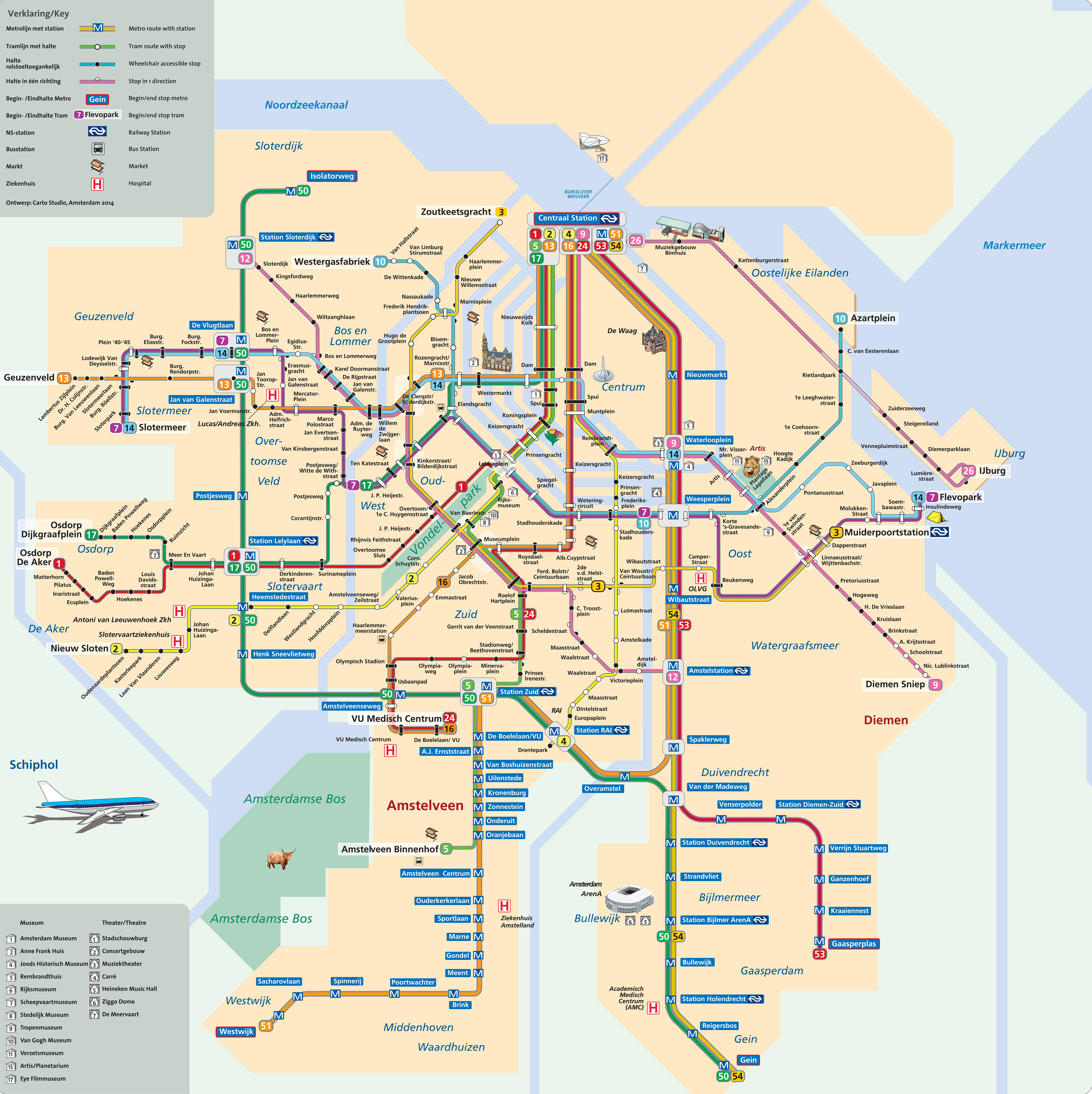
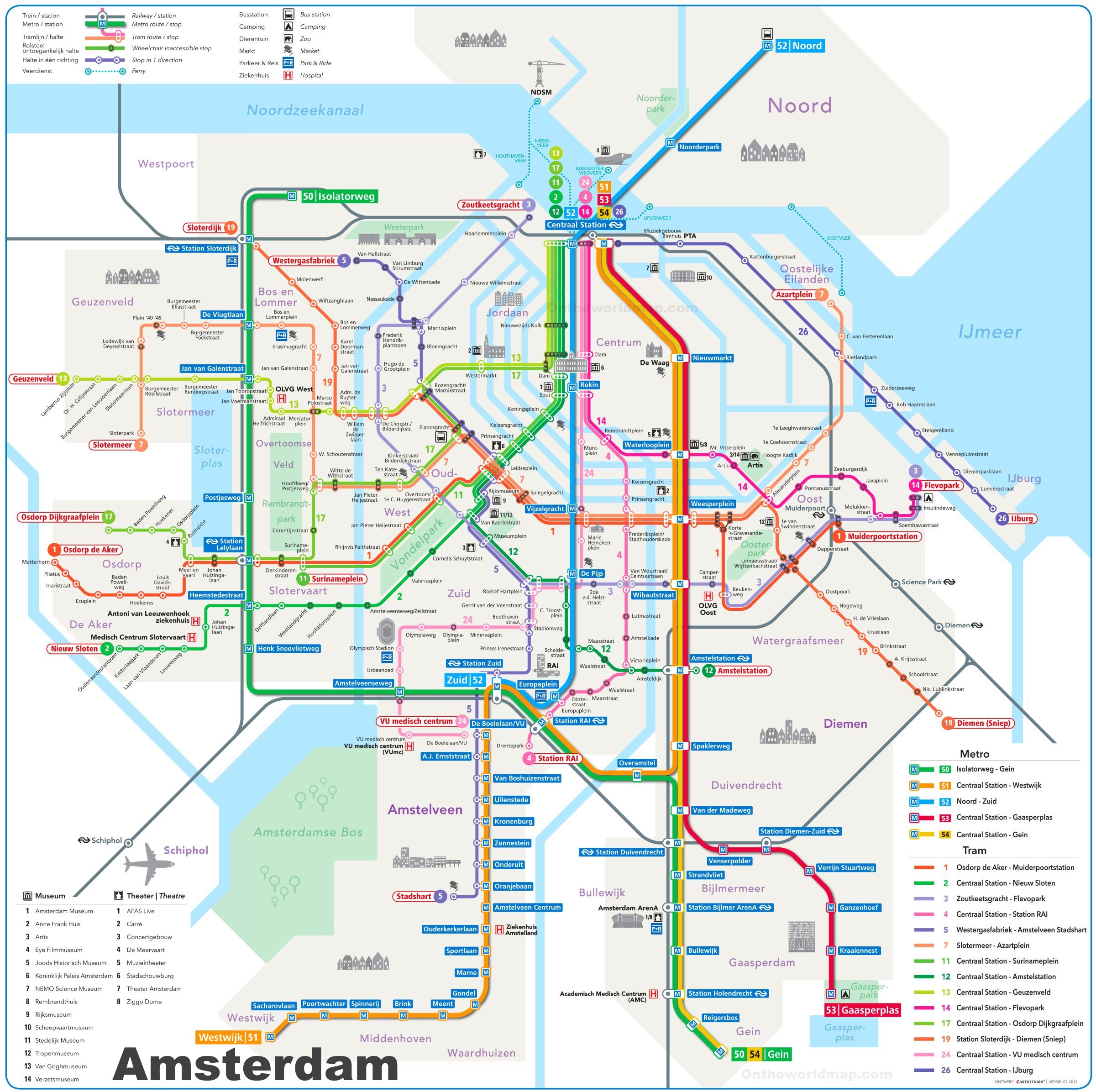
The Amsterdam metro system is a fast, efficient rapid transit network featuring five interconnected lines (51, 52, 53, 54, and the IJburg tram/metro 26) that connect Amsterdam Centraal, the financial district, and surrounding suburbs. Operating via the OV-chipkaart and contactless payment methods, it provides a reliable subterranean and elevated alternative to the city's congested surface streets.
Introduction to the Amsterdam Metro Infrastructure
The Amsterdam metro system, operated by municipal transport company Gemeentelijk Vervoerbedrijf (GVB), serves as the heavy-rail backbone of the Dutch capital's public transit network. While Amsterdam is globally celebrated for its ubiquitous bicycles and picturesque canal-side tramways, the metro network handles high-capacity, high-speed passenger movements across the city and into adjacent municipalities such as Amstelveen, Diemen, and Ouder-Amstel.
Understanding this system requires looking past simple route maps to examine the operational integration, station architecture, and ticketing mechanics that keep millions of daily commuters and international visitors moving seamlessly. Unlike the historic tram network, which frequently shares right-of-way with cyclists and pedestrians, the metro operates on dedicated grades—either elevated concrete viaducts or deep bored tunnels—ensuring predictable journey times unaffected by surface traffic congestion.
The Metro Line Network Architecture
The Amsterdam metro system consists of five operational lines. Each line serves specific geographical corridors, converging at major interchange hubs like Amsterdam Centraal and Amstelstation, while the prestigious North-South line bridges the historical water barrier of the IJ river.
[Amsterdam Centraal] <---> [Amstelstation] <---> [Duivendrecht] <---> [Gein] (Line 54) \---> [Gaasperplas] (Line 53) [Noord] <---> [Amsterdam Centraal] <---> [Zuid] <---> [Amstelveen Westwijk] (Line 52 / Line 51 split)
Line 51 (Amstelveenlijn / Isolatorweg Route)
Originally conceived as a hybrid "sneltram" (fast tram) running high-floor metro vehicles onto low-floor tram tracks toward Amstelveen, Line 51 underwent major restructuring. Today, the southern stub to Amstelveen has been converted into a modern low-floor tram line (Tram 25), while Line 51 operates as a full metro service running from Isolatorweg through the western port areas, down to Amsterdam Zuid and continuing east to Centraal Station.
Line 52 (Noord/Zuidlijn)
Opened in July 2018 after decades of engineering challenges and political debate, the North-South line is the crown jewel of the network. It plunges under the historical city center, navigating deep beneath canals using cutting-edge tunnel-boring techniques. Running from Noord in Amsterdam-Noord down to Amsterdam Zuid, it carries hundreds of thousands of daily passengers, slashing cross-city travel times to a fraction of their surface-level equivalents. Stations along this line, such as De Pijp and Rokin, feature expansive architectural designs, deep escalators, and permanent public art installations.
Line 53 (Gaasperplaslijn)
Connecting Amsterdam Centraal to the southeastern residential district of Gaasperplas, Line 53 serves as a vital commuter corridor. Opened in 1977 as Amsterdam's very first metro route, it runs largely on elevated viaducts through neighborhoods like Bijlmermeer, offering panoramic views of the city's modernist post-war urban planning before terminating at the recreational Gaasperplas park.
Line 54 (Geinlijn)
Parallel to Line 53 for much of its southeastern route, Line 54 links Amsterdam Centraal with Gein. This line shares tracks with Line 53 from Centraal down to Van der Madeweg, where it diverges southward. It serves key industrial and residential hubs, including the busy transport interchange at Duivendrecht, which offers seamless cross-platform transfers to national Dutch Railways (NS) trains.
Line 26 (IJburglijn)
While technically classified as a rapid tram line due to its hybrid design, Line 26 functions operationally as part of the metro network. Running from Amsterdam Centraal eastward to the artificial island neighborhood of IJburg, it operates on dedicated tracks with high-floor platforms, bridging urban neighborhoods with newly developed residential extensions.
Ticketing, Fares, and Payment Systems
Navigating the Amsterdam metro requires familiarity with the automated fare collection infrastructure managed by GVB and national transit authorities. Traditional paper tickets have been largely phased out in favor of digital cards and contactless financial transactions.
The OV-chipkaart and Contactless Transit
The standard medium of fare collection is the OV-chipkaart (smart card), available in anonymous plastic cards or personalized versions for residents. However, for most travelers and visitors, the system supports OVpay, allowing passengers to check in and check out directly using:
- Contactless debit cards (Mastercard, Visa, Maestro)
- Contactless credit cards
- Smartphones or smartwatches equipped with Apple Pay or Google Pay
To enter the platform area, passengers must present their card or device to the optical readers on the station gates (poortjes), triggering a green light and an audible chime. Upon exiting the destination station, the passenger must check out at a matching gate, which calculates the exact fare based on distance or flat-rate structural pricing.
Ticket Types and Pricing Structure
For those who prefer fixed-duration passes, GVB offers several products tailored to tourist and commuter use:
| Ticket Type | Validity Period | Ideal Use Case | Estimated Cost (EUR) |
|---|---|---|---|
| OVpay Contactless | Pay-as-you-go per journey | Occasional trips across the network | Variable (~€1.12 base + distance) |
| GVB 1-Hour Ticket | 60 minutes from validation | Single multi-transfer journeys | €3.40 |
| GVB Multi-Day Pass | 24 to 168 hours (1–7 days) | Tourist sightseeing and heavy transit use | €9.00 (24h) to €42.00 (168h) |
| Amsterdam Travel Ticket | 1, 2, or 3 days | Includes airport train/bus + GVB network | €18.00 (1-day) to €31.00 (3-day) |
Note: Fares are indexed annually by transport authorities. Travelers should verify exact current pricing at official GVB terminals or via digital transit apps prior to purchase.
Station Architecture, Accessibility, and Amenities
Amsterdam metro stations are engineered to high standards of urban safety, cleanliness, and structural integration. Unlike older subterranean systems in cities like London or Paris, Amsterdam's stations—particularly those on the North-South Line—are bright, cavernous, and optimized for natural light penetration where possible.
Universal Accessibility
Nearly all metro stations feature step-free access via high-capacity elevators, tactile paving for visually impaired commuters, and wide entry gates specifically designated for wheelchair users and passengers with bicycles. Train floors are level with the platform edge at most modern stations, enabling quick, seamless boarding. Audio-visual announcements inside the trains and on platforms clearly indicate approaching services, terminus details, and transfer opportunities.
Security and Surveillance
Stations are monitored continuously via closed-circuit television (CCTV) systems managed from centralized transit control rooms. Emergency intercom pillars are installed on every platform, allowing passengers to immediately connect with station security or operational staff in the event of an incident, medical emergency, or security concern.
Operational Rules, Etiquette, and Practical Tips
Riding the Amsterdam metro efficiently requires adherence to local transit customs and operational guidelines designed to maximize passenger flow and safety.
Boarding and Alighting Protocol
- Stand Clear: Always allow alighting passengers to clear the doorways completely before attempting to board the train.
- Door Operation: Metro doors do not always open automatically at every station. Passengers wishing to board or exit may need to press the illuminated green button located on the exterior or interior door panels.
- Bicycle Regulations: Bicycles are permitted on the metro during off-peak hours (Monday to Friday before 07:00, between 09:00 and 16:00, and after 18:30; all day on weekends and public holidays). Cyclists must purchase a separate bicycle ticket (fietskaart) and board only in designated multi-purpose carriages marked with bicycle icons.
Luggage and Animal Policies
Standard luggage, backpacks, and strollers are permitted free of charge. Small dogs are allowed if carried or kept on a leash, while larger service animals travel without restriction. Eating, drinking, and smoking are strictly prohibited within metro trains and behind the paid-access platform gates.
Frequently Asked Questions
Can I use my OV-chipkaart or contactless card on other forms of transport in Amsterdam?
Yes. The same OV-chipkaart or contactless debit/credit card used for the metro is fully interoperable across all GVB tram and bus lines, regional EBS and Connexxion buses, and the national rail network operated by NS within municipal boundaries. However, remember to check in and check out separately when transferring between different transport operators.
What happens if I forget to check out at my destination station?
If you fail to check out at your destination exit gate, a fixed default fare (often referred to as a "boarding penalty") will be deducted from your card or account. For contactless payments or anonymous OV-chipkaarts, this can range between €4.00 and €20.00 depending on the network. You can reclaim misplaced exit charges via web portals like OVpay.nl by registering your transaction history.
Are metro trains operational 24 hours a day?
No. The Amsterdam metro network shuts down nightly for maintenance and safety inspections. Regular services generally commence around 06:00 and conclude around 00:30 (midnight to 12:30 AM). During late-night hours when the metro is inactive, GVB operates a comprehensive network of night buses (nachtbussen) covering similar corridors across the city.
How do I transfer between metro lines safely and quickly?
Major interchange stations such as Amsterdam Centraal, Amstelstation, Duivendrecht, and Amsterdam Zuid feature cross-platform or direct subterranean corridor transfers. Follow the color-coded overhead signage displaying line numbers and destination terminuses. Because platforms are enclosed within a single paid zone, you do not need to check out and check back in when transferring from one metro line to another.
Conclusion and Next Actions
Mastering the Amsterdam metro system unlocks rapid, traffic-free transit across the Dutch capital, connecting major cultural landmarks, residential districts, and regional rail links with precision. Before embarking on your journey, verify your route using digital tools like the 9292 journey planner or the official GVB app, ensure your contactless card or OV-chipkaart has sufficient balance, and always remember to check in and check out at every station gate to avoid default penalty fares.