Identifying as an alto or a mezzo-soprano depends largely on whether you are singing in a choral or solo context. In a choir, "alto" refers to a specific vocal line, whereas "mezzo-soprano" is the solo voice type falling between soprano and contralto. This guide explores how to navigate these roles, develop your range, and select appropriate repertoire for your unique instrument.
Defining the Terms: Alto, Mezzo-Soprano, and Contralto
To begin any practical journey in singing, one must first resolve the frequent confusion between choral designations and solo classifications. In the year 2026, vocal pedagogy continues to emphasize that "alto" is not technically a voice type, but a functional part in a four-part harmony (SATB). Most women who sing the alto part in a choir are actually mezzo-sopranos—voices with a warm, middle-range focus and a usable range that extends both above and below the choral alto staff.
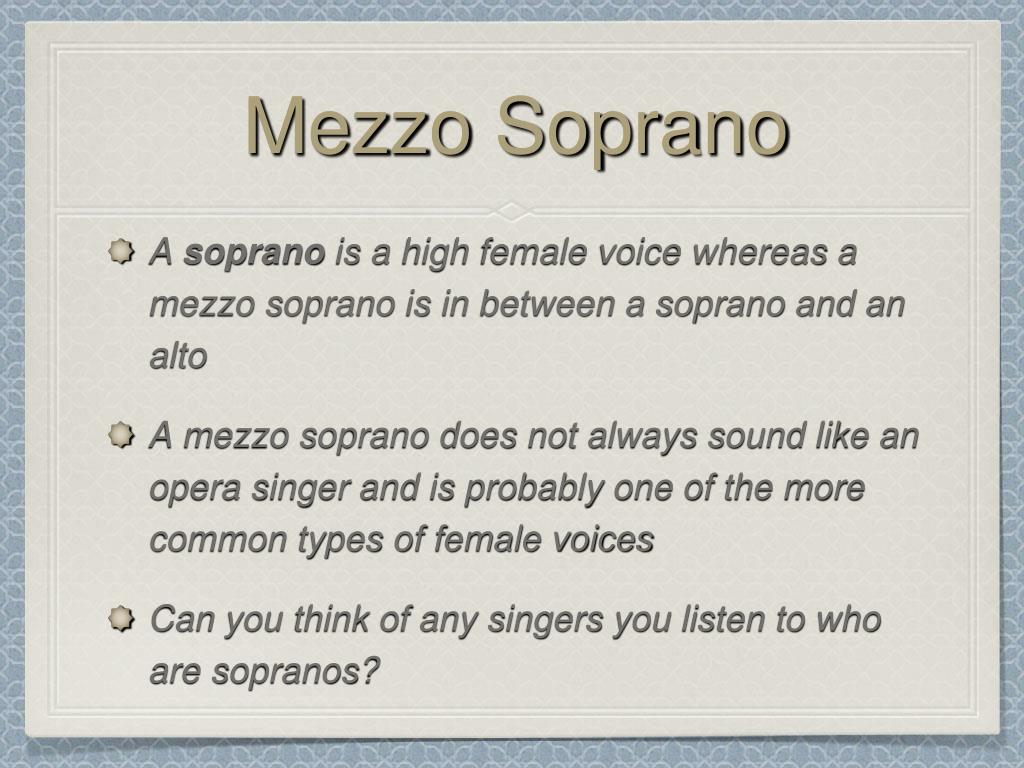
A mezzo-soprano (Italian for "half-soprano") is the most common female voice type. It sits between the high-flying soprano and the rare, deep contralto. While a soprano is prized for her shimmering high notes and a contralto for her rich, masculine lows, the mezzo-soprano is the "workhorse" of the vocal world, possessing a range that typically spans from A3 (the A below middle C) to A5 (two octaves higher).
The contralto is the lowest female voice and is exceptionally rare. Many singers who believe they are contraltos because they can hit low notes are actually dramatic mezzo-sopranos. A true contralto possesses a heavy, thick timber even in her middle register, whereas a mezzo-soprano retains a certain "ring" or brightness associated with the soprano family. Understanding this distinction is vital for long-term vocal health; forcing a mezzo voice to sound like a contralto can lead to vocal strain and a loss of upper-range flexibility.
The Physiology and Resonance of the Mezzo Voice
The mezzo-soprano voice is characterized by its "middle" placement. Physiologically, the vocal folds of a mezzo-soprano are usually slightly longer and thicker than those of a soprano, but shorter than those of a contralto. This anatomical middle ground dictates the "tessitura"—the range in which the voice is most comfortable and sounds most characteristic.
While a mezzo can often sing the high C (C6) required of a soprano, she cannot stay there for long without fatigue. Conversely, she might hit a low F3, but it lacks the carrying power of a true contralto. The "meat" of the mezzo voice lies in the middle register (C4 to C5). This is where the singer must focus their technical development. Resonance in this area requires a balance of "chest" and "head" qualities, often referred to as the mixed voice.
For the practical singer in 2026, developing this mix is the key to a professional sound. Modern vocal science suggests that the mezzo voice relies heavily on the reinforcement of the first harmonic. By maintaining a slightly lower larynx and a lifted soft palate, the mezzo-soprano creates a resonant "cavern" that allows her middle notes to project over an orchestra or a loud piano accompaniment without shouting.
Navigating the Passaggio: The Mezzo's Bridge
One of the most significant challenges for the alto-mezzo singer is the passaggio, or the transition zones between vocal registers. Most mezzo-sopranos encounter two primary transition points:
- The Lower Passaggio (Primo Passaggio): Occurs around E4 or F4. This is where the singer shifts from "chest voice" (the speaking register) into the middle mix.
- The Upper Passaggio (Secondo Passaggio): Occurs around E5 or F5. This is the transition into the "head voice" or "flute register."
Practical training involves "smoothing" these bridges. If a singer carries too much chest weight upward, they will hit a "wall" at F4, resulting in a strained, yelled sound or a sudden, embarrassing crack. To navigate this, singers use vowel modification. As a mezzo approaches the E4 transition, she might slightly "round" or "narrow" the vowel (e.g., turning an "ah" slightly toward "oh") to help the vocal folds thin out and transition into the mix.
In 2026, vocal coaches use real-time spectrography apps to help singers visualize these transitions. Seeing the harmonic energy shift on a screen provides immediate feedback on whether the singer is "gripping" the throat or allowing the resonance to shift naturally.
The Fach System: Categorizing the Mezzo-Soprano
In classical music and opera, the German Fach system is used to further categorize voices based on weight, range, and agility. Identifying your Fach helps you choose repertoire that won't damage your voice and will make you more competitive in auditions.
Coloratura Mezzo-Soprano
These voices have a very high range and extreme flexibility. They specialize in "florid" music—fast scales, trills, and leaps. You will often find them singing the works of Rossini or Handel. While they have the depth of a mezzo, their high notes are as bright and agile as a soprano's.
Lyric Mezzo-Soprano
The most common mezzo type, the lyric mezzo has a warm, bright quality. This voice is ideal for "trouser roles" (women playing young men, such as Cherubino in The Marriage of Figaro). The voice is smooth and sensitive, lacking the heavy "metal" of the dramatic mezzo but possessing a rich, velvety texture.
Dramatic Mezzo-Soprano
This is a powerful, dark voice that can cut through a large Wagnerian orchestra. Dramatic mezzos often sing roles of witches, queens, or villains (like Azucena in Il Trovatore). Their range is often lower than the lyric mezzo, and their chest register is exceptionally strong and resonant.
Comparative Overview of Low-to-Mid Female Voices
The following table provides a practical comparison of the three primary categories often grouped under the "alto" or "mezzo" umbrella.
| Feature | Lyric Mezzo-Soprano | Dramatic Mezzo-Soprano | Contralto |
|---|---|---|---|
| Typical Range | G3 – B5 | F3 – A5 | D3 – F5 |
| Primary Tessitura | Middle (A4 – E5) | Lower-Middle (F4 – D5) | Low (G3 – G4) |
| Vocal Timber | Velvety, warm, bright | Powerful, metallic, dark | Heavy, rich, deep |
| Common Roles | Cherubino, Rosina | Amneris, Eboli | Erda, Ulrica |
| Choral Part | Soprano 2 or Alto 1 | Alto 1 or Alto 2 | Alto 2 |
Practical Repertoire Selection
A common mistake for "altos" is selecting repertoire that is consistently too low. Because the "alto" part in many choral arrangements stays between G3 and C5, many singers never develop their upper extension. For a mezzo-soprano to grow, she must select repertoire that challenges her to use her entire range.
Beginner Level
For those starting out, the 24 Italian Songs and Arias collection remains the gold standard even in 2026. Songs like "Vittoria, mio core!" or "Caro mio ben" allow the mezzo to practice the passaggio without extreme range demands. These pieces help establish the "mixed" resonance needed for more advanced work.
Intermediate Level
As the voice stabilizes, singers should explore the French mélodie or German Lieder. Composers like Gabriel Fauré and Johannes Brahms wrote extensively for the mezzo-soprano voice. Pieces like Fauré's "Ici-bas!" provide excellent practice for breath control and sustaining a long, lyrical line in the middle of the voice.
Advanced/Professional Level
At this stage, the singer should focus on their specific Fach. A coloratura mezzo should look at Rossini’s "Una voce poco fa," while a lyric mezzo might focus on Mozart’s "Voi che sapete." Dramatic mezzos should begin exploring the heavier works of Verdi and Saint-Saëns, such as "Mon cœur s'ouvre à ta voix" from Samson et Dalila.
Technical Exercises for the Mezzo Voice
A practical guide would be incomplete without specific drills. The goal for any alto-mezzo is to integrate the registers so the voice sounds like one continuous instrument from bottom to top.
- Siren Slides: Starting on a comfortable middle note, slide up to your highest comfortable note on an "ng" sound (like the end of the word "sing"). This keeps the resonance in the nasal cavities and helps bypass the "grip" of the throat during the upper passaggio.
- Messa di Voce: Sing a single note in your middle register (e.g., A4). Start as softly as possible (pianissimo), gradually swell to your loudest supported volume (fortissimo), and then fade back to silence. This develops the muscular control of the vocal folds.
- Chest-to-Mix Descending Scales: Start on a C5 and sing a five-note descending scale. The challenge is to keep the "lightness" of the head voice even as you descend into the chest register. This prevents the "clunky" gear shift that many altos experience when moving downward.
Vocal Health and Longevity
In 2026, we have a better understanding of vocal hygiene than ever before. For mezzos, who often sing in the "speaking" range, the risk of vocal fatigue is high.
- Hydration: Systematic hydration (drinking water) takes about 4-6 hours to affect the vocal folds. Surface hydration (using a personal steamer) provides immediate relief for dry mucosal linings.
- Avoid "Artificial" Weight: Many mezzos try to sound more "alto" by depressing the tongue or forcing the larynx down. This creates a "woolly" sound and leads to nodules. Always sing with your natural timber.
- The "Marking" Technique: During long rehearsals, mezzos should "mark"—sing an octave lower or at a lower volume—to save their voice for the performance. This is a professional standard in opera houses worldwide.
Frequently Asked Questions
What is the main difference between an alto and a contralto?
An alto is a musical part in a choir, whereas a contralto is a specific, rare female voice type characterized by a very deep, rich timber and a range that extends significantly into the masculine tenor territory. Most choral "altos" are actually mezzo-sopranos who have a strong lower register.
Can a mezzo-soprano eventually become a soprano?
It is common for young singers to be classified as mezzos because their high notes haven't developed yet. As the voice matures and technique improves, the "ceiling" of the voice may lift, revealing a soprano range. However, a true mezzo-soprano will always have a warmer, darker middle-voice quality than a soprano, regardless of how high she can sing.
What are "Trouser Roles"?
Trouser roles (or "pants roles") are male characters played by female singers, typically mezzo-sopranos. Because the mezzo voice has a certain "weight" but can still reach the high notes required for operatic projection, they are perfect for portraying adolescent boys or young men whose voices haven't "dropped," such as Cherubino in The Marriage of Figaro or Hansel in Hansel and Gretel.
How do I know if I'm a dramatic or lyric mezzo?
This is usually determined by the "weight" of the voice and the size of the orchestra you can comfortably sing over. If your voice is agile, light, and excels in fast passages, you are likely a lyric. If your voice is large, takes longer to move, and feels most comfortable singing powerful, sustained notes, you are likely a dramatic mezzo. This classification often doesn't become clear until a singer is in their late 20s or early 30s.
Why do I lose my voice after singing alto in choir?
This often happens because choral alto parts sit right in the "break" (passaggio) of the mezzo-soprano voice. Many singers "push" their chest voice too high to be heard, leading to vocal cord swelling. Learning to sing the alto part in a "mixed" voice rather than a "pushed chest" voice is essential for avoiding fatigue.
Final Recommendations for the Mezzo-Soprano
If you find yourself identified as an alto or mezzo-soprano, your primary goal should be the unification of registers. Do not be afraid of your high notes; even though you sing the lower part in a group, your solo voice needs the brilliance of the upper extension to be fully functional.
Seek out a teacher who understands the specific mechanics of the mezzo passaggio. Practice vowel modification religiously to ensure your transitions are seamless. Finally, embrace the versatility of your voice. Whether you are playing a seductive heroine like Carmen or a young page boy, the mezzo-soprano voice offers a range of emotional colors that are unmatched by any other voice type.