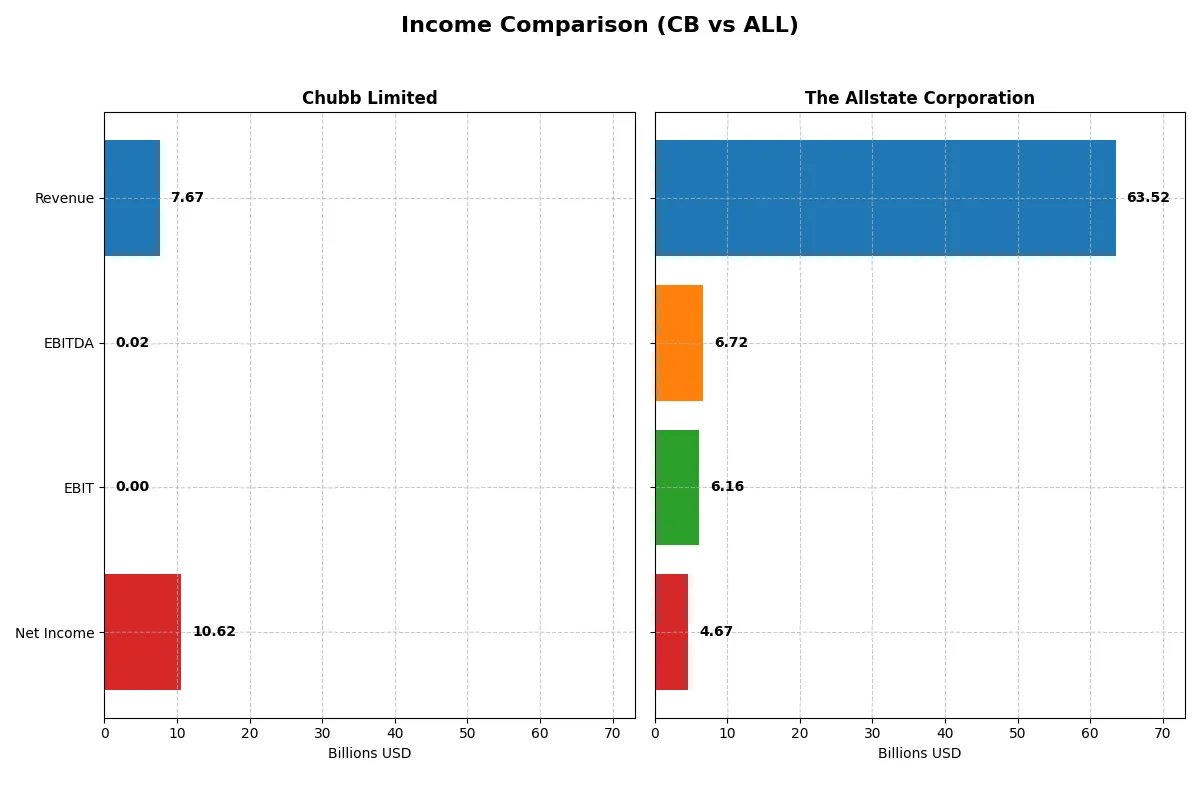
In 2026, Allstate’s life insurance revenue is primarily characterized by its strategic transition from a direct underwriter to a distribution-focused model. Following the 2021 divestiture of its primary life entities to Wilton Re, Allstate now captures life-related revenue through its Allstate Health and Benefits segment and third-party partnerships, generating approximately $2.5 billion to $3 billion annually in this specific sector.
The Evolution of Allstate’s Life Insurance Revenue Model
To understand the current revenue landscape of Allstate’s life insurance interests in 2026, one must examine the massive shift the company undertook at the start of the decade. Historically, Allstate was a major player in the direct underwriting of life insurance and annuities. However, the capital-intensive nature of long-term life products, combined with a prolonged low-interest-rate environment in the early 2020s, led to a fundamental restructuring.
In 2021, Allstate completed the sale of Allstate Life Insurance Company (ALIC) and its New York affiliate to Wilton Re for approximately $2.8 billion. This move effectively removed the bulk of life and annuity liabilities from Allstate’s balance sheet. Consequently, the "revenue" labeled as life insurance in 2026 is no longer derived from high-volume premium underwriting of traditional whole or universal life policies by Allstate itself. Instead, the revenue is categorized under "Health and Benefits" or generated through commission-based distribution agreements with providers like Protective Life.
Shifting from Underwriting to Distribution
In 2026, Allstate functions as a powerful distribution channel. By leveraging its vast network of captive agents, the company sells life insurance products underwritten by other entities. This "capital-light" model allows Allstate to earn fee income and commissions without the long-term interest rate risk and reserve requirements associated with carrying life insurance policies on its own books. This strategic pivot has significantly improved Allstate’s Return on Equity (ROE) by focusing capital on its higher-margin Property-Liability (P&C) business.
Current Revenue Streams and Financial Performance
As of the 2026 fiscal year, Allstate’s total consolidated revenue continues to be dominated by its auto and homeowners insurance lines. However, the specialized segments that house life-related activities remain a critical part of the company's "Circle of Protection" strategy.
Allstate Health and Benefits Segment
This segment is the primary engine for life-adjacent revenue. It includes employer-sponsored voluntary benefits, such as critical illness, accident, and short-term disability, alongside group life insurance. In 2026, this segment has seen steady growth due to the rising demand for supplemental workplace benefits.
- Premium Growth: Revenue in this segment has grown as more small-to-medium-sized businesses (SMBs) adopt Allstate’s voluntary benefit packages.
- Operating Profit: By focusing on group products with shorter durations than individual whole life policies, Allstate maintains a more predictable profit margin.
Protection Services and Third-Party Commissions
Another significant portion of revenue comes from "Protection Services," which includes Allstate Protection Plans (SquareTrade), Arity, and Identity Protection. While not "life insurance" in the traditional sense, these services represent the company’s diversification away from standard risk-bearing insurance. The commissions earned from selling Protective Life policies to Allstate’s existing 16 million+ households contribute to the "Other Revenue" line items in financial reports.
| Financial Metric (Estimated 2025-2026) | Allstate Health & Benefits | Total Allstate Corporation |
|---|---|---|
| Annual Revenue | $2.85 Billion | $64.2 Billion |
| Revenue Growth (YoY) | 4.2% | 8.5% |
| Adjusted Operating Income | $245 Million | $3.1 Billion |
| Combined Ratio (P&C Equivalent) | N/A | 92.5% |
| Investment Income Contribution | $110 Million | $2.4 Billion |
Impact of the Wilton Re Divestiture on Long-Term Revenue
The decision to sell the Allstate Life Insurance Company to Wilton Re in 2021 remains the most significant factor affecting "life" revenue figures in 2026. Prior to this sale, life insurance and annuities contributed billions more to the top-line revenue, but they also introduced significant volatility due to market fluctuations and the need for massive statutory reserves.
De-risking the Balance Sheet
By offloading $35 billion of GAAP liabilities, Allstate freed up capital to invest in the Transformative Growth plan. This plan focused on expanding the auto insurance market share and improving the digital interface for customers. In 2026, we see the fruits of this labor: while "life insurance revenue" appears smaller on paper than it did in 2019, the quality of the remaining revenue is higher. It is less sensitive to interest rate swings and more focused on recurring fee-based income.
Runoff and Legacy Business
A small portion of revenue still stems from "Runoff" business—policies that were not included in the Wilton Re sale or specific life-contingent structured settlements. These are being managed to maturity. In 2026, the revenue from these legacy accounts is negligible compared to the broader Health and Benefits portfolio but requires specialized actuarial management to ensure claims-paying ability.
Macroeconomic Factors Influencing 2026 Revenue
Several external factors have shaped the revenue landscape for Allstate's remaining life and health interests in 2026.
Interest Rate Environment
While Allstate no longer carries the same level of interest-rate risk in its life segment, the Net Investment Income (NII) remains a vital component of overall corporate revenue. In 2026, the stabilization of interest rates following the volatility of the early 2020s has allowed Allstate to achieve better yields on its fixed-income portfolio, which supports the profitability of its Health and Benefits products.
Inflation and Benefit Payouts
Inflationary pressures in the mid-2020s impacted the "cost of goods sold" in the insurance world. For the life and health segments, this translated to higher administrative costs and potentially higher claim amounts for certain supplemental health products. Allstate addressed this by adjusting premium rates in its voluntary benefits segment, ensuring that revenue growth kept pace with rising operational expenses.
Technological Integration
Revenue efficiency in 2026 is driven largely by Allstate’s "Unified Agent Desktop." This technology allows agents to seamlessly pivot from an auto insurance quote to a life insurance referral (via Protective Life) or a supplemental health enrollment. This cross-selling capability is a primary driver of the 4-5% annual growth seen in the Health and Benefits segment.
Comparative Analysis: Allstate vs. Industry Peers
In 2026, Allstate’s approach to life insurance revenue differs starkly from competitors like State Farm or Northwestern Mutual.
- State Farm: Unlike Allstate, State Farm has maintained a massive, direct-underwriting life insurance subsidiary. Consequently, State Farm reports much higher direct life insurance revenue but also carries significantly higher capital requirements.
- Progressive: Progressive followed a similar path to Allstate, largely relying on third-party partnerships (like those with eFinancial or Protective) to offer life insurance. Allstate’s revenue in this space is slightly more robust than Progressive's because of Allstate’s larger footprint in the employer-sponsored benefits market.
- MetLife/Prudential: These "pure-play" or heavy-life insurers operate on a different scale, where life and retirement revenue are the primary drivers. Allstate has essentially exited this peer group to compete more directly with tech-forward P&C insurers.
The Role of Protective Life in Allstate's Ecosystem
Since Allstate no longer underwrites most individual life policies, its relationship with Protective Life Insurance Company is essential for understanding its market presence.
- Product Offering: Allstate agents offer Protective Life’s term, whole, and universal life products.
- Revenue Recognition: Allstate recognizes "Other Revenue" or commission income from these sales. This is a high-margin revenue stream because Allstate does not bear the underlying mortality risk or the requirement to hold billions in reserves for these specific policies.
- Brand Synergy: The products are often co-branded or marketed as "Protective Life products sold by Allstate agents," maintaining brand trust while siloing financial risk.
Challenges to Revenue Growth in 2026
Despite a stable 2026, Allstate faces headwinds in expanding its life-adjacent revenue:
- Direct-to-Consumer (DTC) Competition: Digital-first life insurance startups have increased price competition in the term-life space, potentially eating into the commission revenue Allstate earns through its agent network.
- Regulatory Scrutiny: In 2026, state regulators have increased focus on the transparency of "voluntary benefits" sold through employers. Any changes in commission structures or required loss ratios could impact the profitability of the Health and Benefits segment.
- Agent Retention: As Allstate pushes more digital-direct sales for auto insurance to reduce costs, maintaining a motivated captive agent force—which is crucial for selling complex life and health products—remains a strategic challenge.
Operational Strengths Supporting Revenue Stability
Allstate’s revenue is bolstered by its sophisticated use of data and claims management. In the Health and Benefits segment, the company has integrated Arity (its telematics and data analytics arm) to better understand risk clusters. While telematics is primarily an auto insurance tool, the data insights into lifestyle and behavioral risks are beginning to inform the underwriting of group life and disability products, leading to more accurate pricing and protected margins.
Furthermore, Allstate's "claims satisfaction" ratings remain high in 2026. For the life insurance policies still under their administration or the health benefits they manage, efficient digital claims processing has reduced the "expense ratio," allowing more of the earned premium to flow to the bottom line as net revenue.
Frequently Asked Questions
Does Allstate still sell its own life insurance policies in 2026?
No, Allstate largely exited the direct underwriting of individual life insurance and annuities following the sale of Allstate Life Insurance Company to Wilton Re in 2021. In 2026, Allstate agents primarily sell life insurance policies underwritten by Protective Life Insurance Company, while Allstate focuses on group life and voluntary benefits through its Health and Benefits segment.
How much revenue does Allstate generate from life insurance?
In 2026, "pure" life insurance revenue is no longer a standalone reporting line of significant scale for Allstate. Instead, it is part of the Allstate Health and Benefits segment, which generates approximately $2.5 billion to $3 billion in annual revenue. This includes group life, accident, and supplemental health insurance.
Who is responsible for paying claims on old Allstate life policies?
For policies issued before the 2021 divestiture, the responsibility for claims payment generally lies with Wilton Re, which purchased Allstate Life Insurance Company. However, most policyholders still interact with familiar branding or specific transition portals established during the handoff. For new policies sold by Allstate agents today, Protective Life is the underwriting entity responsible for claims.
Why did Allstate sell its life insurance division?
Allstate sold the division to reduce its exposure to interest rate fluctuations and to free up capital. The life insurance business requires significant "float" and reserves that were tied up for decades. By selling, Allstate was able to deploy that capital into its more profitable property and casualty (auto and home) business and digital expansion.
Is Allstate Health and Benefits the same as Allstate Life?
Not exactly. Allstate Health and Benefits focuses on voluntary supplemental insurance and group products usually offered through employers. While this includes group life insurance, it is a different business model than the individual term or whole life insurance business that was sold to Wilton Re.
What is the financial rating of Allstate's insurance entities in 2026?
Allstate’s primary insurance operating companies maintain high credit and financial strength ratings in 2026. AM Best and S&P Global typically rate Allstate's core entities in the "A+" (Superior) or "AA-" range, reflecting the company’s strong capital position and market leadership in the P&C sector.
Recommendation for Stakeholders
For investors and analysts, the primary "next action" is to evaluate Allstate not as a traditional life insurer, but as a diversified protection provider. When reviewing financial statements in 2026, focus on the growth of the Health and Benefits segment and the Protection Services margins. These areas represent the future of Allstate’s non-P&C revenue.
For consumers, the recommendation is to recognize that while your Allstate agent is a reliable point of contact, the financial strength backing a new life policy is that of Protective Life. Prospective buyers should review the AM Best ratings of Protective Life alongside Allstate’s service reputation to ensure a comprehensive understanding of their policy’s security.