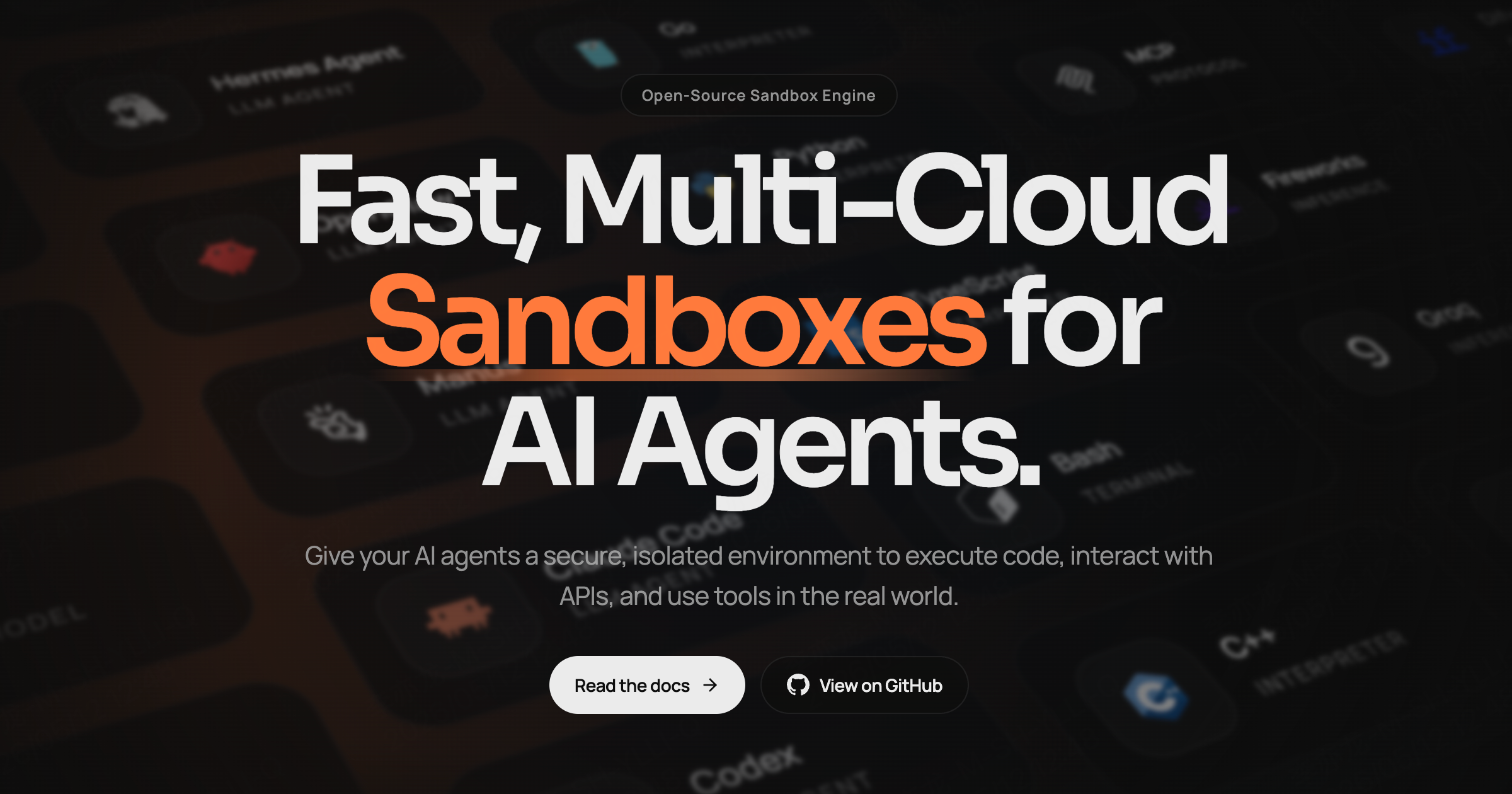
As of 2026, Agent Sandbox as a Service (ASaaS) has become the essential infrastructure for developers deploying autonomous AI agents that require code execution capabilities. These specialized cloud environments provide isolated, ephemeral, and highly secure runtimes that prevent untrusted agent-generated code from compromising host systems or sensitive data while maintaining the low latency required for real-time agentic reasoning.
The Evolution of AI Agent Execution Environments
In the early stages of the generative AI boom, agents were largely restricted to text-based outputs. However, the shift toward "agentic workflows" necessitated that LLMs (Large Language Models) interact with the physical and digital world through code. Whether an agent is tasked with data analysis in Python, web scraping, or automating local system tasks, it must generate and execute scripts.
Executing code generated by an LLM introduces significant security vulnerabilities. Prompt injection attacks can trick an agent into running malicious commands, such as exfiltrating environment variables, scanning internal networks, or launching denial-of-service attacks. Traditional cloud infrastructure, such as standard Docker containers or heavy virtual machines (VMs), often fails to provide the right balance of security, startup speed, and cost-efficiency for these ephemeral tasks.
Agent Sandbox as a Service emerged to solve this specific bottleneck. These services offer pre-configured, "disposable" environments where an agent can spin up a process, execute its logic, and shut down within milliseconds. This architecture ensures that even if an agent is "jailbroken" or coerced into running harmful code, the damage is strictly contained within a restricted environment with no persistence and no lateral access to the broader infrastructure.
Core Technologies Powering Secure Agent Sandboxes
To understand how cloud providers execute agent code securely in 2026, we must look at the underlying isolation technologies. These are not standard virtual machines; they are highly optimized compute layers designed for high-density, multi-tenant security.
MicroVMs and Firecracker
Many ASaaS providers rely on MicroVMs, specifically technologies like AWS Firecracker. MicroVMs provide the security and isolation properties of traditional virtual machines but with the hardware requirements and startup times of containers. By using a minimalist Linux kernel and a restricted set of emulated devices, Firecracker allows providers to launch thousands of independent agent environments on a single bare-metal server. Each agent gets its own kernel, preventing "container breakout" attacks where a malicious process might try to exploit vulnerabilities in the host operating system's kernel.
gVisor and User-Space Kernels
Google’s gVisor is another pillar of the sandbox ecosystem. It functions as a user-space kernel that intercepts system calls from the agent's code. By acting as a proxy between the application and the host kernel, gVisor drastically reduces the attack surface. In an agentic context, this is vital because LLMs often generate code that uses obscure or complex system calls which are difficult to secure in a standard environment.
WebAssembly (Wasm)
By 2026, WebAssembly has matured into a primary runtime for lightweight agent sandboxes. Wasm provides a sandboxed execution environment that is platform-independent and has near-instant cold start times. Because Wasm modules are denied access to the host environment by default (following a capability-based security model), they are inherently safer for running untrusted logic than native binaries or interpreted scripts.
Key Security Features of ASaaS Providers
Cloud providers offering sandbox services implement multi-layered security protocols to ensure that "agentic autonomy" does not result in a security breach.
- Network Isolation and Egress Filtering: By default, agent sandboxes are "air-gapped" from the provider's internal network. Any internet access is strictly controlled through egress filtering. Developers can whitelist specific domains (e.g., an API endpoint the agent needs to call) while blocking everything else.
- Ephemeral Filesystems: Files created or modified by an AI agent during a session are wiped the moment the sandbox is terminated. This prevents "state-based" attacks where an agent might leave a malicious script in a persistent volume to be executed by a future process.
- Resource Quotas and Rate Limiting: To prevent resource exhaustion or crypto-jacking, providers enforce strict limits on CPU usage, memory allocation, and disk I/O. If an agent-generated loop runs out of control, the sandbox is automatically throttled or killed.
- Audit Logging and Observability: Every system call, network request, and file modification within the sandbox is logged. This allows security teams to reconstruct an agent's actions if a policy violation occurs, providing a clear trail for forensic analysis.
Comparing Agent Sandbox as a Service Providers in 2026
The market for ASaaS has bifurcated into "Big Cloud" offerings and specialized "Niche Sandbox" providers. The following table compares the leading approaches to secure agent code execution.
| Provider Type | Examples | Primary Technology | Best Use Case | Key Advantage |
|---|---|---|---|---|
| Hyperscalers | AWS Lambda / Google Cloud Run | MicroVMs / gVisor | Enterprise-grade, high-scale integration | Deep integration with existing cloud IAM and VPCs. |
| Specialized ASaaS | E2B / Kurtosis / Modal | Custom MicroVMs / Firecracker | Rapid agent prototyping and long-running tasks | Tailored SDKs specifically for LLM tool-calling and code-interp. |
| Edge-Based | Cloudflare Workers / Fly.io | V8 Isolates / Firecracker | Low-latency, globally distributed agents | Minimal cold starts; executes close to the end-user. |
| Browser-Based | WebContainer / Pyodide | Wasm / SharedArrayBuffer | Client-side data analysis and privacy | No server-side costs; data never leaves the user's browser. |
Implementation Workflow: Executing Agent Code Securely
Integrating a sandbox service into an AI application typically follows a standardized workflow. Developers no longer need to manage raw Docker sockets or complicated networking; instead, they interact with a high-level API.
Step 1: Defining the Sandbox Environment
The developer specifies the environment requirements—such as a Python runtime with specific libraries (Pandas, NumPy) or a Node.js environment. In 2026, most providers allow for "template-based" sandboxes that can be instantiated in under 100ms.
Step 2: The Tool-Calling Loop
When an AI agent decides it needs to run code (e.g., to calculate a complex mathematical derivative), it generates the code block. The application backend intercepts this, wraps it in a secure execution request, and sends it to the ASaaS provider.
Step 3: Execution and Capturing Output
The sandbox service receives the code, executes it in a fresh, isolated environment, and captures the stdout, stderr, and any generated files. Importantly, the sandbox is configured with a strict timeout—usually a few seconds—to ensure that hanging processes do not consume unnecessary credits.
Step 4: Result Parsing and Termination
The output is returned to the LLM as a "tool observation." The LLM uses this data to continue its reasoning. Once the task is complete, the sandbox is instantly decommissioned, and all volatile memory is cleared.
Common Pitfalls and Troubleshooting in Agentic Execution
Even with robust sandbox services, developers must be wary of certain implementation errors that can compromise the security or reliability of the agent.
- Over-Privileged IAM Roles: A common mistake is assigning the sandbox environment an Identity and Access Management (IAM) role with too many permissions. Even if the sandbox is isolated, if it has a token that can read from a production S3 bucket, a compromised agent can still do damage. Always follow the principle of least privilege.
- State Confusion: Developers often assume that the agent will "remember" files between different code execution blocks. However, in an ephemeral ASaaS model, every execution might happen in a brand-new environment. If persistence is needed, it must be explicitly managed via external storage or "sticky" sessions, which come with higher security risks.
- Prompt Injection via Code: If an agent takes user input and injects it directly into a
subprocess.run()call inside the sandbox, it is vulnerable to command injection. While the sandbox protects the host, it doesn't protect the agent's logic. Input sanitization remains a critical layer of the stack.
The Role of eBPF in Modern Sandbox Security
A significant technical advancement in 2026 is the widespread use of eBPF (Extended Berkeley Packet Filter) for monitoring agent sandboxes. eBPF allows providers to run sandboxed programs within the Linux kernel without changing kernel source code or loading modules.
In an ASaaS context, eBPF is used for "deep observability." It monitors the behavior of the agent code at the syscall level. If an agent attempts to open a sensitive file like /etc/shadow or initiates a network connection to an unauthorized IP, eBPF filters can block that specific action in real-time with zero performance overhead. This provides a more granular "micro-firewall" for every single agent execution.
Cost Considerations and Operational Efficiency
Running a sandbox for every agent interaction can become expensive if not managed correctly. Providers in 2026 typically charge based on "execution seconds" and "warm-start" availability.
To optimize costs, many developers use a tiered approach. Simple logic is handled via WebAssembly (cheapest), while complex data science tasks requiring heavy libraries like PyTorch are sent to MicroVM-based sandboxes (more expensive). Furthermore, using "pooled" sandboxes—where a single environment is reused for a single user session—can reduce the overhead of constant spinning up and tearing down, provided the session isolation is strictly enforced.
FAQ
What is the difference between a standard Docker container and an agent sandbox? A standard Docker container shares the host's Linux kernel, which presents a "breakout" risk if a vulnerability is found. An agent sandbox typically uses a MicroVM (like Firecracker) or a user-space kernel (like gVisor) to provide a much stronger security boundary, ensuring that even a root-level exploit within the sandbox cannot affect the host system.
Can an AI agent access my internal database from a sandbox? By default, no. Agent sandboxes are designed with a "deny-all" network policy. If your agent needs to access an internal database, you must explicitly configure a secure tunnel or a VPC peering connection, and even then, it is recommended to provide access only through a restricted API layer rather than direct database credentials.
How fast are these sandboxes? Does it slow down the AI's response time? Leading ASaaS providers in 2026 offer "cold start" times under 150ms for MicroVMs and under 10ms for Wasm-based environments. For most LLM applications, where the model's inference time is often several seconds, the overhead of spinning up a sandbox is negligible.
Is it possible to run GUI-based applications in an agent sandbox? Yes, some advanced ASaaS providers offer "headless" browser sandboxes or VNC-enabled environments. These allow agents to interact with website UIs or legacy software. However, these are significantly more resource-intensive and require stricter egress filtering to prevent the agent from being used for web-based attacks.
Does Agent Sandbox as a Service help with GDPR or HIPAA compliance? Yes, by providing ephemeral environments where data is automatically purged after execution, ASaaS helps meet data minimization requirements. However, developers must still ensure that the logs captured by the provider do not contain PII (Personally Identifiable Information) and that the provider offers a BAA (Business Associate Agreement) for HIPAA-regulated data.
Practical Recommendation for 2026
When building an agentic platform today, do not attempt to build your own sandboxing infrastructure using raw Docker or virtual machines. The complexity of maintaining secure isolation, managing networking, and optimizing for low latency is a significant operational burden.
Instead, evaluate specialized ASaaS providers like E2B for Python/Node execution or Cloudflare Workers for edge-based logic. Prioritize providers that offer eBPF-based monitoring and OIDC-based authentication for your agent's tool-calling. Start with a "zero-trust" network configuration and only whitelist the minimum necessary external resources as your agent's capabilities expand.