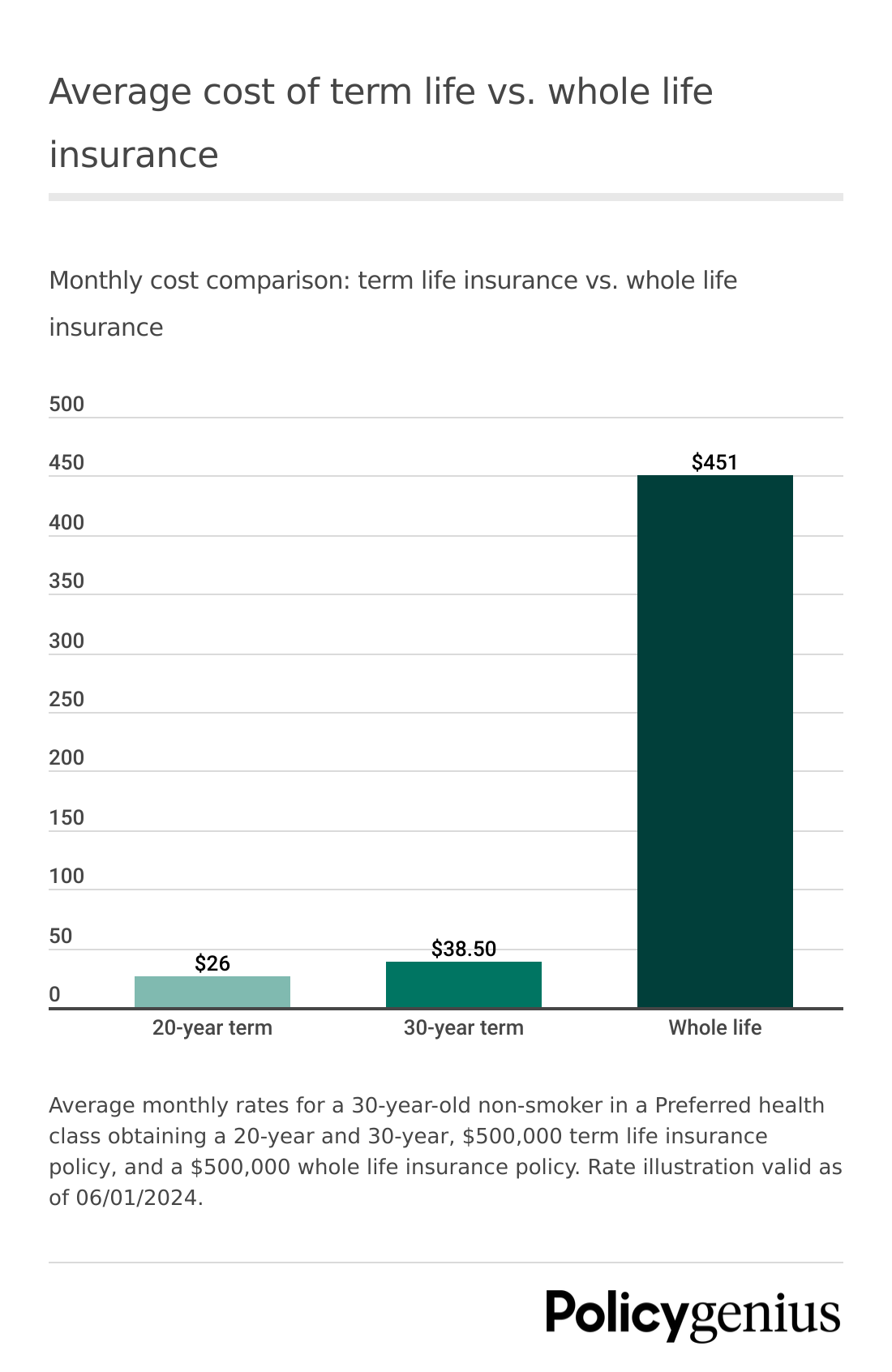
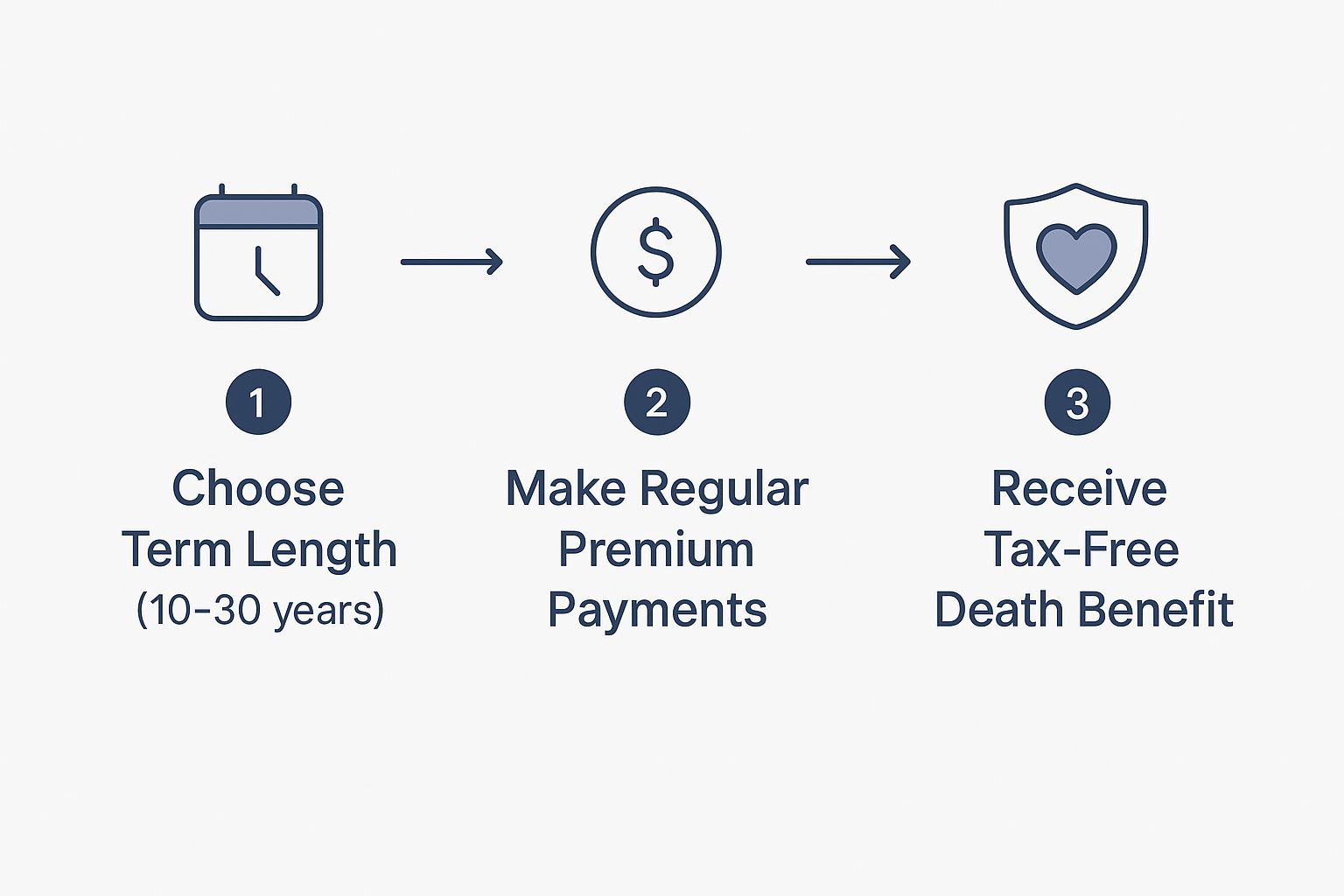
A 6-year banded term life insurance policy is a specialized short-term contract providing a death benefit for a fixed six-year duration. The "banded" element refers to the pricing structure, where premiums are determined by specific coverage tiers or "bands." Larger coverage amounts often trigger a lower cost per thousand dollars of insurance, making higher death benefits more cost-effective.
Understanding the Fundamentals of 6-Year Banded Term Insurance
In the landscape of 2026 life insurance products, the 6-year term remains a niche but highly effective tool for specific financial planning needs. Unlike the more common 10-year or 20-year term policies, a 6-year term is designed for short-term liabilities. To fully understand this product, one must dissect both the term duration and the banding mechanism.
The 6-Year Duration
The "term" in life insurance refers to the period during which the policy is active, provided premiums are paid. If the insured individual passes away during these six years, the beneficiaries receive the death benefit. If the insured survives the six years, the coverage typically expires or may be renewed at a significantly higher "attained age" rate. This specific duration is often aligned with financial obligations that have a similar lifespan, such as a 72-month vehicle loan, a specific business contract, or the remaining years of a child’s secondary education.
The Mechanics of "Banding"
"Banding" is a technical actuarial method used by insurance companies to price their products. Rather than having a linear price increase for every dollar of coverage, insurers group coverage amounts into "bands." For example:
- Band 1: $50,000 to $99,999
- Band 2: $100,000 to $249,999
- Band 3: $250,000 to $499,999
- Band 4: $500,000 and above
As a policyholder moves from a lower band to a higher band, the cost per unit of insurance (usually measured per $1,000 of coverage) typically decreases. This is similar to a bulk discount in retail. In 2026, many digital-first insurers have refined these bands using real-time data to offer more competitive pricing for those seeking mid-range coverage.
Why Choose a 6-Year Banded Term Policy?
While a 10-year term is the standard "short-term" entry point for many, the 6-year banded term offers a precision that can save policyholders money by not over-insuring for years they do not need.
Specific Debt Obligations
One of the primary drivers for a 6-year policy is the alignment with debt. Many personal and business loans carry 5 to 7-year terms. A 6-year policy acts as a "bridge" to ensure that if the primary earner or business partner passes away, the debt is not left to survivors or the estate.
Business Buy-Sell Agreements
In the corporate world of 2026, many startup vesting schedules or short-term partnership agreements operate on a 5 or 6-year horizon. A banded term policy allows partners to fund a buy-sell agreement affordably. Because business coverage amounts are often high, the "banded" pricing structure allows corporations to secure large death benefits (e.g., $1,000,000+) at a lower rate per thousand than a smaller individual policy would offer.
Bridge to Permanent Coverage or Retirement
Individuals who are six years away from a major financial milestone—such as qualifying for a pension, reaching the age for Social Security full retirement, or the maturity of a large investment—use this term to protect their family during that final "vulnerability gap."
Analyzing the Banded Pricing Structure
The financial efficiency of a banded policy is its most attractive feature. Understanding how these bands affect your monthly or annual premium is crucial during the quoting process.
The "Cliff" Effect in Banding
Because of the tiered nature of banding, there are instances where increasing your coverage can actually lower your total premium or only increase it by a negligible amount. For instance, a $95,000 policy (Band 1) might cost more than a $100,000 policy (Band 2) because the higher band triggers a lower base rate.
Experienced brokers often suggest "rounding up" to the start of the next band to maximize value. This is particularly relevant in 2026, as automated underwriting systems are programmed to flag these "price breaks" for consumers during the application phase.
Fixed vs. Increasing Premiums
Most 6-year term policies offer level premiums, meaning the cost remains the same every year for the duration of the term. However, some "banded" products may refer to age-banding, where the premium increases if the insured moves into a new age bracket (e.g., moving from the 30-35 bracket to the 36-40 bracket). It is vital to clarify with the provider whether the "banded" term refers to the coverage amount tiers or age-based price adjustments.
Comparing 6-Year Banded Terms to Standard Term Lengths
When deciding on a policy, comparing the 6-year duration against other common lengths helps clarify the cost-benefit ratio.
| Feature | 6-Year Banded Term | 5-Year Level Term | 10-Year Level Term |
|---|---|---|---|
| Typical Use Case | 72-month loans / Short-term business | Very short-term bridge | Mortgage protection / Parenting |
| Cost Efficiency | High (due to amount banding) | Moderate | High (long-term stability) |
| Renewal Risk | Low (short duration) | Very Low | Moderate |
| Medical Underwriting | Simplified or Accelerated | Often Simplified | Full or Accelerated |
| Premium Stability | Level for 6 years | Level for 5 years | Level for 10 years |
Note: Data reflects general market availability in 2026. Specific rates depend on individual health profiles and carrier-specific bands.
Underwriting and Eligibility in 2026
The process of securing a 6-year banded term policy has evolved significantly. In 2026, the emphasis is on speed and data-driven accuracy.
Accelerated Underwriting (AU)
For many 6-year policies, especially those in lower coverage bands, insurers now utilize Accelerated Underwriting. This process uses algorithms to scan medical records, prescription histories, and motor vehicle reports in real-time. If the applicant is healthy, the policy can be issued in minutes without a medical exam (fluidless underwriting).
Impact of Coverage Bands on Underwriting
Higher coverage bands (usually Band 3 and Band 4, involving $500,000 or more) may still require more traditional underwriting. This might include a paramedical exam or a more detailed Attending Physician Statement (APS). However, even for high-band policies, the 6-year duration is seen as lower risk by insurers compared to a 30-year policy, often resulting in more lenient "table ratings" for minor health issues.
Age Restrictions
Because a 6-year term is so short, it is often available to older applicants who might be priced out of 20 or 30-year terms. In 2026, individuals up to age 75 or even 80 may find 6-year banded products accessible as a means of covering final expenses or short-term estate taxes.
Critical Considerations and Common Pitfalls
While the 6-year banded term is a powerful tool, it is not without potential downsides.
The Risk of Uninsurability at Term's End
The greatest risk of any short-term policy is that at the end of the six years, your health may have declined. If you still need insurance after the term expires, you will have to re-apply at your current age and health status. If you have developed a chronic condition during those six years, you might find new coverage to be prohibitively expensive or unavailable.
Conversion Privileges
To mitigate the risk of uninsurability, many 6-year banded term policies include a conversion rider. This allows the policyholder to convert the term policy into a permanent policy (like Whole Life or Universal Life) without undergoing a new medical exam. In 2026, check the specific "conversion window," as some policies only allow conversion during the first 3 or 4 years of a 6-year term.
"Hidden" Fees and Policy Fees
Almost every banded policy includes a "policy fee"—a flat annual administrative charge. When looking at the bands, ensure you are calculating the total cost (Base Rate per Thousand x Coverage + Policy Fee). Sometimes, the policy fee is reduced in higher bands, further increasing the value of larger death benefits.
Step-by-Step: How to Purchase a 6-Year Banded Term Policy
- Identify the Liability: Determine exactly why you need the coverage and confirm that the financial obligation will indeed end within six years.
- Calculate the Required Band: Determine the death benefit needed. Check the insurer's "price breaks" to see if increasing the coverage to the next band (e.g., from $240,000 to $250,000) provides better value.
- Gather Documentation: Have your medical history, current prescriptions, and financial statements (if seeking high-band business coverage) ready.
- Compare Quotes: Use a 2026 digital aggregator to compare 6-year terms. Be aware that many sites default to 10-year terms, so you may need to specify "6-year" or "Custom Term" in the search filters.
- Review the Rider Options: Decide if you need an Accidental Death Benefit, Waiver of Premium, or Living Benefits (which allow you to access the death benefit early if diagnosed with a terminal illness).
- Apply and Verify: Complete the digital application. If flagged for accelerated underwriting, you may receive an instant decision.
Professional Advice Limitation
The information provided in this article is for educational purposes only and does not constitute financial, legal, or tax advice. Life insurance products, regulations, and pricing structures vary significantly by jurisdiction and individual circumstances. It is highly recommended to consult with a licensed insurance professional or financial advisor before making a purchase decision.
Frequently Asked Questions
Can I cancel a 6-year banded term policy early?
Yes, term life insurance policies are not restrictive contracts for the policyholder. You can stop paying premiums at any time, and the coverage will simply lapse. There are generally no cancellation fees, but there is also no "cash value" returned to you, unlike permanent life insurance.
What happens if I outlive the 6-year term?
If you are still living at the end of the six years, the policy expires. The insurance company keeps the premiums paid, and no death benefit is distributed. This is why term insurance is the most affordable form of life insurance; you are paying only for the protection against the risk of death within that specific window.
Are the premiums for a 6-year banded term tax-deductible?
For individuals, life insurance premiums are generally not tax-deductible. However, if the policy is used for business purposes (such as a key-person policy or as part of certain executive benefit packages), there may be different tax implications. You should consult a tax professional regarding your specific 2026 tax situation.
Is "banded" the same as "tiered"?
In the insurance industry, "banded" and "tiered" are often used interchangeably to describe pricing structures based on the amount of coverage. However, "banded" is the more common technical term used in actuarial documents and policy contracts to describe the specific dollar ranges that trigger different rate scales.
Can I increase my coverage amount later?
Usually, you cannot increase the coverage on an existing 6-year term policy. To get more coverage, you would typically need to apply for a new, additional policy or replace the current one, which would require new underwriting and likely a higher premium due to your increased age.
Practical Recommendation
For those with a defined, six-year financial risk—such as a specific loan or a final bridge to retirement—the 6-year banded term policy is an exceptionally efficient choice. To get the best results, always ask your agent for quotes at the very bottom of the next highest band. By "buying into" a higher band, you often secure significantly more protection for a marginal increase in cost, effectively lowering your price per dollar of insurance. Ensure the policy includes a conversion rider to protect your future insurability, and prioritize carriers that offer accelerated underwriting to streamline the acquisition process in this 2026 market.