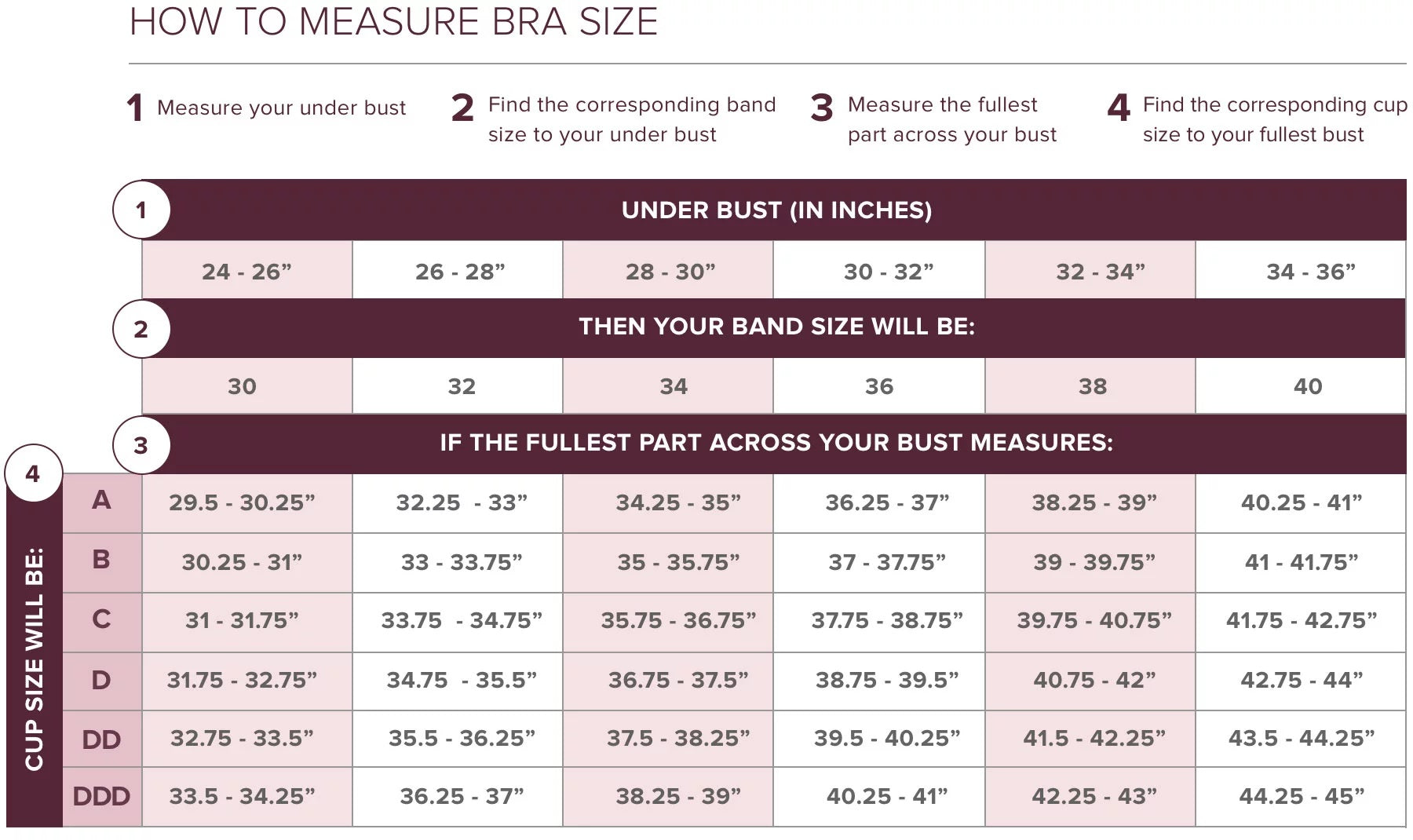
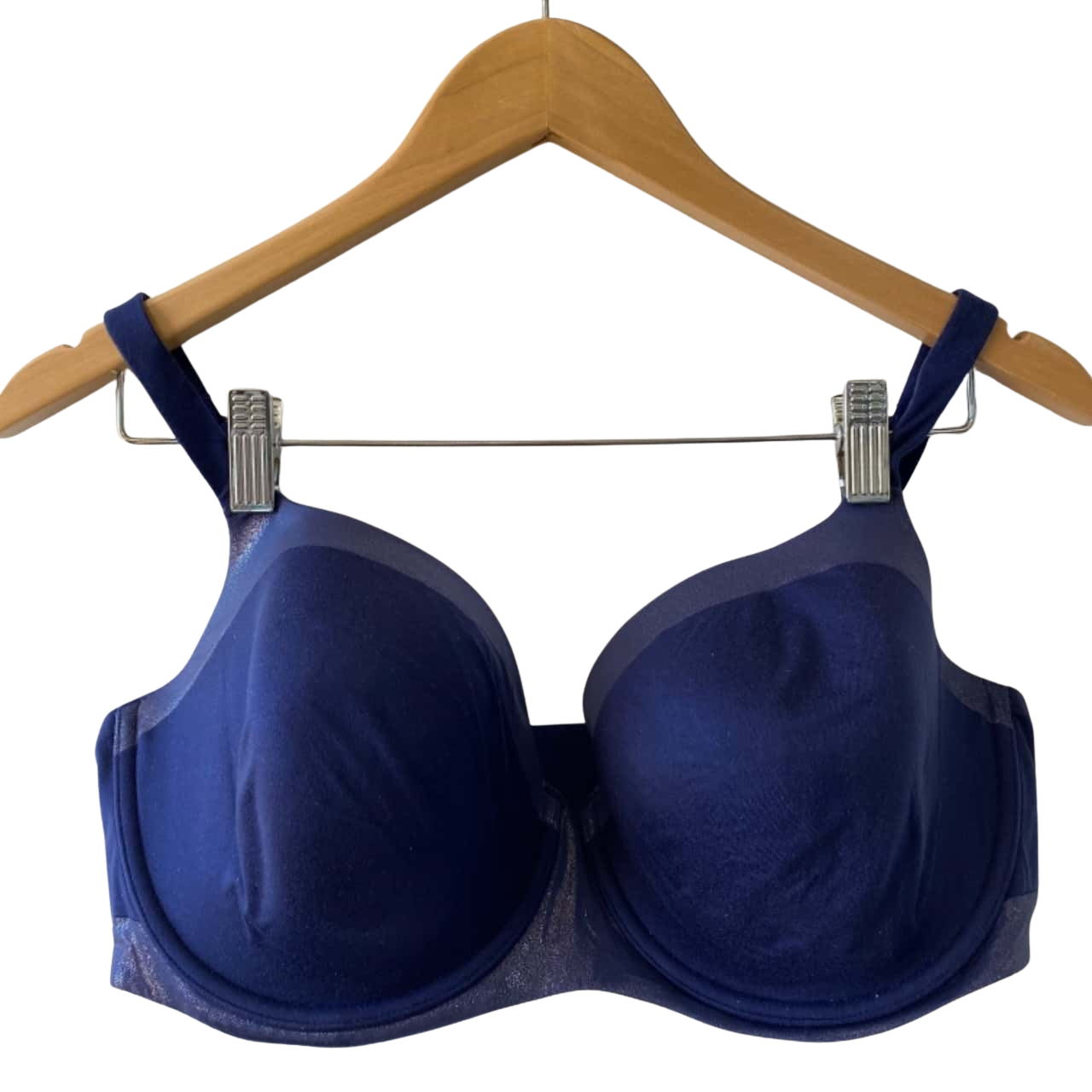
A 38DDD bra size indicates a 38-inch band measurement paired with a bust measurement that is approximately 44 inches around the fullest part of the breasts. This sizing configuration bridges the gap between full-bust and plus-size categories, requiring careful attention to both band tension and cup volume to achieve an optimal fit.
Understanding intimate apparel sizing requires moving beyond simple guesswork and examining the physical geometry of garment construction. For shoppers navigating the market for a 38DDD bra, knowing the precise measurements in inches eliminates frustration, reduces unnecessary returns, and ensures comfort throughout daily wear. Because bra manufacturing standards vary across regions, understanding the exact numerical breakdown of a 38DDD is essential for securing a garment that provides structural support without causing chafing, digging, or gaping.
The Anatomy of a Bra Size: Band and Cup Fundamentals
To understand what a 38DDD represents in inches, one must separate the sizing formula into its two primary components: the numeric band size and the alphabetical cup designation. Each component serves a distinct structural purpose in how the garment interacts with the human torso.
The band size corresponds to the numeric value—in this case, 38. Historically and mathematically, this number reflects the snug measurement of the torso directly underneath the bust. However, modern lingerie engineering factors in the stretch and recovery of synthetic elastic blends. Consequently, a 38-inch band is engineered to fit a ribcage measuring approximately 38 inches when the band is comfortably secured. The band provides roughly 80% of a bra's structural support, making its precise fit critical for posture and weight distribution.
The cup letter—in this case, DDD—indicates the volume of the breast tissue relative to the band. In standard sizing systems, each sequential letter after the D cup represents a one-inch increase in the difference between the underbust measurement and the full bust measurement.
Decoding 38DDD in Inches: The Mathematical Breakdown
When calculating a 38DDD bra size in inches, the sizing logic relies on standard industry increments. While older sizing methodologies sometimes added four or five inches to the underbust measurement to determine band size—a practice known as the "plus four" method—modern professional fitters utilize contemporary direct-measurement techniques.
Under modern sizing standards:
- Underbust (Band) Measurement: Approximately 38 inches. This means the individual's ribcage measures tightly around 38 inches.
- Full Bust Measurement: Approximately 44 inches. This measurement is taken across the fullest part of the breasts, typically at the nipple line, while wearing an unlined or non-compressing bra.
The difference between the full bust (44 inches) and the underbust (38 inches) is 6 inches. In standard US sizing conventions, a 1-inch difference equals an A cup, a 2-inch difference equals a B cup, a 3-inch difference equals a C cup, a 4-inch difference equals a D cup, a 5-inch difference equals a DD cup, and a 6-inch difference equals a DDD cup (often equivalent to an E cup in UK sizing systems). Therefore, a 38DDD bra is explicitly designed for a body with a 38-inch ribcage and a 44-inch bust circumference.
| Sizing Component | Measurement in Inches | Anatomical Reference Point |
|---|---|---|
| Band Size | 38 inches | Snug circumference directly beneath the bust |
| Full Bust | 44 inches | Fullest part of the breasts across the apex |
| Cup Difference | 6 inches | Mathematical variance between bust and underbust |
International Sizing Equivalents for 38DDD
Navigating global lingerie brands requires recognizing that cup and band sizing terminologies change depending on the manufacturing country. A 38DDD in the United States does not carry the exact same label in the United Kingdom, Europe, or Australia.
In the United Kingdom, where brands often use more granular cup progressions, a US 38DDD is frequently equivalent to a 38E. UK sizing scales follow A, B, C, D, DD, E, FF, G, GG, and so forth. Because the E cup represents a 6-inch difference, it matches the volumetric capacity of a US DDD cup.
In European sizing systems (such as EU or French standards), band measurements are traditionally calculated in centimeters and rounded to increments of five. A 38-inch band translates roughly to a 85-centimeter band (since 38 inches multiplied by 2.54 centimeters equals 96.5 cm, standard sizing rounds down or up depending on the brand's stretch, typically landing on an EU 85 or FR 100). Combined with European cup progressions, a 38DDD typically maps to an EU 85F or FR 100F.
| Region / System | Equivalent Size | Band Measurement Reference | Cup Volume Reference |
|---|---|---|---|
| United States (US) | 38DDD | 38 inches | 6-inch difference (DDD) |
| United Kingdom (UK) | 38E | 38 inches | 6-inch difference (E) |
| European Union (EU) | 85F | ~85 cm ribcage | Equivalent to 6-inch variance |
| France (FR) | 100F | ~100 cm ribcage | Equivalent to 6-inch variance |
| Australia / New Zealand | 16E | 16 (AU band scale) | Equivalent to 6-inch variance |
Step-by-Step Guide to Measuring for a 38DDD
Accurate self-measurement requires minimal equipment—specifically, a flexible non-stretch cloth measuring tape and a mirror. To verify whether a 38DDD is the correct size or to establish a baseline before purchasing, follow these precise steps:
- Measure the Underbust (Band): Stand straight without hunching. Wrap the measuring tape horizontally around your torso directly underneath your bust, where the bra band naturally rests. Ensure the tape is level all the way around your back. Pull it snug against the skin without digging in, and round the number to the nearest whole inch. If the number is even, that is your baseline band size.
- Measure the Full Bust: Wrap the tape around the fullest part of your chest, typically passing directly across the center of the breasts (the nipples). Ensure the tape is parallel to the floor and not pulled tight enough to compress breast tissue. Record this measurement in inches, rounding to the nearest whole number.
- Calculate the Cup Variance: Subtract your underbust measurement from your full bust measurement. For example, 44 inches (bust) minus 38 inches (underbust) equals 6 inches.
- Analyze the Results: Match the resulting number to standard sizing charts. A 6-inch variance with a 38-inch band confirms a 38DDD requirement.
Common Signs of an Incorrect 38DDD Fit
Even when measurements indicate a 38DDD, human breast tissue shape, density, and root width vary widely. A size that matches mathematical formulas may still require adjustment based on physical fit indicators. Identifying poor fit early prevents physical discomfort and premature wear of the garment.
- Band Slippage or Rising: If the back band rides up toward the shoulder blades, the band is too large. A supportive band must remain parallel to the floor. If a 38 band rides up, a wearer might need to drop down to a 36 band while increasing the cup size to maintain volume (known as sister sizing).
- Cup Spillage (Quad-Boob): If breast tissue spills over the top or sides of the cups, the cup volume is too small, even if the 38-inch band feels correct. Moving from a 38DDD to a 38G may resolve this.
- Gapping Cups: If the fabric at the top of the cups wrinkles or pulls away from the body, the cup size is too large or the cup style does not match the wearer's breast shape (e.g., shallow versus projected roots).
- Gouging Straps: If the shoulder straps dig painfully into the shoulders, it indicates that the band is failing to provide its share of support, forcing the straps to bear the weight of the bust.
Sister Sizing Options for 38DDD
Sister sizing involves shifting band and cup dimensions to maintain identical cup volume while altering band tension. This is helpful when a 38DDD band feels too tight or too loose, but the cup volume is otherwise correct.
- To go tighter on the band: Decrease the band size by one step and increase the cup letter by one step. The sister size for a 38DDD is 36G (US).
- To go looser on the band: Increase the band size by one step and decrease the cup letter by one step. The sister size for a 38DDD is 40DD (US).
| Desired Adjustment | Sister Size (US) | Structural Impact |
|---|---|---|
| Baseline Size | 38DDD | Standard fit for 38" underbust / 44" bust |
| Tighter Band / Same Volume | 36G | Shorter band stretch, larger cup letter to match volume |
| Looser Band / Same Volume | 40DD | Longer band stretch, smaller cup letter to match volume |
Frequently Asked Questions
Is a 38DDD considered a plus-size bra?
A 38DDD straddles the boundary between standard and full-bust sizing categories. While 38 inches is often the starting threshold for plus-size ranges in certain brands, a DDD cup represents a moderate-to-high volume relative to that band. Many mainstream lingerie brands carry 38DDD in their standard lines, while others classify it within their full-support or full-figure collections.
What is the difference between a 38DD and a 38DDD?
The primary difference is cup volume. A 38DD bra is designed for a 5-inch difference between the underbust and full bust (approx. 43 inches), whereas a 38DDD bra is designed for a 6-inch difference (approx. 44 inches). The band size remains identical at 38 inches, but the DDD cup provides one additional inch of fabric depth.
Can I wear a 36G if I cannot find a 38DDD?
Yes, a 36G is the direct sister size to a 38DDD. It offers the exact same cup volume but features a tighter 36-inch band. If you try a 36G, you may need to use a non-stretch band extender initially until the fabric breaks in, as the tighter band will provide a firmer grip around the ribcage.
Why do my 38DDD bra straps keep falling down?
Slipping straps are frequently caused by a band that is too large. When the back band is loose, it shifts throughout the day, altering the anchor points of the shoulder straps and causing them to slide off sloping shoulders. Ensuring your band fits snugly on the loosest hook often resolves strap slippage without requiring strap modifications.
Do all brands size 38DDD the same way?
No. Manufacturing variations mean that cut, fabric elasticity, and country of origin influence how a 38DDD fits. American and Canadian brands generally adhere strictly to the US sizing standard (where DDD follows DD), while European and UK brands use alternative lettering progressions (such as E or F) that require cross-referencing conversion charts.
Conclusion and Next Actions
Finding the right fit in a 38DDD bra requires balancing precise physical measurements with an understanding of how band elasticity and cup volume interact. Begin by measuring your underbust and full bust to confirm the 6-inch variance. If purchasing a new brand for the first time, consult their specific sizing matrix, and remember that sister sizes like 36G or 40DD offer viable alternatives if band tension requires modification. Prioritize comfort, ensure the band remains parallel to the floor, and verify that the underwire—if present—encapsulates the entire breast root without pressing into sensitive tissue.