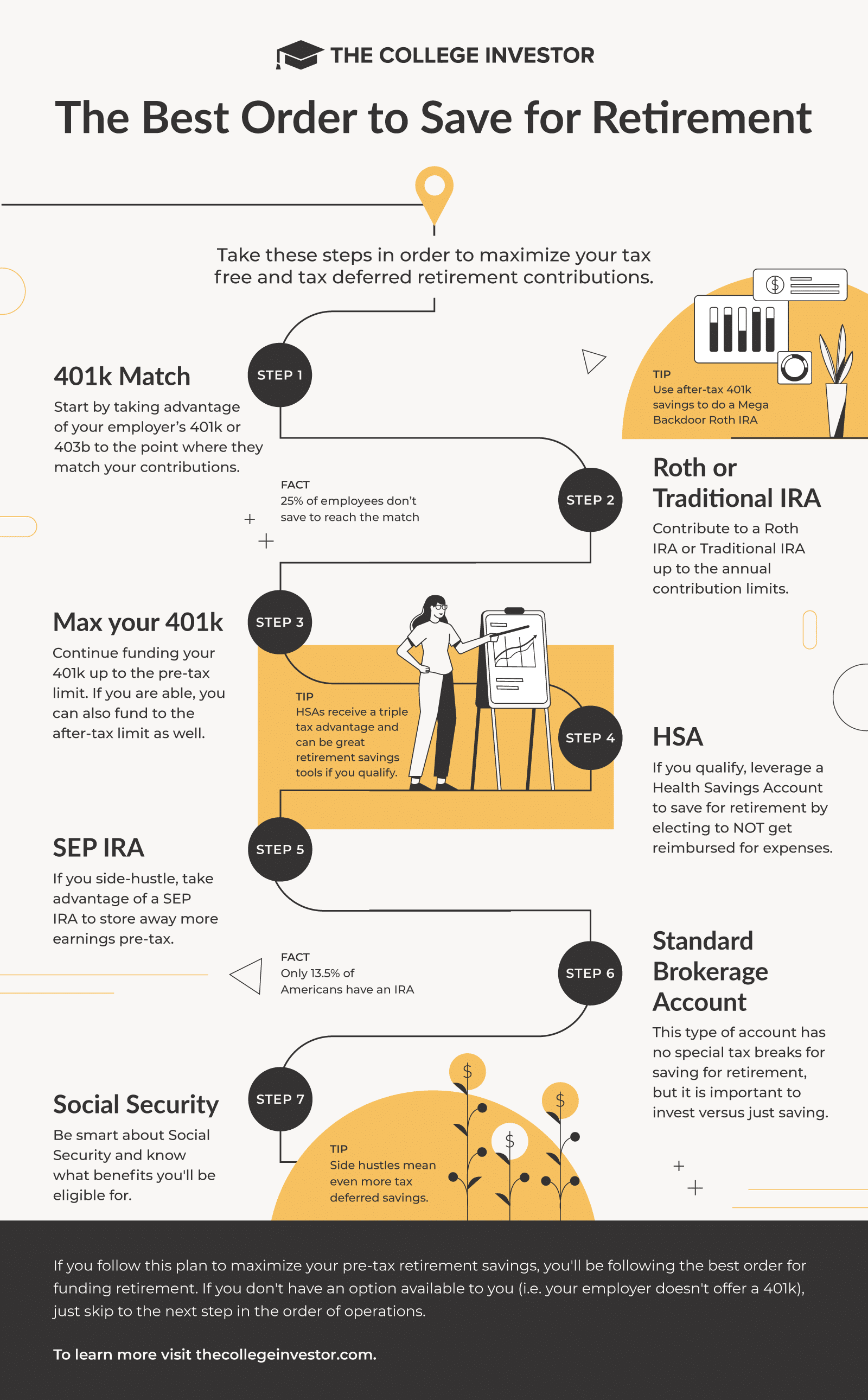
The three best retirement investment accounts for 2024 are the 401(k), the Roth IRA, and the Traditional IRA. These accounts offer a combination of high contribution limits, significant tax advantages—either upfront or during withdrawal—and unique features like employer matching, which collectively serve as the foundation for long-term financial security.
Securing a comfortable retirement requires more than just saving; it necessitates utilizing the most efficient tax-advantaged vehicles available. In 2024, the landscape of retirement planning was shaped significantly by the ongoing implementation of the SECURE Act 2.0, which introduced higher contribution limits and adjusted rules for distributions. As we look back from 2026, it is clear that individuals who maximized these specific accounts in 2024 placed themselves on a superior trajectory for wealth accumulation.
Each of these three accounts serves a different strategic purpose. Depending on your current income level, your expected tax bracket in retirement, and whether your employer offers a retirement plan, one may be more advantageous than the others. Below, we provide an in-depth analysis of these accounts, their technical requirements, and how to optimize them for your financial goals.
1. The 401(k) Plan: The Power of Employer-Sponsored Growth
The 401(k) remains the cornerstone of American retirement planning. For 2024, it stood out as the most powerful tool for high-volume saving due to its high contribution limits and the unique benefit of employer matching.
High Contribution Thresholds
In 2024, the IRS set the individual contribution limit for 401(k) plans at $23,000. For those aged 50 and older, a "catch-up" contribution of an additional $7,500 was permitted, bringing the total potential annual contribution to $30,500. This high ceiling allows investors to shield a significant portion of their income from taxes while benefiting from compound interest over decades.
The Impact of the Employer Match
The most compelling reason to prioritize a 401(k) is the employer match. Many companies offer to match employee contributions up to a certain percentage of their salary (e.g., 50% match on the first 6% of pay). In financial terms, this is a 100% return on investment before the money even touches the market. In 2024, maximizing this match was considered the "first rule" of personal finance, as failing to do so essentially meant leaving part of one's total compensation package on the table.
Tax Treatment and Automatic Enrollment
Standard 401(k)s are funded with pre-tax dollars. This reduces your taxable income in the year you contribute, which is particularly beneficial for those currently in higher tax brackets. Furthermore, many plans in 2024 utilized automatic enrollment and automatic escalation features—provisions bolstered by the SECURE Act 2.0—which helped investors stay consistent without manual intervention.
2. The Roth IRA: Tax-Free Freedom
The Roth IRA is often cited by financial experts as the most flexible and potentially lucrative retirement account for those who expect to be in a higher tax bracket in the future or who value tax-free income in retirement.
Post-Tax Contributions and Tax-Free Growth
Unlike the 401(k) or Traditional IRA, the Roth IRA is funded with after-tax dollars. You do not get a tax break in the year you contribute. However, the trade-off is immense: both your original contributions and all the investment gains grow entirely tax-free. When you reach age 59½ and have held the account for at least five years, every dollar you withdraw is yours to keep, with no obligation to the IRS.
2024 Contribution Limits and Eligibility
For the 2024 tax year, the contribution limit for a Roth IRA was $7,000, with a $1,000 catch-up contribution for those 50 and older. It is important to note that Roth IRAs have income eligibility requirements. In 2024, the ability to contribute began to phase out for single filers with a Modified Adjusted Gross Income (MAGI) between $146,000 and $161,000, and for married couples filing jointly between $230,000 and $240,000.
Flexibility and No RMDs
One of the most significant advantages of the Roth IRA is the lack of Required Minimum Distributions (RMDs) during the original owner's lifetime. While 401(k)s and Traditional IRAs eventually force you to take money out (so the government can tax it), the Roth IRA allows your money to stay invested indefinitely. Additionally, you can withdraw your original contributions (but not earnings) at any time without taxes or penalties, providing an unofficial "back-up" emergency fund.
3. The Traditional IRA: Strategic Tax Deferral
The Traditional IRA is a versatile tool that provides immediate tax relief for eligible investors, making it an excellent choice for those looking to lower their current tax bill while saving for the future.
Immediate Tax Deductibility
For many investors, contributions to a Traditional IRA are tax-deductible. If you are not covered by a retirement plan at work, you can typically deduct the full amount of your contribution, regardless of income. If you or your spouse are covered by a workplace plan, the deduction may be limited based on your income. This immediate deduction allows you to reinvest your tax savings, effectively increasing your "investable" capital.
Technical Specifications for 2024
The contribution limits for the Traditional IRA in 2024 were identical to the Roth IRA: $7,000 (plus the $1,000 catch-up for those 50+). The primary difference lies in the "back-end" treatment. Money in a Traditional IRA grows tax-deferred, meaning you pay no taxes on dividends or capital gains while the money is in the account. However, withdrawals in retirement are taxed as ordinary income at your then-current rate.
Who Benefits Most?
The Traditional IRA is ideal for individuals who are currently in a high tax bracket but expect to be in a lower bracket during retirement. By deferring the tax until a time when their income is lower, they can significantly reduce the total lifetime tax paid to the government.
Comparative Analysis of 2024 Retirement Accounts
The following table compares the key metrics of these three accounts as they stood in 2024. These figures are essential for understanding the scale of contribution power and the limitations placed on each vehicle.
| Feature | 401(k) / 403(b) | Roth IRA | Traditional IRA |
|---|---|---|---|
| 2024 Contribution Limit | $23,000 | $7,000 | $7,000 |
| Catch-up Limit (Age 50+) | $7,500 | $1,000 | $1,000 |
| Tax Benefit Timing | Upfront (Pre-tax) | Future (Tax-free) | Upfront (Deductible) |
| Income Limits | None | Yes (Phased out) | For Deductions only |
| Employer Match | Common | None | None |
| Early Withdrawal Rule | 10% penalty + tax | Contributions: No; Earnings: Yes | 10% penalty + tax |
| RMD Requirements | Yes (starting at 73/75) | No (for original owner) | Yes (starting at 73/75) |
The Impact of SECURE Act 2.0 in 2024
When evaluating the best accounts for 2024, one cannot ignore the legislative changes that took full effect during that year. The SECURE Act 2.0 introduced several nuances that made these accounts even more attractive.
- Increased RMD Age: The age at which you must begin taking Required Minimum Distributions from 401(k)s and Traditional IRAs increased, allowing money to grow longer.
- Emergency Savings Linked to 401(k): New rules in 2024 allowed employers to offer "pension-linked emergency savings accounts," enabling employees to save up to $2,500 in a Roth-style account that could be accessed without the usual retirement penalties.
- Matching for Student Loan Payments: A major development in 2024 was the ability for employers to "match" an employee's student loan payments with contributions into their retirement account. This allowed young professionals to tackle debt while simultaneously building a 401(k) balance.
Choosing the Right Mix: A Strategic Approach
Most financial advisors suggest a "waterfall" method for utilizing these three best accounts. The strategy generally follows this order of operations:
Step 1: Secure the 401(k) Match
Contribute enough to your 401(k) to get the full employer match. This is the highest guaranteed return you will find in any investment vehicle. In 2024, this was the absolute priority for anyone with access to a workplace plan.
Step 2: Maximize the Roth IRA
Once the match is secured, many investors benefit from shifting their next available dollars to a Roth IRA. The tax-free growth and withdrawal flexibility make it a superior choice for the "middle" portion of your savings, especially if you have decades of growth ahead of you.
Step 3: Return to the 401(k) or Traditional IRA
If you still have funds to invest after maximizing the Roth IRA ($7,000), return to your 401(k) to work toward the $23,000 limit. If you do not have a workplace plan, the Traditional IRA becomes the primary alternative to the Roth, depending on your tax deduction eligibility.
Common Mistakes to Avoid
While these accounts are powerful, certain errors can negate their benefits. As we evaluate these strategies from 2026, several recurring mistakes have become evident:
- Ignoring Income Limits for Roth IRAs: Investors who earned too much in 2024 but contributed directly to a Roth IRA faced excise tax penalties. In such cases, the "Backdoor Roth" strategy—contributing to a Traditional IRA and then converting it—remained a legal and vital workaround.
- Cashing Out During Job Changes: Many individuals in 2024 chose to cash out their 401(k)s when switching jobs rather than rolling them over into an IRA or a new employer's plan. This resulted in immediate taxation and a 10% penalty, significantly stunting their long-term compound growth.
- Underestimating the Five-Year Rule: Roth IRA owners sometimes forget that while contributions can be withdrawn, earnings must remain in the account for five years (and until age 59½) to be tax-free. Withdrawing earnings too early can lead to unexpected tax bills.
Frequently Asked Questions
Can I contribute to both a 401(k) and an IRA in 2024?
Yes. You are allowed to contribute to both a workplace 401(k) and a personal IRA (either Roth or Traditional). In fact, doing so is a recommended strategy for high-income earners to maximize their tax-advantaged space. However, your ability to deduct Traditional IRA contributions may be limited if your income exceeds certain thresholds and you have a 401(k) at work.
What is the "Backdoor Roth" IRA?
The Backdoor Roth is a strategy used by high earners whose income exceeds the IRS limits for direct Roth IRA contributions. It involves making a non-deductible contribution to a Traditional IRA and then immediately converting those funds to a Roth IRA. Because the 2024 laws remained favorable toward this maneuver, it was a primary method for wealthy investors to access tax-free growth.
Are 401(k) contribution limits the same for 2024 and 2026?
No. The IRS typically adjusts contribution limits every one to two years based on inflation. While the 2024 limit was $23,000, the limits for 2026 have been adjusted upward to reflect the cost-of-living increases. It is essential to check the current IRS announcements for the exact 2026 figures to ensure you are maximizing your current year's potential.
What happens if I contribute more than the limit in 2024?
If you over-contribute to an IRA or 401(k), you must withdraw the excess amount and any earnings associated with it before the tax-filing deadline (typically April of the following year). Failure to do so results in a 6% excise tax on the excess amount for every year it remains in the account.
Which account is best if I expect taxes to go up in the future?
If you believe tax rates will be higher when you retire—either due to your own increased wealth or changes in federal law—the Roth IRA is the best choice. By paying taxes now at a lower rate, you lock in tax-free withdrawals later, regardless of how high tax rates climb.
Next Steps for Investors
To make the most of your retirement planning, begin by verifying your total contributions for the previous periods and ensuring your current 2026 contributions are aligned with the new limits. If you have not yet maximized your 401(k) match, contact your HR department immediately to adjust your deferral percentage. For those without a workplace plan, opening an IRA at a reputable brokerage is a critical next step to ensure you are not missing out on the compounding power of tax-advantaged investing.