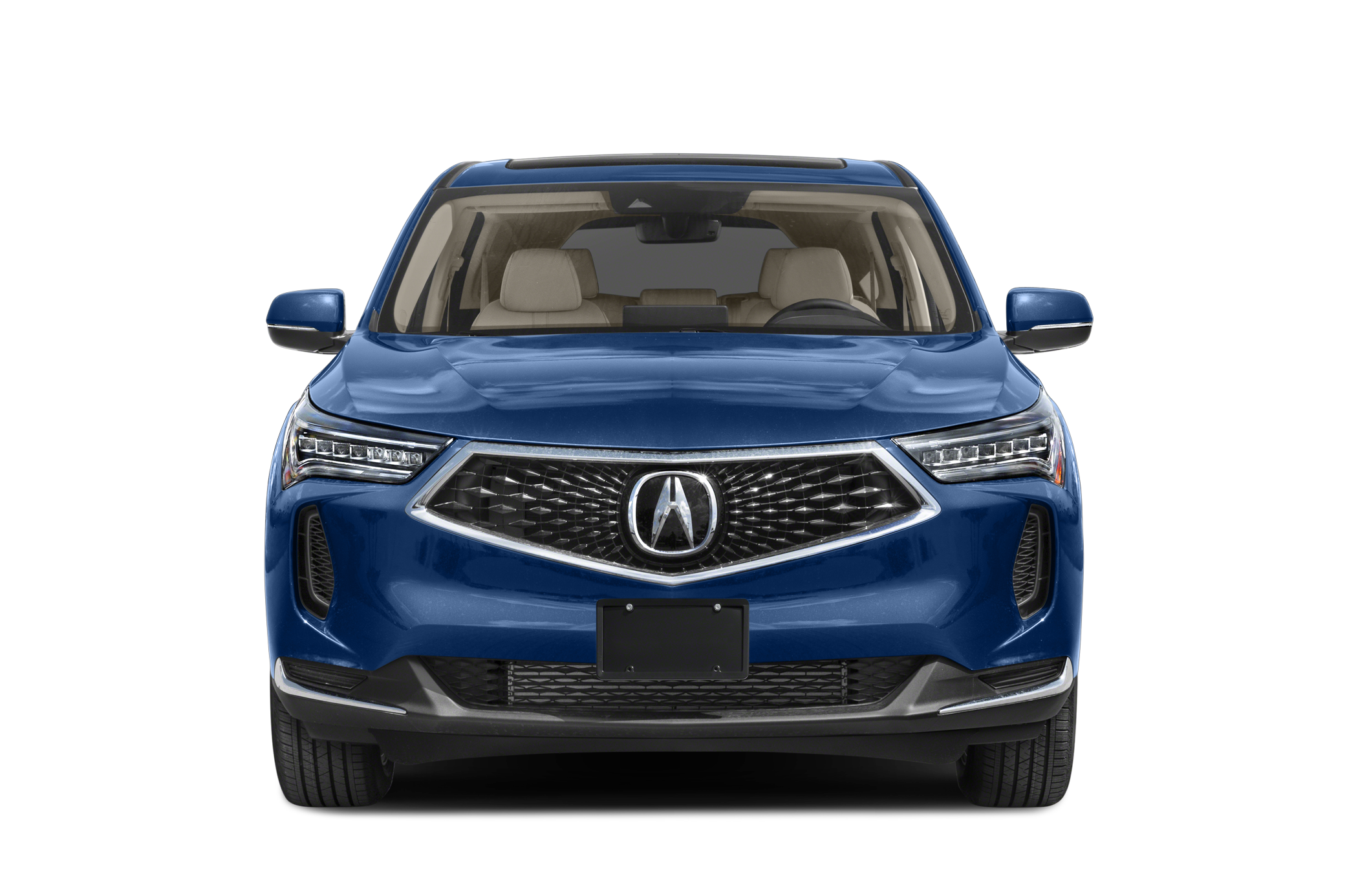
The 2018 Acura RDX features a 3.5-liter V6 engine producing 279 horsepower at 6,200 rpm and 252 lb-ft of torque at 4,900 rpm. This naturally aspirated powerplant defines the second-generation RDX, offering a blend of smooth, linear acceleration and long-term mechanical reliability that remains highly sought after in the 2026 pre-owned market.
The 2018 model year represents the final iteration of the second-generation RDX (2013–2018). As a pinnacle of that specific engineering cycle, it serves as a bridge between the era of high-displacement naturally aspirated engines and the current industry standard of smaller-displacement turbocharged units. For drivers in 2026 looking at the secondary market, understanding the nuances of this 279-hp output is essential for evaluating whether this crossover meets modern performance expectations.
The Engineering Behind the 3.5L i-VTEC V6 Engine
At the core of the 2018 Acura RDX power output is the J35Y6 engine, a member of Honda’s legendary J-series V6 family. Unlike many of its competitors that moved toward four-cylinder turbocharging during this period, Acura maintained a Single Overhead Cam (SOHC) 24-valve design for the RDX.
The "i-VTEC" designation stands for Intelligent Variable Valve Timing and Lift Electronic Control. This system is the primary reason the vehicle can achieve a peak of 279 horsepower. At lower RPMs, the engine operates on a cam profile optimized for fuel efficiency and stable idling. Once the driver demands more power and the tachometer climbs, the i-VTEC system switches to a high-lift cam profile. This allows the engine to "breathe" more effectively at high speeds, resulting in a surge of power that peaks just before the redline.
This mechanical transition provides the 2018 RDX with a distinct dual personality. Under normal commuting conditions, the power delivery is polite and unobtrusive. However, when merging onto a highway or overtaking, the 279 hp becomes readily available, providing a level of confidence-inspiring acceleration that many smaller turbocharged engines struggle to replicate without noticeable "lag."
Analyzing the 279 HP and 252 lb-ft Torque Split
While the 279 hp figure often grabs the headlines, the 252 lb-ft of torque is equally important for daily drivability. In automotive physics, horsepower dictates how fast you can go, while torque dictates how quickly you can get moving.
Because the 2018 RDX uses a naturally aspirated engine, its peak torque arrives relatively late in the rev range at 4,900 rpm. Modern 2026 vehicles often reach peak torque as low as 1,500 rpm due to turbocharging. Consequently, the RDX requires a bit more "winding up" to access its full potential. To compensate for this, Acura engineers tuned the 6-speed automatic transmission to be highly responsive, ensuring that downshifts happen quickly when the throttle is depressed.
The result is a 0-60 mph time of approximately 6.2 to 6.5 seconds, depending on the drivetrain (Front-Wheel Drive vs. All-Wheel Drive) and environmental conditions. Even in the context of 2026 performance standards, a sub-7-second 0-60 time remains competitive for a compact luxury crossover, ensuring the RDX doesn't feel dated in modern traffic flow.
Transmission and Drivetrain Dynamics
The 279 hp is managed by a 6-speed automatic transmission with Sequential SportShift paddle shifters. While 8-speed, 9-speed, and 10-speed transmissions became common shortly after 2018, the 6-speed unit in this RDX is often praised for its "hunting-free" nature. It doesn't constantly cycle through gears to find the most efficient ratio; instead, it holds gears longer, allowing the V6 to stay within its power band.
All-Wheel Drive with Intelligent Control
The 2018 RDX utilizes a specific version of All-Wheel Drive (AWD) known as "AWD with Intelligent Control System." It is important for buyers to note that this is not the Super Handling All-Wheel Drive (SH-AWD) found in the MDX or the later 2019+ RDX models.
This system is lighter and more focused on fuel efficiency. It primarily operates in front-wheel-drive mode to save gas but can divert power to the rear wheels instantly when sensors detect a loss of traction or during heavy acceleration to prevent wheel spin. This helps the vehicle put all 279 hp to the pavement effectively, even in rain or light snow.
Variable Cylinder Management (VCM) and Efficiency
Producing 279 hp from a 3.5L V6 typically comes at a cost to fuel economy. To mitigate this, Acura utilized Variable Cylinder Management (VCM). This system allows the engine to deactivate two or three cylinders during cruising or light-load situations, effectively turning the V6 into a V3 or V4.
The transition between 3-cylinder and 6-cylinder modes is managed by an electronic control unit (ECU) and is designed to be imperceptible to the driver. To further ensure smoothness, Acura equipped the 2018 RDX with:
- Active Control Engine Mounts (ACM): These liquid-filled mounts use actuators to vibrate in opposition to engine vibrations, cancelling them out.
- Active Sound Control (ASC): This system uses the vehicle’s audio speakers to emit a frequency that cancels out the "booming" noise associated with 3-cylinder operation.
Thanks to these technologies, the 279-hp RDX achieved an EPA-rated 20 mpg city and 28 mpg highway (for the FWD model), which was impressive for a V6-powered luxury vehicle of that era.
Comparative Specifications: 2018 Acura RDX
The following table outlines the critical performance metrics for the 2018 Acura RDX to provide a clear technical overview.
| Feature | Specification |
|---|---|
| Engine Type | 3.5-Liter, SOHC i-VTEC V6 |
| Peak Horsepower | 279 hp @ 6,200 rpm |
| Peak Torque | 252 lb-ft @ 4,900 rpm |
| Compression Ratio | 10.5:1 |
| Transmission | 6-Speed Automatic |
| 0-60 MPH (Estimated) | 6.2 - 6.5 Seconds |
| Towing Capacity | 1,500 lbs (680 kg) |
| Fuel Requirement | Premium Unleaded (91+ Octane Recommended) |
| Curb Weight | 3,737 lbs (FWD) / 3,946 lbs (AWD) |
The 2018 V6 vs. Newer Turbocharged Generations
In 2019, Acura redesigned the RDX, replacing the 279-hp V6 with a 2.0-liter turbocharged four-cylinder engine. While the newer engine actually produced less peak horsepower (272 hp), it offered significantly more torque (280 lb-ft) available much earlier in the rev range.
Why does this matter in 2026? The choice between the 2018 model and the subsequent generation often comes down to "feel" and "long-term cost."
- Power Delivery: The 2018 V6 offers a linear, "musical" build-up of power. It feels more like a traditional luxury car. The newer turbo-4 feels punchier in the city but can feel strained or buzzy at very high speeds.
- Complexity: Turbocharged engines have more plumbing, intercoolers, and higher heat cycles. The 2018 V6 is a relatively simple, high-displacement engine. For owners planning to keep a vehicle for 200,000 miles or more, the J35 V6 is widely considered one of the most reliable engines ever built by Honda/Aura.
- Towing: While both are rated for 1,500 lbs, the V6's displacement provides a more stable towing experience on inclines compared to a small-displacement turbo that relies heavily on boost pressure.
Maintenance Considerations for the 279 HP V6
Maintaining the peak 279 hp output requires adherence to a specific maintenance schedule. Because the J35 is an interference engine using a timing belt rather than a timing chain, the timing belt service is the most critical maintenance item.
- Timing Belt Replacement: Usually required every 100,000 miles or 7 years. In 2026, many 2018 RDX models are reaching or have passed this milestone. Failure to replace the belt can lead to catastrophic engine failure if the belt snaps.
- Valve Adjustments: Unlike many modern engines with hydraulic lifters, the i-VTEC V6 may require mechanical valve adjustments if the engine becomes noisy (valvetrain "ticking"). This is typically performed during the timing belt service.
- Spark Plugs: To maintain the efficiency of the VCM system and the full 279 hp, high-quality iridium spark plugs are required every 100k miles.
- Fluid Changes: The 6-speed automatic transmission and the AWD rear differential (if equipped) require regular fluid intervals to ensure the power is transferred without slippage or overheating.
Real-World Performance at Altitude
One technical limitation of the 2018 Acura RDX’s naturally aspirated 279 hp is how it handles high-altitude driving (e.g., in Denver or mountain passes). Naturally aspirated engines lose roughly 3% of their power for every 1,000 feet of elevation gain because the air is less dense.
At 5,000 feet, the 279-hp RDX might effectively be operating with closer to 235 hp. Modern turbocharged vehicles (like the 2019+ RDX) are less affected by this because the turbocharger can "force" more air into the engine to compensate for lower atmospheric pressure. Drivers living in mountainous regions should be aware of this distinction when evaluating the 2018 model's power output.
FAQs About the 2018 Acura RDX Power Output
Does the 2018 Acura RDX require premium fuel to reach 279 hp?
Acura recommends the use of premium unleaded fuel (91 octane or higher) for the 2018 RDX. While the vehicle can run on 87-octane regular gas without damaging the engine, the ECU will retard the ignition timing to prevent "knocking." This results in a slight decrease in both horsepower and fuel efficiency. To achieve the full 279 hp, premium fuel is necessary.
How does the 279 hp compare to modern luxury crossovers in 2026?
By 2026 standards, 279 hp is considered "mid-range." Many modern luxury EVs and performance hybrids now exceed 350 hp. However, the RDX’s power remains more than adequate for spirited daily driving and is superior to many entry-level luxury crossovers that utilize base-model engines with only 200–240 hp.
Is the 2018 RDX faster than the 2019 model?
In a straight line from 0-60 mph, the two are very close, usually within 0.2 seconds of each other. The 2018 V6 has a slight advantage at higher speeds (above 70 mph) due to its higher peak horsepower, while the 2019 model is quicker "off the line" due to its higher low-end torque.
Can the power output be increased with aftermarket tuning?
Because the 2018 RDX is naturally aspirated, it is difficult to gain significant horsepower through simple software "tunes" compared to turbocharged cars. While cold-air intakes or exhaust modifications might add 5–10 hp and improve engine sound, the most effective way to maintain the 279 hp is through rigorous maintenance and using high-quality fuel.
Does the Variable Cylinder Management (VCM) affect power?
No, the VCM system only deactivates cylinders when the engine is under very light load. As soon as you step on the accelerator for more power, the system reactivates all six cylinders in milliseconds, making the full 279 hp available nearly instantaneously.
Final Recommendation for 2026 Buyers
In 2026, the 2018 Acura RDX remains a compelling choice for those who value the smooth, reliable power of a V6 engine. The 279 hp output provides a "sweet spot" of performance—strong enough to feel luxurious and capable, but balanced enough to maintain reasonable fuel economy and legendary longevity.
When shopping, prioritize vehicles that have a documented history of the timing belt service. If you live at sea level and prefer a linear, high-revving engine over the "surge and lag" of modern turbos, the 2018 RDX's power delivery remains one of the best examples of its era. For those frequently driving at high altitudes or seeking the most aggressive cornering performance, the newer 2019+ SH-AWD models might be worth the extra investment. However, as a long-term ownership proposition, the 279-hp V6 in the 2018 model is a hallmark of mechanical durability.