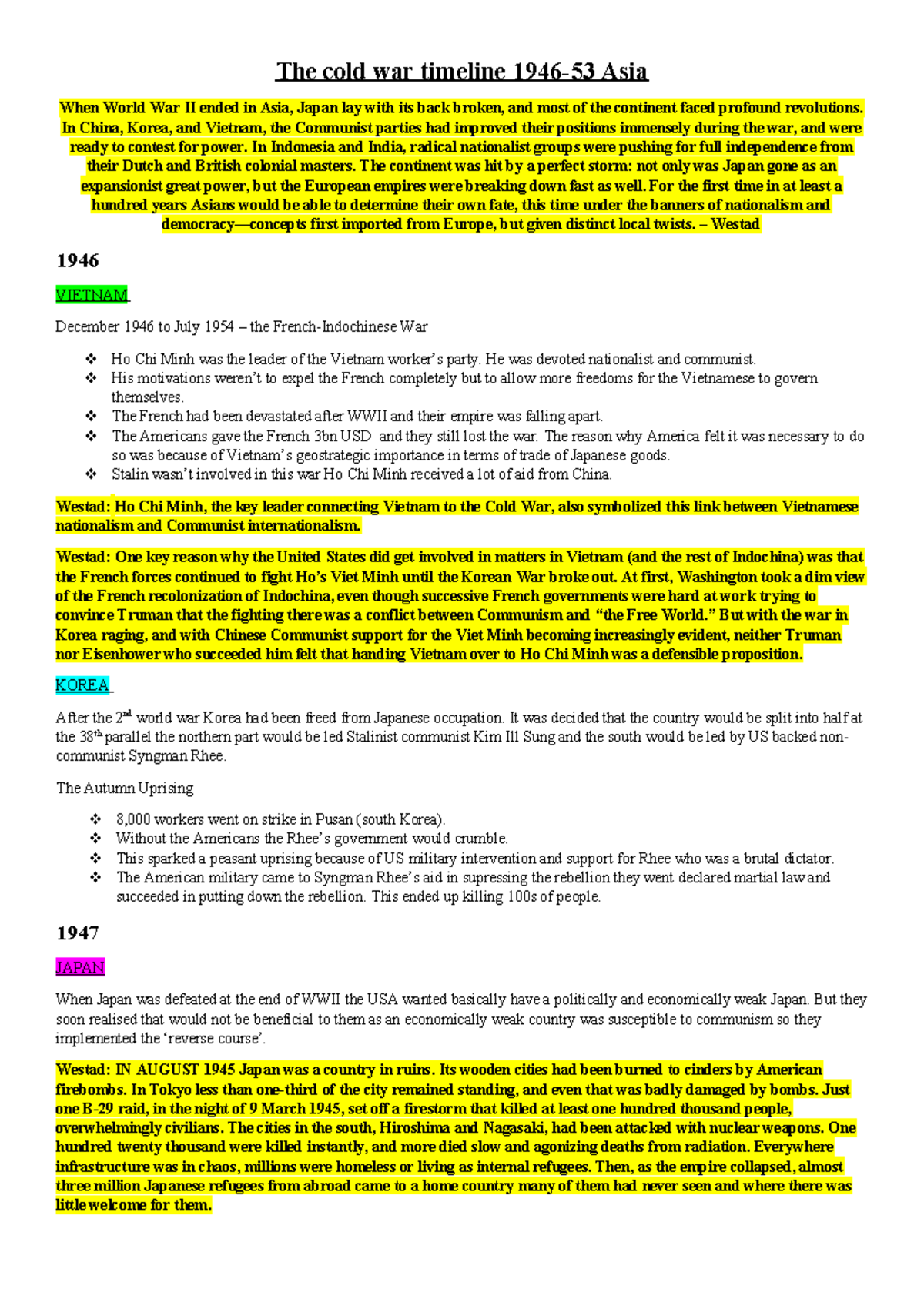
The period spanning from 1946 to 2025 represents the most rapid era of technological, social, and geopolitical transformation in human history, evolving from the immediate aftermath of World War II to the dawn of an AI-driven global society. This chronology tracks the transition from a bipolar world order defined by the Cold War to a multipolar, hyper-connected digital landscape characterized by unprecedented challenges in climate, governance, and technology.
The Foundation of the Post-War Order (1946–1959)
The year 1946 served as "Year Zero" for the modern international system. As the world emerged from the devastation of global conflict, the primary objective was the establishment of institutions capable of preventing a third world war. In January 1946, the United Nations General Assembly held its first meeting in London, signaling a shift toward multilateral diplomacy. This was followed closely by the formal establishment of the International Court of Justice (ICJ), which began its work in April 1946 as the principal judicial organ of the UN.
The late 1940s were defined by the "Iron Curtain," a term popularized by Winston Churchill in March 1946, which demarcated the growing divide between Western democracies and the Soviet-aligned Eastern Bloc. The Marshall Plan (1948) catalyzed the economic recovery of Western Europe, while the formation of NATO (1949) and the Warsaw Pact (1955) solidified the military architecture of the Cold War.
Technologically, this era witnessed the birth of the "Atomic Age" and the first inklings of the "Space Age." The launch of Sputnik 1 by the USSR in 1957 shattered the perception of Western technological hegemony and triggered a massive escalation in scientific investment. Domestically, the 1950s saw the rise of consumerism in the West, the introduction of the polio vaccine (1955), and the first commercial use of mainframe computers, setting the stage for the digital revolution to come.
Decolonization, Social Upheaval, and the Space Race (1960–1979)
If the 1950s were about stability and reconstruction, the 1960s and 70s were defined by the dismantling of old empires and the challenging of social norms. The "Year of Africa" (1960) saw 17 nations gain independence, a trend that continued throughout the decade, fundamentally altering the composition of the United Nations and the focus of global politics.
The geopolitical tension reached its zenith during the Cuban Missile Crisis (1962), which brought the world to the brink of nuclear war and subsequently led to the first major arms control treaties. Simultaneously, the "Space Race" culminated in the Apollo 11 moon landing (1969), a feat that demonstrated the limits of human ingenuity and served as a powerful propaganda tool during the Cold War.
Socially, this period was marked by the Civil Rights Movement in the United States, the 1968 student protests across Europe, and the second-wave feminist movement. These shifts were underpinned by the "Green Revolution" in agriculture, which drastically increased food production, and the introduction of the birth control pill, which transformed demographics and labor markets. The 1970s, however, introduced economic volatility through the 1973 Oil Crisis, leading to "stagflation" and a pivot toward neoliberal economic policies that would dominate the following decades.
The Digital Awakening and the Collapse of Bipolarity (1980–1999)
The final two decades of the 20th century were characterized by the transition from industrial to information-based economies. The introduction of the IBM PC (1981) and the subsequent rise of Microsoft and Apple brought computing power into the home. By the late 1980s, the development of the World Wide Web by Tim Berners-Lee (1989) laid the groundwork for the modern internet.
Geopolitically, the world witnessed the unexpected and rapid collapse of the Soviet Union. The fall of the Berlin Wall (1989) and the subsequent dissolution of the USSR in 1991 ended the Cold War, ushering in a "unipolar moment" dominated by the United States. This era saw the expansion of global trade through the formation of the World Trade Organization (WTO) in 1995 and the adoption of the Euro as a common currency for much of Europe.
However, the 1990s were also marred by ethnic conflicts in the Balkans and Rwanda, highlighting the limitations of the post-war international order in preventing internal atrocities. The decade closed with the "Dot-com Bubble," a period of extreme speculation in internet-based companies that, despite its eventual crash, signaled the definitive arrival of the digital economy.
Globalization, Crisis, and the Rise of Big Tech (2000–2019)
The start of the 21st century was defined by a shift from state-on-state conflict to the "War on Terror" following the September 11 attacks (2001). This era was characterized by prolonged military engagements in Afghanistan and Iraq, which reshaped Middle Eastern politics and strained international alliances.
Economically, the Global Financial Crisis of 2008 was the most significant event since the Great Depression. It exposed the vulnerabilities of a hyper-leveraged global banking system and led to a decade of austerity, low interest rates, and growing populism. During this same window, the "Smartphone Revolution"—sparked by the launch of the iPhone in 2007—fundamentally changed how humans interact, consume information, and participate in the economy.
The 2010s saw the rise of social media as a primary political and social force, facilitating the Arab Spring (2011) but also enabling the spread of disinformation. Climate change moved from a peripheral concern to a central global priority with the signing of the Paris Agreement (2015). Meanwhile, China’s rapid economic ascent began to challenge the Western-led order, leading to a new era of "Great Power Competition."
The Era of Poly-Crisis and Artificial Intelligence (2020–2025)
The decade beginning in 2020 has been marked by a series of overlapping global shocks, often referred to as a "poly-crisis." The COVID-19 pandemic acted as a massive accelerant for existing trends, forcing a global shift to remote work and highlighting the fragility of global supply chains. The recovery from the pandemic was complicated by the Russia-Ukraine conflict (2022), which triggered an energy crisis and the highest inflation rates seen since the 1970s.
The year 2023 and 2024 were defined by the "Generative AI Explosion." The public release of advanced large language models (LLMs) catalyzed a race among tech giants (Microsoft, Google, Meta) and prompted urgent discussions regarding AI safety, ethics, and the future of labor. By 2025, AI integration became standard across most professional industries, from drug discovery to legal analysis.
In the realm of space, the Artemis Program made significant strides toward returning humans to the Moon, while private entities like SpaceX achieved record-breaking launch frequencies. Environmentally, 2025 served as a critical checkpoint for the "2030 Goals," with many nations accelerating their transition to renewable energy sources despite persistent geopolitical friction.
Comparison of Global Metrics: 1946 vs. 2025
The following table highlights the radical shifts in the global landscape over this 79-year period.
| Metric | Status in 1946 | Status in 2025 (Projected/Actual) |
|---|---|---|
| Global Population | ~2.4 Billion | ~8.2 Billion |
| Primary Energy Source | Coal & Oil | Diversified (Oil, Gas, Renewables, Nuclear) |
| Leading Geopolitical Structure | Bipolar (US vs. USSR) | Multipolar (US, China, EU, Global South) |
| Dominant Communication | Radio, Print, Telegraph | Real-time Global Internet, 6G/Satellite |
| Global Literacy Rate | ~40% | ~87% |
| Life Expectancy (Global) | ~46 Years | ~73 Years |
| Main Economic Driver | Industrial Manufacturing | Digital Services & AI-driven Production |
Historical Significance of the 1946-2025 Timeline
This 80-year span is unique because it represents the transition from a world of physical borders and slow-moving information to a "Global Village." The chronology of events shows a clear progression from the collective trauma of war toward a shared, albeit fractured, global identity.
- Institutional Resilience: Institutions created in 1946, such as the UN and the IMF, have survived but face increasing pressure to reform as the distribution of global power shifts toward the East and South.
- Technological Acceleration: The interval between major technological breakthroughs has shrunk. The transition from the first computer to the internet took 40 years; the transition from the internet to pervasive AI took less than 20.
- Human Rights and Agency: Since 1946, there has been a significant, if uneven, expansion of human rights. Decolonization, civil rights, and LGBTQ+ movements have fundamentally changed the legal and social fabric of most nations.
Frequently Asked Questions
What was the most significant event in 1946?
The most significant event was the inaugural meeting of the United Nations General Assembly on January 10, 1946. This established the framework for modern international relations and the principle of collective security. It was the first time in history that a truly global body attempted to provide a platform for all sovereign states to resolve disputes without resorting to total war.
How has the definition of a "Superpower" changed between 1946 and 2025?
In 1946, a superpower was defined primarily by nuclear capability and industrial manufacturing output. By 2025, the definition expanded to include technological sovereignty, specifically in the realms of Artificial Intelligence, semiconductor manufacturing, and data control. While military might remains a factor, economic interdependence and "soft power" (cultural and digital influence) are now equally critical.
What are the "Artemis Accords" and why do they matter in the 2025 timeline?
The Artemis Accords are a series of non-binding multilateral arrangements between the U.S. government and other world governments that establish a framework for cooperation in the civil exploration and use of the Moon, Mars, and other astronomical objects. In 2025, these accords became a focal point for space diplomacy, distinguishing the Western approach to space law from that of competing blocs.
Was the 1946-2025 period the most peaceful in history?
Historians often refer to the post-1945 era as the "Long Peace" because there has been no direct military conflict between the world’s major powers. However, this is a subject of debate, as hundreds of "proxy wars," civil conflicts, and regional wars (such as those in Vietnam, Afghanistan, and Ukraine) have resulted in millions of casualties. Peace at the global level has often been maintained through nuclear deterrence, known as Mutually Assured Destruction (MAD).
What major environmental shifts occurred between 1946 and 2025?
The most profound shift was the transition into the Anthropocene, an epoch where human activity became the dominant influence on climate and the environment. In 1946, the concentration of CO2 in the atmosphere was roughly 310 ppm (parts per million). By 2025, that figure has surpassed 420 ppm, leading to the global climate crisis and the urgent push for "Net Zero" emissions by the mid-21st century.
Recommended Next Steps for Researchers
For those looking to deepen their understanding of this chronology, the following actions are recommended:
- Primary Source Analysis: Review the original charters of the UN and the Bretton Woods institutions (1944-1946) to understand the original intent of the post-war order.
- Technological Tracking: Study the history of the "Transistor" (invented in 1947) to see how it directly led to the smartphone and AI technologies of 2025.
- Geopolitical Mapping: Compare a world map from 1946 (post-colonial borders) with a map from 2025 to see the emergence of nearly 150 new sovereign nations.
- Legal Review: Visit the official site of the International Court of Justice to review landmark cases that have shaped international law over the last eight decades.