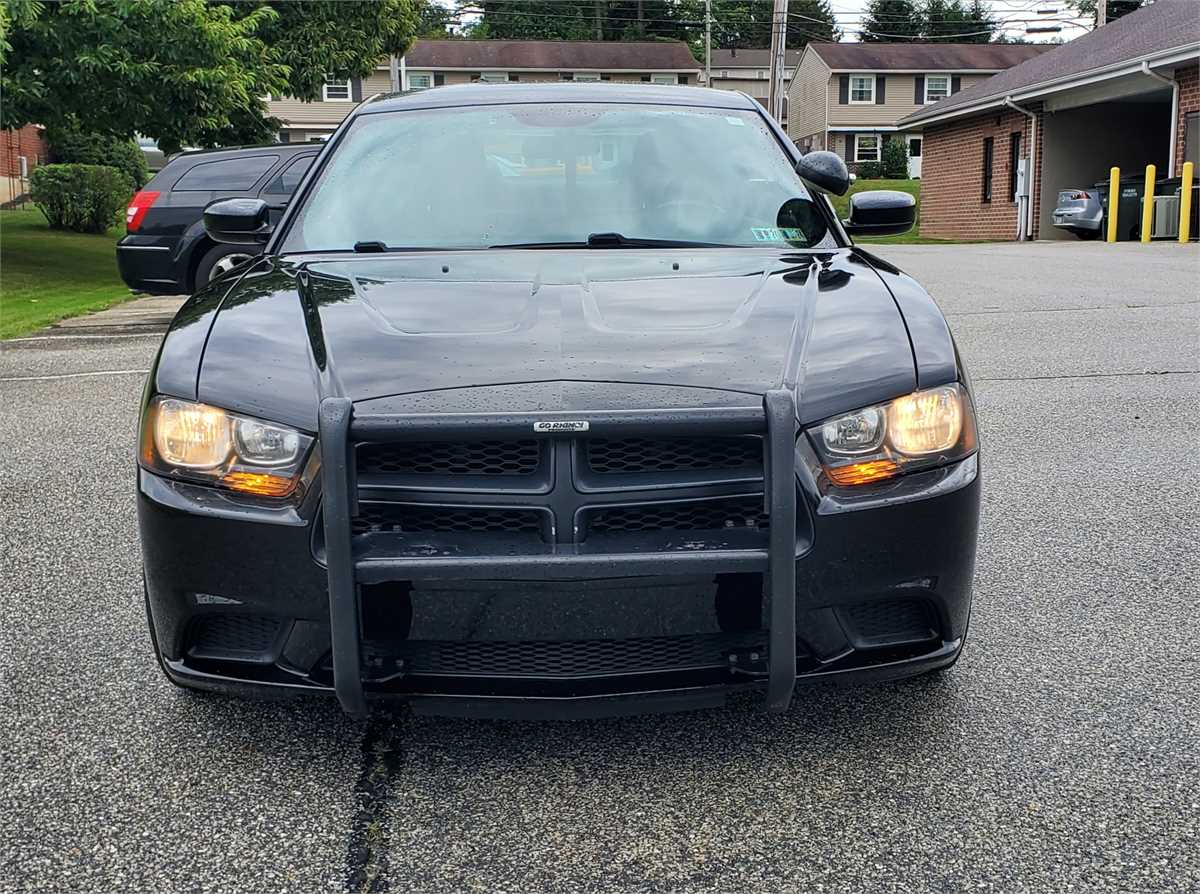
The 2014 5.7-liter HEMI V8 (Eagle architecture) produces 370 to 395 horsepower and 395 to 410 lb-ft of torque, depending on the vehicle platform. Featuring a 3.917-inch bore, 3.578-inch stroke, and a 10.5:1 compression ratio, this cast-iron pushrod engine incorporates variable valve timing (VVT) and Chrysler's Multi-Displacement System (MDS) cylinder deactivation.
2014 5.7L HEMI V8: Engineering Overview and Architecture
The 2014 model year marked an established phase for Chrysler’s second-generation modern HEMI, specifically the revised "Eagle" revision introduced in 2009. Built primarily at the Saltillo Engine Plant in Ramos Arizpe, Mexico, the 5.7-liter (345 cubic-inch) HEMI bridged traditional pushrod packaging with modern variable valve timing and efficiency controls.
Chrysler engineers retained a deep-skirt, cast-iron cylinder block with cross-bolted, four-bolt main bearing caps to maintain structural rigidity under high cylinder pressures. The cast-iron foundation handles torsional stress well, making it durable for heavy towing applications in trucks and sustained high-RPM operation in passenger cars.
Sitting atop the iron block are cast aluminum alloy cylinder heads featuring the namesake hemispherical-style combustion chambers. The Eagle revision introduced substantially reshaped intake ports, improved port flow matching the earlier 6.1L SRT architecture, higher compression, and unique dual-plug ignition geometry. Two spark plugs per cylinder (16 plugs total) ensure fast, complete combustion of the air-fuel mixture, reducing emissions while limiting knock sensitivity.
The valvetrain uses a single in-block camshaft operating two pushrod-actuated valves per cylinder (one intake, one exhaust) via shaft-mounted rocker arms. The valvetrain incorporates a computer-controlled cam phaser on the front of the camshaft, allowing variable valve timing across a 37-degree sweep. This system broadens the torque curve at low engine speeds while advancing valve events at high RPM to maximize volumetric efficiency.
Vehicle-Specific Power, Torque, and Application Breakdown
While the mechanical core of the 5.7L HEMI remains consistent across the 2014 Chrysler, Dodge, Ram, and Jeep lineups, output ratings vary. Differences in intake manifold design, exhaust routing, chassis clearance, and powertrain control module (PCM) calibration account for these variations.
- 2014 5.7L HEMI Eagle Platform
- Truck / SUV Platforms
- Ram 1500 (395 hp / 410 lb-ft)
- Grand Cherokee (360 hp / 390)
- Dodge Durango (360 hp / 390)
- Car Platforms (LD/LC)
- Dodge Charger (370 hp / 395 lb-ft)
- Dodge Challenger (372-375 hp)
- Chrysler 300 (363 hp / 394 lb-ft)
- Truck / SUV Platforms
Ram 1500 Pickup Truck
In the 2014 Ram 1500, the 5.7L HEMI achieved its highest standard output rating of the era: 395 horsepower at 5,600 RPM and 410 lb-ft of torque at 3,950 RPM. Engineers paired the truck engine with an active dual-runner intake manifold that switches path lengths to optimize low-end torque for pulling and high-end airflow for highway passing. Most 2014 Ram 1500 models were paired with the ZF-designed TorqueFlite 8-speed automatic (8HP70), though select work-truck trims retained the older 6-speed 65RFE automatic.
Ram 2500 and 3500 Heavy Duty
The heavy-duty Ram 2500 and 3500 trucks utilized a de-tuned commercial variant of the 5.7L HEMI producing 383 horsepower at 5,600 RPM and 400 lb-ft of torque at 4,000 RPM. This iteration was calibrated specifically for continuous heavy-load durability rather than peak acceleration, operating alongside the robust 66RFE 6-speed automatic transmission.
Dodge Charger and Chrysler 300
On the rear-wheel-drive and all-wheel-drive LD platform, the 2014 Dodge Charger R/T produced 370 horsepower at 5,250 RPM and 395 lb-ft of torque at 4,200 RPM. The luxury-oriented 2014 Chrysler 300S and 300C models received a slight calibration difference, delivering 363 horsepower and 394 lb-ft of torque. Both models routed exhaust through restrictive floor-pan channels compared to the Ram, slightly limiting peak exhaust scavenging. In 2014, all V8 passenger sedans used the Mercedes-derived W5A580 (NAG1) 5-speed automatic transmission.
Dodge Challenger R/T
The 2014 Challenger R/T offered two distinct specifications based on the selected transmission:
- Tremec TR-6060 6-Speed Manual: Rated at 375 horsepower at 5,150 RPM and 410 lb-ft of torque at 4,300 RPM. This configuration required 91 octane fuel and deleted the Multi-Displacement System (MDS), giving drivers uninterrupted V8 operation and an aggressive camshaft profile.
- 5-Speed Automatic (NAG1): Rated at 372 horsepower at 5,200 RPM and 400 lb-ft of torque at 4,400 RPM, equipped with standard MDS hardware to improve highway fuel economy.
Jeep Grand Cherokee and Dodge Durango
Within the WK2/WD SUV platform, packaging constraints around the front differential and steering gear necessitated tighter exhaust manifolds. As a result, the 2014 Jeep Grand Cherokee and Dodge Durango 5.7L HEMI produced 360 horsepower at 5,150 RPM and 390 lb-ft of torque at 4,250 RPM. Both SUVs received the updated 8HP70 8-speed automatic transmission for the 2014 model year, substantially improving real-world acceleration and fuel consumption over previous model years.
Complete 2014 5.7 HEMI Technical Specifications Table
The following table provides verified mechanical dimensions, component clearances, and fluid capacities applicable to the 2014 5.7-liter HEMI V8 across platforms.
| Specification Category | Technical Detail / Value | Unit of Measurement |
|---|---|---|
| Displacement | 5,654 cc / 345 cid | Liters / Cubic Inches |
| Engine Configuration | 90-degree V8, Pushrod OHV | 16-valve, 2 valves per cylinder |
| Bore x Stroke | 99.5 mm x 90.9 mm | 3.917 in x 3.578 in |
| Block Material | Cast Iron | Deep-skirt, cross-bolted mains |
| Cylinder Head Material | A319 Cast Aluminum Alloy | Hemispherical combustion chamber |
| Compression Ratio | 10.5:1 | Static ratio |
| Firing Order | 1-8-4-3-6-5-7-2 | Sequential electronic injection |
| Valvetrain Type | Pushrod with Hydraulic Roller Lifters | Cam-in-block, dual-spring dampers |
| Valve Timing | VVT via Hydraulic Cam Phaser | 37 degrees total crank rotation |
| Intake Valve Diameter | 54.3 mm / 2.14 in | Lightweight hollow-stem steel |
| Exhaust Valve Diameter | 42.0 mm / 1.65 in | Sodium-filled for heat transfer |
| Spark Plugs | 16 total (2 per cylinder) | Dual-plug distributorless coil pack |
| Spark Plug Type | NGK LZFR5C-11 (or OEM equivalent) | Nickel alloy, 0.043 in (1.1 mm) gap |
| Engine Oil Viscosity (MDS) | SAE 5W-20 (Strictly enforced for MDS) | API Certified SN / MS-6395 |
| Engine Oil Viscosity (Non-MDS Manual) | SAE 5W-20 or SAE 0W-40 (Track usage) | Consult platform owner's manual |
| Engine Oil Sump Capacity (Truck/SUV) | 7.0 US Quarts (6.6 Liters) with filter | Standard deep stamped-steel pan |
| Engine Oil Sump Capacity (Car R/T) | 7.0 US Quarts (6.6 Liters) with filter | Structural cast aluminum pan |
| Coolant Capacity | 14.0 to 14.7 US Quarts (13.3–13.9 L) | Mopar OAT 10-Year/150,000-Mile |
| Maximum Engine Speed (Redline) | 5,800 RPM | Electronic fuel cut-off |
Fuel Economy, Cylinder Deactivation, and VVT Operation
The 2014 5.7L HEMI incorporates two primary efficiency technologies: the Multi-Displacement System (MDS) and Variable Camshaft Timing (VCT). Understanding how these systems interact is critical for vehicle diagnosis and general upkeep.
Multi-Displacement System (MDS) Mechanics
MDS was developed to address the fuel consumption inherent to a 345-cubic-inch V8. When the engine control module detects steady-state cruising conditions, low engine load, and speeds between 18 and 80 mph, it commands MDS to deactivate cylinders 1, 4, 6, and 7.
The physical deactivation relies on unique two-piece, collapsible hydraulic roller lifters mounted in specific lifter bores. Four electronic solenoids located underneath the intake manifold direct engine oil pressure to these specialized lifters:
When energized, the solenoid vents oil pressure from the lifter's internal locking pins.
The spring-loaded locking pins retract inward.
As the camshaft lobe pushes upward on the lifter body, the inner mechanism collapses freely without moving the pushrod.
The intake and exhaust valves remain completely closed for that cylinder, trapping air to create an air spring that minimizes pumping losses.
ECM Detects Low Load (Cruising 18–80 mph)
Energizes MDS Solenoids in Valley
Vents Oil Pressure from Locking Pins
Lifters for Cylinders 1, 4, 6, 7 Collapse
Valves Stay Closed (Air Spring Effect)
Engine Runs in 4-Cylinder Economy Mode
This transition occurs in approximately 40 milliseconds. The system relies entirely on accurate hydraulic line pressures inside the lifter galleys. Consequently, using an incorrect oil viscosity—such as 10W-30 or 20W-50 instead of the mandatory SAE 5W-20—slows hydraulic pin travel. This can trigger diagnostic trouble codes (such as P3400, P3401, or P3421) and prevent the system from cycling smoothly.
Variable Valve Timing (VVT) Integration
Unlike dual-overhead-cam engines that can adjust intake and exhaust profiles independently, the single-cam 5.7L HEMI alters both profiles simultaneously. A computer-controlled oil control valve (OCV) delivers high-pressure oil to a vane-type cam phaser bolted to the front timing sprocket.
Advancing or retarding the camshaft by up to 37 crankshaft degrees accomplishes two primary objectives:
- EGR Elimination: At mid-RPM, the camshaft timing is adjusted to create internal exhaust gas recirculation by altering valve overlap. This eliminated the need for an external mechanical EGR valve and its associated carbon clogging issues.
- Expanded Torque Curve: By advancing cam timing at low engine speeds, the intake valve closes earlier, trapping more mixture to improve off-the-line torque. Retarding the cam at higher speeds allows air-fuel inertia to fill the cylinder later in the cycle, raising the engine's peak power threshold.
Towing and Payload Capabilities (2014 Applications)
The 5.7L HEMI served as the benchmark workhorse across Ram and Jeep vehicles for 2014. Because real-world capacities depend heavily on final drive axle ratios, suspension setups, and chassis layouts, capabilities vary across platforms.
2014 Ram 1500 Configuration Impact
For the 2014 Ram 1500, maximum towing ratings scaled dramatically based on the rear axle gear ratio selected from the factory:
- 3.21 Axle Ratio: Optimized for highway fuel economy; maximum towing capacity capped at approximately 7,450 to 8,650 pounds, depending on cab configuration (Regular, Quad, or Crew Cab).
- 3.55 Axle Ratio: Balanced towing capability rated up to 9,250 pounds.
- 3.92 Axle Ratio: The heavy-towing specification, permitting a maximum trailer rating of up to 10,450 pounds and a gross combined weight rating (GCWR) of nearly 16,000 pounds when properly equipped.
Payload ratings for HEMI-equipped half-ton Ram pickups generally ranged between 1,200 and 1,750 pounds, limited primarily by the coil-spring (or optional air-spring) rear suspension setup.
2014 Jeep Grand Cherokee & Dodge Durango
Equipped with unibody architectures and independent rear suspensions, the SUV applications delivered competitive towing metrics:
- Jeep Grand Cherokee 5.7L (4x2 / 4x4): Rated for up to 7,400 pounds (4x2) or 7,200 pounds (4x4) with an integrated Class IV receiver hitch, auxiliary oil cooling, and heavy-duty engine cooling.
- Dodge Durango 5.7L (AWD / RWD): Rated up to 7,400 pounds (RWD) and 7,200 pounds (AWD), benefiting from the longer wheelbase to stabilize larger trailers.
Known Vulnerabilities, Maintenance Issues, and Diagnostic Fixes
Despite its durable bottom-end construction, the 2014 5.7L HEMI exhibits several well-documented mechanical tendencies. Recognizing these symptoms early prevents catastrophic engine component failures.
The "HEMI Tick": Lifter Roller Seizure and Camshaft Scoring
The most prevalent mechanical failure mode in Eagle-era 5.7L engines is the dreaded "HEMI Tick." Unlike harmless fuel injector noise or cold-start piston slap, a deep, persistent metallic ticking that increases with engine RPM often indicates a failing needle bearing inside a hydraulic roller lifter.
- Root Cause: Extended idle times, fuel dilution, or degraded engine oil can starve the lifter needle bearings of adequate lubrication. Because the camshaft is positioned relatively high in the block, oil splash from the crankshaft provides limited coverage to the lifters at low RPM. If the needle bearings seize, the roller stops spinning and begins grinding directly against the camshaft lobe.
- Progression: The friction grinds flat spots onto the camshaft lobe, sending metallic debris throughout the oiling system. The clearance grows until the pushrod can no longer fully open the valve, resulting in a persistent misfire code (frequently P0300, or cylinder-specific P0303, P0305, or P0308).
- Repair Scope: Once the ticking escalates to a misfire, both the camshaft and all 16 lifters (including lifter guides) must be replaced. In severe cases where fine metal particulate has circulated, the oil pump and timing set must be swapped, and the oil pan completely cleaned.
- Extended Idling / Degraded Oil
- Starvation of Lifter Roller Needle Bearings
- Lifter Roller Seizes
- Grinds Flat Spot on Camshaft Lobe
- Audible Metallic Tick
- Misfire (P0300 Series)
- Full Cam & Lifter Replacement
Exhaust Manifold Stud Breakage
A near-universal issue for 2014 Ram 1500 and Grand Cherokee 5.7L models involves broken exhaust manifold bolts, particularly on the rear cylinders (cylinders 7 and 8 on the driver side; cylinder 8 on the passenger side).
- Mechanism: The cast-iron exhaust manifolds heat and cool at a significantly different rate than the aluminum cylinder heads. This thermal differential causes the manifold to expand, contract, and subtly warp over time. This cyclical sheer stress shears the factory grade-8 steel bolts, typically snapping the bolt head flush with the cylinder head.
- Symptoms: A prominent, rapid ticking or chattering sound on a cold startup that fades or disappears entirely as the engine warms up and the manifold expands to seal the gap.
- Resolution: Extracting the broken studs from the cylinder head, surfacing the warped exhaust manifold on a belt sander (or replacing it with a flat aftermarket unit/shorty headers), and reinstalling with high-grade aftermarket fasteners or upgraded stainless studs.
Water Pump Bearing Failure
The factory water pump installed on 2014 5.7L HEMI platforms typically displays a service life between 70,000 and 110,000 miles. Bearing play or seal compromise leads to coolant seepage from the weep hole, dried orange/pink OAT coolant crust around the front timing cover, and a high-pitched bearing whine under the hood. Failure to address this can cause complete belt thrown issues, engine overheating, and blown head gaskets.
Maintenance Schedule and Ownership Guidelines
Preserving the 2014 5.7-liter HEMI requires strict adherence to fluid specifications, ignition cycles, and operational hygiene.
1. Oil Selection and Drain Intervals
- Specification: Use an API Certified SAE 5W-20 meeting Chrysler Material Standard MS-6395. Do not vary viscosities on MDS-equipped vehicles. High-quality synthetic oils are strongly recommended to provide thermal stability to the needle bearings during highway towing and stop-and-go driving.
- Interval: The on-board Oil Life Monitor (OLM) calculates duty cycles, but oil changes should never exceed 7,500 miles. For severe service, frequent short trips, or high-idle applications (work sites, delivery, fleets), oil changes should be performed every 4,000 to 5,000 miles.
2. Dual-Plug Ignition Maintenance
The 2014 5.7L HEMI utilizes 16 spark plugs to control emissions and flame propagation.
- Replacement Interval: Factory-installed nickel/copper-alloy spark plugs carry a replacement interval of 30,000 miles on select early manuals, though many 2014 service schedules align with 100,000-mile platinum/iridium maintenance schedules. Inspecting plugs every 30,000 to 40,000 miles prevents premature ignition coil failure.
- Torque Spec: Torque plugs to 13–15 lb-ft (17.5–20.5 Nm). Avoid over-tightening into the aluminum cylinder head threads.
3. Cooling System Upkeep
- Specification: Vehicles manufactured for the 2014 model year use Mopar OAT (Organic Additive Technology) 10-Year/150,000-Mile Coolant (typically purple in color when concentrated, turning pinkish/orange when diluted).
- Warning: Never mix Mopar OAT with older Mopar HOAT (Hybrid Organic Additive Technology, typically orange). Mixing these two coolants causes precipitation, turning the fluid into a gelatinous sludge that clogs the radiator cores and heater core.
Frequently Asked Questions
What type of fuel does the 2014 5.7 HEMI require?
Mid-grade 89 octane is recommended for optimum performance and fuel economy in most applications (Ram 1500, Charger, Grand Cherokee). Regular 87 octane is acceptable for everyday driving without damaging the engine, though the PCM will retard timing slightly, leading to small reductions in power and efficiency. The exception is the Challenger R/T with a 6-speed manual, which strictly requires 91 octane or higher.
How many quarts of oil does a 2014 5.7 HEMI take?
The 2014 5.7 HEMI requires 7.0 quarts (6.6 liters) of engine oil with a filter change. Ram trucks, Durango/Grand Cherokee SUVs, and passenger cars (Charger, Challenger, 300) all share this 7.0-quart sump capacity, though dipstick part numbers and tube routings vary across platforms.
Can I run 5W-30 oil in my 2014 5.7 HEMI?
No, you should not run 5W-30 in an MDS-equipped 5.7L HEMI. Chrysler explicitly mandates SAE 5W-20 to ensure the hydraulic oil passages feeding the MDS lifter solenoids function within factory pressure tolerances. Deviating from 5W-20 can cause delayed lifter pin engagement, check engine lights, rough engine operation, and increased valvetrain wear.
How long does a 2014 5.7 HEMI engine last?
With proper maintenance, a 2014 5.7L HEMI regularly reaches 200,000 to 250,000 miles. Achieving this lifespan requires avoiding prolonged idling, strictly maintaining 5,000-mile synthetic oil change intervals, replacing the water pump proactively around 100,000 miles, and resolving exhaust manifold leaks promptly.
What causes the HEMI tick in 2014 engines?
The tick typically stems from two distinct issues: a cracked exhaust manifold stud (a minor problem that goes away as the engine warms) or a seized lifter needle bearing that scores the camshaft lobe (a major internal failure that requires a complete camshaft and lifter replacement).
Final Recommendation and Next Actions
If you own or are evaluating a 2014 vehicle equipped with the 5.7L HEMI, your primary focus should be valvetrain health and cooling system integrity. For buyers, perform a cold startup to listen for sharp exhaust leaks at the rear cylinder heads, followed by a warm idle inspection using an automotive stethoscope against the cylinder head valve covers to rule out lifter ticks.
For current owners, avoid prolonged engine idling, service your oil every 5,000 miles using high-grade API MS-6395 certified SAE 5W-20 synthetic, and ensure the cooling system is maintained exclusively with genuine Mopar OAT coolant.