The recommended oil type for a 2008 Jeep Liberty equipped with the 3.7L PowerTech V6 engine is SAE 5W-20 motor oil that meets Chrysler Material Standard MS-6395. The total oil capacity is 5.0 US quarts (4.7 liters) when replacing the oil filter. Using high-quality synthetic oil optimized for high-mileage engines provides superior protection for this powertrain.
Recommended Oil Type and Viscosity for the 2008 Jeep Liberty
Every 2008 Jeep Liberty (KK generation) comes equipped with a single engine option: the 3.7-liter PowerTech SOHC V6. Chrysler explicitly specifies SAE 5W-20 engine oil for this powertrain under all operating ambient temperatures. The primary reason for recommending a 5W-20 viscosity is to ensure immediate lubrication to the upper valvetrain during cold starts while optimizing fuel efficiency and minimizing internal engine drag.
To satisfy factory warranty and protection requirements, the oil selected must meet Chrysler Material Standard MS-6395. This standard ensures the motor oil possesses adequate thermal stability, anti-wear properties, and resistance to oxidation over extended service intervals. Oils meeting current American Petroleum Institute (API) SP and ILSAC GF-6A specifications exceed the original performance criteria established when the vehicle was built.
| Specification | Details |
|---|---|
| Engine | 3.7L PowerTech SOHC V6 |
| Standard Viscosity | SAE 5W-20 |
| Alternate Viscosity (Hot Climates) | SAE 5W-30 (If approved locally) |
| Factory Specification | Chrysler MS-6395 |
| Total Capacity (with filter) | 5.0 US Quarts (4.7 Liters) |
| Drain Plug Torque | 25 ft-lbs (34 Nm) |
| Drain Plug Socket Size | 13 mm |
Conventional vs. Synthetic Blend vs. Full Synthetic
While the factory original owner's manual permits conventional motor oil meeting MS-6395 standards, modern driving demands and the mechanical age of the 2008 Jeep Liberty make oil selection a critical decision:
- Conventional Motor Oil: Provides basic lubrication but breaks down rapidly under high thermal stress. It requires strict change intervals of 3,000 to 4,000 miles and offers minimal protection against sludge accumulation.
- Synthetic Blend Oil: Combines conventional base stocks with synthetic additives. It offers superior temperature resistance and wear protection compared to pure conventional oil at a moderate cost.
- Full Synthetic Oil: Provides the highest level of film strength, resistance to thermal breakdown, and low-temperature fluidity. Full synthetic oils maintain their viscosity over longer periods, significantly reducing wear during cold starts and towing.
- High-Mileage Full Synthetic: Formulated specifically for engines with over 75,000 miles. These formulations include extra anti-wear additives (such as zinc and phosphorus derivatives) and seal conditioners that restore flexibility to aged rubber gaskets and crank seals.
Given that every 2008 Jeep Liberty has aged well beyond its original release, transitioning to a full synthetic or high-mileage 5W-20 formula is highly recommended to protect internal components against wear.
2008 Jeep Liberty Oil Capacity and Technical Specifications
When performing an oil and filter change on the 3.7L V6 engine, exact capacity control is essential. Overfilling can cause oil foaming and aerated lubrication, while underfilling leads to starved bearings and elevated friction.
| Specification Parameter | Technical Value | Notes & Recommendations |
|---|---|---|
| Engine Displacement | 3.7 Liters (226 cu in) | Single Overhead Cam (SOHC) 12-Valve V6 |
| Factory Oil Viscosity | SAE 5W-20 | Approved for all ambient temperature ranges |
| Oil Capacity (with filter) | 5.0 US Quarts (4.7 L) | Fill with 4.5 qt first, then top off using dipstick |
| Oil Capacity (without filter) | ~4.5 US Quarts (4.2 L) | Filter housing retains approximately 0.5 qt |
| Chrysler Specification | MS-6395 | Look for this specification printed on the bottle |
| Drain Plug Socket Size | 13 mm hex socket | Use a 6-point socket to prevent rounding |
| Drain Plug Torque | 25 ft-lbs (34 Nm) | Do not overtighten; oil pan is steel |
| Filter Thread Pitch | 3/4"-16 UNF | Standard Mopar spin-on filter thread |
| Normal Service Interval | 5,000 miles / 6 months | Synthetic oil under normal driving conditions |
| Severe Service Interval | 3,000 miles / 3 months | Towing, stop-and-go, idling, or off-road use |
Selecting the Best Oil for the 3.7L PowerTech V6 Engine
The 3.7-liter PowerTech engine uses a cast-iron block topped with aluminum cylinder heads and hydraulic lash adjusters. This specific architecture makes the valvetrain sensitive to oil purity, hydraulic pressure, and viscosity stability.
Key Factors When Choosing Engine Oil
- Chrysler MS-6395 Approval: Always inspect the product label on the back of the oil bottle. Reputable brands such as Pennzoil, Valvoline, Mobil 1, and Castrol explicitly list MS-6395 compliance on their standard 5W-20 product lines.
- API Service Category: Ensure the oil carries the API "Starburst" certification symbol and meets the current API Lubricant Standards (API SP). API SP oils offer enhanced protection against low-speed pre-ignition (LSPI), chain wear, and high-temperature deposit formation.
- High-Mileage Additive Packages: Older PowerTech engines are prone to valve cover gasket weeping and rear main seal dampness. High-mileage synthetic formulations contain gentle seal swelling agents that help eliminate minor dampness before active leaks develop.
Step-by-Step 2008 Jeep Liberty Oil Change Procedure
Performing an oil change on the 2008 Jeep Liberty is a straightforward DIY task due to the vehicle's generous ground clearance. Following correct safety procedures ensures a clean and precise job.
Necessary Tools and Materials
- 5 Quarts of SAE 5W-20 Motor Oil (MS-6395 certified)
- New Oil Filter (e.g., Mopar MO-899 or equivalent aftermarket filter)
- 13 mm Socket and Ratchet
- Torque Wrench (capable of measuring 25 ft-lbs)
- Oil Filter Wrench (cap wrench or strap style)
- Drain Pan (minimum 6-quart capacity)
- Funnel, Shop Towels, and Nitrile Gloves
- Safety Glasses and Wheel Chocks
Step 1: Vehicle Preparation and Safety
Park the Jeep Liberty on a flat, level concrete surface. Set the parking brake firmly and place wheel chocks behind the rear tires. Run the engine for 3 to 5 minutes to allow the oil to reach operating temperature; warm oil drains more thoroughly and carries suspended contaminants out with it. Turn off the ignition, remove the key, open the hood, and unscrew the oil filler cap on top of the engine valve cover.
Step 2: Draining the Used Engine Oil
Position the drain pan directly beneath the oil pan drain plug, which faces toward the rear of the vehicle. Using a 13 mm socket, loosen the drain plug counterclockwise. Carefully unthread the plug by hand, pressing inward against the threads until the final turn to prevent hot oil from spilling onto your hands.
Allow the oil to drain completely into the catch pan for at least 10 to 15 minutes. Inspect the drain plug seal washer. If the washer is crushed, flattened, or damaged, replace it before reinstalling. Wipe the drain plug clean and thread it back into the pan by hand to avoid cross-threading. Tighten the drain plug to 25 ft-lbs (34 Nm) using a calibrated torque wrench.
Step 3: Replacing the Oil Filter
The oil filter on the 3.7L V6 is located on the lower passenger side of the engine block, situated above the front axle on four-wheel-drive models. Position your drain pan beneath the filter area, as oil will spill when the seal breaks.
- Use an oil filter wrench to turn the old filter counterclockwise until it spins freely.
- Unscrew the filter slowly and tilt the top up to prevent excess oil spillage.
- Crucial Check: Inspect the oil filter mounting pad on the engine block to ensure the old rubber O-ring seal came off with the filter. If the old seal remains stuck to the block ("double-gasketing"), the new filter will leak severely upon start-up.
- Wipe the metal mounting pad clean with a shop towel.
- Apply a thin film of clean, fresh engine oil to the rubber gasket of the new oil filter.
- Thread the new filter onto the housing by hand until the gasket makes solid contact with the mounting base.
- Tighten the filter an additional 3/4 to 1 full turn by hand. Do not use an oil filter wrench to tighten the new filter, as over-tightening damages the rubber gasket.
Step 4: Refilling Engine Oil and Level Verification
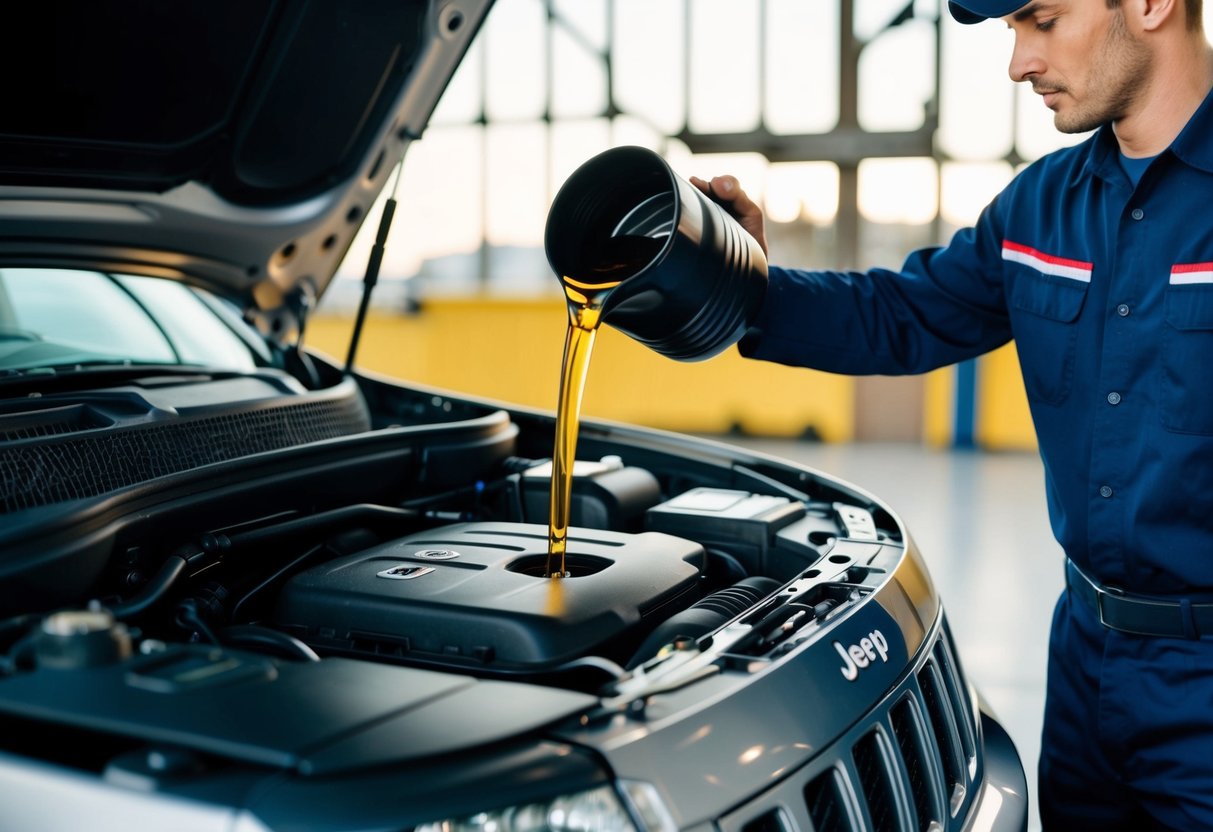
Insert a clean funnel into the valve cover oil filler neck. Pour in 4.5 quarts of fresh SAE 5W-20 motor oil. Replace the oil filler cap loosely and start the engine.
Watch the oil pressure warning light on the instrument cluster. It should turn off within 2 to 4 seconds as system pressure builds. Allow the engine to idle for 1 to 2 minutes while visually inspecting the drain plug and oil filter area for leaks.
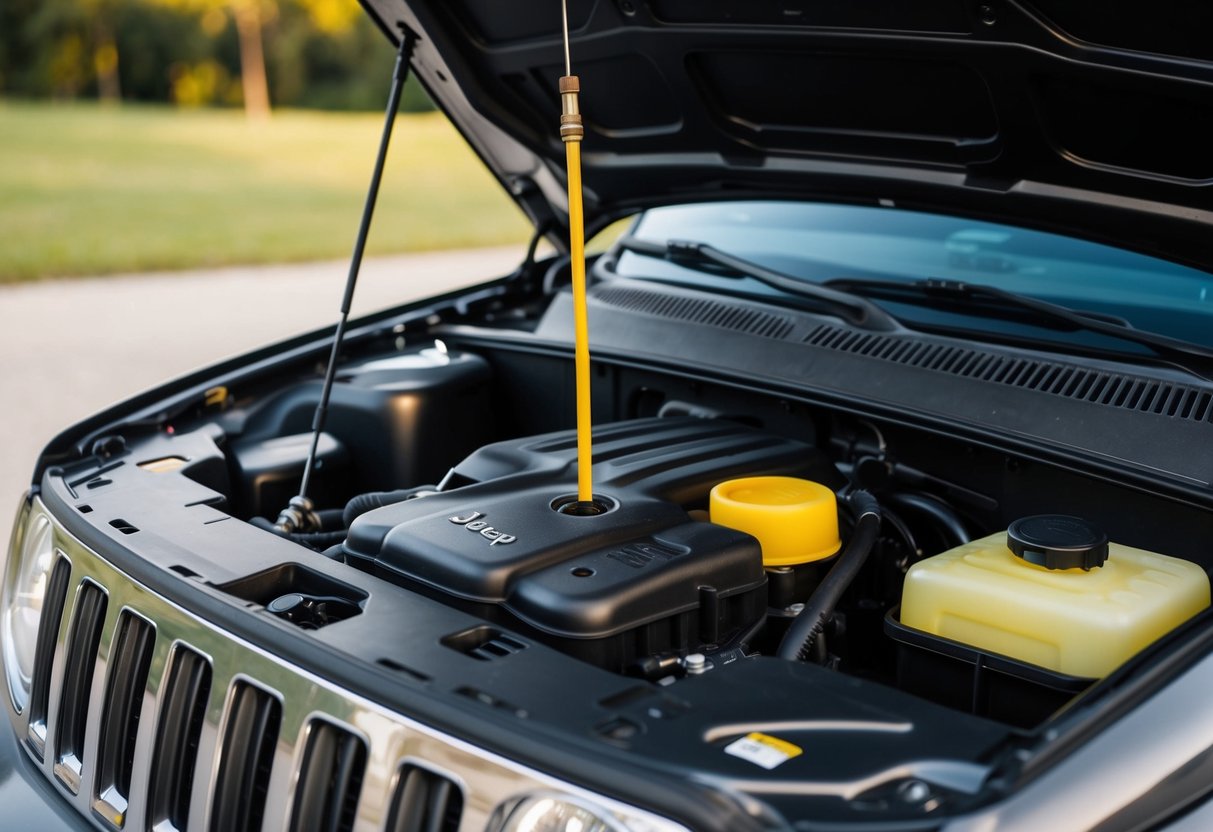
Turn off the engine and allow the vehicle to sit for 5 minutes so oil drains back into the sump. Pull the oil dipstick, wipe it clean on a rag, reinsert it fully, and pull it out again to read the level. Top off with the remaining 0.5 quarts incrementally until the oil level lands squarely between the "SAFE" or upper fill crosshatches on the dipstick.
- MIN/ADD
- SAFE RANGE
- Correct Fill Level
- MAX/FULL
How to Reset the Oil Change Light on a 2008 Jeep Liberty
The 2008 Jeep Liberty features an automated maintenance indicator that calculates oil life based on engine operating conditions, speed, idling time, and mileage. Once an oil change is completed, reset the indicator using the following procedure:
- Turn the ignition switch to the ON / RUN position. Do not start the engine (do not crank the starter).
- Slowly press the accelerator pedal all the way to the floor three times within 10 seconds.
- Turn the ignition switch back to the OFF / LOCK position.
- Start the engine to verify that the "Change Oil" message or reminder chime has cleared.
If the "Change Oil" message appears again upon starting, the pedal presses were likely completed too quickly or slowly. Repeat the process from Step 1.
Common Oil-Related Issues in the 3.7L PowerTech Engine
The 3.7L V6 PowerTech engine is generally robust, but it possesses distinct mechanical traits that make consistent oil care paramount.
Engine Sludge and Varnish Build-Up
The 3.7L engine runs relatively warm and features internal oil passages that can restrict flow if oil breakdown occurs. Neglecting oil change intervals leads to thermal oxidation, causing heavy oil sludge to accumulate in the valve covers and oil pickup tube screen. Sludge starves upper valvetrain components, resulting in permanent damage to overhead camshafts and rocker arms.
To prevent sludge, maintain strict 5,000-mile change intervals with synthetic oil, and replace the Positive Crankcase Ventilation (PCV) valve every 30,000 to 50,000 miles. A clogged PCV valve traps moisture and blow-by gases inside the crankcase, accelerating sludge formation.
Valve Cover Gaskets and Oil Pan Leaks
As the rubber seals on the engine age, thermal cycling causes them to harden and shrink. Common leakage points include:
- Valve Cover Gaskets: Oil seeps down the sides of the cylinder heads, often dripping onto the exhaust manifolds and causing a burnt-oil smell.
- Oil Pan Gasket: The stamped steel oil pan can develop seepage around its mounting flange over time.
- Rear Main Seal: Located between the engine and transmission bellhousing; signs include oil droplets dripping from the bottom inspection cover.
Using high-mileage motor oils containing seal-conditioning agents helps preserve the elasticity of these rubber components, significantly delaying or slowing leaks.
Valvetrain Ticking (Hydraulic Lash Adjusters)
A distinct ticking noise from the top of the engine upon start-up often indicates low oil pressure or clogged hydraulic lash adjusters (lifters). The narrow passages feeding the lash adjusters are easily blocked by small debris or oxidized oil particles. Maintaining correct 5W-20 oil viscosity ensures rapid fluid delivery to the adjusters during cold starts, maintaining correct valve clearance and eliminating noise.
Recommended Maintenance Intervals and Oil Filter Selection
Determining the ideal maintenance schedule depends on how the 2008 Jeep Liberty is driven.
| Driving Type | Conditions Defined |
|---|---|
| Normal Service (5,000 Miles / 6 Months) | • Highway cruising• Moderate suburban commuting• Operating in mild ambient temperatures |
| Severe Service (3,000 Miles / 3 Months) | • Frequent short trips (under 5 miles)• Extensive idling or stop-and-go traffic• Towing trailers or hauling heavy loads• Driving in dusty, off-road, or freezing climates |
Selecting an Optimal Oil Filter
The oil filter plays a direct role in maintaining oil pressure and catching abrasive particles before they re-enter engine bearings. When choosing a replacement filter, consider these standards:
- OEM Mopar (MO-899 / MO-089): Standard factory specification featuring correct bypass valve pressure settings and anti-drainback valves that keep oil in the upper galleries when the vehicle is parked.
- Premium Aftermarket Filters: Brands such as Wix, Baldwin, Mobil 1 Extended Performance, and Mann/Hummel manufacture high-efficiency synthetic-media filters. Synthetic filter media provides higher dirt-holding capacity and better flow rates than conventional cellulose media.
Ensure any selected filter includes a silicone anti-drainback valve. This valve prevents oil from draining out of the filter into the oil pan when the engine is shut off, eliminating dry start conditions on subsequent engine starts.
Frequently Asked Questions
Can I use 5W-30 oil in my 2008 Jeep Liberty?
Factory guidelines specify SAE 5W-20 for all operating temperatures. However, if you live in an extremely warm climate or drive a high-mileage engine with minor oil consumption, high-quality SAE 5W-30 meeting MS-6395 standards can be safely used without causing mechanical harm. Never use high-viscosity oils such as 10W-40 or 20W-50, as they are too thick to properly feed the hydraulic lash adjusters and overhead camshaft galleries during cold starts.
How many quarts of oil does a 2008 Jeep Liberty take?
The 3.7L V6 engine requires 5.0 US quarts (4.7 liters) of engine oil when changing both the oil and the oil filter. If you do not replace the filter, the engine holds approximately 4.5 quarts. Always check the dipstick to confirm the level after refilling and running the engine.
What happens if I don't use Chrysler MS-6395 certified oil?
Using non-certified oil may lead to accelerated engine wear, deposit accumulation, or valve guide corrosion. The MS-6395 standard requires rigorous field testing to ensure the oil resists oxidation and thermal breakdown in Chrysler powertrains over full service intervals.
How often should I change the oil in a 2008 Jeep Liberty?
Under standard driving conditions using synthetic oil, change the oil every 5,000 miles or 6 months, whichever comes first. If you frequently tow trailers, idle for long periods, drive in dusty off-road environments, or make frequent short trips in cold weather, follow the severe service schedule of 3,000 miles or 3 months.
Why is my 2008 Jeep Liberty consuming oil between changes?
As the 3.7L V6 ages, slight oil consumption (up to 1 quart every 1,500 to 2,000 miles) can occur due to worn piston rings, hardened valve stem seals, or a stuck PCV valve. Inspect the PCV valve first, as a malfunctioning valve pulls crankcase oil vapor directly into the intake manifold to be burned in the combustion chamber.
Practical Recommendations for Long-Term Engine Health
To maximize the service life of your 2008 Jeep Liberty's 3.7L PowerTech V6 engine, observe these practical maintenance guidelines:
- Standardize on Full Synthetic 5W-20: Transition to a high-mileage full synthetic formula meeting Chrysler MS-6395 standards to ensure maximum film strength and thermal protection.
- Monitor the Oil Level Bi-Weekly: Check the oil dipstick at least every two weeks or before long highway road trips. Never allow the oil level to drop below the "ADD" mark on the dipstick.
- Replace the PCV Valve Annually: The PCV valve is an inexpensive maintenance item that prevents internal crankcase pressure build-up and reduces oil consumption.
- Use Quality Filters with Silicone Anti-Drainback Valves: Protect the upper valvetrain against dry starts by choosing filters built with high-grade silicone seals and synthetic filter media.
Environmental Protection Limitation Notice: Always discard used engine oil and oil filters responsibly. Take used motor oil to an authorized automotive service station, auto parts store, or municipal recycling drop-off center. Never pour motor oil onto the ground or into storm drains.