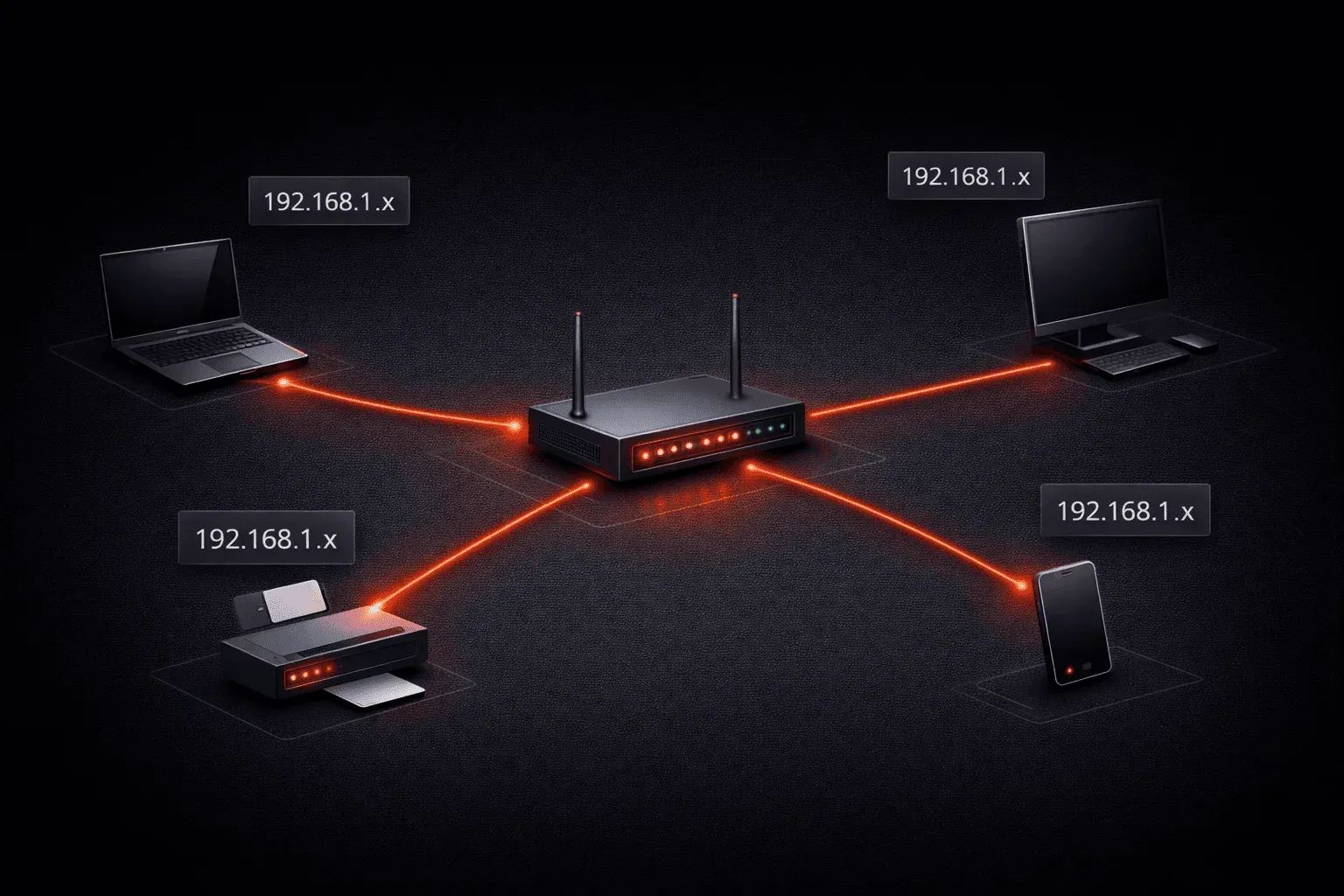
Private IPv4 address ranges are blocks of Internet Protocol version 4 addresses reserved by the Internet Assigned Numbers Authority (IANA) for internal local area networks. These ranges are non-routable across the public internet, allowing organizations and home users to reuse the same address space internally without causing routing conflicts or IP address exhaustion on the global web.
Introduction to IPv4 Address Depletion and Private Spaces
The original architecture of the Internet Protocol version 4 (IPv4), defined in RFC 791 and later formalized for modern networking in RFC 950, provides approximately 4.29 billion unique addresses. While this number seemed virtually inexhaustible during the early development of computer networking, the exponential expansion of personal computing, enterprise data centers, mobile devices, and the Internet of Things (IoT) created an unprecedented demand for IP addresses. By the early 1990s, network engineers recognized that assigning a globally unique public IPv4 address to every connected device would exhaust the available pool prematurely.
To mitigate this looming crisis, the Internet Engineering Task Force (IETF) published RFC 1918 in February 1996, titled "Address Allocation for Private Internets." This document established specific blocks of IPv4 address space that could be used freely by anyone for private, internal communications. Devices operating within these private ranges cannot communicate directly with the public internet without an intermediary mechanism. Instead, they rely on technologies like Network Address Translation (NAT) and Port Address Translation (PAT)—typically executed by consumer routers or enterprise firewalls—to share a single or small pool of public IP addresses.
Understanding how these private ranges function, how they are structured, and how they interact with subnet masks is critical for network administrators, systems engineers, and IT professionals. Misconfigurations in private addressing can lead to routing loops, subnet overlap issues during virtual private network (VPN) tunneling, and severe connectivity bottlenecks. This guide examines the fundamental architecture of IPv4 private ranges, explores the specific address blocks defined under networking standards, and outlines best practices for implementation and troubleshooting.
RFC 1918 Specifications and the Three Private Blocks
RFC 1918 defines three distinct blocks of IPv4 address space reserved for private internets. These blocks span across different classes of the historical IP address architecture (Class A, Class B, and Class C), offering varying scales of address capacity to accommodate everything from a small home network to a massive multinational enterprise infrastructure.
| RFC 1918 Block | Total Host Addresses | CIDR Notation | Default Subnet Mask |
|---|---|---|---|
| 10.0.0.0 – 10.255.255.255 | 16,777,216 | 10.0.0.0/8 | 255.0.0.0 |
| 172.16.0.0 – 172.31.255.255 | 1,048,576 | 172.16.0.0/12 | 255.240.0.0 |
| 192.168.0.0 – 192.168.255.255 | 65,536 | 192.168.0.0/16 | 255.255.0.0 |
The Class A Large Enterprise Range: 10.0.0.0/8
The largest of the private IPv4 blocks is the 10.0.0.0/8 network. Spanning from 10.0.0.0 to 10.255.255.255, this block provides a single Class A network equivalent containing 16,777,216 total IP addresses.
- Target Deployment: Large enterprises, universities, global corporations, and cloud service providers with complex, multi-site network topologies.
- Flexibility: Because of its massive scale, network administrators can easily subdivide (subnet) this range into hundreds of smaller, manageable segments using Variable Length Subnet Masking (VLSM). For example, a corporation might assign
10.100.0.0/16to its New York office,10.200.0.0/16to its London branch, and utilize smaller/24subnets for individual departments. - Routing Considerations: Due to its size, internal routing protocols such as Open Shortest Path First (OSPF) or Border Gateway Protocol (BGP) within private autonomous systems are often implemented to manage traffic efficiently across diverse geographical locations.
The Medium Enterprise Range: 172.16.0.0/12
The second private block covers the range from 172.16.0.0 to 172.31.255.255, expressed in Classless Inter-Domain Routing (CIDR) notation as 172.16.0.0/12. This block equates to 16 contiguous Class B network blocks, yielding a total of 1,048,576 host addresses.
- Target Deployment: Medium-to-large businesses, regional enterprise branches, and complex institutional networks that do not require the sprawling scale of a
/8network but need more capacity than a standard Class C block. - Flexibility: The 172.16.0.0/12 space allows organizations to structure internal networks cleanly without risking address exhaustion within specific sub-allocations. A common practice is utilizing distinct
/16blocks within this range (such as172.16.0.0/16through172.31.0.0/16) for different operational environments, separating corporate data networks from guest Wi-Fi or IoT device pools.
The Small Business and Home Network Range: 192.168.0.0/16
The most widely recognized private IPv4 range is 192.168.0.0/16, spanning from 192.168.0.0 to 192.168.255.255. This block consists of 256 contiguous Class C network blocks, totaling 65,536 addresses.
- Target Deployment: Home networks, small-to-medium offices (SOHO), small business environments, and default consumer router configurations manufactured by companies like Cisco, Netgear, TP-Link, and ASUS.
- Flexibility: Consumer routers almost universally ship pre-configured to issue addresses from a tiny subset of this range—most commonly
192.168.1.0/24or192.168.0.0/24, providing 254 usable host addresses per subnet. While home users rarely utilize the entire/16space, enterprise administrators can break it down into 256 distinct/24networks for isolated branch offices or localized VLANs.
The Mechanics of Network Address Translation (NAT)
Private IP addresses are fundamentally incapable of traversing the public internet because public routers (such as those operated by Internet Service Providers and Tier-1 backbone carriers) are configured to drop packets originating from or destined to RFC 1918 addresses. This restriction prevents accidental routing loops and ensures that private addresses remain strictly internal.
To allow devices on a private network to access external web services, Network Address Translation (NAT) acts as a bridge between the private local area network (LAN) and the public wide area network (WAN).
- Outbound Traffic: When a computer with a private IP address (e.g.,
192.168.1.50) requests a web page, the packet is sent to the local default gateway (the router). The router intercepts the packet, records the source private IP and port in a translation table, and replaces the source IP with its own publicly routable IP address. - Inbound Traffic: When the external web server responds, it sends the data back to the router's public IP address. The router consults its NAT translation table, identifies which internal device initiated the request, swaps the destination public IP back to
192.168.1.50, and forwards the packet to the correct local machine.
Port Address Translation (PAT), an extension of NAT, enables thousands of devices utilizing private IP addresses to share a single public IP address simultaneously by mapping unique source port numbers to each internal connection.
Other Special-Use IPv4 Ranges to Know
In addition to RFC 1918 private ranges, the IETF has designated several other special-purpose IPv4 address blocks for specific networking functions. Confusing these ranges with standard private spaces can lead to severe operational failures.
- Loopback Addresses (
127.0.0.0/8): Reserved for host self-communication. The standard address used for testing local network stack integrity is127.0.0.1. Traffic sent to a loopback address never leaves the local machine. - Link-Local / APIPA (
169.254.0.0/16): Automatic Private IP Addressing (APIPA) is utilized by operating systems when a device is configured to obtain an IP address via DHCP but fails to find an active DHCP server on the network. The device automatically self-assigns an address in this range to allow basic local communication. These addresses are non-routable. - Carrier-Grade NAT / CGNAT (
100.64.0.0/10): Defined in RFC 6598, this address space is used by ISPs to share a single public IPv4 address among multiple residential subscribers when public IPv4 exhaustion forces them to deploy large-scale NAT infrastructure. While functionally similar to private addressing, CGNAT sits between the customer router and the ISP's public gateway.
Common Subnetting Configurations and Calculations
Designing an efficient network requires a firm grasp of subnetting. Subnet masks determine which portion of an IP address identifies the network and which portion identifies the specific host device.
Subnet Mask Breakdown Table
| CIDR Prefix | Subnet Mask | Usable Hosts | Common Application |
|---|---|---|---|
| /24 | 255.255.255.0 | 254 | Home / Small Office |
| /25 | 255.255.255.128 | 126 | Medium Department |
| /26 | 255.255.255.192 | 62 | Small Server Cluster |
| /27 | 255.255.255.224 | 30 | Security Zone / DMZ |
| /28 | 255.255.255.240 | 14 | Small Point-to-Point |
When calculating usable host addresses within any subnet, network engineers subtract two addresses from the total calculation: the Network ID (the lowest address, where all host bits are zero) and the Broadcast Address (the highest address, where all host bits are one). For example, a /24 network provides $2^8 = 256$ total addresses, resulting in 254 usable host addresses after removing the network and broadcast identifiers.
Best Practices for Enterprise and Home Network Design
Implementing private IPv4 ranges effectively requires adherence to industry standard architecture principles to prevent routing conflicts, security vulnerabilities, and management overhead.
- Avoid Overlapping Subnets in VPN Design: When connecting multiple branch offices via Site-to-Site VPN tunnels, ensure each location utilizes a distinct subnet within the RFC 1918 space. If Office A and Office B both utilize
192.168.1.0/24, the routing table will fail to determine where packets destined for that range should be directed, resulting in complete communication failure. - Adopt Consistent Allocation Schemes: Large organizations should maintain an internal IP Address Management (IPAM) policy or database. Documenting which departments, floors, or VLANs occupy specific ranges within the
10.0.0.0/8block prevents accidental duplicate assignments (IP conflicts). - Separate Critical Infrastructure: Isolate server infrastructure, guest wireless networks, management interfaces, and employee workstations into separate VLANs and subnets. Utilize firewall rules to restrict traffic flow between these zones, enforcing the principle of least privilege.
- Prepare for IPv4/IPv6 Dual-Stack Migration: While private IPv4 spaces remain vital for legacy compatibility, organizations should plan for long-term integration with IPv6. Utilizing Unique Local Addresses (ULA) in IPv6 provides a structural equivalent to RFC 1918 private addressing.
Troubleshooting Private IP Connectivity Issues
When troubleshooting connectivity problems within private IPv4 networks, systematic verification steps isolate whether the issue lies at the physical layer, configuration layer, or routing layer.
- Verify Local Configuration: Use command-line utilities (
ipconfigon Windows orip addr/ifconfigon Linux and macOS) to confirm that the device has successfully acquired a valid private IP address, correct subnet mask, and default gateway. - Check for APIPA Presence: If an endpoint displays an IP address starting with
169.254.x.x, the device failed to communicate with a DHCP server. Inspect physical Ethernet cables, Wi-Fi credentials, and DHCP service status on the local router or Windows/Linux DHCP server daemon. - Test Local Connectivity: Ping the local default gateway to verify that the device can communicate with the local network hardware. If local pings succeed but external websites fail, check DNS settings and NAT gateway routing rules.
- Inspect Routing and VPN Tables: Execute
route print(Windows) ornetstat -rn(Unix-like systems) to examine active routing tables. Ensure that traffic destined for remote private subnets is explicitly directed through the correct VPN tunnel interface rather than the default internet gateway.
Frequently Asked Questions
Can two different devices on separate home networks have the same private IP address?
Yes. Because private IP addresses (such as 192.168.1.10) are strictly non-routable across the public internet, millions of independent home networks around the world use the exact same private address ranges simultaneously. Interference or conflicts only occur when two devices attempt to communicate within the same broadcast domain or across a misconfigured VPN tunnel.
Why are there three different RFC 1918 private ranges?
The IETF established three distinct blocks to provide flexibility across vastly different network scales. The 192.168.0.0/16 range suits small home and office setups; the 172.16.0.0/12 range accommodates medium organizations; and the massive 10.0.0.0/8 range supports sprawling enterprise and cloud environments with millions of connected devices.
What happens if a packet with an RFC 1918 source address reaches the public internet?
Public internet routers are configured according to standard routing protocols (such as BCP 38) to drop packets originating from private IP spaces. These packets are treated as invalid or spoofed traffic and are discarded immediately to protect the global routing table from pollution.
Is it possible to subnet a private IPv4 range?
Yes. Network administrators routinely use Variable Length Subnet Masking (VLSM) to divide large private blocks (like a /8 or /16) into smaller, highly specialized subnets (such as /24, /27, or /30) to optimize security boundaries and broadcast traffic management.
How does IPv6 handle private addressing compared to IPv4?
IPv6 replaces RFC 1918 private ranges with Unique Local Addresses (ULAs), defined in RFC 4193. ULAs provide a locally managed private address space designed for sites that require internal communications without global internet routability, utilizing a pseudo-random global ID prefix to minimize collision risks when networks merge.