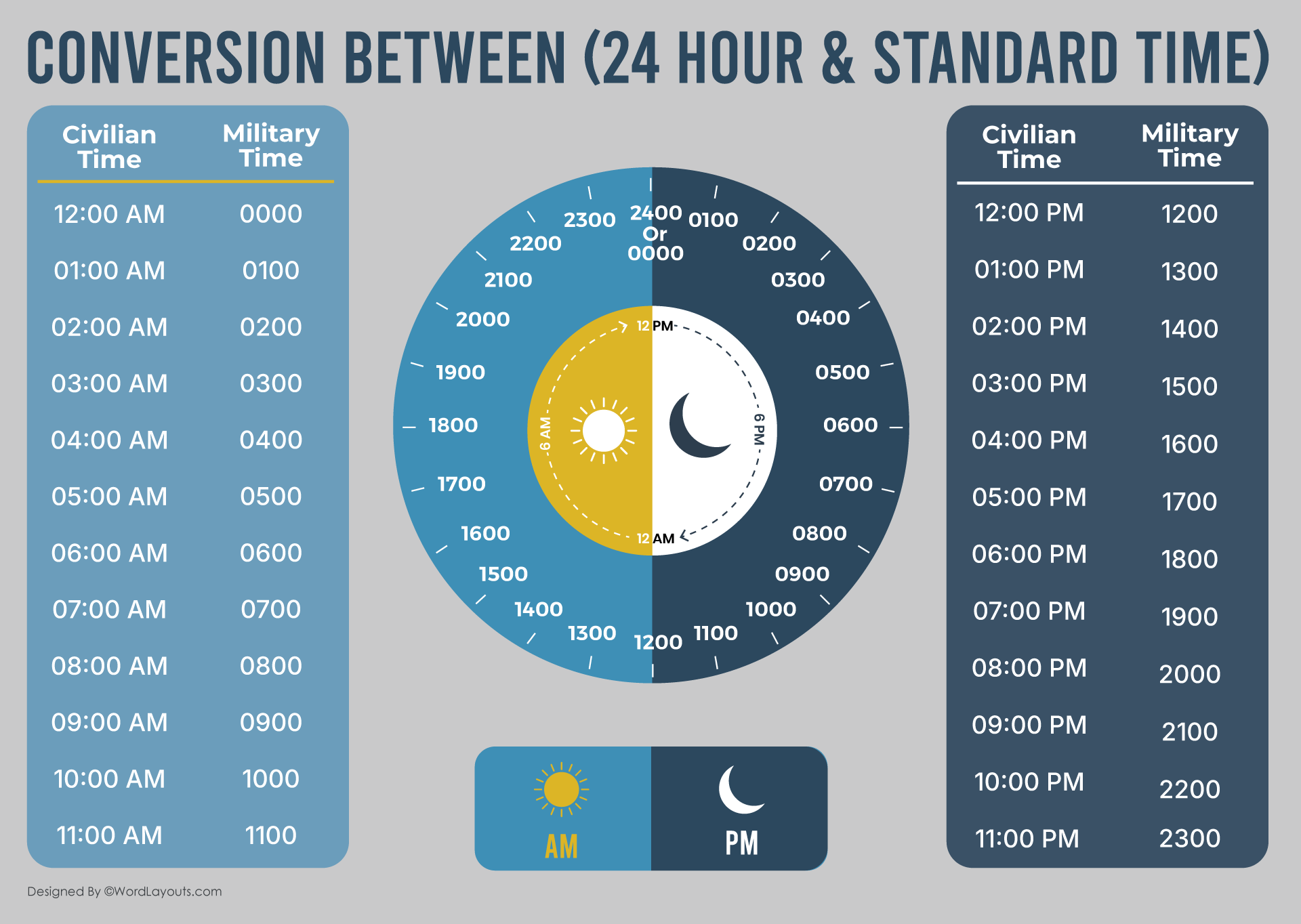
In the 12-hour clock system, commonly referred to as "normal time," 15:00 is 3:00 PM. The term "15 PM" is a linguistic hybrid that combines the 24-hour clock hour (15) with the 12-hour clock suffix (PM). To convert any hour after 12:00 to normal time, you simply subtract 12 from the 24-hour figure.
Understanding the "15 PM" Ambiguity
The phrase "15 PM" is technically a redundant or incorrect expression because it merges two distinct timekeeping systems. In the 24-hour clock, which is widely used in Europe, the military, and technical industries, the day runs from 00:00 to 23:59. In this system, there is no need for "AM" or "PM" because every hour has a unique numerical designation.
When someone asks for "15 PM in normal time," they are typically encountering a 24-hour clock format (15:00) and attempting to translate it into the 12-hour format (AM/PM). In the 12-hour system, the day is divided into two cycles: ante meridiem (before noon) and post meridiem (after noon). Since 15:00 occurs three hours after the midday point (12:00), it is designated as 3:00 PM.
Using "15" alongside "PM" is logically circular. In a 24-hour format, "15" already informs the reader that the time is in the afternoon. Conversely, in a 12-hour format, the number 15 does not exist on a standard clock face. As of 2026, most digital interfaces allow users to toggle between these two systems, but the confusion remains a common hurdle for travelers and international professionals.
The Mechanics of Time Conversion: The "Rule of 12"
Converting 24-hour time to 12-hour time is a straightforward mathematical process, but it requires a clear understanding of the transition point at noon. The most effective way to handle this is the Rule of 12.
For Hours 00 to 11
During the first half of the day, the 24-hour and 12-hour clocks look very similar, with one major exception: midnight.
- 00:00 to 00:59: This is the first hour of the day. In normal time, you replace the "00" with "12" and add "AM." (e.g., 00:30 becomes 12:30 AM).
- 01:00 to 11:59: The numbers remain the same. You simply add "AM" to the end. (e.g., 08:00 becomes 8:00 AM).
For Hours 12 to 23
This is the period where "15:00" falls.
- 12:00 to 12:59: This is noon. The number remains 12, but you add "PM."
- 13:00 to 23:59: This is where you apply the subtraction rule. Subtract 12 from the 24-hour value and add "PM."
Calculation for 15:00:
- Take the 24-hour time: 15
- Subtract 12: 15 - 12 = 3
- Add the PM suffix: 3:00 PM
This simple subtraction works because the 24-hour clock continues counting up from 12, while the 12-hour clock resets to 1. By subtracting 12, you are essentially finding out how many hours have passed since the noon reset.
Why Do We Have Two Different Systems?
The coexistence of the 12-hour and 24-hour clocks is a result of both historical tradition and the need for modern precision.
The History of the 12-Hour Clock
The 12-hour clock has its roots in ancient Mesopotamia and Egypt. Early civilizations used sundials to track the movement of the sun, dividing the daylight into 12 equal parts. Nighttime was similarly divided based on the observation of stars. Because sundials only work during the day, the division of the "day" and "night" into two separate blocks of 12 hours became the standard for centuries.
This system remains "normal time" in many English-speaking countries, including the United States, Canada, and Australia, because it aligns with the visual representation of a traditional analog clock face.
The Rise of the 24-Hour Clock
The 24-hour clock, often called "military time" in North America or "continental time" in Europe, was developed to eliminate ambiguity. In high-stakes environments—such as aviation, medicine, and emergency services—misinterpreting "AM" and "PM" can have catastrophic consequences. A pilot who misreads "8:00" could be 12 hours off their scheduled landing, leading to fuel exhaustion or runway conflicts.
Most of the world has adopted the 24-hour clock for official and public use. In 2026, if you look at a train schedule in Paris, Tokyo, or Berlin, you will see 15:00, not 3 PM. This universality prevents errors across time zones and linguistic barriers.
Comparison Table: 24-Hour to 12-Hour Conversion
This table provides a quick reference for converting afternoon and evening hours, including the specific conversion for 15:00.
| 24-Hour Format | 12-Hour (Normal) Time | Period of Day |
|---|---|---|
| 12:00 | 12:00 PM | Noon |
| 13:00 | 1:00 PM | Early Afternoon |
| 14:00 | 2:00 PM | Early Afternoon |
| 15:00 | 3:00 PM | Mid-Afternoon |
| 16:00 | 4:00 PM | Late Afternoon |
| 17:00 | 5:00 PM | Late Afternoon |
| 18:00 | 6:00 PM | Early Evening |
| 19:00 | 7:00 PM | Evening |
| 20:00 | 8:00 PM | Evening |
| 21:00 | 9:00 PM | Night |
| 22:00 | 10:00 PM | Night |
| 23:00 | 11:00 PM | Late Night |
| 00:00 | 12:00 AM | Midnight |
Technical Implementation and ISO 8601
In the world of computing and international standards, the 24-hour clock is the undisputed king. The International Organization for Standardization (ISO) established ISO 8601, which dictates that time should be expressed in a 24-hour format (HH:MM:SS).
When you set an alarm on your smartphone or schedule a meeting in a digital calendar, the underlying code almost always uses the 24-hour system or a Unix timestamp. The "normal time" (3:00 PM) you see on your screen is often just a "view" or a user interface preference. This distinction is vital for developers and data analysts who must ensure that a meeting scheduled for 15:00 in London is correctly synced with a colleague in New York, where it would be 10:00 AM.
By 2026, the use of ISO 8601 has become even more critical due to the proliferation of automated AI scheduling assistants. These systems require unambiguous data to function. If you tell an AI to "schedule a meeting at 15," it will default to 15:00 (3 PM), whereas "at 3" might prompt a clarification request to ensure you don't mean 3:00 AM.
Common Pitfalls: Why 12:00 is the Hardest Part
While converting 15:00 to 3:00 PM is easy, the most frequent errors in time conversion occur at the transition points: noon and midnight.
The Noon Confusion (12:00)
Many people struggle with whether noon is 12:00 AM or 12:00 PM. Technically, meridiem means noon. Therefore, noon is neither "before" nor "after" itself. However, by international convention, 12:00 PM is noon. This can be confusing because the minute after 11:59 AM is 12:00 PM, meaning the suffix flips right at the start of the 12th hour.
The Midnight Confusion (00:00)
Midnight is even more complex. In the 24-hour clock, midnight is 00:00 (the start of the day). In the 12-hour clock, it is 12:00 AM. Digital systems often avoid this confusion by using 11:59 PM or 12:01 AM for deadlines. For example, if a document is due on Friday at midnight, does that mean the start of Friday or the end of Friday? Using the 24-hour clock (Friday at 00:00 vs. Friday at 23:59) removes this legal and logistical ambiguity.
The National Institute of Standards and Technology (NIST) recommends using "12 Noon" or "12 Midnight" in formal writing to avoid any possibility of error, as even the AM/PM designation can be misinterpreted in legal contracts.
Regional Preferences and Global Travel
If you are traveling in 2026, understanding that 15:00 is 3:00 PM is essential for navigating public transport.
- United Kingdom and Ireland: These countries use a mix. In casual conversation, people say "3 o'clock," but all train and bus schedules use the 24-hour clock (15:00).
- Continental Europe (Germany, France, Spain): The 24-hour clock is the dominant system for both written and spoken time. You are much more likely to hear someone say "fifteen hours" (translated) than "three in the afternoon."
- United States: The 12-hour clock is the cultural standard. The 24-hour clock is almost exclusively reserved for the military, police, and specialized technical fields.
- Military "Z" Time: In military operations, 15:00 might be referred to as "1500 hours" or "1500Z" (Zulutime/UTC). The pronunciation "fifteen-hundred" is used to ensure clarity over radio communications.
Practical Steps for Daily Conversion
If you find yourself frequently needing to convert times like 15:00, here are some practical tips to make it second nature:
- The "2 Rule": If you are in a hurry, ignore the "1" in the tens place and just subtract 2 from the second digit. For 15:00, 5 - 2 = 3. This works for all times from 13:00 to 19:00.
- Analog Visualization: Imagine a standard clock face. If the hour is greater than 12, continue counting around the circle a second time. 13 is where 1 is, 14 is where 2 is, and 15 is where 3 is.
- Digital Settings: Change your phone or computer clock to 24-hour mode for one week. This "immersion therapy" is the fastest way to learn. You will quickly stop calculating and start recognizing 15:00 as "late afternoon" instinctively.
- Use Context Clues: Remember that 12 is the anchor. 15 is 3 hours past the anchor. 18 is 6 hours past (dinner time). 21 is 9 hours past (bedtime for many).
Summary of Professional Recommendations
For 2026, the trend is moving toward higher adoption of the 24-hour clock in digital spaces to accommodate a global workforce. However, for personal and local communication in regions like North America, the 12-hour "normal" time remains the standard for social etiquette.
When documenting time professionally:
- Use the 24-hour format (15:00) for schedules, logs, and international communications to prevent "AM/PM" errors.
- Use 12-hour format with clear suffixes (3:00 PM) for local social invitations or marketing materials.
- Avoid hybrid terms like "15 PM" as they can appear unprofessional and confusing.
Frequently Asked Questions
Is 15:00 always 3:00 PM?
Yes, in every standard timekeeping system, 15:00 represents the 15th hour of the day. Since the first 12 hours constitute the morning (AM) and the next 12 hours constitute the afternoon/evening (PM), the 15th hour is always the 3rd hour of the PM cycle. This remains constant regardless of daylight saving time or time zone.
Why do some people call it "1500 hours"?
This is common in military and aviation contexts. The "hundred" is added to emphasize that it is a 24-hour time and to separate the hours from the minutes clearly during verbal communication. In this context, it is pronounced "fifteen-hundred," whereas in casual European civilian life, it is simply "fifteen" (e.g., "The train leaves at fifteen").
How do I write 15:00 in normal time correctly?
The most accepted "normal" way to write it is 3:00 PM or 3 p.m. (using lowercase with periods is a common journalistic style, such as in the AP Stylebook). You should avoid writing "3:00 in the afternoon" unless you are writing a narrative or formal letter where abbreviations are discouraged.
Does 15:00 change depending on the time zone?
No, the format does not change. 15:00 is 3:00 PM in any time zone. However, 15:00 UTC is a different moment in time than 15:00 EST. Always specify the time zone (e.g., 15:00 GMT) if you are communicating with someone in a different geographic location to ensure you both mean the same absolute moment.
Is there a 24:00?
In some technical and transport schedules, 24:00 is used to denote the exact end of a day, while 00:00 denotes the start of the next day. For example, a shop that closes exactly at midnight on Monday might list its hours as "Closing at 24:00." Practically, 24:00 on Monday is the same as 00:00 on Tuesday.
Final Actionable Tip
If you are struggling to remember whether 15:00 is 3:00 PM or 5:00 PM, remember that 12:00 is your baseline. Every number higher than 12 is just "hours after noon." By simply subtracting 12, you bridge the gap between the military/international standard and the traditional clock we use in our daily lives.