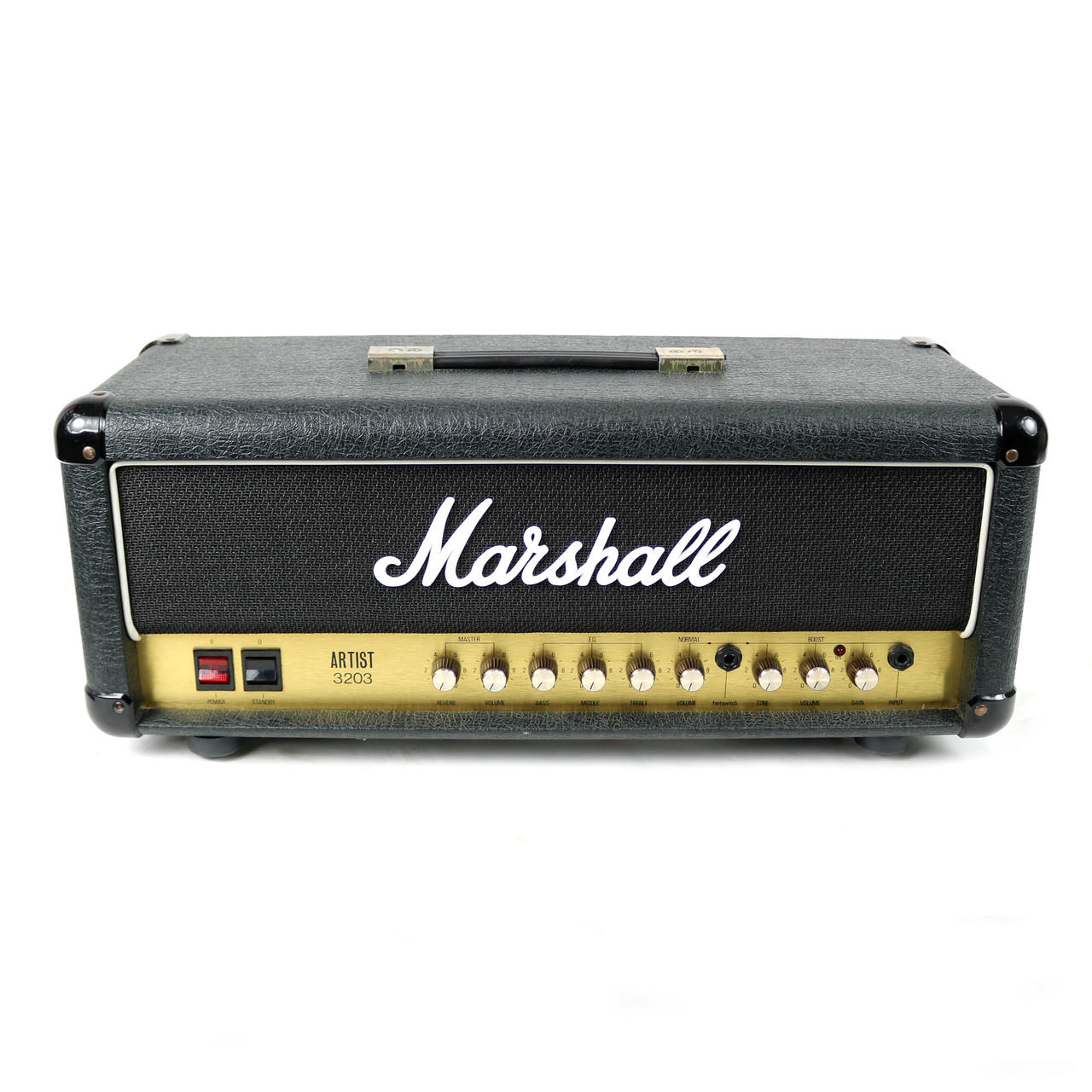
The debate surrounding Marshall amplifiers and the legendary "setting of 11" involves a complex intersection of vacuum tube physics, psychoacoustics, and the cultural legacy of rock history. While the number itself is famously a pop-culture reference, the technical reality of pushing a British-voiced valve circuit to its absolute physical limit creates a unique harmonic profile that remains the benchmark for "cranked" guitar tone in 2026.
1. The Physics of Power Tube Saturation
At the heart of the Marshall debate is the distinction between preamp distortion and power tube saturation. Most modern amplifiers rely on preamp gain—clipping the signal early in the circuit to provide sustain at lower volumes. However, the classic "Marshall Sound" associated with the 1959 Super Lead or the JTM45 is only fully realized when the power tubes (typically EL34s or KT66s) are pushed into "saturation."
When a Marshall is turned to 10—or the theoretical 11—the power valves can no longer cleanly amplify the incoming signal. Instead, they begin to compress the peaks of the waveform, rounding them off into smooth, musical even-order harmonics. Critics argue that this level of saturation destroys the definition of individual notes, while proponents maintain that this specific "sag" and compression provide a tactile response and "bloom" that is impossible to achieve at lower voltages.
2. The Fletcher-Munson Curve and Psychoacoustics
The "11" debate is often less about the amplifier’s circuit and more about how the human ear perceives sound. The Fletcher-Munson curve (Equal-Loudness Contours) demonstrates that the human ear is less sensitive to low and high frequencies at lower volumes. As the volume increases toward the "11" mark, these frequencies become more prominent to the listener.
This creates a psychological effect where a Marshall at maximum volume feels "fuller" and "thicker" than the same amp at lower volumes, even if the frequency response of the amp itself hasn't changed. In 2026, even with advanced DSP (Digital Signal Processing), replicating the physical sensation of air moving from a 4x12 cabinet at 120 decibels remains a significant hurdle, keeping the "cranked Marshall" debate alive among purists.
3. Output Transformer Saturation (The Iron Factor)
The output transformer is the heavy component that matches the high-impedance signal of the tubes to the low-impedance requirement of the speakers. When a Marshall is pushed to 11, the iron core of the transformer can reach magnetic saturation.
This adds another layer of compression and harmonic coloration that is distinct from tube distortion. The transformer essentially acts as a low-pass filter, smoothing out harsh high-end frequencies that might otherwise occur during heavy clipping. The debate persists because many modern Marshall reissues use different transformer designs than the vintage "Plexi" units, leading to heated discussions about whether "modern 11" sounds anything like "vintage 11."
4. The "Spinal Tap" Marketing vs. Engineering Reality
The concept of "11" entered the zeitgeist through the 1984 film This Is Spinal Tap. While originally a joke about Nigel Tufnel’s misunderstanding of gain stages, Marshall Amplification eventually embraced the trope. Some limited-edition models and the JTM60 series famously featured knobs that actually went to 11.
The debate here is whether "11" represents a functional increase in gain or merely a cosmetic change to a standard 10-position potentiometer. In most traditional Marshall circuits, the volume pot reaches its maximum conductance at the end of its physical sweep. "11" is usually just a re-labeling of the final 10% of a standard pot's travel, yet players often report "hearing" a difference simply due to the psychological suggestion of the extra headroom.
5. Speaker Breakup and Cabinet Resonance
A Marshall head at 11 is only half of the equation; the other half is the Celestion speakers inside the cabinet. Most classic Marshall stacks use Greenback or Vintage 30 speakers. When pushed by a 100-watt head running at full tilt (which can actually peak at 150-180 watts of square-wave power), the speaker cones themselves begin to deform and "break up."
This mechanical distortion adds a gritty, paper-like texture to the tone. Detractors argue that this risks permanent damage to the drivers and produces "ghost notes" (intermodulation distortion), while fans of the "11" sound claim this speaker stress is essential for the aggressive "kerrang" associated with 1970s hard rock.
6. The Rise of High-Quality Attenuators
In 2026, the debate has shifted toward how we achieve the "11" sound without the deafening volume. Reactive loads and power attenuators (like the Universal Audio Ox or the Fryette Power Station) allow a Marshall to be pushed to its maximum electronic output while sending only a fraction of that energy to the speakers.
The contention lies in whether an attenuated Marshall sounds the same as a "loud" Marshall. Without the physical interaction between the speaker and the air—and the lack of cabinet resonance—some purists argue that attenuation "chokes" the tone, losing the very "11" magic the player was trying to capture.
7. Negative Feedback Loop Variations
Marshall circuits utilize a "negative feedback loop" that sends a portion of the output signal back into the power section to increase clarity and reduce distortion. As the volume knob approaches 11, the effectiveness of this loop changes.
In many vintage-style Marshalls, the Presence control interacts directly with this loop. At maximum volume, the power section's ability to remain stable decreases, leading to a raw, "unhinged" sound. This instability is what many players define as the "sweet spot," while engineers often view it as a design limitation that compromises signal integrity.
8. Reliability and Component Stress
Running an amp at 11 is inherently dangerous for the equipment. It places maximum thermal stress on the vacuum tubes, pushes the filter capacitors to their limits, and generates significant heat. The debate here is one of "Tone vs. Longevity."
| Feature | Performance at "5-7" (Sweet Spot) | Performance at "11" (Maxed) |
|---|---|---|
| Tube Life | Moderate (Years of use) | High Stress (Months of use) |
| Compression | Dynamic and responsive | Heavy, "brick-wall" compression |
| Harmonics | Second-order dominant (Warm) | Increased Third-order (Aggressive) |
| Noise Floor | Manageable hiss | Significant floor noise and hum |
| Speaker Risk | Minimal | High risk of coil burnout |
9. The Digital Modeling Threshold
By 2026, digital modelers (Fractal, Kemper, Neural DSP) have reached a point where they can simulate the non-linear behavior of a Marshall at 11 with nearly 99% accuracy. However, the debate remains because the "11" experience is often about the physical feedback loop between the guitar strings and the vibrating air from the speakers.
A digital model of a Marshall at 11 played through studio monitors does not produce the same harmonic sustain (controlled feedback) that a physical tube amp does at that volume. This "tactile gap" ensures that the discussion about the "real" Marshall sound persists.
10. Signal-to-Noise Ratio at Extreme Gain
When a Marshall is cranked to 11, the noise floor rises exponentially. Every imperfection in the guitar’s shielding, every radio frequency interference (RFI) in the room, and the inherent thermal noise of the resistors in the amp are amplified to extreme levels.
For recording engineers, this is often a nightmare, leading to the use of heavy noise gates that can clip the natural decay of the notes. For the player, however, this "living, breathing" wall of noise is part of the instrument's character, representing the raw power of an analog system at its breaking point.
11. Cultural Authenticity and "The Feel"
Finally, the debate over "11" is deeply rooted in the concept of authenticity. In the modern era of silent stages and in-ear monitors, the sight and sound of a Marshall stack at 11 is a rebellious act. It represents a connection to the era of Hendrix, Page, and Van Halen.
Many guitarists argue that you play differently when an amp is at 11. The sensitivity to touch increases; the way the guitar vibrates against your body changes; and the sustain allows for a different style of phrasing. This "performative feedback" is something that cannot be measured on an oscilloscope but is a central pillar of the guitar tone debate.
Frequently Asked Questions
Does turning a Marshall to 11 actually make it louder than 10?
In most standard amplifiers, the difference between 10 and 11 is negligible in terms of actual decibel (dB) output. Because human hearing is logarithmic, a massive increase in wattage is required to produce a small increase in perceived volume. Usually, "11" simply increases the amount of distortion (clipping) and compression rather than the physical volume.
Can running my Marshall at 11 damage the amplifier?
Yes, consistently running any tube amplifier at its maximum setting increases the risk of component failure. The most common issues include "red-plating" (overheating) of the power tubes, blown fuses, and, in extreme cases, the failure of the output transformer. It is generally recommended to have an amp professionally serviced and biased if you plan to run it at high volumes regularly.
Why do some Marshall knobs go to 11 and others to 10 or 20?
The numbering on the dial is purely a choice of the manufacturer or the designer of the faceplate. Older Marshalls often used a 0-10 scale. After the popularity of This Is Spinal Tap, some models were produced with 0-11 scales as a marketing tribute. Some modern digital Marshalls or specific signature models (like the Zakk Wylde versions) have used even higher numbers, but these are aesthetic choices that do not change the fundamental engineering of the potentiometer.
Is "11" necessary for modern metal or rock?
In 2026, it is rarely "necessary" for the volume to be at 11 to achieve high gain. Most modern metal tones are achieved through high-gain preamp circuits (like the Marshall JVM series) or pedals. However, for "classic" or "retro" rock tones, the specific sound of the power section being pushed (the "11" sound) remains the preferred method for many professional recording artists.
How do I get the "11" sound at home without getting evicted?
The most effective way is to use a high-quality reactive load box or a power attenuator. These devices sit between your amplifier head and the speaker cabinet, allowing you to crank the amp's volume to 11 while controlling the actual output to the speakers. Alternatively, modern Marshall-style pedals (often called "Plexi-in-a-box") can simulate this sound at much lower volumes.
Recommendation for Achieving the "11" Tone
If you are seeking the elusive "cranked Marshall" sound in a modern environment, do not simply turn your amp to 11 and hope for the best. Instead, invest in a reactive load box that matches your amplifier's impedance. This allows you to explore the harmonic complexity of a saturated power section while protecting your hearing and your relationship with your neighbors. Additionally, ensure your amplifier is fitted with high-quality, matched power tubes, as the "11" sound relies heavily on the symmetrical clipping of the output stage.