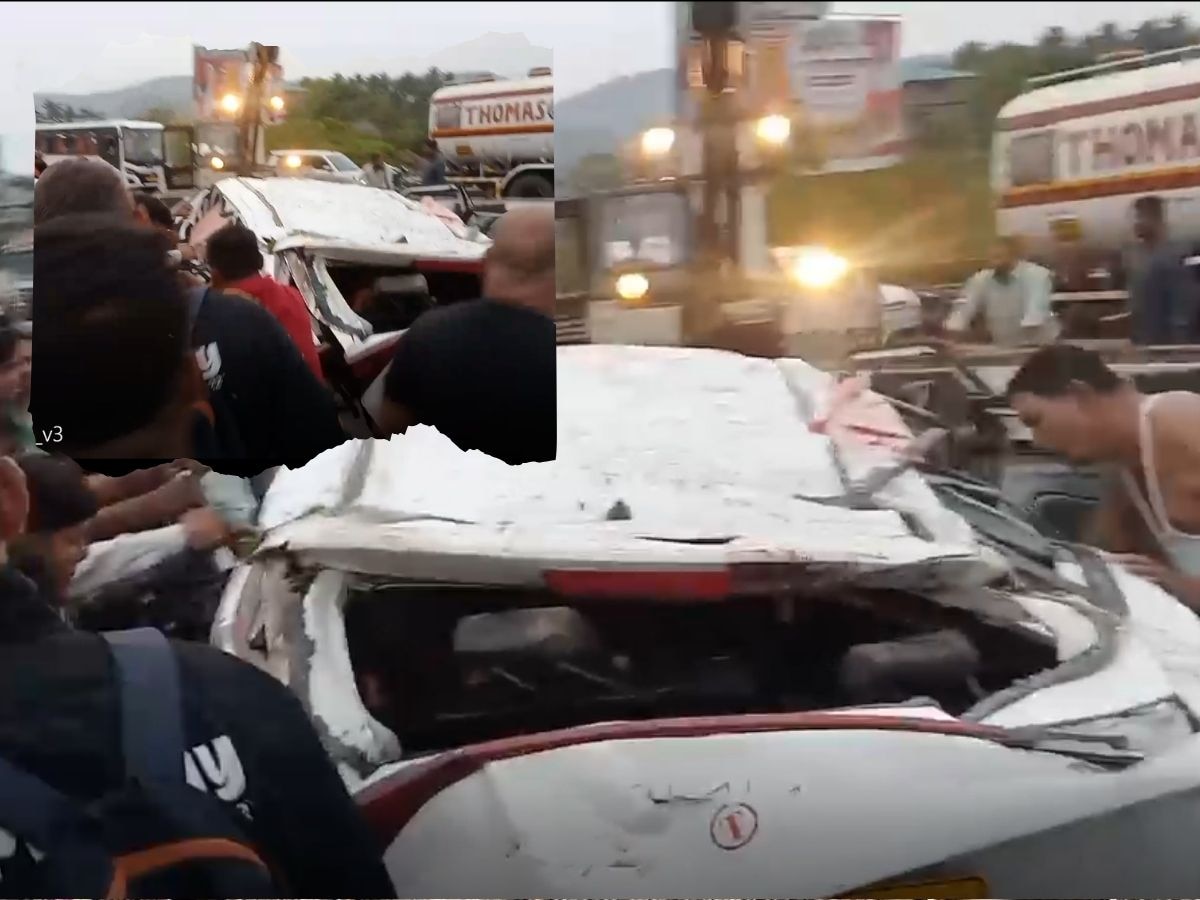
A 100-vehicle accident is a massive chain-reaction collision, often called a pileup, involving 100 or more individual vehicles in a single interconnected event. These incidents typically occur on high-speed interstates during extreme weather conditions—such as dense fog, black ice, or whiteouts—where limited visibility and reduced traction prevent drivers from reacting to initial collisions.
Multi-vehicle collisions of this magnitude represent some of the most complex challenges for emergency responders, legal professionals, and insurance adjusters. When a hundred vehicles collide, the traditional rules of traffic safety are often overwhelmed by the sheer scale of the wreckage, the number of injured parties, and the difficulty of establishing a clear sequence of events. As we navigate the transportation landscape of 2026, even with advancements in vehicle-to-vehicle (V2V) communication and automated braking systems, these "megacrash" events remain a persistent threat on modern highways.
The Anatomy of a Mass Pileup
The transition from a minor fender-bender to a 100-vehicle catastrophe is often a matter of seconds. These events are rarely caused by a single mechanical failure; instead, they are the result of a "perfect storm" of environmental triggers and human behavior.
Environmental Triggers and "The Wall of White"
Most 100-vehicle accidents are precipitated by a sudden, localized drop in visibility. Meteorologists often refer to these as "micro-events." For example, a "snow squall" can reduce visibility from several miles to near zero in less than thirty seconds. On a high-speed highway where vehicles travel at 70 mph (approximately 103 feet per second), a driver who cannot see more than 50 feet ahead has effectively zero reaction time.
Black ice is another primary culprit. Unlike visible snow, black ice is a transparent coating of frozen water on the asphalt. In major pileups, the first ten vehicles may lose control simultaneously, creating a physical blockade across all lanes. Subsequent drivers, unaware of the blockage due to fog or curves in the road, continue to enter the "impact zone" at high speeds, unaware that the road ahead is a graveyard of twisted metal.
The Physics of Successive Impact
In a standard two-car accident, kinetic energy is transferred between two objects. In a 100-vehicle accident, the physics become exponentially more dangerous. A vehicle that has already come to a stop after an initial impact may be struck ten or twenty more times by following vehicles. This "compounding impact" means that safety features like airbags may have already deployed during the first minor hit, leaving occupants unprotected during the more severe secondary and tertiary strikes.
Furthermore, the "accordion effect" occurs when the pileup grows backward. The back of the accident becomes a moving target, with each new arriving vehicle extending the wreckage further down the highway. This makes the rear of the pileup the most dangerous place to be, as arriving semi-trucks carry enough momentum to crush smaller passenger vehicles against the already stationary mass of cars.
Historical Context: Notable 100+ Vehicle Events
To understand the severity of these incidents, one must look at the historical data provided by the National Transportation Safety Board (NTSB). These events serve as case studies for improving highway design and emergency response protocols.
| Location | Year | Total Vehicles | Primary Cause | Severity |
|---|---|---|---|---|
| Fort Worth, TX (I-35W) | 2021 | 133 | Black Ice / Freezing Rain | High (6 fatalities, 65+ injured) |
| Galeville, IL (I-57) | 1990 | 100+ | Dense "Superfog" | High (Multiple fatalities) |
| Henderson, CA (I-5) | 2002 | 194 | Tule Fog | Massive property damage |
| Wytheville, VA (I-77) | 2013 | 95-100 | Mountain Fog/Speed | Significant injuries/Fire |
| Michigan (I-94) | 2015 | 193 | Whiteout Conditions | 1 death, fireworks/acid truck fire |
The 2021 Fort Worth pileup remains one of the most studied incidents in recent history. It highlighted the danger of managed "toll lanes" where concrete barriers prevent drivers from steering onto the shoulder to avoid a crash. When the road iced over, drivers in the express lanes were essentially trapped in a chute, with nowhere to go but into the back of the vehicles ahead of them.
The Logistical Nightmare of Emergency Response
When a 100-vehicle accident is reported, local emergency services immediately trigger a Mass Casualty Incident (MCI) protocol. This is a specialized response strategy used when the number of victims exceeds the immediate resources of the local EMS system.
Triage and Treatment
The first responders on the scene do not immediately begin treating the first person they see. Instead, they perform "triage," a process of sorting victims based on the severity of their injuries.
- Red (Immediate): Life-threatening injuries requiring immediate transport.
- Yellow (Delayed): Serious but not immediately life-threatening.
- Green (Minor): The "walking wounded."
- Black (Deceased/Expectant): Those who have passed or whose injuries are so severe that survival is unlikely given the available resources.
In a 100-vehicle crash, the sheer physical footprint of the accident can be over a mile long. Responders may have to hike through wreckage, climb over crushed cars, and use heavy extrication tools (like the "Jaws of Life") on dozens of vehicles simultaneously.
Fire and Hazardous Materials
A significant risk in large pileups is the presence of commercial vehicles. A single semi-truck carrying flammable chemicals or pressurized gas can turn a pileup into an explosion hazard. If a fire starts in the middle of a 100-vehicle cluster, the close proximity of the cars allows the fire to jump from one fuel tank to the next, creating an inferno that is nearly impossible for fire crews to reach with hoses.
Insurance and Legal Complexity: Who is at Fault?
Determining liability in a 100-vehicle accident is one of the most difficult tasks in the legal world. In a typical two-car rear-end collision, the following driver is almost always at fault. In a 100-car pileup, this logic breaks down.
The "First Impact" vs. "Independent Negligence"
Insurance adjusters and forensic investigators must reconstruct the timeline to determine if there was one large accident or dozens of separate, smaller accidents occurring in the same space.
- Chain Reaction Theory: If Car A hits Car B, and the force of that impact pushes Car B into Car C, Car A may be held liable for the damage to both cars.
- Independent Negligence: If Car A hits Car B, and then five seconds later Car C hits Car B because Car C was speeding, Car C may be independently liable for the second impact.
Comparative Fault
Most jurisdictions use a system of comparative negligence. This means that a court will assign a percentage of fault to each driver. A driver might be 10% at fault for driving slightly too fast for the conditions, even if they were hit by someone else who was 90% at fault. In a 100-car crash, insurance companies often form "arbitration pools" to settle claims because litigating 100 individual cases would take decades and cost millions in legal fees.
The "Act of God" Defense
In rare cases, defense attorneys argue that a pileup was an "unavoidable accident" caused by an "Act of God" (such as a sudden, unpredictable weather event). However, this defense is difficult to prove. Courts generally hold that drivers have a duty to maintain control of their vehicles regardless of the weather. If you are driving 65 mph in a fog where you can only see 20 feet, you are technically driving "too fast for conditions," which constitutes negligence.
Survival Strategies: What to Do During the Event
If you find yourself entering a situation where a massive pileup is occurring, your split-second decisions will determine your survival.
Inside the Vehicle: The Primary Shield
Safety experts from the National Safety Council generally recommend staying inside your vehicle unless there is an immediate threat of fire or if your car is positioned in a way that it will certainly be crushed (such as being directly in the path of an oncoming semi-truck).
- Keep your seatbelt on. Most deaths in pileups occur because occupants unbuckle to check for damage, only to be struck by a subsequent high-speed impact.
- Stay low. If you see a large truck approaching in your rearview mirror, lean toward the center of the vehicle to avoid being crushed by the roof pillars.
- Do not exit into traffic. Many fatalities in 100-vehicle accidents happen when people step out of their cars and are struck by other sliding vehicles.
When to Evacuate
If you must exit the vehicle—perhaps due to the smell of gasoline or smoke—move as far away from the roadway as possible.
- Check for clear ground. Do not jump over a concrete barrier without looking; there may be a 50-foot drop on the other side.
- Move "upstream." Move toward the direction the traffic was coming from, but stay far off the shoulder. This ensures that if more cars hit the pileup, they are moving away from you, not toward you.
- Stay off the pavement. In icy or foggy conditions, the road surface is the most dangerous place to be.
Post-Accident Recovery and Legal Recourse
Once the scene is cleared—a process that can take 24 to 48 hours—the long process of recovery begins.
Documentation is Critical
Because the scene is chaotic, physical evidence disappears quickly. If you are physically able, take photos of your car's position relative to the others. Note the time of the crash and the specific weather conditions. These details will be vital when your insurance company negotiates with the other 99 insurers involved.
Medical Evaluation
Even if you feel fine, you must seek a medical evaluation immediately. The adrenaline of a mass casualty event can mask internal injuries or concussions. Furthermore, insurance companies will often deny claims for "pain and suffering" if there is no medical record of an injury within the first 24-48 hours.
The Role of Dashcams
By 2026, dashcam footage has become the "black box" of highway safety. If you were involved in a 100-car accident, your dashcam footage might be the only evidence that proves you had successfully stopped before being hit from behind. This distinction can save you from being held liable for the damage to the car in front of you.
Frequently Asked Questions
How long does it take to clear a 100-vehicle accident?
Clearing a pileup of this scale usually takes between 12 and 36 hours. It involves dozens of heavy-duty tow trucks, hazardous materials (HAZMAT) teams to clean up fuel spills, and forensic investigators who must map the scene before the vehicles can be moved.
Will my insurance go up if I’m in a 100-vehicle pileup?
It depends on whether you are found "at fault." If you hit the car in front of you first, you will likely be considered at fault. However, if you stopped safely and were then pushed into the car in front of you by another driver, you may be found not at fault. Due to the complexity, these cases often take months to resolve.
Can autonomous vehicles prevent 100-vehicle accidents?
While automated systems like Automatic Emergency Braking (AEB) can help, they are not a cure-all. Sensors can be blinded by heavy snow or fog, and no amount of technology can overcome the laws of physics if a road is covered in ice. V2V (Vehicle-to-Vehicle) communication is the most promising tech, as it allows a car at the front of a crash to "warn" cars a mile away to stop before they even see the fog.
Why do people keep driving fast into thick fog?
Psychologically, drivers often experience "velocitation," where they become accustomed to high speeds and don't realize how fast they are going. Additionally, many drivers feel a false sense of security if they can see the taillights of the car directly in front of them, not realizing that if that car hits a wall, they have no time to stop.
Practical Recommendation
To minimize your risk of being involved in a 100-vehicle accident, the most effective action is to monitor "Short-Term Forecasts" and "Snow Squall Warnings" from the National Weather Service. If a warning is issued for your route, delay your trip or exit the highway immediately. If you are caught in sudden low visibility, reduce your speed significantly, increase your following distance to at least 10 seconds, and avoid using your high beams, which can reflect off fog and further reduce your sight. If you see brake lights ahead in a fog bank, consider it an emergency and begin slowing down immediately, while checking your mirrors for any trucks that may not be slowing down behind you.