A Quality Management System (QMS) example for campus labs establishes a formalized framework to ensure consistency, safety, and regulatory compliance in research and instructional environments. By integrating standard operating procedures, document control, and corrective action protocols, academic institutions can maintain rigorous data integrity while meeting the specific accreditation standards required for modern scientific research.
The Role of Quality Management Systems in Academic Settings
In the context of higher education, a QMS serves as the structural backbone for laboratory operations. Unlike commercial manufacturing, where a QMS is often tied to profit margins or regulatory product certification (such as ISO 9001 or ISO 17025), an academic QMS focuses on reproducibility, ethical oversight, and the integrity of experimental data.
When designing a QMS for campus labs, the primary goal is to shift from reactive troubleshooting—fixing issues as they arise—to a proactive culture of quality. This involves clearly defining roles, documenting every phase of experimental processes, and creating a feedback loop where errors are analyzed and system processes are updated accordingly. For researchers and laboratory managers, this systematic approach reduces the risk of lost data, safety incidents, and funding setbacks associated with non-compliance.
Key Components of an Effective Campus Lab QMS
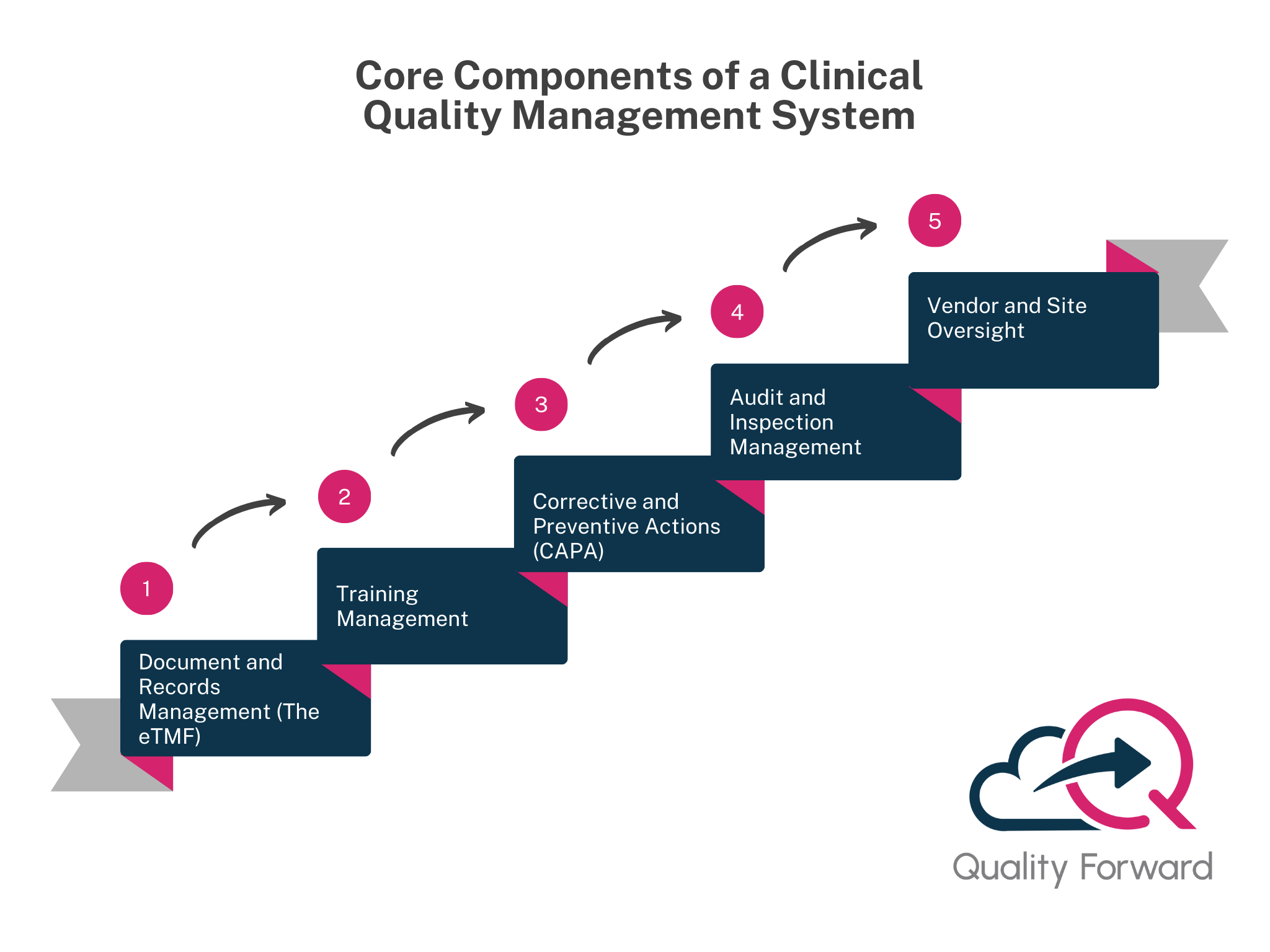
An effective QMS for a campus lab is not merely a collection of binders or digital files. It is an operational ecosystem composed of several essential pillars.
- Document Control: This is the heart of the QMS. Every protocol, logbook template, and safety procedure must have a version number, an approval date, and a designated owner. This prevents the use of obsolete procedures that could lead to inconsistent results.
- Training and Competency Records: The QMS must track that every individual accessing the laboratory has been trained on the specific equipment and protocols they are utilizing. This is a critical legal and safety requirement in 2026, especially when managing hazardous materials or expensive shared instrumentation.
- Equipment Calibration and Maintenance: Laboratories depend on precision. A QMS requires a scheduled maintenance log for every instrument, documenting its last calibration date, the technician responsible, and its current performance status.
- Non-Conformance and Corrective Actions: When an experiment fails or a piece of equipment malfunctions, the QMS provides a formal mechanism for documenting the incident. This "Corrective and Preventive Action" (CAPA) process ensures that the root cause is identified and steps are taken to prevent recurrence.
Establishing Documentation Protocols
Documentation is often the most significant hurdle for campus labs transitioning to a formal QMS. The most successful examples utilize a hierarchical approach to documentation:
- Level 1: The Quality Manual: A high-level document stating the laboratory’s quality policy and objectives. It outlines the scope of the QMS and the responsibilities of staff.
- Level 2: Standard Operating Procedures (SOPs): Detailed instructions on how to perform specific tasks, such as chemical inventory management or sample processing.
- Level 3: Work Instructions and Forms: The granular documentation, including data sheets, equipment logs, and checklists that provide daily evidence of QMS compliance.
By separating policy (what we do) from procedure (how we do it), the laboratory ensures that the system is scalable. As new projects are added to the lab’s portfolio, researchers can create new SOPs without needing to rewrite the overarching Quality Manual.
Navigating Regulatory Requirements and Standards
Depending on the nature of the research, a campus lab may need to align with specific external standards. For example, labs conducting clinical diagnostic work may need to adhere to CLIA (Clinical Laboratory Improvement Amendments) standards, while labs performing environmental testing might look toward ISO/IEC 17025 for testing and calibration laboratories.
Even when external certification is not mandated by a government agency, institutional requirements or grant-funding bodies often request proof of quality management. A QMS example that mimics these international standards provides a competitive advantage when applying for grants. It demonstrates to reviewers that the institution possesses the maturity to manage complex research projects without compromising data validity.
Operational Challenges and Best Practices
Transitioning to a formalized QMS is rarely seamless. The most common pitfall in campus environments is the "culture of autonomy," where individual researchers prioritize independent workflows over standardized ones.
To overcome this, leaders must position the QMS as an efficiency tool rather than a bureaucratic hurdle. For instance, a centralized digital dashboard that automates instrument scheduling and logs maintenance alerts saves researchers time, making the QMS a benefit rather than a burden.
| Feature | Informal Lab Culture | Structured QMS Environment |
|---|---|---|
| Protocol Management | Tribal knowledge; informal notes | Version-controlled, signed SOPs |
| Equipment Logs | Ad-hoc checks; paper scraps | Mandatory digital/physical audit logs |
| Error Handling | Repetitive fixes | Formalized CAPA (Root cause analysis) |
| Compliance | Minimal; mostly reactive | Continuous; audit-ready state |
Implementing Digital Solutions in 2026
By 2026, the reliance on paper-based QMS models has significantly declined in favor of Laboratory Information Management Systems (LIMS) and electronic Lab Notebooks (eLNs). A digital QMS allows for automated version control, which is virtually impossible to maintain effectively with physical binders.
When choosing a digital platform for a campus lab, prioritize systems that allow for modular growth. Begin by digitizing high-frequency, high-risk items, such as hazardous waste logs or expensive shared-resource instrument logs. Once these are mastered, expand the QMS modules to include procurement and internal peer review documentation.
Troubleshooting Common QMS Failures
Even with a robust QMS, labs may face hurdles that require troubleshooting:
- Low Staff Engagement: If researchers perceive the QMS as "busy work," engagement will fail. Involve student researchers and post-docs in the development of the SOPs. When staff members contribute to the design of a process, they are far more likely to adhere to it.
- Fragmented Data: If the QMS is not integrated with the data collection process, it becomes an "extra" task. Ensure that the QMS documentation links directly to the research data.
- Auditor Resistance: If the lab is subject to external audits, ensure the QMS is "audit-ready" at all times rather than performing an "audit prep" phase. This involves setting up a schedule for internal mock-audits every six months.
Next Steps for Lab Managers
To initiate a QMS in your campus lab, follow these sequential steps:
- Gap Analysis: Identify what is currently tracked and where the "knowledge silos" exist. Where are the areas of highest risk regarding data loss or safety?
- Define the Scope: Start small. You do not need to implement a full-scale enterprise QMS immediately. Begin with the most critical equipment or the most sensitive research protocols.
- Designate a Quality Officer: Even in a small lab, one person must be the final authority on QMS document approval. This ensures consistency and accountability.
- Continuous Review: Schedule a meeting every quarter to review the QMS. Discuss which SOPs are outdated, which logs are not being filled out, and what adjustments are needed based on the current research cycle.
By establishing this framework, you are not merely creating a set of rules; you are building an institutional memory that protects the research integrity of your campus lab for years to come.
Frequently Asked Questions
What is the difference between a QMS and an LIMS? A QMS is a management framework that defines policies and procedures for quality control, whereas a LIMS (Laboratory Information Management System) is the software tool used to track data, samples, and workflows. They often work together: the LIMS provides the data infrastructure, while the QMS provides the organizational requirements for that data.
How do I make a QMS user-friendly for students? Use visual aids, flowcharts, and simple checklists. Avoid excessive jargon in your SOPs. If a student can look at a 1-page "quick-start guide" for a piece of equipment and successfully perform a task without errors, your QMS is functioning effectively.
Is an ISO certification necessary for an academic lab? Not usually. While ISO 9001 or 17025 are the gold standards for quality, most academic labs implement a "QMS-aligned" structure rather than seeking formal certification unless they provide commercial testing services or are governed by strict federal mandates.
How often should a QMS be audited? Internal audits should occur at least annually. If the lab is involved in high-stakes research or clinical trials, quarterly "self-audits" are recommended to ensure that documentation remains current and staff remain trained.
What is the biggest mistake when starting a QMS? The biggest mistake is over-engineering. Labs often try to create a massive system that covers everything at once, which leads to burnout and abandonment. Start with the most critical safety and data-integrity processes, then expand incrementally.