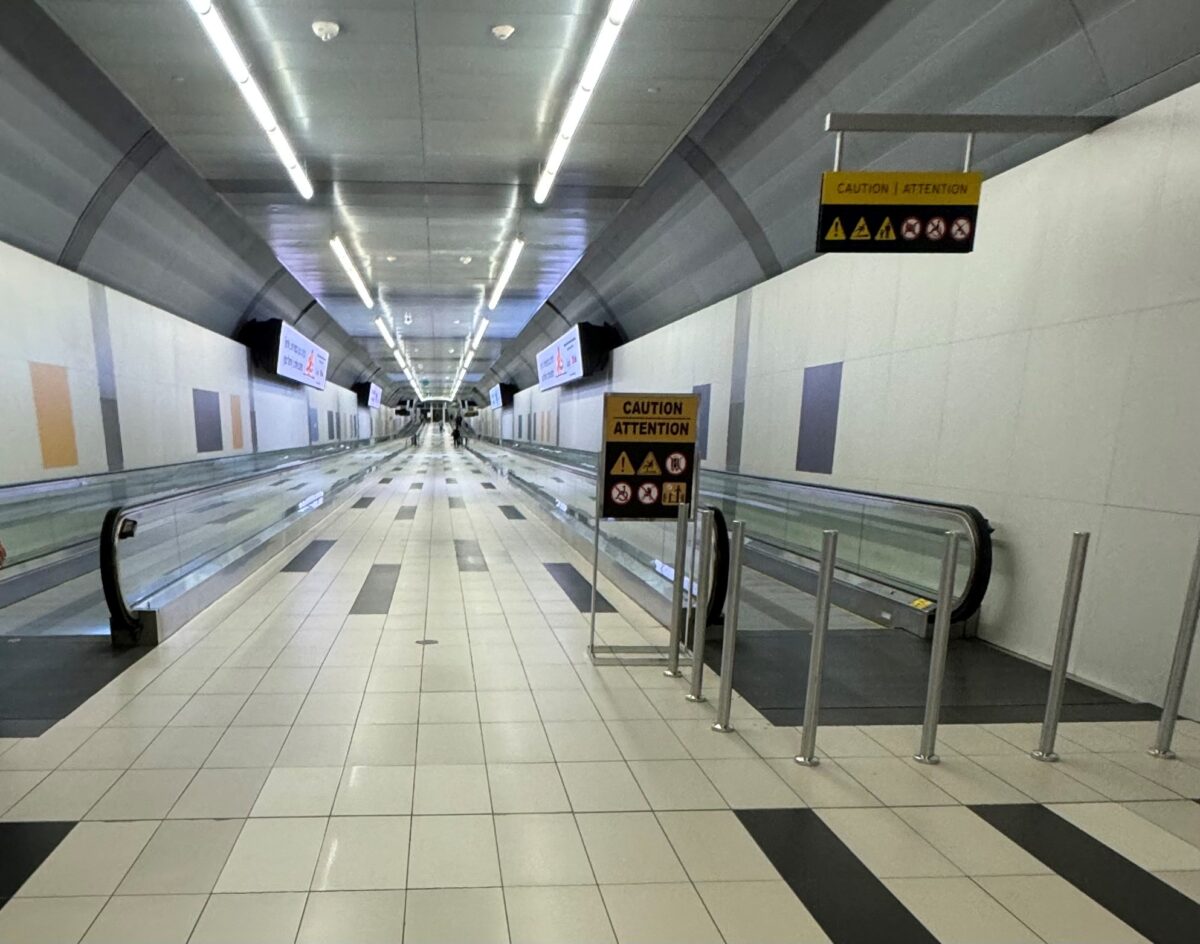
The Atlanta airport tunnel, officially known as the Transportation Mall, is a 1.2-mile subterranean corridor connecting the Domestic Terminal to all seven concourses (T, A, B, C, D, E, and F) at Hartsfield-Jackson Atlanta International Airport (ATL). It houses the automated Plane Train and parallel pedestrian walkways featuring world-class art installations, including the iconic "A Walk Through the Atlanta Forest."
Whether you are a frequent business traveler or a first-time visitor to the world’s busiest airport, understanding the layout and logistics of the Atlanta airport tunnel is essential for a stress-free journey. This corridor is the lifeblood of the airport’s "spine" design, ensuring that even with millions of passengers passing through annually, the transition from security to the furthest gate remains efficient. As of 2026, recent infrastructure expansions have further optimized the flow of the Plane Train, making the tunnel system more reliable than ever.
The Architecture of the Transportation Mall
The Transportation Mall is situated 40 feet beneath the airport’s taxiways and runways. It serves two primary functions: housing the Plane Train—an automated people mover (APM)—and providing a climate-controlled pedestrian path for those who prefer to walk between concourses.
The layout follows a linear path. If you are starting at the Domestic Terminal (located at the western end), the tunnel moves eastward through the concourses in this specific order:
- Domestic Terminal / Baggage Claim
- Concourse T
- Concourse A
- Concourse B
- Concourse C
- Concourse D
- Concourse E
- Concourse F (International Terminal)
It is important to note that while the Plane Train connects all concourses, the pedestrian walkway is most commonly used between the Domestic Terminal and Concourse E. The journey from Concourse E to Concourse F involves a slightly different configuration, though they remain connected within the secure airside environment.
The Plane Train: Efficiency and Technical Specifications
The Plane Train is the most recognizable component of the Atlanta airport tunnel. It is one of the most heavily used automated people mover systems in the world. In 2026, it continues to operate as a high-frequency shuttle, moving passengers across the 1.2-mile stretch in approximately 15 minutes from end to end.
Operational Capacity and Technology
The system utilizes Alstom Innovia APM vehicles. These rubber-tired, automated trains run on a dedicated guideway within the tunnel. Because the system is fully automated, there are no drivers; the trains are managed by a central control room that monitors speed, station dwell times, and track safety.
- Frequency: During peak hours, a train arrives approximately every 108 to 120 seconds.
- Speed: The trains travel at speeds up to 30 mph between concourse stations.
- Reliability: The Plane Train maintains an operational uptime of over 99%, though maintenance typically occurs during the late-night hours (between 1:00 AM and 5:00 AM), during which shuttle buses may be deployed if necessary.
The 2026 Status: The Tunnel Extension Project
By 2026, the major "Plane Train Tunnel Extension" project has reached full operational maturity. This $331 million infrastructure endeavor involved extending the tunnel westward, past the Domestic Terminal’s baggage claim area.
The primary purpose of this extension was not to add new passenger stops, but to create a "turnback" track. Previously, trains had to slow down and wait for a single track to clear at the terminal end. The new extension allows for a more efficient crossover, enabling the airport to add more train cars to the system and reduce wait times by an additional 15–20 seconds per interval. This was a massive engineering feat that required tunneling underneath the active MARTA (Metropolitan Atlanta Rapid Transit Authority) station and the SkyTrain structure.
The Pedestrian Walkway: A Journey Through Art
While the Plane Train is the fastest way to travel, many passengers choose to use the pedestrian walkways located parallel to the tracks. Walking between concourses is not only a good way to get steps in during a long layover but also offers access to some of the most impressive public art in any global airport.
"A Walk Through the Atlanta Forest" (Between Concourses A and B)
Perhaps the most famous section of the tunnel is the 450-foot stretch between Concourses A and B. Created by artist Steven Waldeck, this multi-sensory installation is titled "Flight Paths," though it is colloquially known as the "Rainforest."
- The Canopy: The ceiling is covered with 20,000 laser-cut aluminum leaves, illuminated by a complex LED lighting system that mimics the dappled sunlight of a forest floor.
- The Soundscape: High-fidelity speakers play a loop of birds chirping and simulated thunderstorms, providing a psychological reprieve from the mechanical hum of the airport.
- The Experience: It is designed to represent Georgia's natural beauty, specifically the dense tree canopy for which Atlanta—the "City in a Forest"—is known.
"Flight Through History" (Between Concourses B and C)
For those interested in aviation and local history, the walkway between Concourses B and C features a massive photographic and informational exhibit titled "Flight Through History." This installation documents the evolution of Hartsfield-Jackson from its beginnings as Candler Field (a racetrack converted into an airfield in 1925) to its current status as a global hub.
Key panels in this exhibit include:
- The early airmail era and the role of the Eastern Air Lines.
- The leadership of Mayors William B. Hartsfield and Maynard Jackson.
- The construction of the modern terminal complex in 1980.
- The airport's role in the 1996 Centennial Olympic Games.
Walking Times and Logistics
Walking the entire length of the tunnel is feasible for most passengers, provided they are not in a severe rush. Moving walkways (travelators) are available in most sections to assist with speed.
| From | To | Estimated Walking Time | Estimated Plane Train Time |
|---|---|---|---|
| Terminal | Concourse A | 7–10 Minutes | 2 Minutes |
| Concourse A | Concourse B | 5–7 Minutes | 2 Minutes |
| Concourse B | Concourse C | 5–7 Minutes | 2 Minutes |
| Concourse C | Concourse D | 6–8 Minutes | 2 Minutes |
| Concourse D | Concourse E | 8–12 Minutes | 3 Minutes |
| Concourse E | Concourse F | 10–15 Minutes | 3 Minutes |
Note: Times are estimates based on average walking speeds and include wait times for the train.
Navigation and Accessibility Features
Accessing the Atlanta airport tunnel is straightforward. Once you pass through the main security checkpoints at the Domestic Terminal (North or South), you will see signs for "All Concourses" and "The Plane Train." Large escalators and elevators lead down into the Transportation Mall.
Signage and Wayfinding
The airport uses a color-coded and lettered system. Every station is clearly marked with the letter of the concourse. Announcements on the Plane Train are made in both English and several other languages, typically including Spanish, French, and German, given the airport's international reach.
ADA Accessibility
The entire tunnel system is fully compliant with the Americans with Disabilities Act (ADA).
- Elevators: Every concourse station features high-capacity elevators that provide access from the gate level down to the tunnel level.
- Train Access: The Plane Train platforms are level with the train floors, allowing for seamless boarding for passengers using wheelchairs, walkers, or strollers.
- Assistance: For passengers with significant mobility challenges, the airport's "Passenger Assist" program can provide electric cart transportation, though these carts typically operate on the gate levels rather than in the subterranean tunnel itself.
Practical Tips for Travelers in 2026
Navigating a space as large as the ATL tunnel requires some tactical knowledge. Based on current 2026 operations, here are the best practices for a smooth transition:
- The "One Concourse" Rule: If your departure gate is only one concourse away from your current location (e.g., you are at B and your flight is at C), walking is often faster than waiting for the train and navigating the crowds on the platform.
- Stay to the Right: On the moving walkways, the standard etiquette is to stand on the right and walk on the left. This allows passengers in a hurry to pass safely.
- Mind the Doors: The Plane Train doors close quickly. Unlike elevator doors, they do not always retract if they hit an object. If the "chimes" sound, do not attempt to rush through the doors.
- Terminal F Connection: If you are arriving at the International Terminal (Concourse F) and need to get to the Domestic side, the Plane Train is your best option. However, if you have already exited the secure area (landside), you cannot use the tunnel; you must take the external terminal-to-terminal shuttle bus.
- Peak Hour Strategy: During holiday peaks, the Plane Train can become extremely crowded. If the first train that arrives is full, wait for the next one—it is usually only 100 seconds behind.
Safety and Security in the Tunnel
The Atlanta airport tunnel is a highly secure environment. Because it is located entirely within the sterile (post-security) area, all passengers and staff have already undergone TSA screening.
- Surveillance: The tunnel is monitored 24/7 by a network of hundreds of high-definition cameras managed by the Atlanta Police Department (APD) Airport Section and airport security.
- Emergency Egress: There are clearly marked emergency exit stairs located at regular intervals between the stations. In the event of a fire or emergency, passengers are instructed to follow the green illuminated signs.
- Air Quality: The tunnel features a sophisticated HVAC and smoke evacuation system designed to maintain air quality and safety in the event of an underground emergency.
Environmental Impact and Modernization
In 2026, Hartsfield-Jackson continues its "ATLNext" modernization program, which includes environmental upgrades to the tunnel system. The lighting throughout the corridor has been fully transitioned to high-efficiency LEDs, significantly reducing the airport’s carbon footprint. Furthermore, the regenerative braking system on the Plane Train helps recover energy that is fed back into the airport's electrical grid.
The "Rainforest" exhibit (Flight Paths) also serves an environmental education purpose, highlighting the importance of urban forestry. The materials used in the 2026 tunnel maintenance cycles prioritize low-VOC (volatile organic compound) coatings and recycled aluminum components.
FAQs About the Atlanta Airport Tunnel
Is the Atlanta airport tunnel open 24 hours?
Yes, the pedestrian walkway remains open 24 hours a day. However, the Plane Train may have limited service or undergo maintenance during the very early morning hours (typically 1:00 AM to 5:00 AM). During these times, walking is the primary method of transit, or airport-provided shuttles may be available.
Can I use the tunnel if I haven't gone through security?
No. The Transportation Mall and the Plane Train are located airside (post-security). If you are in the public area of the Domestic Terminal and need to get to the International Terminal (or vice versa) without a boarding pass, you must use the landside shuttle bus or the MARTA system for local transit.
How long does it take to get from the Domestic Terminal to Concourse F?
Via the Plane Train, it takes approximately 15 to 18 minutes, including wait times and station stops. If you choose to walk the entire 1.2-mile distance, it will take approximately 30 to 45 minutes, depending on your pace and use of moving walkways.
Is there a separate tunnel for the International Terminal?
Concourse F (the International Terminal) is the final stop on the Plane Train. While it is part of the same continuous line, Concourse F is newer and the walkway from Concourse E to F is slightly longer and features different art installations than the main "Transportation Mall" stretch.
What should I do if I leave an item on the Plane Train?
Items found on the Plane Train are typically turned in to the Hartsfield-Jackson Lost and Found office, located in the Domestic Terminal North, across from the ticket counters. You can also report lost items via the airport’s official website.
Final Recommendation
For most travelers, taking the Plane Train is the most efficient way to navigate the Atlanta airport tunnel, especially if traveling more than two concourses. However, if you have at least 15 minutes to spare, walking the section between Concourses A and B is highly recommended to experience the "Rainforest" art installation. It offers a rare moment of tranquility in an otherwise bustling aviation hub. Always check the digital signage at the terminal entrance for real-time train status to ensure a smooth connection to your flight.