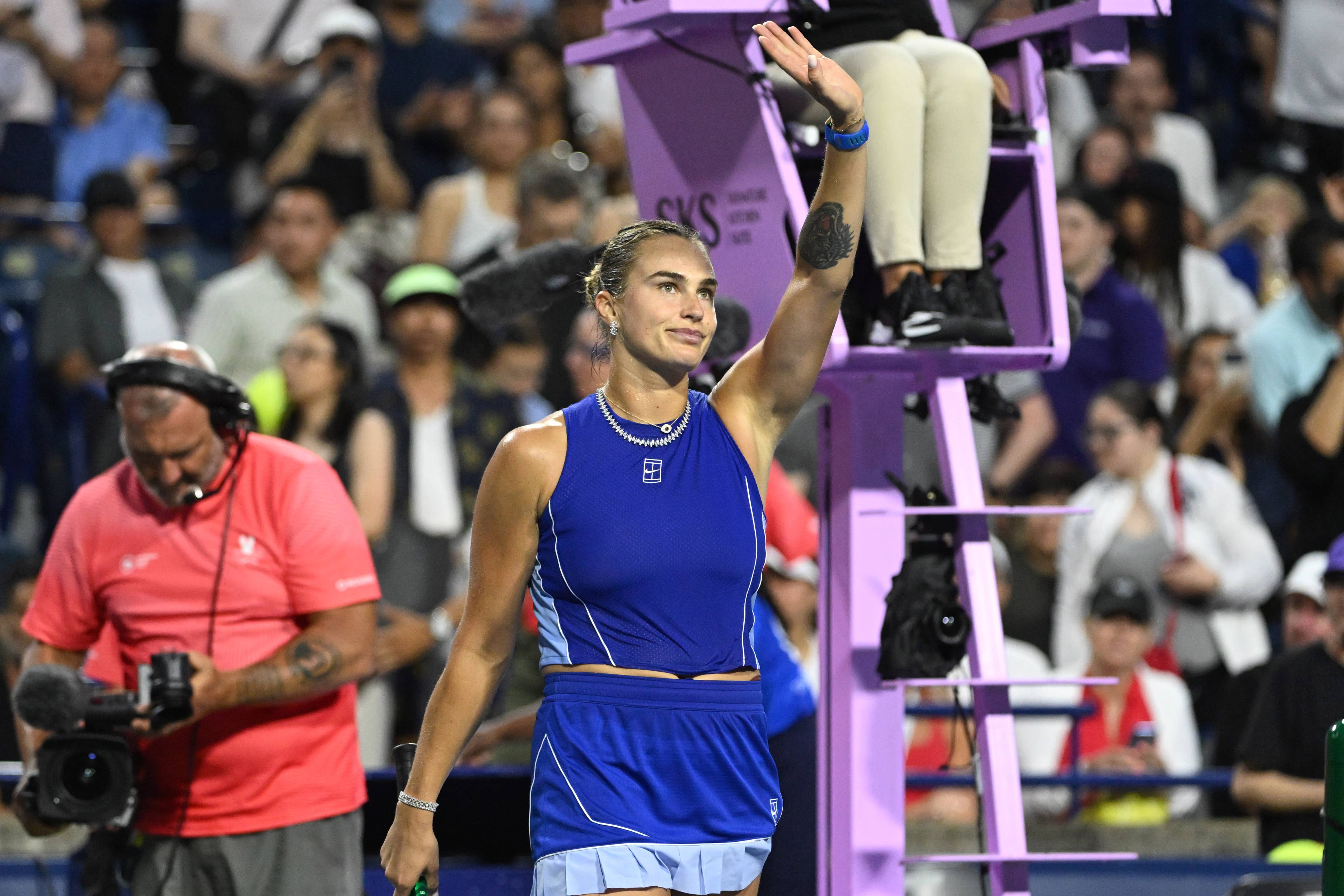
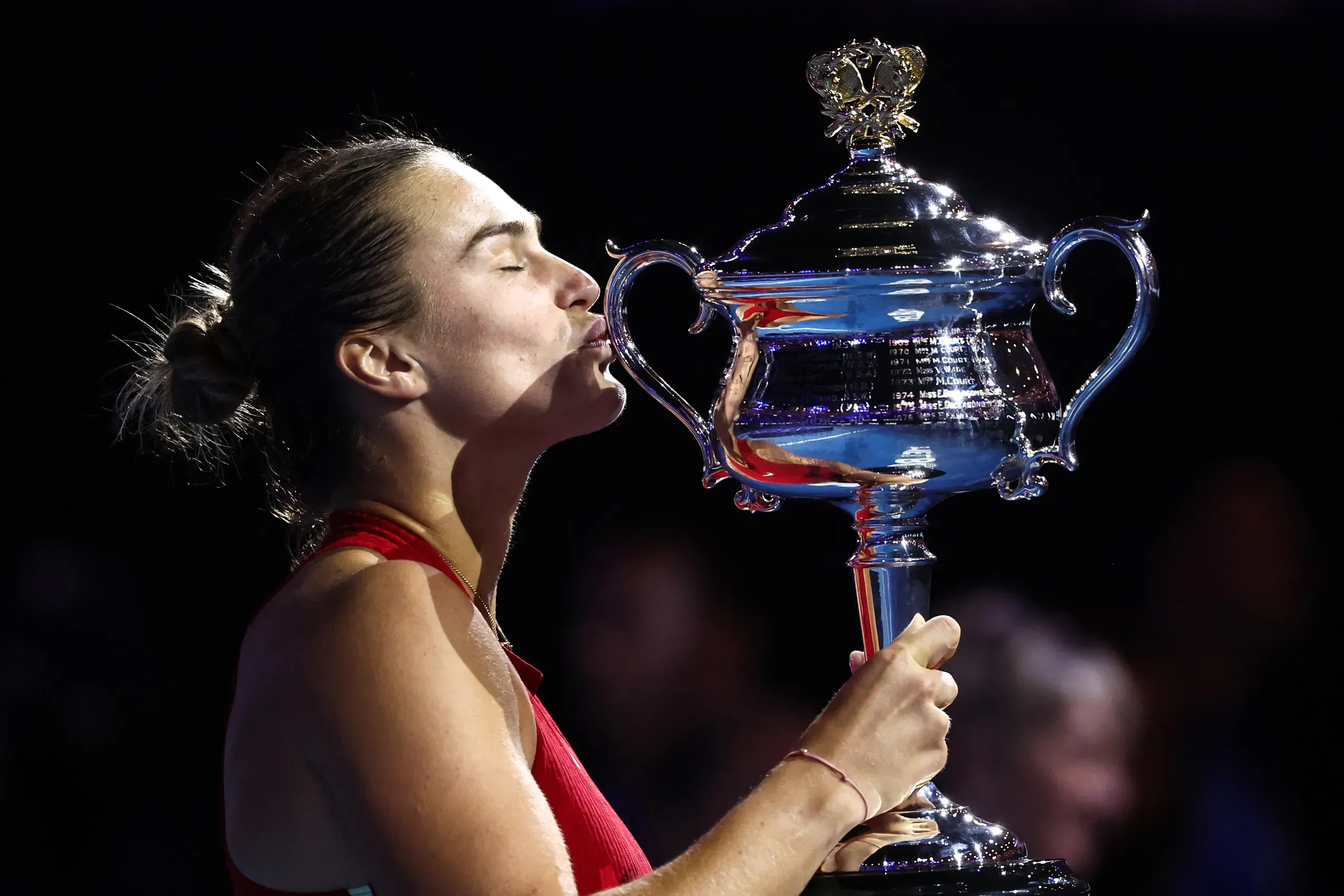
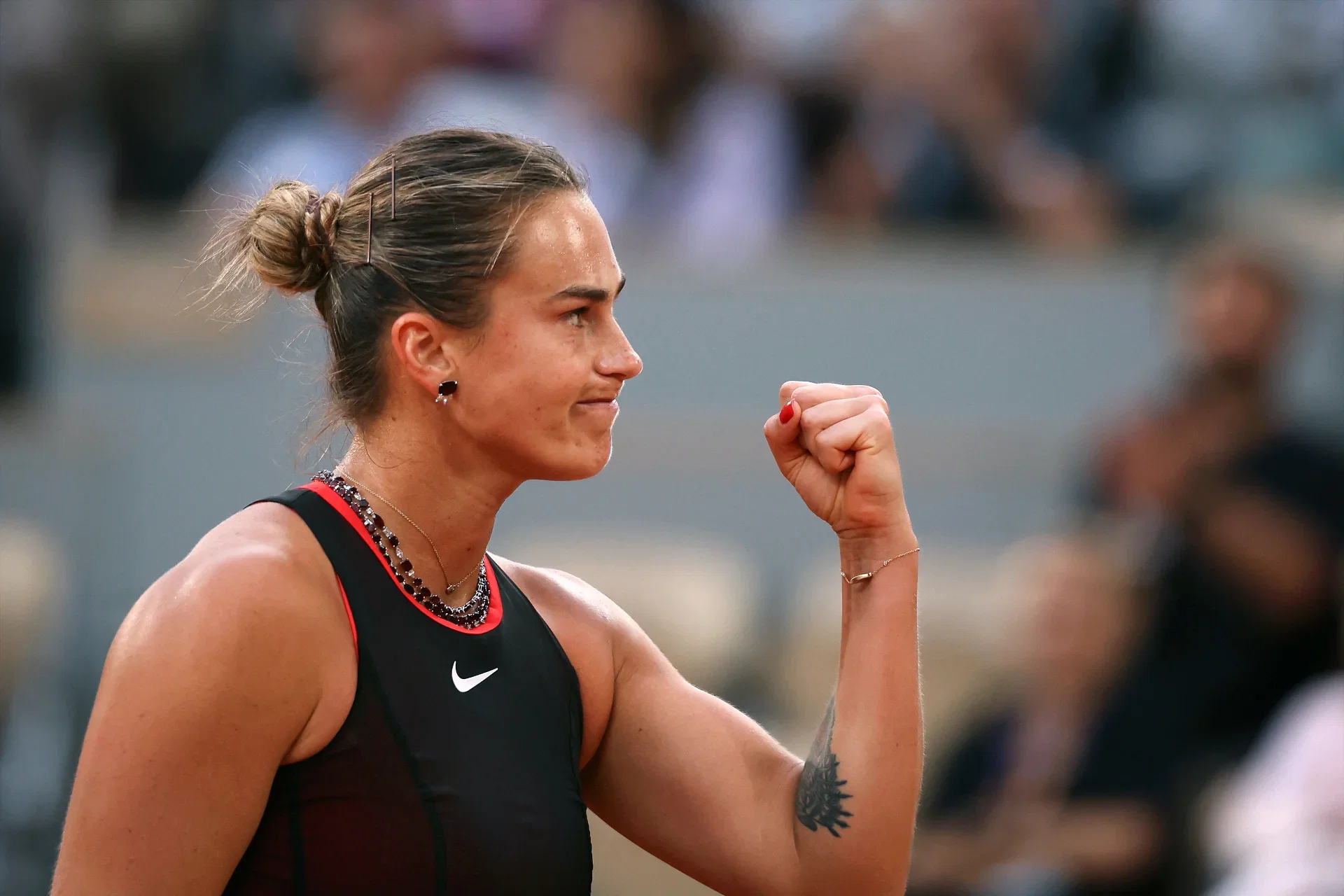
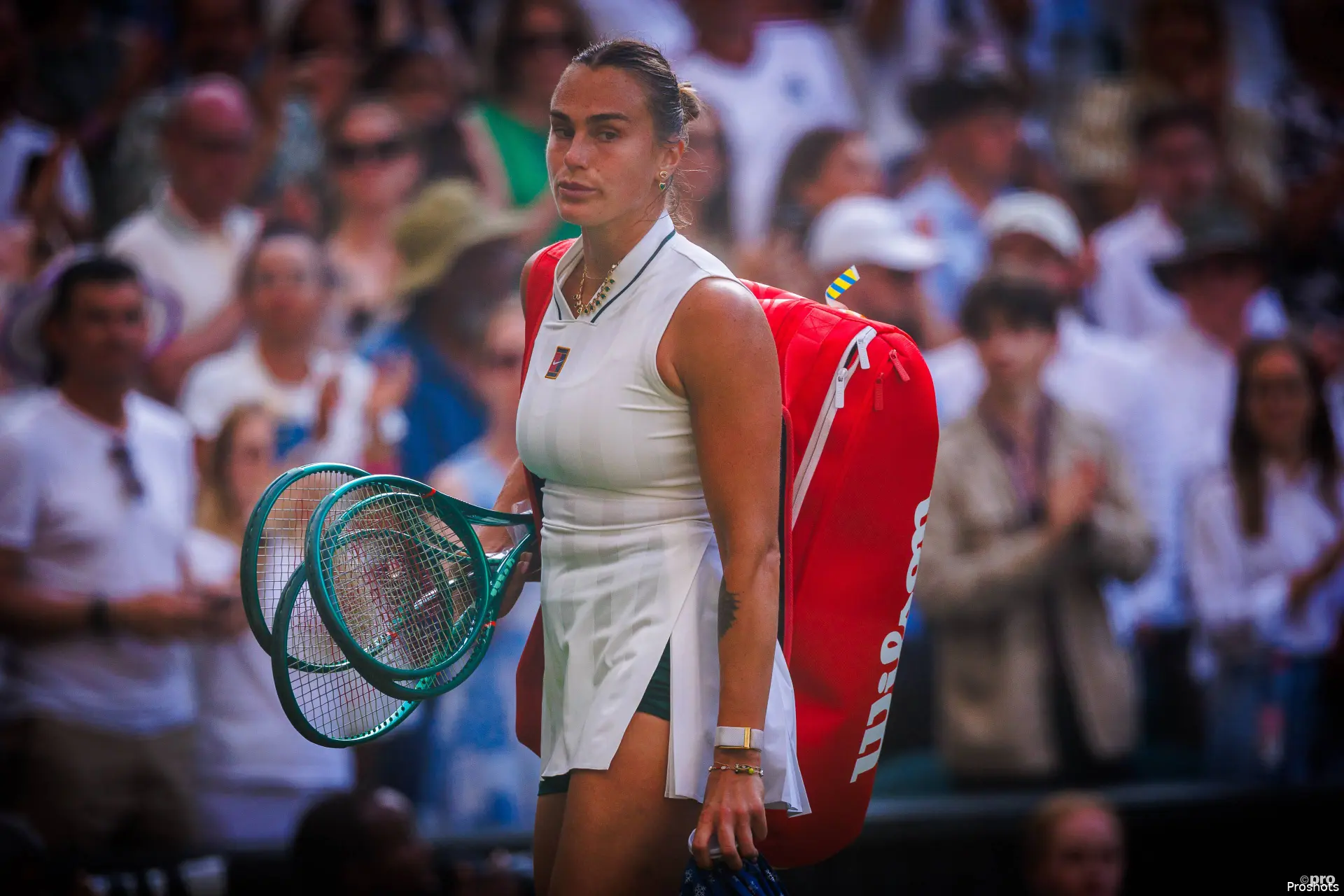
Aryna Sabalenka is a Belarusian professional tennis player who has established herself as one of the most dominant forces in modern women's tennis, holding the WTA World No. 1 singles ranking and winning multiple Grand Slam titles, including back-to-back Australian Open crowns (2023, 2024) and the 2024 US Open.
Early Life and Technical Foundations in Minsk
Born on May 5, 1998, in Minsk, Belarus, Aryna Sabalenka began playing tennis at the age of six after an unscheduled introduction to the sport by her father, Sergey Sabalenka, a former hockey player. Her athletic background provided a strong foundation for raw physical power, explosive footwork, and a competitive drive that would come to define her professional career.
During her junior development at the National Tennis Academy in Minsk, Sabalenka did not follow the standard path of competing heavily on the ITF Junior Circuit. Instead, her team prioritized transition to adult ITF Women's Circuit events early, exposing her to professional pace and physical intensity by the age of 15. She officially turned professional in 2015, rapidly ascending through the lower-tier circuits due to her exceptional groundstroke velocity.
Sabalenka first gained wide international attention in 2017 when she led the Belarus Fed Cup team to the final, demonstrating an ability to perform under intense pressure against top-ranked opponents. Her aggressive, high-risk style was apparent from the beginning: heavy flat groundstrokes, a fast first serve, and an relentless desire to control the center of the court. However, early in her career, this high-powered approach often resulted in high unforced error counts, highlighting the need for technical refine and tactical balance.
Technical Mechanics and Tactical Evolution
Sabalenka's rise to the top of the WTA rankings is rooted in a fundamental re-engineering of her technical mechanics, particularly her serve, alongside a refined tactical approach to rally construction.
| Sabalenka's Playing Style Profile | Detail |
|---|---|
| Baseline Position | Aggressive, inside or on the baseline |
| Forehand Stroke | Semi-western grip, high topspin heavy ball |
| Backhand Stroke | Two-handed, flat trajectory, low net margin |
| First Serve Speed | Averages 110–120 mph (177–193 km/h) |
| Key Tactical Goal | Strike first inside first 3 shots of rally |
Rebuilding the Serve Mechanics
In 2021 and early 2022, Sabalenka struggled significantly with serve reliability, leading the WTA Tour in double faults. Recognizing that her toss motion and shoulder rotation were out of sync, she partnered with biomechanics specialist Gavin MacMillan in 2022.
The technical overhaul focused on three distinct adjustments:
- Toss Consistency: Simplifying the arm path during the toss to prevent the ball from drifting too far behind her head.
- Knee Bend and Loading Phase: Stabilizing her lower-body drive to create a repeatable kinetic chain rather than relying exclusively on upper-body force.
- Racket Head Acceleration: Modifying her deceleration phase post-contact to reduce tension in her wrist and shoulder, creating a smoother release.
By late 2022, these changes reduced her double-fault rate dramatically while retaining her first-serve velocity, which regularly exceeds 115 mph (185 km/h). This mechanical stability provided the base for her Grand Slam success in 2023 and 2024.
Forehand and Backhand Velocity
Sabalenka possesses one of the heaviest groundstrokes in professional tennis, regardless of gender. Her forehand—executed with a semi-western grip—combines high racket-head speed with heavy topspin, allowing her to push opponents well behind the baseline.
Her two-handed backhand is flatter and taken earlier on the rise. This complementary ball flight allows her to change the direction of play easily down the line, taking away reaction time from opponents. Rather than relying on extended rallies, her tactical objective is to win points within the first four shots through aggressive first serves and authoritative third-shot drive volleys or wing winners.
Major Achievements and Dual-Ranking Supremacy
Sabalenka is among a select group of modern players who have achieved top-tier success in both singles and doubles. Before securing her first Grand Slam singles title, she reached the summit of the doubles game, demonstrating complete court coverage and net proficiency.
| Event | Year | Discipline | Partner |
|---|---|---|---|
| US Open | 2019 | Doubles | E. Mertens |
| Australian Open | 2021 | Doubles | E. Mertens |
| Australian Open | 2023 | Singles | N/A |
| Australian Open | 2024 | Singles | N/A |
| US Open | 2024 | Singles | N/A |
Doubles Success and World No. 1 Ranking
Partnering with Belgian player Elise Mertens, Sabalenka won two Grand Slam doubles titles: the 2019 US Open and the 2021 Australian Open. The pair also won prestigious WTA 1000 titles in Indian Wells and Miami (completing the "Sunshine Double" in doubles in 2019).
On February 22, 2021, Sabalenka became the WTA World No. 1 in doubles. This doubles experience honed her transition game, volley technique, and overhead smash—skills that later became critical assets in closing out tight singles matches.
Breakthrough to Singles World No. 1
Sabalenka claimed her maiden Grand Slam singles title at the 2023 Australian Open, defeating Elena Rybakina in a three-set final characterized by high-powered shotmaking. Following consistent runs to the semifinals or better at all four Grand Slams in 2023—including reaching the final of the US Open—she officially reached the WTA Singles World No. 1 ranking on September 11, 2023, dethroning Iga Świątek.
She consolidated her standing as the world's premier hard-court player by defending her title at the 2024 Australian Open without dropping a set, defeating Zheng Qinwen in the final. Later that year, she captured her third Grand Slam singles title at the 2024 US Open by defeating Jessica Pegula, cementing her position at the top of the WTA rankings.
Comprehensive Performance Breakdown
To understand Sabalenka's standing in professional tennis, it is helpful to examine her performance across court surfaces, tournament tiers, and career milestones.
| Metric / Event Category | Performance Details & Statistics | Primary Tactical Advantage |
|---|---|---|
| Hard Court Performance | 3x Grand Slam Champion (AO 2023, AO 2024, US 2024) | High rebound accentuates serve speed & groundstroke power |
| Clay Court Performance | 2x Madrid Open Champion (2021, 2023); Roland Garros Finalist/SF | Heavy topspin forehand jumps high out of opponents' strike zones |
| Grass Court Performance | 2x Wimbledon Semifinalist (2021, 2023) | Low bounce rewards flat backhand and aggressive first serve |
| Peak Singles Ranking | WTA World No. 1 (First achieved Sept 2023) | High consistency across Grand Slam and WTA 1000 events |
| Peak Doubles Ranking | WTA World No. 1 (First achieved Feb 2021) | Superior return quality and net control |
| Career WTA Titles | 15+ Singles Titles, 6 Doubles Titles | Dominance in high-tier mandatory tournaments |
Key WTA Rivalries
Sabalenka’s reign at the top of women's tennis has been shaped by compelling rivalries against other elite players. These matchups showcase distinct tactical contrasts.
| Matchup | Tactical Dynamics |
|---|---|
| Sabalenka vs. Świątek | Power vs. Movement & Heavy Topspin Spin |
| Sabalenka vs. Rybakina | Flat First Serves & First-Strike Power |
| Sabalenka vs. Gauff | Aggressive Offense vs. Elite Defense/Speed |
Aryna Sabalenka vs. Iga Świątek
The rivalry between Sabalenka and Iga Świątek represents the central conflict for the WTA World No. 1 spot. While Świątek excels on slower clay courts with exceptional footwork and extreme forehand topspin, Sabalenka often holds the edge on faster hard courts, where her raw power can penetrate Świątek's defensive baseline positioning. Their encounters at WTA 1000 finals and Grand Slams consistently decide top ranking points.
Aryna Sabalenka vs. Elena Rybakina
Matches against Kazakhstan's Elena Rybakina feature two of the most powerful serves and groundstrokes in modern tennis. Unlike the strategic rallies seen against defensive opponents, Sabalenka vs. Rybakina encounters are determined by microscopic margins: first-serve percentages, return-of-serve positioning, and unforced error counts on the second shot.
Aryna Sabalenka vs. Coco Gauff
The contrast in styles between Sabalenka and American star Coco Gauff highlights power versus defense. Gauff relies on elite footwork, lateral speed, and counter-punching capabilities to extend rallies, forcing Sabalenka into longer exchanges. Sabalenka's tactical objective against Gauff is to maintain rally patience, targeting Gauff's forehand wing while avoiding premature low-margin baseline errors.
Mental Toughness and Psychological Adaptation
Beyond her physical gifts and technical adjustments, Sabalenka’s transformation into World No. 1 required significant psychological adaptation. Early in her career, high-pressure situations often led to emotional frustration on court, which accelerated errors during critical points.
Working with sports psychologists and adopting structured breathing exercises between points helped her remain grounded during high-stakes games. Key elements of her psychological framework include:
- Acceptance of Errors: Acknowledging that high-risk shotmaking naturally incurs unforced errors, preventing single missed shots from altering her strategy.
- Routine Discipline: Adopting a strict, repeatable pre-serve routine (ball bounces, breath control) to maintain emotional regulation regardless of the score.
- Tactical Patience: Understanding when to hit to large court targets rather than chasing lines, saving peak power for short-ball opportunities.
This mental maturity was evident in her 2023 and 2024 Grand Slam runs, where she repeatedly rallied back from set deficits and break points without abandoning her tactical foundation.
Frequently Asked Questions
What is Aryna Sabalenka's primary playing style?
Aryna Sabalenka is an aggressive baseliner known for exceptional power on both forehand and backhand groundstrokes, paired with a dominant first serve. Her tactical approach relies on forcing short returns, dictating play from the baseline, and minimizing point length through offensive shotmaking.
How did Sabalenka overcome her serve issues?
In 2022, Sabalenka partnered with biomechanics specialist Gavin MacMillan to overhaul her serve. The technical changes focused on stabilizing her toss position, optimizing her knee-bend kinetic chain, and smoothing racket-head acceleration. This work drastically reduced her double-fault totals while keeping her serve speed above 115 mph.
Has Sabalenka won Grand Slam titles in both singles and doubles?
Yes. Sabalenka has won multiple Grand Slam singles titles (including the 2023 Australian Open, 2024 Australian Open, and 2024 US Open) as well as two Grand Slam doubles titles (the 2019 US Open and 2021 Australian Open, both alongside Elise Mertens). She has held the World No. 1 ranking in both singles and doubles.
Who is Aryna Sabalenka's coach?
Sabalenka's primary coach is former Belarusian tennis player Anton Dubrov, who has led her team since 2020. Her support team also includes performance conditioning coach Jason Stacy and biomechanics consultant Gavin MacMillan.
What court surface best suits Sabalenka’s game?
Hard courts are Sabalenka's most successful surface. The predictable, medium-to-fast rebound of hard courts maximizes her serve effectiveness and allows her flat, heavy groundstrokes to penetrate the court efficiently, as demonstrated by her Grand Slam titles at the Australian Open and US Open.
Practical Takeaways for Players and Analysts
Analyzing Sabalenka's career provides valuable lessons for competitive players, coaches, and tennis analysts:
- Commitment to Technical Overhauls: Mechanical flaws in foundational shots (like the serve) can be corrected at the highest professional level through targeted biomechanical training rather than simple repetition.
- Emotional Regulation Drives Consistency: High-risk offensive strategies require mental calm. Reducing emotional reactions between points directly lowers unforced error sprees.
- Doubles Improves Singles Skills: Developing net play and return sharpness in doubles directly enhances baseline dominance and closing capability in singles play.
By pairing elite physical power with biomechanical precision and psychological discipline, Aryna Sabalenka has redefined performance expectations in modern women's tennis, solidifying her status as a premier World No. 1 athlete.