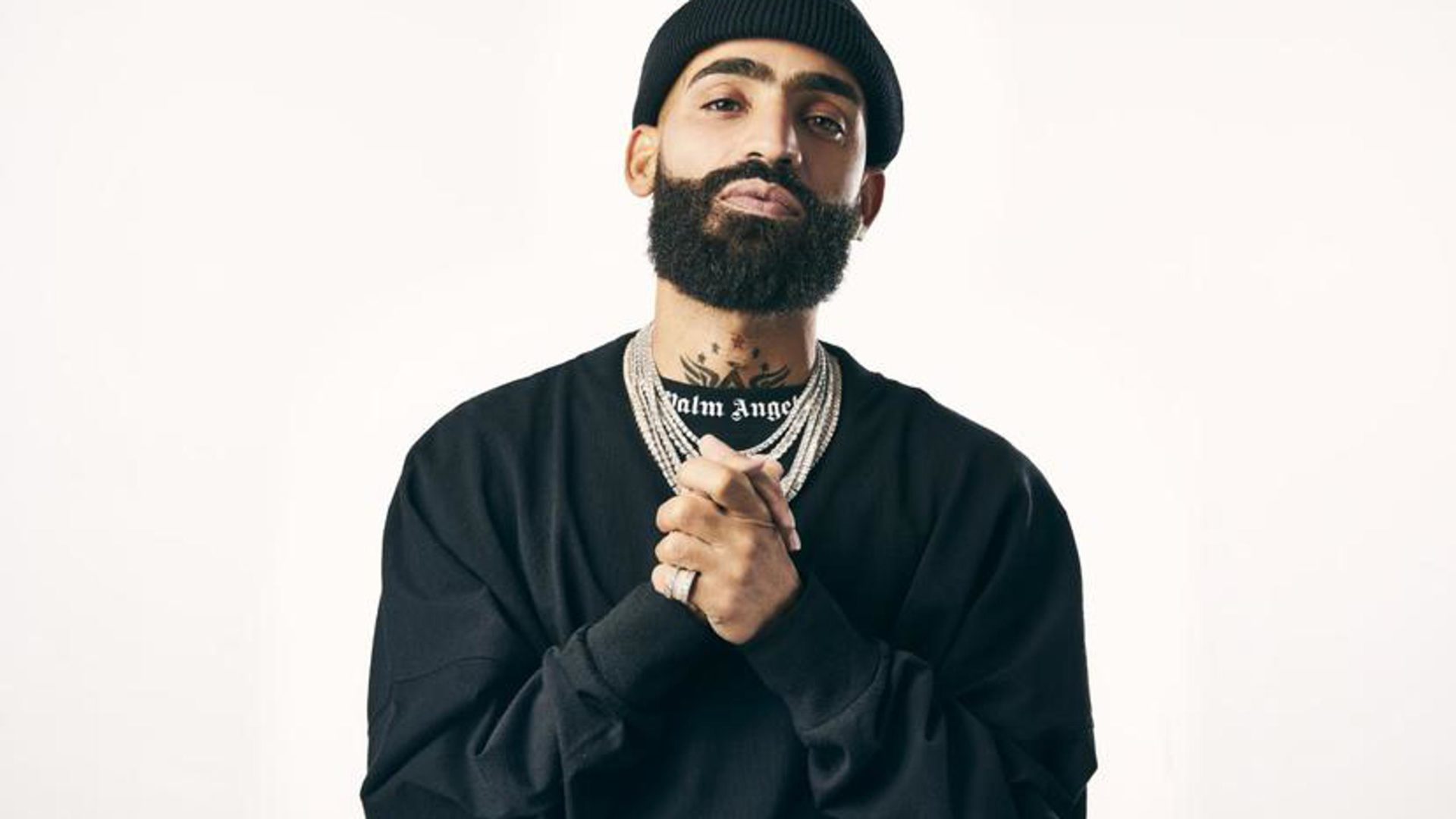
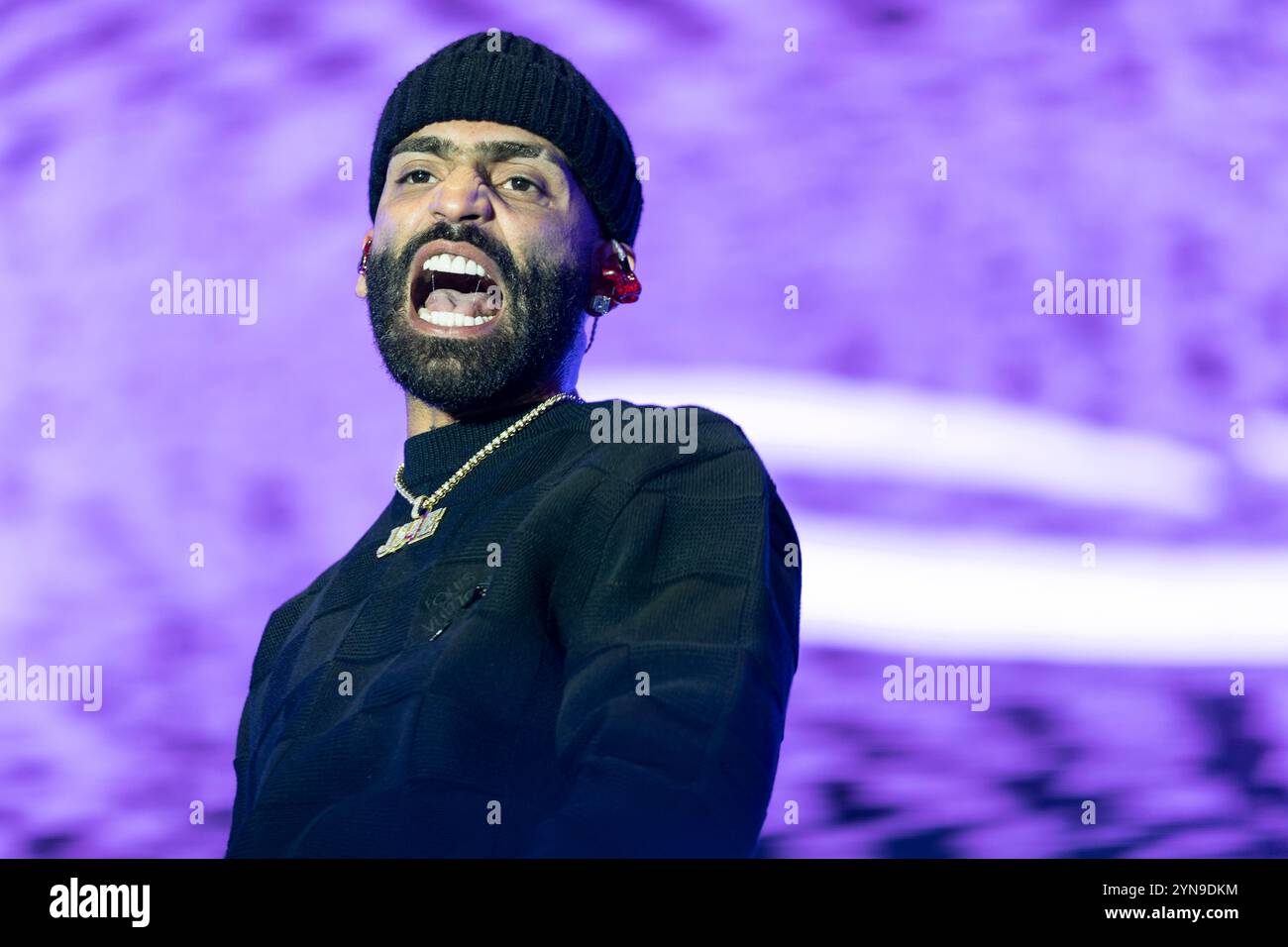
Yes, Arcángel is an American rapper and singer who holds United States nationality by birth. Born Austin Agustín Santos in East Harlem, New York City, to Dominican parents and later raised in Santurce, Puerto Rico, he holds natural-born U.S. citizenship while representing both Dominican and Puerto Rican cultural roots across the global Latin urban music landscape.
Birthplace, Legal Status, and Cultural Identity
The identity of the artist known professionally as Arcángel often sparks questions among fans of Latin urban music. Because he rose to prominence within the fertile reggaeton circuit of San Juan, Puerto Rico, and speaks with a heavy Caribbean Spanish cadence, casual listeners frequently assume he was born in the Dominican Republic or Puerto Rico.
From a strictly legal and constitutional standpoint, Arcángel is a natural-born United States citizen. He was born on December 23, 1985, in Spanish Harlem (El Barrio), a historic neighborhood in Manhattan, New York City. Under the Fourteenth Amendment to the United States Constitution, anyone born on U.S. soil is automatically a citizen at birth, regardless of the nationality or immigration status of their parents.
However, reduced to a passport or birth certificate, Arcángel's identity tells only a fraction of his story. His life and career are built upon a cross-cultural framework that spans three distinct geographies:
- New York City (Birthplace): The urban, multicultural metropolis where he spent his earliest childhood years, absorbing early hip-hop and the Afro-diasporic sounds of Manhattan.
- The Dominican Republic (Ancestry): The homeland of his parents, Carmen Rosa and his father, which imbued him with deep respect for Dominican merengue, bachata, and community ties. His mother was a member of the all-female merengue ensemble Las Chicas del Can.
- Puerto Rico (Upbringing and Musical Forge): The island where he moved during childhood, settling in the Villa Palmeras sector of Santurce, San Juan. Puerto Rico became the incubator for his distinctive melodic delivery, slang, and artistic breakthrough.
Understanding Arcángel requires untangling how political nationality and cultural self-determination coexist within the Latin Caribbean diaspora.
The Nuance of US Citizenship in the Latin Urban Movement
To understand why fans frequently search whether Arcángel is an American rapper with U.S. nationality, one must examine the legal relationship between the United States, Puerto Rico, and the broader Latin diaspora.
Puerto Rico has been an unincorporated territory of the United States since 1898. Under the Jones-Shafroth Act of 1917, all individuals born in Puerto Rico are statutory U.S. citizens. Many of reggaeton’s foundational figures—such as Daddy Yankee, Don Omar, Ivy Queen, and Bad Bunny—are U.S. citizens by virtue of their birth on the island of Puerto Rico.
Arcángel's situation is slightly different: he does not derive his U.S. citizenship from territorial statute, but directly via the Fourteenth Amendment due to his physical birth in New York State. When his mother relocated the family back to Puerto Rico during his formative years, Arcángel moved between two jurisdictions under the same sovereign nation.
- Carmen Rosa (Dominican Musician / Mother)
- Austin Agustín Santos (Arcángel) - Born: Dec 23, 1985 (NYC)
- United States
- Birthplace (NYC)
- 14th Amendment
- U.S. Passport
- Dominican Republic
- Parental heritage
- Merengue background
- Cultural kinship
- Puerto Rico
- Childhood home
- Musical development
- Reggaeton inception
- United States
- Austin Agustín Santos (Arcángel) - Born: Dec 23, 1985 (NYC)
This dual reality—holding legal American nationality while operating almost entirely in Spanish within the Latin Caribbean cultural sphere—is common among members of the Puerto Rican and Dominican diasporas in New York (often referred to colloquially as "Nuyoricans" or "Dominicanyorks"). Arcángel has consistently honored all three pillars of his background in his lyrics, public interviews, and international tours.
Career Trajectory: From Santurce to International Acclaim
Arcángel did not launch his music career in the English-language hip-hop market of New York. Instead, his musical ascent occurred in Puerto Rico during the mid-2000s, at the peak of reggaeton's first major international wave.
The Arcángel & De La Ghetto Era (2004–2007)
After returning to Puerto Rico, Santos adopted the stage name Arcángel, inspired by the biblical archangels. In 2004, he formed the iconic duo Arcángel & De La Ghetto alongside Rafael Castillo (De La Ghetto), an artist who shared a remarkably similar background: born in New York to a Dominican mother and Puerto Rican father, then raised in San Juan.
Together, the duo pioneered a unique sound that merged American hip-hop flows, R&B vocal inflections, and classic Puerto Rican reggaeton rhythms. Breakthrough underground tracks like "Pégate," "Sorpresa," and "Mi Fanática" established them as the fresh vanguard of the genre. Their contribution to the compilation album Sangre Nueva (2005), executive produced by Héctor El Father, propelled them into mainstream radio rotation across Latin America and the United States.
Solo Independence and El Fenómeno (2007–2012)
Following creative disagreements with their initial label, Baby Records, the duo parted ways amiably in 2007 to pursue solo paths, though they would reunite frequently throughout their careers. Arcángel set out as an independent artist, quickly gaining a reputation for fierce lyrical diss tracks (tiraeras) and an unmistakably sweet, melodic tone that earned him the moniker "La Maravilla" (The Wonder).
His debut studio album, El Fenómeno, arrived in late 2008 through Machete Music. The project featured smash hits such as "Pa' Que la Pases Bien" and "Por Amar a Ciegas," blending smooth synth-pop textures with hard-hitting reggaeton. The record confirmed his ability to convert mixtape buzz into certified commercial performance on the Billboard Latin charts.
The Pina Records Partnership and Sentimiento, Elegancia & Maldad (2012–2018)
In 2012, Arcángel signed an administrative and distribution alliance with Pina Records, the premier reggaeton imprint helmed by Rafael "Raphy" Pina. Under this banner, he released his critically lauded second solo album, Sentimiento, Elegancia & Maldad (2013).
This album showcased his maturity as a songwriter, neatly dividing his artistic identity into three distinct temperaments:
- Sentimiento (Feeling): Emotional ballads, romantic reggaeton, and introspective themes.
- Elegancia (Elegance): Polished urban pop and high-production contemporary Latin rhythms.
- Maldad (Edge/Grit): Uncompromising street hip-hop, rapid-fire rap, and aggressive trap delivery.
During this period, he expanded his global footprint, performing to sold-out arenas across South America, Europe, and major metropolitan arenas in the United States, including Madison Square Garden.
Pioneering Latin Trap and Later Projects (2018–Present)
Long before American streaming platforms formally recognized "Latin Trap" as a commercial category, Arcángel was actively laying its groundwork. His vocal cadence and thematic emphasis on street realism, luxury fashion, and resilience influenced an entire generation of younger artists.
When Latin trap surged into mainstream dominance between 2016 and 2020, Arcángel emerged not as a legacy act attempting to modernize, but as an elder statesman and foundational architect of the movement. His collaborations with younger stars—including Bad Bunny, Anuel AA, Myke Towers, and Eladio Carrión—cemented his enduring relevance.
Projects such as Ares (2018), Historias de un Capricornio (2019), Los Favoritos 2 (2020), and Sr. Santos (2022) highlighted his ability to oscillate seamlessly between aggressive trap records and radio-friendly reggaeton anthems.
Comparative Profile: Identity, Nationality, and Discography
The table below provides a factual synthesis of Arcángel’s biographical, legal, and artistic credentials.
| Characteristic | Verified Fact / Detail | Significance to Career |
|---|---|---|
| Legal Full Name | Austin Agustín Santos | Used in legal copyrights, publishing, and official documents. |
| Stage Name | Arcángel ("La Maravilla", "El Duende Malvado") | High-profile personal brand throughout Latin music markets. |
| Date of Birth | December 23, 1985 | Debuted in his late teens; boasts over two decades of professional activity. |
| Birthplace | East Harlem, New York City, U.S. | Grants natural-born U.S. citizenship via the 14th Amendment. |
| Legal Nationality | United States (U.S. Citizen) | Facilitates unrestricted global travel on a U.S. passport and U.S. copyright protection. |
| Parental Lineage | Dominican (Mother: Carmen Rosa; Father: Dominican) | Strong personal and cultural allegiance to the Dominican Republic. |
| Primary Upbringing | Santurce, San Juan, Puerto Rico | Grounded his dialect, musical network, and entry into reggaeton. |
| Primary Language | Spanish (Fluent English) | Performs almost exclusively in Caribbean Spanish with urban slang. |
| Key Associated Genres | Reggaeton, Latin Trap, Hip-Hop, Latin Pop | Instrumental in bringing R&B vocal aesthetics into mid-2000s reggaeton. |
| Landmark Releases | El Fenómeno (2008), Sentimiento, Elegancia & Maldad (2013), Sr. Santos (2022) | Multi-platinum certified projects under RIAA Latin standards. |
Why Arcángel’s Nationality Matters in the Music Industry
Arcángel's legal status as an American citizen has provided specific structural and business advantages that are often overlooked by casual listeners.
Freedom of International Movement and Touring
The international touring circuit is notoriously difficult for non-U.S. artists due to strict visa requirements, consular delays, and administrative vetting. Because Arcángel holds a United States passport, his ability to travel across North America, the European Union, the United Kingdom, and numerous South American territories is streamlined under reciprocal visa-waiver treaties.
For Latin artists hailing from nations with restrictive travel barriers, securing artist visas (such as the U.S. O-1 or P-1 visas) involves tens of thousands of dollars in legal fees, extensive background checks, and unpredictable scheduling. Arcángel's natural-born U.S. citizenship permanently exempted him from these administrative hurdles within the lucrative U.S. domestic touring market.
Domestic Royalties and Legal Infrastructure
Under the legal jurisdiction of the United States, an artist’s intellectual property, mechanical royalties, and digital performance payouts are governed by robust federal copyright laws.
Arcángel’s catalog has historically been registered through American performance rights organizations such as ASCAP (the American Society of Composers, Authors and Publishers) and protected under the U.S. Copyright Office. This corporate anchor provides contractual transparency and legal recourse in American federal courts that many Latin American independent artists lacked during the early 2000s mixtape boom.
The "Nuyorican" and Diaspora Pipeline
Historically, New York City has served as the birthplace of transformative Latin music movements. The 1970s salsa explosion orchestrated by Fania Records occurred primarily in Manhattan and the Bronx, driven by musicians of Puerto Rican and Dominican descent living in the city.
Arcángel fits squarely within this classic migratory pipeline. While reggaeton developed primarily on the island of Puerto Rico through underground cassettes (playero tapes) in the 1990s, the genre's rapid modernization in the mid-2000s was fueled heavily by artists who carried New York hip-hop sensibilities back to San Juan. Arcángel and his longtime collaborator De La Ghetto imported the cadence, fashion, and vocal styling of Harlem and Queens directly into the recording studios of Carolina and Bayamón.
Common Misconceptions Regarding Arcángel’s Background
Because Arcángel has embraced multiple Caribbean identities, several recurring misconceptions persist across online forums, social media, and music commentary.
Misconception 1: "He Was Born in Puerto Rico"
While Arcángel was raised in Santurce from his early adolescence onward and developed his musical career in Puerto Rico, he was not born on the island. He frequently corrects interviewers, affirming his physical birth in New York City while expressing undying gratitude to Puerto Rico for nurturing his artistry.
Misconception 2: "He Is an Immigrant to the United States"
Because he is deeply associated with Latin America, some assume Arcángel immigrated to the United States and underwent a naturalization process to obtain citizenship. This is factually incorrect. Having been born in Manhattan, he has held U.S. citizenship since birth.
Misconception 3: "He Denies His Dominican Roots"
During the mid-2000s, intense rivalries within reggaeton led some detractors to question Arcángel's cultural loyalty. In reality, Arcángel has consistently championed his Dominican heritage. He has recorded multiple songs celebrating Dominican culture, maintained close ties with Dominican urban artists (such as Lapiz Conciente, El Alfa, and Rochy RD), and frequently performs in Santo Domingo and Santiago de los Caballeros to massive crowds.
Misconception 4: "He Sings in English Because He Is American"
Despite his fluency in English and his birth in New York City, Arcángel rarely records full tracks in English. His core demographic is Spanish-speaking, and his expressive strength lies in the rich colloquialisms, metaphors, and wordplay of Caribbean Spanish. When he does utilize English, it is typically through ad-libs, hooks, or hybrid verses that reflect the bilingual reality of the urban Latin diaspora.
Health Challenges, Resilience, and Artistic Longevity
Arcángel’s career has also been defined by personal perseverance in the face of serious medical and personal hardships. His willingness to speak candidly about these struggles has deepened his bond with his international fanbase.
Cardiovascular Conditions and Medical Care
In September 2019, Arcángel suffered an acute myocardial infarction (heart attack) while traveling between San Juan and Mayagüez in Puerto Rico. He was rushed to the hospital and underwent an emergency cardiac catheterization to clear an obstructed artery.
Following this scare, doctors detected further cardiovascular anomalies, and in late 2020, Arcángel announced that physicians had discovered a shadow on his brain, requiring ongoing neurological monitoring. Despite these serious diagnoses, he continued to create music, stating in multiple interviews that his craft serves as his most effective therapy. His medical treatment has taken place primarily within specialized cardiovascular centers in the United States, where he has access to world-class medical infrastructure.
The Loss of His Brother Justin Santos
In November 2021, tragedy struck the Santos family when Arcángel’s younger brother, Justin Santos Del Carmen, was killed in a car crash on the Teodoro Moscoso Bridge in San Juan, Puerto Rico. The fatal collision was caused by an allegedly intoxicated driver who crossed into oncoming traffic.
The loss deeply affected Arcángel, inspiring his deeply personal 2022 album Sr. Santos. The project was dedicated entirely to Justin’s memory, featuring an enormous two-day tattoo session where Arcángel was placed under general anesthesia while artists illustrated an intricate memorial piece across his chest and torso. The album debuted high on the Billboard Top Latin Albums chart, anchored by the poignant track "JS4E" (Justin Santos For Ever).
Verifying Artist Backgrounds: Best Practices for Fans and Researchers
When confirming biographical details about musical artists operating across international borders, standard internet searches often surface outdated fan wikis, conflicting claims, or poorly sourced aggregator articles.
To verify an artist’s legal nationality, birthplace, and cultural lineage accurately, utilize the following research steps:
- Consult Legal Copyright Registrations: Official performing rights organizations such as ASCAP, BMI, and SESAC require legal legal names (real names) rather than stage monikers to route royalties. Searching the repertoire databases of these organizations confirms an artist's full legal name and accredited compositions.
- Review Verified Primary Interviews: Artists frequently recount their migration journeys, family backgrounds, and early childhood memories in detailed video interviews. Long-form discussions on platforms like MoluscoTV, Alofoke Radio Show, or Billboard Latin conferences provide firsthand corroboration from the artists themselves.
- Examine Government Records and Civil Filings: Trademark disputes, contract filings, or business incorporation documents filed with state bodies (such as the Florida Department of State Division of Corporations or the Puerto Rico Department of State) list legal citizenship, residential jurisdictions, and corporate entities.
- Distinguish Between Nationality and Ethnicity: Remember that nationality is a legal status tying an individual to a sovereign state (e.g., U.S. citizenship), whereas ethnicity and heritage describe cultural, linguistic, and ancestral ties (e.g., Dominican-American, Latino, Afro-Caribbean).
Frequently Asked Questions
Is Arcángel legally considered an American rapper?
Yes. Because he was born in East Harlem, New York City, Arcángel is a natural-born United States citizen. Under international and domestic law, his nationality is American. However, musically and stylistically, he is primarily categorized as a Latin urban, reggaeton, and Latin trap artist who performs predominantly in Spanish.
Does Arcángel have Dominican citizenship?
Under Dominican nationality law, children born abroad to Dominican parents are eligible for Dominican nationality by descent (jus sanguinis). While Arcángel fiercely embraces his Dominican parentage and identifies culturally as Dominican, his primary documented nationality in international business and travel is his United States citizenship.
What is Arcángel’s real name?
His full legal name is Austin Agustín Santos. He adopted the stage name "Arcángel" early in his recording career, drawing inspiration from biblical archangels while adding monikers like "La Maravilla" to signify his vocal talent and lyrical dexterity.
Where did Arcángel grow up?
Although born in New York City, Arcángel spent his key formative years in Santurce, a historic district of San Juan, Puerto Rico. It was in the neighborhood of Villa Palmeras that he absorbed the local music scene, mastered Puerto Rican street vernacular, and co-founded his career within the reggaeton genre.
What was Arcángel's mother’s musical background?
Arcángel’s mother, Carmen Rosa, was a professional musician and performer in the Dominican Republic. She was a member of the legendary, all-female merengue orchestra Las Chicas del Can. Growing up around rehearsals, tours, and recording equipment gave Arcángel an early education in musical composition and stage presence.
Why does Arcángel rarely record in English if he was born in New York?
Arcángel's musical identity was forged within the Spanish-language Caribbean diaspora. While he is fluent in English, his core artistic expression, storytelling, and rhythmic delivery are anchored in the colloquial expressions of Puerto Rico and the Dominican Republic. He has occasionally integrated English verses and hip-hop terminology into his songs, but his primary artistic medium remains Caribbean Spanish.
Practical Takeaway and Next Steps
The reality behind the query "Arcángel is an American rapper with U.S. nationality" is straightforward yet culturally rich: Austin Agustín Santos is a natural-born United States citizen whose artistic identity represents the modern Caribbean-American experience. His career demonstrates that American nationality encompasses a vast range of languages, cultural traditions, and musical forms beyond standard English-language hip-hop.
If you are exploring the evolution of the Latin urban movement or researching artist biographies:
- Listen to Early Milestone Releases: Start with the Sangre Nueva compilation (2005) and his debut solo album El Fenómeno (2008) to hear how his New York roots informed his early melodic flow.
- Trace the Diaspora Connection: Explore related artists who share this dual New York–Puerto Rico musical bridge, such as De La Ghetto, Nicky Jam (born in Boston, raised in Puerto Rico), and Tempo.
- Reference Official Music Registrations: When verifying songwriting credits and catalog ownership, search the ASCAP Repertory database under his legal name, Austin Santos, for accurate, legally verified discographical records.