Life insurance is a versatile financial instrument that can secure a company's financial stability, fund buy-sell agreements, and protect against the loss of key personnel. However, using life insurance for short-term speculative investments, avoiding legitimate business taxes through abusive schemes, or funding non-deductible personal obligations of owners without corporate justification are inappropriate uses that violate tax laws and fiduciary duties.
Understanding Corporate Life Insurance Fundamentals
Corporate-owned life insurance (COLI) serves as a foundational tool in modern corporate risk management and continuity planning. When a business purchases a life insurance policy on the life of an owner, key executive, or essential employee, the company typically acts as the owner and the beneficiary of the policy. This arrangement provides a dual purpose: it mitigates the catastrophic financial shock of losing crucial human capital and injects immediate liquidity into the organization during a crisis.
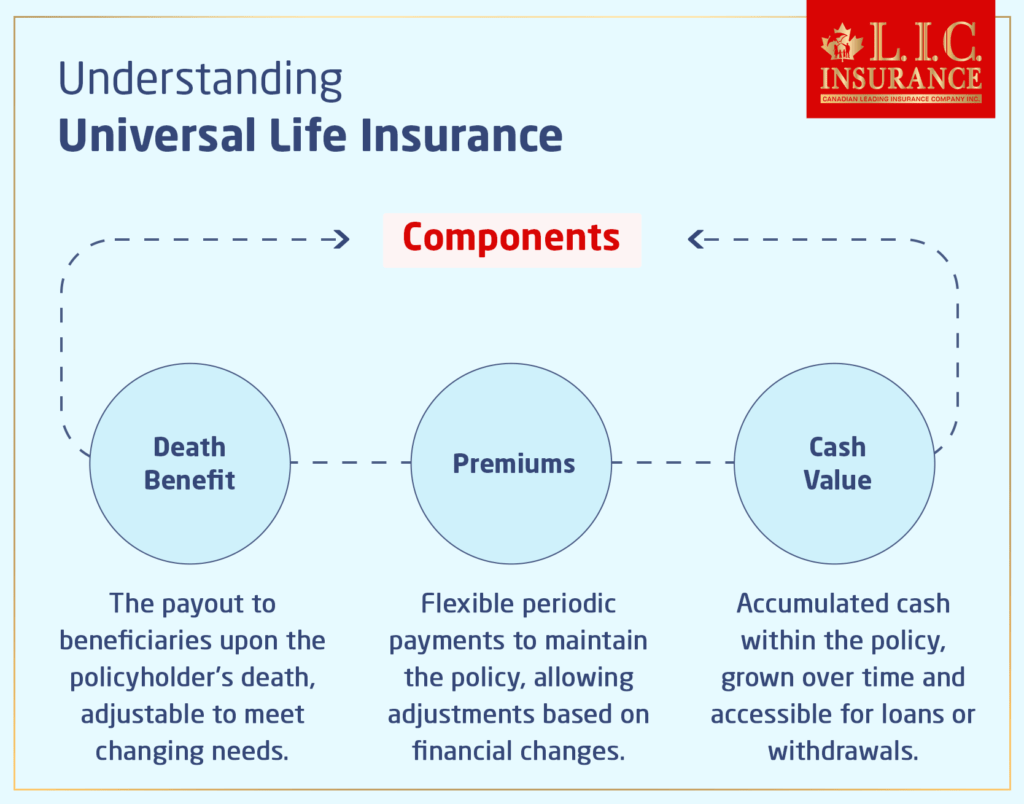
In a standard corporate structure, life insurance falls into two primary categories: term life and permanent life (such as whole life or universal life). Term insurance offers straightforward, temporary protection for a specified duration, making it ideal for covering short-term business debts or loans. Permanent insurance builds a cash value component over time, offering a tax-advantaged asset that can be leveraged for supplemental retirement funding, executive bonuses, or deferred compensation plans.
Despite these flexible commercial applications, the Internal Revenue Service (IRS) and regulatory bodies enforce strict boundaries. A corporate life insurance policy must be tied to a legitimate business purpose. When policies are acquired outside these recognized parameters, companies risk severe financial penalties, the loss of tax deductions, and intense scrutiny during IRS audits. Recognizing what constitutes an inappropriate application of business life insurance is just as important as understanding its valid deployments.
Appropriate Uses of Life Insurance for Business
To understand where boundaries are crossed, it is helpful to establish baseline context on why businesses legitimately acquire life insurance. These established applications demonstrate how the policy protects operational continuity and financial integrity.
Key Person Insurance
When a business relies heavily on a specific individual—such as a visionary founder, a top-performing sales director, or a lead engineer—the sudden death of that person can cause an immediate drop in revenue, disrupt client relationships, and paralyze operations. Key person insurance provides a tax-free cash influx to the business to stabilize cash flow, hire and train a replacement, or reassure creditors during the transition period.
Buy-Sell Agreements
Partners in closely held businesses often utilize life insurance to fund buy-sell agreements. If a co-owner passes away, their surviving family members may not want to be involved in daily business operations, and the remaining partners may lack the personal capital to buy out the deceased's shares. A pre-funded life insurance policy ensures that immediate cash is available to purchase the deceased owner’s equity at a pre-agreed valuation, keeping ownership within the intended circle and providing financial security to the surviving family.
Employee Benefit Plans
Companies frequently use life insurance to sweeten compensation packages for top-tier talent. Through Executive Bonus Plans (commonly known as Section 162 plans) or Split-Dollar life insurance arrangements, businesses can help high-value employees build personal wealth while securing their long-term loyalty to the firm.
Inappropriate Uses of Life Insurance for Business (The "Except" Categories)
When businesses attempt to stretch life insurance beyond its intended risk-management and legitimate compensation functions, they enter regulatory gray areas or outright violations. Below are the primary inappropriate uses of life insurance for business operations.
| Category | Inappropriate Application | Regulatory or Financial Risk |
|---|---|---|
| Tax Avoidance | Using excessive cash-value accumulation as an aggressive tax shelter without economic substance. | Loss of tax-deferred status, penalties, and audit triggers by the IRS under economic substance doctrines. |
| Speculative Investing | Purchasing policies solely as high-risk, short-term investment vehicles using corporate operating cash. | Poor liquidity, high surrender charges, and breach of fiduciary duty to shareholders. |
| Personal Enrichment | Funding personal estate planning, family trusts, or lifestyle expenses of owners disguised as business expenses. | Disallowance of premium deductions, classification as taxable constructive dividends, and potential fraud charges. |
| Non-Business Debt | Securing policies to fund personal debts or non-deductible liabilities unrelated to corporate operations. | Violation of corporate waste doctrines and increased scrutiny from minority shareholders or lenders. |
1. Purely Speculative or High-Risk Investment Vehicles
Life insurance is designed primarily to provide a death benefit and, in permanent policies, steady, conservative cash value growth. Using corporate funds to purchase speculative variable life insurance policies with the primary intent of short-term market speculation is an inappropriate use of company assets. Corporate directors and officers have a fiduciary duty to act in the best financial interest of the corporation and its shareholders. Diverting essential operating capital into aggressive, speculative insurance portfolios exposes the firm to unnecessary market volatility and high administrative fees.
2. Abusive Tax Shelters and Lack of Economic Substance
In the past, some corporate entities attempted to exploit complex life insurance structures—such as corporate-owned life insurance (COLI) leveraged plans or employee-benefit trust arrangements—solely to generate massive, artificial tax deductions. Under current tax laws, particularly the economic substance doctrine codified in IRC Section 7701(o), a transaction must have a valid, non-tax business purpose to be respected by the IRS. Using business life insurance purely as a tax shelter without a legitimate risk-management or compensatory justification invites severe tax penalties, disallowance of deductions, and back taxes.
3. Funding Personal Estate Planning and Wealth Transfer for Owners
While life insurance is an exceptional tool for personal estate planning, utilizing corporate funds to pay for policies that exclusively benefit an owner's personal heirs—without a corresponding business benefit—is improper. For example, if a company pays premiums on a policy where the death benefit goes directly to the owner's children rather than funding a valid stock redemption or key person loss, the IRS may treat those premium payments as taxable constructive dividends or taxable compensation to the owner. This creates unexpected personal income tax liabilities for the owner and removes the deductibility of the expense for the corporation.
4. Securing Non-Business Liabilities or Personal Guarantees
Corporate assets should generally be deployed to support corporate objectives. Purchasing business life insurance to cover personal mortgages, personal credit card debt, or unrelated family liabilities of the business owners represents a misuse of corporate funds. If the business becomes insolvent or faces bankruptcy, creditors and bankruptcy trustees can scrutinize corporate expenditures. Using company capital to pay for policies that protect personal, non-business interests can expose management to claims of corporate waste and breach of fiduciary responsibility.
Legal, Regulatory, and Tax Implications
Navigating the intersection of corporate finance and insurance law requires adherence to federal and state statutes. Misusing life insurance within a business structure can trigger complex legal consequences.
The Insurable Interest Requirement
A fundamental principle of insurance law is the requirement of an "insurable interest." At the time a policy is issued, the policyholder must have a lawful and substantial economic interest in the continued life of the insured. A business generally has an insurable interest in its owners, key officers, and essential employees because their death would cause direct financial harm. However, attempting to insure individuals with no material connection to the business—or maintaining policies on former employees long after they have departed—violates insurable interest laws, rendering the policy invalid or unenforceable in many jurisdictions.
IRS Section 264 Restrictions
Under Internal Revenue Code Section 264, deductions for interest on life insurance policy loans are heavily restricted. When a business borrows against the cash value of a corporate-owned life insurance policy to fund general operations, the interest is often non-deductible if the loan exceeds statutory thresholds (such as the four-out-of-seven rule). Attempting to use corporate life insurance as a revolving line of credit while claiming improper interest deductions is a frequent target of IRS audits.
Notice and Consent Rules (IRC Section 101(j))
Under IRC Section 101(j), a corporation that owns employer-owned life insurance must satisfy strict notice and consent requirements before the policy is issued. The employee must provide written consent to being insured, be informed of the maximum face amount for which they could be insured, and acknowledge that the company will be the beneficiary of the death proceeds. Failing to secure proper, documented consent can result in the loss of the tax-free status of the death benefit when the policy pays out, turning a tax-free liquidity event into a major corporate tax burden.
Best Practices for Corporate Life Insurance Management
To ensure that life insurance remains a powerful asset rather than a regulatory liability, business owners, CFOs, and human resource directors must implement structured governance protocols.
- Document the Business Purpose: Every corporate-owned policy should have a clearly articulated justification recorded in corporate minutes, board resolutions, or human resource documentation. Whether it is key person protection or a funded buy-sell agreement, the rationale must be evident.
- Consult Qualified Professionals: Life insurance structuring involves intricate federal tax codes, corporate law, and accounting standards. Always coordinate policy acquisition and review through a team consisting of a certified public accountant (CPA), a corporate tax attorney, and an independent insurance advisor.
- Regular Policy Reviews: Business valuations change, key employees retire, and partnership structures evolve. Conduct annual reviews of all corporate-owned policies to verify that face amounts match current business valuations, insurable interest remains intact, and ownership structures comply with the latest regulatory updates.
- Maintain Transparent Accounting: Ensure that premium payments, cash value adjustments, and policy loans are correctly categorized on the corporate balance sheet and income statements. Clear accounting prevents misunderstandings during financial audits and shareholder reviews.
Frequently Asked Questions
Can a business deduct the premiums paid for life insurance policies?
Generally, no. Under IRC Section 264(a)(1), if a business is directly or indirectly a beneficiary under the policy, the premiums paid are not tax-deductible business expenses. However, if the insurance is structured as a bonafide employee benefit (such as an executive bonus plan where the employee owns the policy and the company simply provides a cash bonus to pay premiums), the bonus amount may be deductible as compensation, provided it is reasonable.
What happens to a corporate-owned life insurance policy when an employee leaves the company?
When a key employee departs, the company typically has three options: surrender the policy for its cash value, maintain the policy if an insurable interest or executive retention agreement justifies it, or sell/transfer the policy to the departing employee as part of a severance or buyout package. Transferring the policy directly to the employee can trigger complex transfer-for-value rules under IRC Section 101(a), which may jeopardize the tax-free nature of the death benefit unless specific exceptions are met.
Can a sole proprietorship own a life insurance policy on the owner?
From a legal standpoint, a sole proprietorship is not a distinct legal entity separate from the owner. Therefore, a sole proprietor cannot technically own a "corporate-owned" life insurance policy on their own life in a business capacity. Instead, life insurance purchased by a sole proprietor is treated as personal insurance, meaning premiums are paid with personal after-tax dollars, and business deductions are not applicable.
Why is an economic substance doctrine relevant to business life insurance?
The economic substance doctrine requires that a transaction result in a meaningful change to the taxpayer's economic position, apart from federal income tax benefits, and that the taxpayer has a substantial non-tax purpose for entering into the transaction. If a business enters into a complex life insurance arrangement designed solely to manufacture tax deductions without real economic risk or operational purpose, the IRS can disallow all related tax benefits and assess substantial accuracy-related penalties.
Conclusion
Life insurance is a cornerstone of corporate risk management, offering indispensable solutions for key person protection, business continuity, and executive compensation. However, its utility is bound by strict legal, financial, and regulatory frameworks. Utilizing policies for speculative market investments, abusive tax avoidance, unauthorized personal enrichment, or non-business debt exposes a company to severe legal liabilities, IRS audits, and the loss of critical tax advantages. By establishing clear business purposes, securing proper employee consent, and maintaining diligent oversight, organizations can harness the true power of life insurance while avoiding costly regulatory pitfalls.