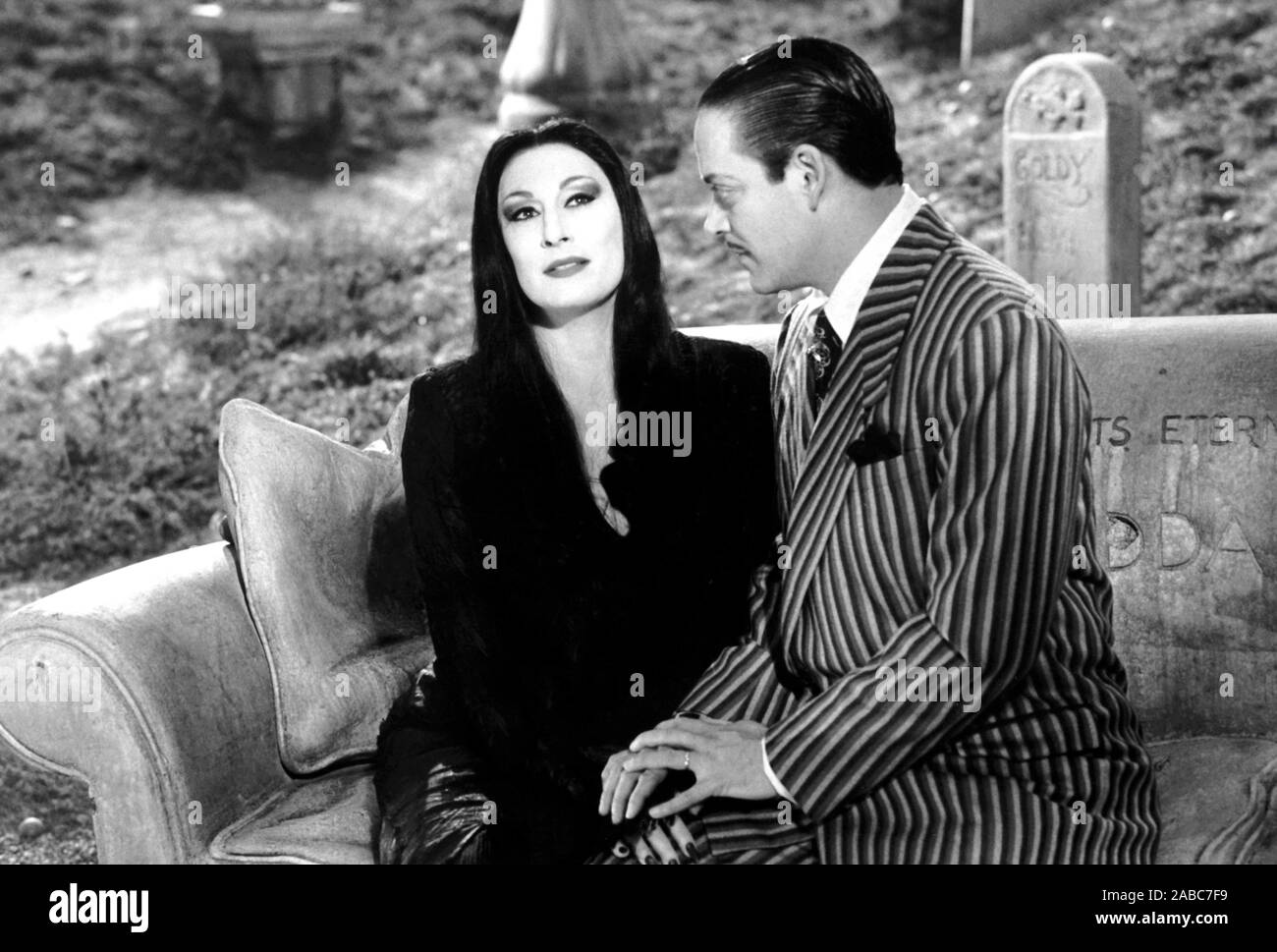
Anjelica Huston’s portrayal of Morticia Addams in the 1990s film adaptations redefined the character from a quirky sitcom matriarch into a sophisticated cinematic icon of Gothic elegance. By blending aristocratic poise with a razor-sharp, deadpan wit, Huston established the definitive modern interpretation of the character, a legacy that remains unsurpassed as of 2026.
The Origins of a Gothic Icon: Casting Anjelica Huston
In the early 1990s, the challenge of adapting Charles Addams’ macabre cartoons for a big-screen audience required a lead actress who could embody both the surreal humor and the grounded warmth of a devoted mother. Director Barry Sonnenfeld recognized that the role of Morticia Addams required more than just a visual resemblance to the source material; it needed a performer with an inherent sense of regality and a mastery of subtle, darkly comedic timing.
Anjelica Huston was not merely a choice; she was arguably the only actress of her era who possessed the natural "Huston" elegance—a product of her Hollywood royalty upbringing as the daughter of director John Huston. Her casting brought an immediate credibility to the project. Unlike the 1960s television series, which relied on the campy charm of Carolyn Jones, the 1991 film version sought a version of Morticia that felt like she stepped directly out of a high-fashion, albeit funeral-themed, editorial.
Huston’s preparation for the role involved a deep dive into the original New Yorker cartoons created by Charles Addams. She aimed to capture the "distilled" essence of Morticia—a woman who is completely unbothered by the norms of society because her own reality is so much more rich and romantic. This alignment with the original source material, combined with Sonnenfeld’s vision, laid the foundation for a performance that would bridge the gap between mid-century satire and 90s cynical humor.
Crafting Morticia: The Aesthetic and Technical Mastery
The visual representation of Morticia Addams in the 1991 film and its 1993 sequel, Addams Family Values, was a technical marvel of its time. To achieve the specific "look" that Huston and Sonnenfeld desired, the production team employed rigorous makeup, lighting, and costume techniques that influenced film aesthetics for decades.
The Lighting of a Legend
One of the most distinctive features of Huston’s Morticia is the way her face is lit. Sonnenfeld, a former cinematographer himself, insisted on a specific lighting rig that would cast a thin slit of light across Huston's eyes, leaving the rest of her face in a soft, ethereal shadow. This technique, often referred to as "Garamond lighting" in some technical circles or simply the "Addams eye-light," gave her a supernatural, feline quality. It emphasized her gaze, making her appear simultaneously menacing and alluring, a core tenet of the darkly comedic legacy she was building.
Costume and Physical Constraints
The costumes, designed by Ruth Myers, were masterpieces of restrictive elegance. Huston famously wore a metal corset to achieve the impossibly narrow waist seen in Charles Addams’ drawings. This garment was so restrictive that Huston could not lie down while wearing it; she had to lean against a slanted "resting board" between takes.
This physical constraint significantly informed her performance. Because she could not move her torso or neck freely, Huston developed a signature glide. Morticia doesn't walk; she drifts across the floor, her movements controlled and minimalist. This lack of frantic motion contrasted sharply with the high-energy physical comedy of Christopher Lloyd’s Uncle Fester or the exuberant dancing of Raul Julia’s Gomez, creating a perfect comedic foil within the family dynamic.
The Physicality of the Performance: Grace Under Pressure
Huston’s Morticia is a study in economy of movement. In a world of "dark comedy," the humor often comes from the juxtaposition of the horrific and the mundane. Huston’s ability to deliver lines about torture or death while elegantly trimming the heads off roses is the cornerstone of the film’s success.
Her hand gestures were particularly calculated. Huston used her long, slender fingers and dark nail polish to emphasize Morticia’s aristocratic nature. Every movement—whether it was stroking a carnivorous plant or pouring tea—was executed with the precision of a surgeon. This stillness made her occasional outbursts of passion, particularly those directed at Gomez, feel earned and explosive.
By 2026, film students still analyze Huston’s "minimalist" approach to Morticia. It serves as a masterclass in how to command a scene without raising one’s voice or making broad gestures. She understood that in the Addams household, Morticia is the calm center of the storm, and her performance reflects that unwavering composure.
The Chemistry of Macabre Romance: Morticia and Gomez
The legacy of Anjelica Huston in The Addams Family cannot be discussed without acknowledging her screen partner, Raul Julia. Together, they redefined the "onscreen couple" for a generation. Unlike many cinematic parents who are depicted as bickering or bored, Morticia and Gomez were intensely, almost aggressively, in love.
Their chemistry was built on a foundation of mutual respect and shared darkness. Huston played the "straight man" to Julia’s more theatrical Gomez, but she never lacked for passion. The "Mamushka" dance and their frequent lapses into French (which Gomez found intoxicating) provided some of the films' most memorable comedic beats.
This relationship provided a crucial emotional anchor. Because Huston and Julia portrayed their love as genuine and deep, the audience was able to buy into the stranger aspects of their lives. We don't laugh at them; we laugh with them at the "normal" world that doesn't understand their devotion. This portrayal of a healthy, romantic, albeit macabre, marriage remains one of the most celebrated aspects of the 90s films.
Comparing the Matriarchs: Carolyn Jones vs. Anjelica Huston
While Carolyn Jones’ 1960s Morticia was revolutionary for its time—depicting a woman who was both a mother and a sexual being—Anjelica Huston took the character into a more sophisticated, "High Gothic" territory.
| Feature | Carolyn Jones (1964–1966) | Anjelica Huston (1991–1993) |
|---|---|---|
| Tone | Campy, warm, and eccentric. | Deadpan, aristocratic, and sharp. |
| Visual Style | Soft-focus, classic 60s TV glamour. | High-contrast lighting, sharp silhouettes. |
| Relationship with Gomez | Flirtatious and playful. | Intensely passionate and soulful. |
| Maternal Approach | More traditional "TV mom" with a twist. | Detached but fiercely protective and wise. |
| Legacy | Established the character's core identity. | Established the character as a fashion and cultural icon. |
Huston’s version removed some of the "suburban" feel of the 60s show. Her Morticia didn't just live in a spooky house; she was an emissary of an ancient, aristocratic tradition of the macabre. This shift allowed the films to lean harder into the satirical commentary on the American "Nuclear Family," using Huston’s refined performance to highlight the hypocrisy of the so-called normal neighbors.
Critical and Commercial Impact: Defining a Decade
The 1991 film The Addams Family was a massive commercial success, grossing over $113 million domestically (a significant sum at the time). Critics were quick to point out that while the plot might have been thin, the casting was impeccable. Huston received a Golden Globe nomination for her role, a rarity for a comedic performance in a genre film.
The 1993 sequel, Addams Family Values, is often cited by fans and critics as the superior film, largely due to the expanded role of the family’s dynamics and the addition of Joan Cusack. In the sequel, Huston’s Morticia faced new challenges, including the arrival of a new baby (Pubert) and the existential threat of a "normal" nanny. Her performance in the sequel became even more nuanced, showcasing a mother who is quietly terrified of her children becoming "average."
The commercial success of these films ensured that Huston’s image would be the one burned into the collective consciousness of the public. When people think of Morticia Addams today, they rarely think of the cartoons or the 60s show first; they think of the pale, statuesque woman in the floor-length black gown.
The Legacy of Morticia Addams in Modern Cinema (2026 Perspective)
As we look back from 2026, the influence of Anjelica Huston’s Morticia is visible across the media landscape. The "Goth" aesthetic that exploded in the late 90s and early 2000s owes a debt to Huston’s portrayal, which made the macabre look aspirational rather than repulsive.
In the mid-2020s, the revival of the Addams Family franchise through the Netflix series Wednesday brought a new interpretation of Morticia by Catherine Zeta-Jones. While Zeta-Jones brought her own charisma to the role, much of the discourse surrounding the show involved comparisons to Huston. This ongoing comparison highlights how Huston’s performance became the "gold standard" or the blueprint for the character.
Furthermore, the "darkly comedic legacy" refers to the specific tone Huston mastered. She proved that you could be frightening and funny at the exact same moment without breaking character. This tonal balance has been mimicked in countless "dark" comedies and "prestige" horror films that have followed, but few have achieved the effortless grace Huston displayed.
FAQs About Anjelica Huston’s Morticia Addams
1. How did Anjelica Huston prepare for the role of Morticia?
Huston’s preparation was largely visual and internal. She studied the original Charles Addams drawings to understand the character's silhouette and spirit. She also drew inspiration from Jerry Hall, the model and actress, wanting to bring a sense of high-fashion glamor to the role. She focused on the concept of a woman who is "entirely content in her own skin," which informed Morticia's calm and confident demeanor.
2. Was the makeup and costume process physically difficult?
Yes, it was famously grueling. The makeup process took hours each day to achieve the perfect pale complexion and sharp features. The most difficult aspect, however, was the corset and the "eye-pulls." To give her eyes a more slanted, exotic look, makeup artists used silk tabs and strings to pull back the skin at her temples, which were hidden under her wig. This caused Huston significant headaches during long filming days.
3. Did Anjelica Huston do her own stunts?
While The Addams Family films didn't require traditional stunts from Morticia, they did require intense physical control. Huston’s "glide" was a result of small, rapid steps taken under her long dress, which required significant balance and leg strength. Any scene involving the family's "dangerous" activities (like the sword fighting or the Mamushka) was carefully choreographed to maintain Morticia’s composure throughout.
4. Why is her performance considered "darkly comedic"?
The humor in Huston’s performance comes from her reaction—or lack thereof—to horrific things. She treats the macabre with the same casualness that one might treat the weather. For example, when she tells her children to "play with your food" (referring to live creatures), she does so with a warm, maternal smile. This subversion of typical "motherly" behavior is what creates the dark comedy.
5. What awards did she win for The Addams Family?
Huston was nominated for a Golden Globe for Best Actress – Motion Picture Musical or Comedy for the 1991 film. While she did not win, the nomination itself was a significant acknowledgment of the technical and artistic skill required to play a character that could easily have become a caricature.
Practical Recommendation for Fans and Historians
For those looking to truly appreciate the depth of Huston’s legacy, a back-to-back viewing of The Addams Family (1991) and Addams Family Values (1993) is essential. Pay close attention to the silences. Much of Huston’s comedic brilliance lies in her reaction shots—a raised eyebrow or a slight tilt of the head that conveys more than a page of dialogue.
In 2026, these films are readily available on 4K restoration formats. Watching them in high definition allows you to see the intricate detail in the costume textures and the specific lighting techniques mentioned above. Studying her performance offers a masterclass in character acting that transcends the "spooky" genre and enters the realm of cinematic art.