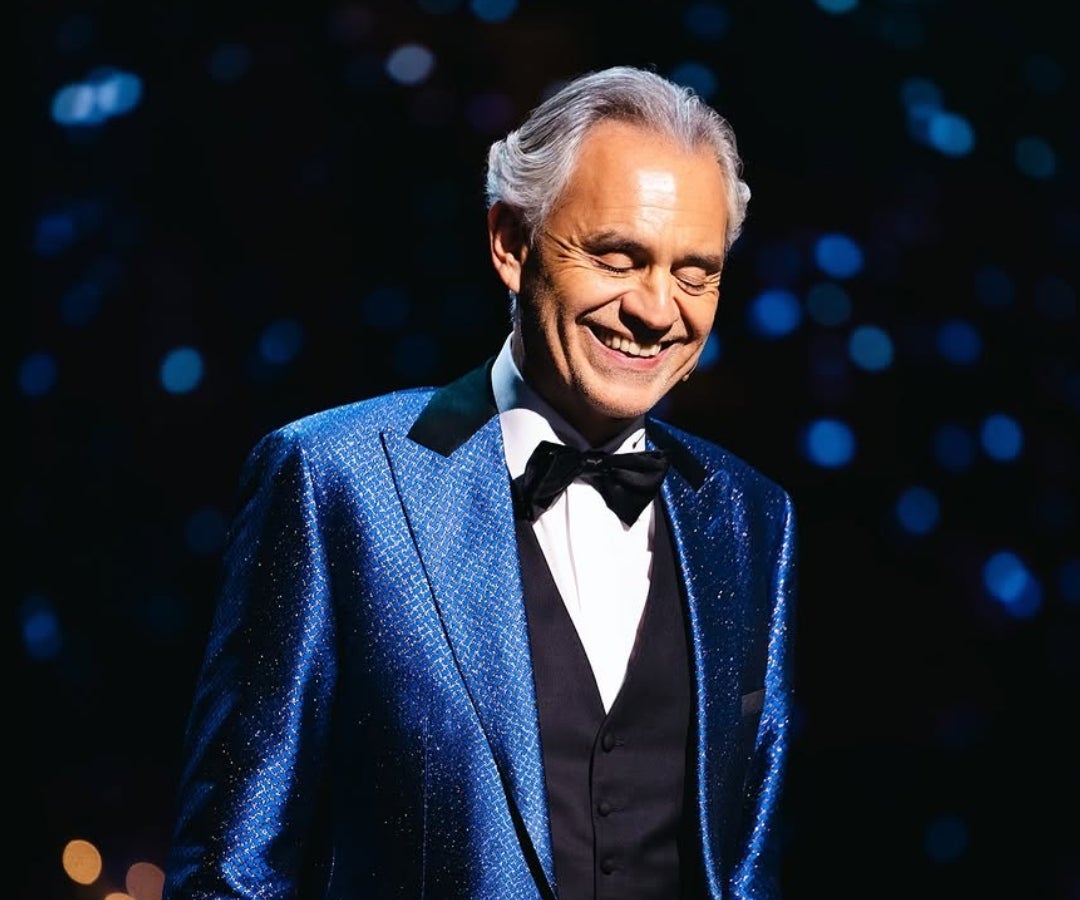
Andrea Bocelli was not born completely blind; rather, he was diagnosed with congenital glaucoma as an infant, which caused severely impaired vision from birth before a subsequent accident at age twelve resulted in total, permanent blindness. This dual medical reality shaped his early life, his education, and his eventual rise to become one of the most celebrated classical crossover tenors in global music history.
The Early Diagnosis: Congenital Glaucoma and Partial Sight
The story of Andrea Bocelli’s vision begins with a congenital condition that presented complications from his earliest days. Born on September 22, 1958, in Lajatico, a small agricultural village in Tuscany, Italy, Bocelli showed signs of eye abnormalities shortly after birth. Medical examinations confirmed he had congenital glaucoma, an eye disease that increases intraocular pressure and damages the optic nerve.
Congenital glaucoma is relatively rare, appearing in roughly one out of every 10,000 live births. In Bocelli’s case, the condition meant he entered the world with severely compromised eyesight. During his early childhood, he was not entirely without sight; he retained partial vision and low-contrast perception. He could distinguish light, colors, and vague shapes, which allowed him to navigate his family’s farm and interact with his surroundings, albeit with significant visual limitations.
Recognizing the severity of the condition, his parents sought numerous medical opinions. Bocelli underwent a series of surgical interventions and treatments during his childhood in an effort to preserve or improve his remaining sight. While these procedures offered temporary relief or minor stabilization, the progressive nature of glaucoma meant that his visual acuity continued to deteriorate over time. Despite these physical challenges, his parents encouraged him to live an active life, enrolling him in a normal school environment and supporting his burgeoning interest in music.
The Turning Point: The Childhood Accident at Age Twelve
While congenital glaucoma laid the groundwork for his visual impairment, a specific childhood trauma altered the course of Bocelli's life permanently. At the age of twelve, while playing as a goalkeeper during a soccer match with friends, Bocelli was struck in the face by a soccer ball.
The impact exacerbated the pressure within his eyes and triggered a severe hemorrhage. Doctors attempted emergency surgical procedures and various treatments to save whatever sight remained, but their efforts were unsuccessful. Following this trauma, Bocelli lost all remaining light perception, plunging him into total and permanent blindness.
This transition at age twelve was a profound psychological and practical hurdle. Moving from low-vision navigation to complete blindness required a steep learning curve. However, rather than retreating from the world, Bocelli channeled his focus into his education and his greatest passion: music. He had already begun playing the piano at age six, later adding the flute and saxophone. The loss of his sight accelerated his reliance on auditory memory, a skill that would later underpin his phenomenal capacity to memorize vast operatic scores and musical arrangements entirely by ear.
Musical Journey and Overcoming Perceptual Barriers
The intersection of Bocelli’s vision loss and his musical career is a testament to rigorous training and exceptional natural talent. When Bocelli entered the conservatory and later studied under the legendary Italian tenor Franco Corelli, his blindness presented unique logistical challenges that required specialized adaptations.
| Aspect of Training | Traditional Approach | Bocelli's Adapted Approach |
|---|---|---|
| Score Reading | Reading standard sheet notation visually | Memorizing arrangements entirely through auditory instruction and Braille music notation |
| Stage Navigation | Visual cues from conductors and lighting | Spatial awareness, counting steps, and relying on audio cues or physical guides |
| Rehearsal Integration | Following live baton movements directly | Listening intently to orchestral phrasing and cueing from musical accompaniment |
Braille music notation became an essential tool for Bocelli, allowing him to read complex compositions tactilely. Furthermore, his acute sense of hearing compensated for his lack of sight, enabling him to detect subtle nuances in pitch, timbre, and vocal resonance that sighted performers might overlook or process visually.
When performing on stage, Bocelli utilizes precise spatial mapping to navigate complex opera sets and concert halls. Because he cannot see the conductor's baton, he relies entirely on auditory synchronization—listening to the orchestra's tempo and breathing in tandem with fellow performers to maintain perfect rhythm. This extraordinary level of concentration allows him to deliver seamless, emotionally resonant performances across major international venues, from New York’s Metropolitan Opera House to the Teatro del Silenzio in his hometown of Lajatico.
The Legal and Medical Context of Congenital Glaucoma
To understand Bocelli's medical history accurately, it is helpful to examine how congenital glaucoma operates from an ophthalmological perspective. Glaucoma involves the buildup of fluid (aqueous humor) in the front part of the eye. If the drainage angle is blocked or malformed—as is common in congenital or developmental variants—pressure rises rapidly, stretching the delicate tissues of an infant's eye and damaging the optic nerve.
| Medical Feature | Congenital Glaucoma | Adult-Onset Glaucoma |
|---|---|---|
| Onset | Birth to age three | Typically middle age to older adulthood |
| Physical Manifestations | Enlarged eyes (buphthalmos), cloudy cornea, light sensitivity | Gradual peripheral vision loss without structural swelling |
| Treatment Urgency | Immediate surgical intervention required to preserve optic nerve function | Medical management via eye drops, laser therapy, or surgery |
In the mid-20th century, when Bocelli was born in rural Italy, surgical techniques for pediatric glaucoma were far more invasive and carried lower success rates than modern micro-incisional glaucoma surgeries available today. The multiple procedures he endured as a child reflect the era's medical limitations in halting a relentlessly progressive optic neuropathy. Despite these hardships, his survival of the condition and subsequent adaptation highlight the resilience of individuals navigating severe sensory disabilities.
Frequently Asked Questions
Was Andrea Bocelli born totally blind?
No. Andrea Bocelli was born with congenital glaucoma, which left him with severely impaired vision, but he was not completely blind from birth. He could perceive light and contrasting shapes until a soccer accident at age twelve resulted in total and permanent blindness.
How does Andrea Bocelli navigate the stage during opera performances?
Bocelli navigates complex stages by carefully mapping the physical space during rehearsals, counting specific steps, and relying heavily on spatial memory. During live shows, he syncs his performance with the orchestra entirely through sound, listening closely to the tempo and musical cues rather than watching a conductor.
Did Andrea Bocelli learn to read music?
Yes. Bocelli learned to read music using Braille music notation, a tactile system that allows visually impaired musicians to read scores by touch. He also developed an extraordinary auditory memory, allowing him to memorize entire opera roles and concert repertoires by listening to them.
What inspired Andrea Bocelli to pursue law before music?
Out of practical concern for his future and to satisfy his mother's wishes, Bocelli initially studied law at the University of Pisa. He earned his law degree and worked briefly as a court-appointed lawyer before dedicating himself entirely to vocal performance and launching his professional music career.
Next Actions and Further Exploration
For readers interested in learning more about Andrea Bocelli’s life and artistic contributions, exploring his autobiographical writings—such as The Music of Silence—offers a firsthand account of his childhood in Tuscany and his journey through vision loss. Additionally, studying the history of pediatric ophthalmology provides broader context regarding the medical advancements made in treating congenital glaucoma since the 1950s.