The persistent folklore surrounding the anatomy of professional wrestler and actor André the Giant stems from a combination of sensationalized tabloid journalism, cinema lore from the set of The Princess Bride, and the physiological realities of acromegaly. While contemporary media often exaggerates these accounts into urban legends, historical documentation and medical context provide a clearer, more grounded perspective on how his unique physical dimensions were measured and perceived by the public.
The Intersection of Stature and Tabloid Culture in the 20th Century
During the height of André René Roussimoff’s professional wrestling career in the 1970s and 1980s, the media landscape operated under different standards of sensationalism than it does today. Professional wrestling was heavily kayfabe-driven, meaning that the boundaries between theatrical performance and reality were deliberately blurred by promoters, journalists, and the performers themselves.
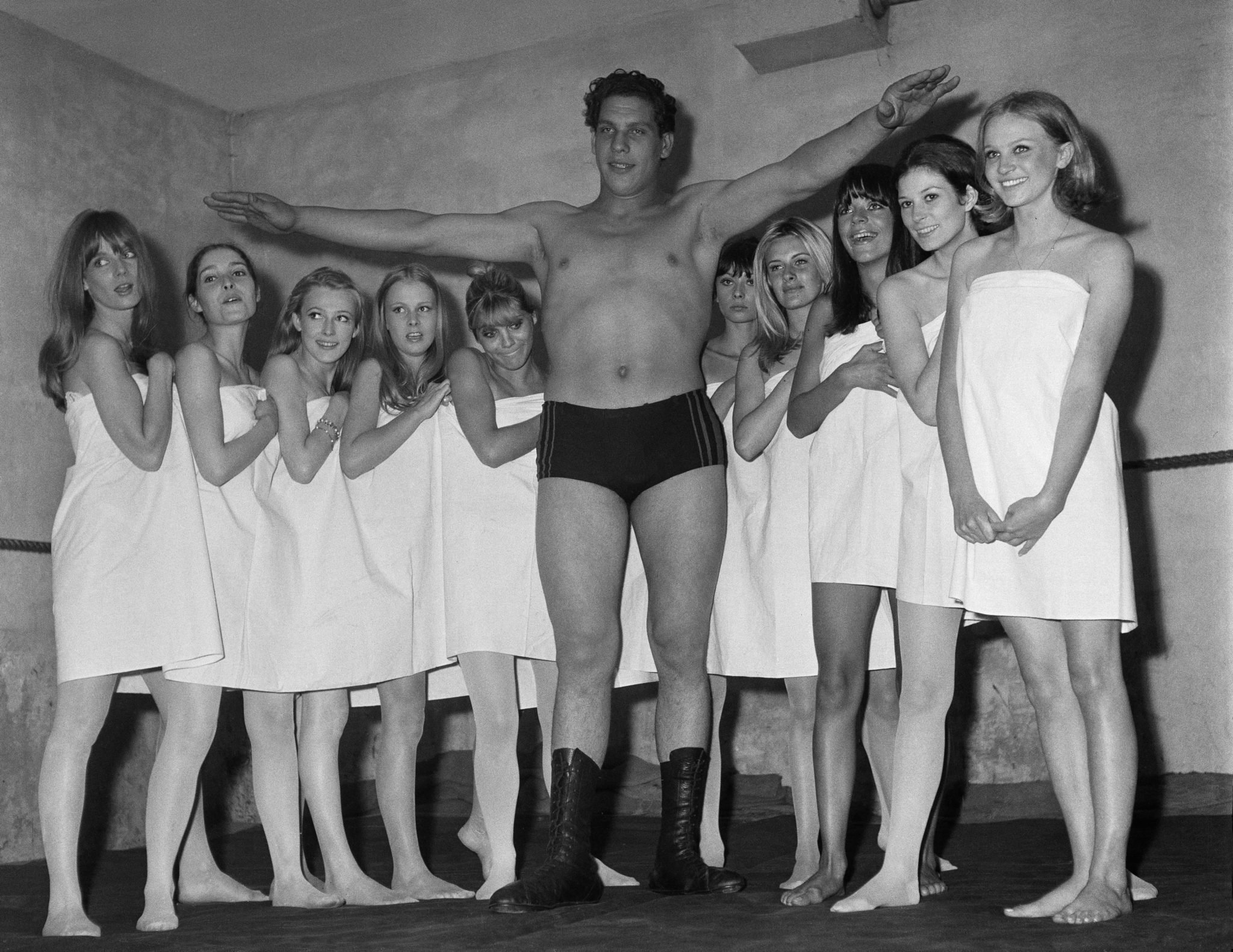
Promoters like Vince McMahon Sr. and later Vince McMahon Jr. recognized that André’s sheer size—standing over seven feet tall and weighing upwards of 500 pounds—was his primary commercial draw. Consequently, print media, sports journalism, and television broadcasts frequently leaned into hyperbole. Tabloid newspapers and wrestling fanzines routinely published exaggerated statistics regarding every aspect of his body, transforming standard biological measurements into mythical proportions.
This environment of manufactured wonder created fertile ground for anatomical myths. Because the general public had rarely encountered human beings of such extreme proportions, outlandish claims about his physical dimensions were easily accepted without rigorous journalistic scrutiny. Over time, these unverified claims transitioned from wrestling ring hyperbole into mainstream urban folklore, reinforced by retellings in pop culture and early internet message boards.
Medical Context: Understanding Acromegaly and Gigantism
To analyze the factual basis behind the myths surrounding André the Giant, one must examine the medical condition that dictated his life: acromegaly, caused by an excess of growth hormone (GH) usually resulting from a benign pituitary tumor.
Unlike standard gigantism where growth occurs proportionally during childhood, acromegaly often manifests when the pituitary gland produces excess growth hormone after normal bone growth plates have closed. This results in the enlargement of hands, feet, facial features, and internal organs. However, medical literature does not support the premise that acromegaly results in extreme, anomalous enlargement of anatomical features outside the standard framework of proportionate or proportional-adjacent scaling driven by the endocrine disorder.
Endocrinologists and medical historians who study pituitary disorders note that while individuals with gigantism experience significant skeletal and soft-tissue enlargement, popular culture often misinterprets the medical manifestations of the condition. The human body scales according to complex genetic and physiological blueprints; extreme height and bone mass do not translate into uniform, exponential increases across every bodily dimension. Therefore, medical science views unverified anatomical folklore as a cultural phenomenon rather than a physiological reality.
The Role of Cinema Lore: The Princess Bride and Behind-the-Scenes Mythmaking
Much of the modern reinforcement of the André the Giant anatomy myth can be traced back to anecdotes shared by the cast and crew of the 1987 film The Princess Bride, in which André portrayed Fezzik.
Director Rob Reiner, co-stars like Cary Elwes and Mandy Patinkin, and various crew members frequently shared humorous behind-the-scenes stories during press tours and documentaries regarding André’s massive capacity for food, alcohol, and physical strength. While these stories were generally shared with affection and admiration for his gentle demeanor, the hyperbolic style of Hollywood storytelling naturally lent itself to exaggeration.
In interviews, cast members occasionally recounted lighthearted locker-room or set-related banter about his size, which fans and media outlets subsequently embellished. In the decades following André’s passing in 1993, these anecdotes solidified in popular culture, transforming from casual on-set camaraderie into widely circulated internet lore. The lack of primary sources or verified measurements from these anecdotes highlights how casual storytelling can be mistaken for historical documentation within entertainment media.
Analyzing Historical Documentation and Measurement Standards
Evaluating the validity of any historical claim regarding human anatomy requires looking at verifiable records, such as medical charts, passport applications, professional athletic commission filings, and reliable biographical accounts.
| Source Type | Nature of Documentation | Reliability Regarding Anatomy |
|---|---|---|
| Medical Records | Physician notes, hospital admissions, endocrine evaluations. | High for skeletal height, weight, and general health status; private regarding specific anatomical details. |
| Wrestling Promotions | Promotional bios, ring announcements, merchandise copy. | Low; routinely exaggerated for entertainment and marketing impact. |
| Tabloid Media | Sensationalist newspapers, entertainment magazines, unverified columns. | Very low; prioritizes shock value, sensationalism, and urban legend propagation over fact-checking. |
| Biographical Memoirs | Accounts by peers, directors, and wrestling colleagues. | Moderate for general character and physical presence; variable for specific measurements due to reliance on memory and humor. |
As demonstrated by the documentation spectrum, official medical evaluations and formal athletic records provide the only verifiable baselines for André’s physical dimensions. None of these credible repositories contain verifiable data supporting the sensationalized claims propagated by tabloid media. Historians and biographers, such as Box Brown in his biographical graphic novel Andrè the Giant: Life and Legend, emphasize that the man's real-life struggles with chronic pain, travel difficulties, and his immense kindness far outweighed the sensationalized myths that followed his career.
Frequently Asked Questions
What caused André the Giant's immense size?
André the Giant suffered from acromegaly, a hormonal disorder caused by a benign tumor on the pituitary gland that resulted in excess growth hormone production, leading to his extreme height and weight.
Where did the anatomical myths about André the Giant originate?
The myths primarily originated from a mix of 1970s and 1980s wrestling promotion hyperbole, tabloid journalism, and embellished behind-the-scenes anecdotes from his time filming The Princess Bride.
Are there official medical records confirming these myths?
No. Official medical records document his height, weight, and the progression of acromegaly, but do not contain any verification of the sensationalized anatomical claims found in urban folklore.
How did André the Giant feel about his size?
While his size made him a global superstar and a beloved entertainer, acromegaly caused him chronic physical pain, joint issues, and significant challenges with everyday infrastructure, such as standard hotel beds and airline seats.
Practical Perspectives on Media Literacy and Folklore
When examining historical figures who existed larger-than-life in the public eye, maintaining a distinction between verified fact and entertainment folklore is essential. The media ecosystem surrounding professional wrestling and classic cinema often relies on mythmaking to sustain cultural fascination. By relying on verifiable medical context, biographical research, and critical media analysis, observers can appreciate André the Giant’s genuine legacy as a pioneering athletic entertainer and gentle human being without relying on unverified sensationalism.