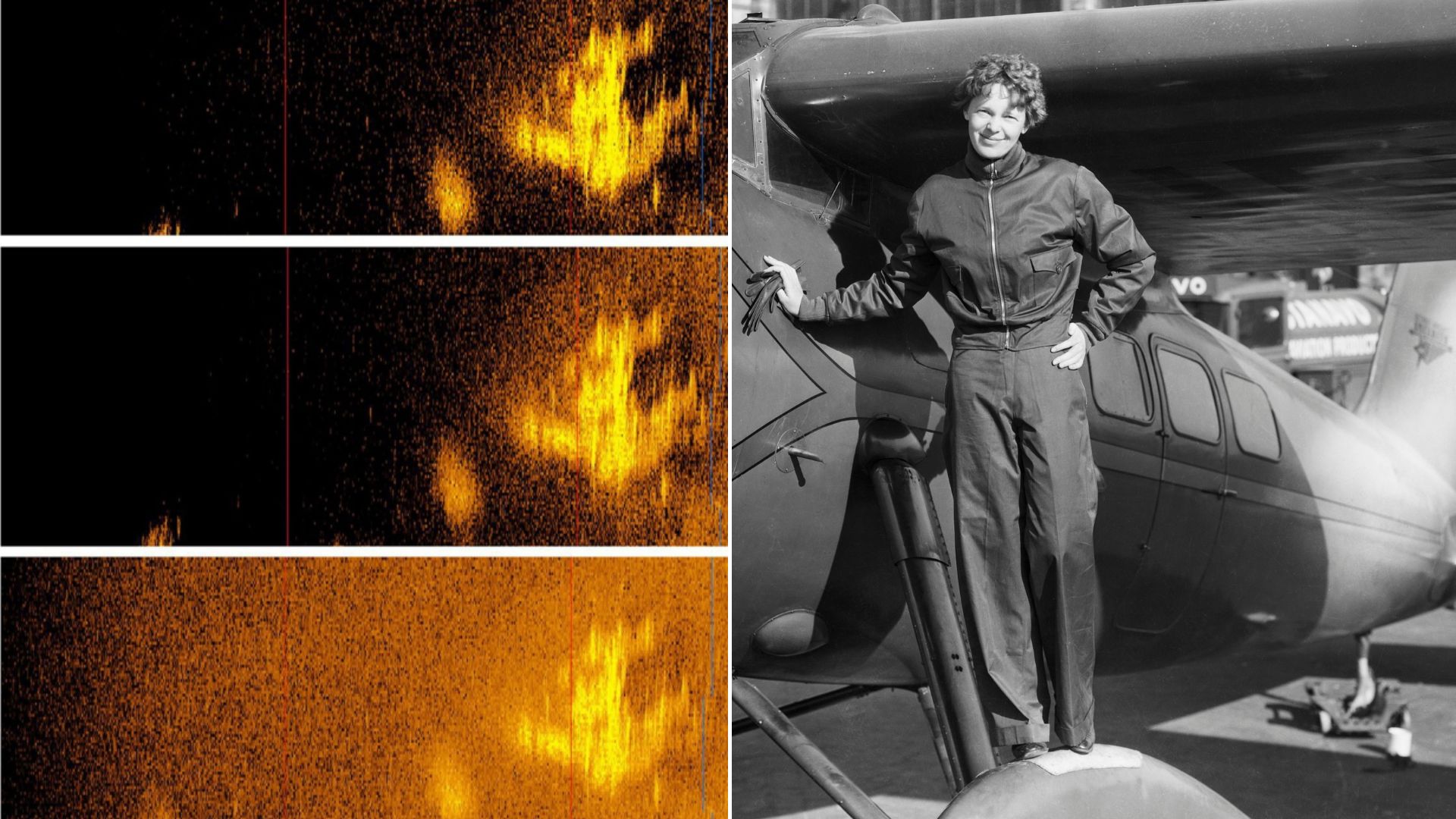
As of 2026, Amelia Earhart has never been officially found. Despite numerous high-tech expeditions, forensic re-evaluations of skeletal remains, and the 2024 discovery of a compelling sonar image on the ocean floor, no physical evidence—such as DNA-verified remains or serial-numbered aircraft wreckage—has been recovered to definitively close the case of her 1937 disappearance.
The disappearance of Amelia Earhart and her navigator, Fred Noonan, remains the most tantalizing unsolved mystery in aviation history. On July 2, 1937, during an attempt to become the first woman to circumnavigate the globe, Earhart and Noonan vanished over the central Pacific Ocean. The massive search that followed, and the decades of private investigations that have occurred since, have turned a tragic accident into a cultural phenomenon. To understand why we are still looking nearly a century later, one must examine the specific evidence, the leading theories, and the profound impact Earhart had on the world.
The Final Flight: A Brief Chronology of July 2, 1937
Amelia Earhart’s "World Flight" was nearing its end when she took off from Lae, New Guinea, heading for Howland Island, a tiny sliver of land in the vast Pacific. The journey was roughly 2,556 miles, a grueling distance for the Lockheed Electra 10E. The aircraft was heavily modified with extra fuel tanks, but the margin for error was razor-thin.
The flight relied on a combination of dead reckoning, celestial navigation performed by Noonan, and radio direction finding. As they approached the vicinity of Howland Island, Earhart radioed the USCG Itasca, a Coast Guard cutter stationed there to provide a radio "beacon" for her. However, communication was plagued by technical difficulties. Earhart could hear the Itasca, but she could not receive their signals clearly enough to determine a bearing.
At 8:43 AM, her final confirmed transmission stated: "We are on the line 157 337... we are running on line north and south." This referred to a sun line of position passing through Howland Island. After that, the Electra fell silent. The U.S. Navy and Coast Guard launched the largest and most expensive search in history to that date, covering over 250,000 square miles of ocean, but they found nothing.
The Leading Hypotheses: Where Is the Electra?
Since 1937, three primary theories have dominated the discourse. Each is supported by different types of circumstantial evidence, ranging from radio logs to skeletal measurements.
1. The Crash and Sink Theory
This is the official position of the U.S. government and many mainstream historians. It suggests that Earhart and Noonan simply ran out of fuel and ditched the aircraft in the deep ocean near Howland Island. Given the weight of the Electra’s engines, the plane likely sank quickly to depths of 16,000 to 18,000 feet. At these depths, the pressure is immense and the terrain is rugged, making it incredibly difficult for sonar to distinguish a small aircraft from rock formations.
The "Crash and Sink" theory is supported by the lack of credible radio signals after the initial disappearance and the immense difficulty of hitting a target as small as Howland Island using 1930s navigation tools.
2. The Nikumaroro (Gardner Island) Hypothesis
Promoted largely by The International Group for Historic Aircraft Recovery (TIGHAR), this theory posits that Earhart and Noonan missed Howland but landed on the flat reef of Gardner Island (now Nikumaroro), about 350 miles to the south.
The evidence for this includes:
- Radio Signals: For several days after the disappearance, amateur radio operators reported hearing distress calls that some experts believe could have originated from the Electra while it was on the reef, using a battery-powered engine.
- Skeletal Remains: In 1940, a British colonial officer found a partial skeleton on the island. While initial 1940s measurements suggested a male, a 2018 forensic analysis by Dr. Richard Jantz concluded that the bones were more consistent with Earhart’s morphology than 99% of the general population.
- Artifacts: Expeditions have recovered items like a woman’s shoe heel, a piece of Plexiglas, and a jar of freckle cream, though none have been definitively linked to Earhart.
3. The Japanese Captivity Theory
A more controversial theory suggests that Earhart and Noonan drifted into the Marshall Islands, which were then under Japanese mandate. Proponents argue they were captured as spies and died in custody on Saipan. While this theory has been the subject of several documentaries, it lacks the physical evidence seen in the other two hypotheses and is generally dismissed by the Smithsonian Institution and the U.S. Navy.
The 2024 Deep Sea Vision Breakthrough
In early 2024, the search for Earhart entered a new era. Tony Romeo, a former Air Force intelligence officer and CEO of Deep Sea Vision, released a sonar image captured by an underwater drone approximately 100 miles from Howland Island. The image depicts a blurry, aircraft-shaped object at a depth of 16,000 feet.
What makes this find significant is the "H-tail" shape visible in the sonar, which mirrors the twin-vertical stabilizers of the Lockheed Electra. While some experts caution that it could be a rock formation or an unrelated wreck, it represents the most promising lead in decades. As of 2026, plans for follow-up missions using Remotely Operated Vehicles (ROVs) to capture high-definition imagery and potential serial number verification are the primary focus of the search community.
Comparison of Evidence: Major Hypotheses
| Hypothesis | Primary Evidence | Major Weakness | Current Status (2026) |
|---|---|---|---|
| Crash and Sink | Fuel calculations; last radio transmission location. | No wreckage found for 87+ years. | Most widely accepted scientific theory. |
| Nikumaroro | 1940 bones; artifacts; radio distress logs. | DNA from bones is lost/unverifiable. | Ongoing debate; TIGHAR continues analysis. |
| Deep Sea Vision | 2024 Sonar image showing aircraft-like shape. | Needs visual confirmation and identification. | Currently the most active area of exploration. |
| Japanese Captivity | Eyewitness accounts from Saipan/Marshall Islands. | Zero physical evidence or Japanese records. | Largely considered a conspiracy theory. |
Why the Mystery Still Matters in 2026
The persistence of the search for Amelia Earhart is not merely about finding a pile of aluminum at the bottom of the sea. It matters for three fundamental reasons: its impact on aviation, its role in women’s history, and the advancement of search technology.
A Beacon for Women’s Empowerment
Amelia Earhart was more than a pilot; she was a global icon of the burgeoning feminist movement. At a time when women were often confined to domestic roles, Earhart was setting records, promoting commercial flight, and serving as a career counselor to female students at Purdue University.
Her disappearance mid-flight froze her in time as a symbol of courage and risk-taking. Solving the mystery matters because it provides a final chapter to the life of a woman who paved the way for millions of female aviators and professionals. To many, "finding Amelia" is a way of honoring her legacy by ensuring her story has an ending.
Advancing Deep-Sea Exploration Technology
The hunt for the Electra has inadvertently pushed the boundaries of what humans can do in the deep ocean. Each major search mission—from those led by Robert Ballard (who found the Titanic) to the recent Deep Sea Vision expedition—utilizes cutting-edge technology.
Searchers use Autonomous Underwater Vehicles (AUVs), sophisticated sonar arrays, and high-frequency acoustic imaging. The techniques developed to find a small plane in the vast Pacific have direct applications in:
- Mapping the ocean floor for environmental research.
- Recovering black boxes from modern commercial airline disasters.
- Maintaining undersea infrastructure like internet cables and pipelines.
The Human Need for Closure
History is often messy and unresolved. The Earhart disappearance is one of the few "pure" mysteries left from the 20th century. In a world of GPS and constant connectivity, the idea that a world-famous person could simply vanish remains fascinating. For historians and scientists, the search is a test of our ability to reconstruct the past using modern forensic tools.
Technical Challenges: Why is it So Hard to Find Her?
The difficulty of finding the Electra cannot be overstated. The search area near Howland Island is characterized by extreme depths and "seamounts"—underwater mountains—that can reach thousands of feet in height.
- Depth and Pressure: At 16,000 feet, the pressure is over 7,000 pounds per square inch. Only a handful of specialized submersibles can operate at this depth.
- Acoustic Shadows: Sonar works by bouncing sound waves off objects. In a rugged underwater environment, shadows created by rocks can easily hide an airplane or make a rock look like a wing.
- The "Coriolis Effect" and Navigation: Noonan and Earhart were using 1930s tools. Small errors in chronometer timing or wind speed estimations could have put them dozens, or even hundreds, of miles off course.
- Decomposition: While aluminum does not rust like steel, "galvanic corrosion" in saltwater can eventually cause a plane's skin to dissolve, leaving only the heavier engines and frame.
The Significance of the Lockheed Electra 10E
Understanding the aircraft itself helps explain the search. The Lockheed Electra 10E was an all-metal, twin-engine transport plane. It was "state of the art" for 1937, featuring variable-pitch propellers and a retractable landing gear.
However, it was not designed for the extreme transoceanic distances Earhart was attempting. The modifications made to the plane—specifically the removal of some radio equipment to save weight and the addition of massive fuel tanks in the fuselage—made it a "flying gas tank." If Earhart crashed into the water at high speed, the plane likely broke apart. If she ditched successfully, it might have floated for a short time before the heavy Pratt & Whitney Wasp engines pulled it down.
FAQs About Amelia Earhart's Disappearance
Did they find Amelia Earhart's plane in 2024?
In early 2024, the company Deep Sea Vision released sonar images of an object that resembles an airplane on the Pacific floor. However, it has not been confirmed to be Earhart’s Lockheed Electra. Visual verification via ROV is required to confirm the identity of the object.
Were bones ever found that belonged to Earhart?
In 1940, several bones were found on Nikumaroro Island. They were initially identified as male, but modern forensic re-analysis of the measurements suggests they are a strong match for Amelia Earhart. Unfortunately, the actual bones were lost decades ago, so DNA testing is currently impossible.
How did Amelia Earhart's plane run out of fuel?
Earhart’s flight from Lae to Howland was at the very limit of the Electra’s range. Headwinds were stronger than anticipated, and navigation difficulties meant she spent extra time searching for the island. Her final radio transmissions indicated she was flying on a "line" searching for land, suggesting her fuel reserves were nearly exhausted.
What happened to Fred Noonan?
Fred Noonan, Earhart's navigator, disappeared along with her. If the Nikumaroro theory is correct, he may have died shortly after the landing. If the crash-and-sink theory is correct, he likely perished upon impact or soon after the plane sank. No separate evidence of Noonan's fate has ever been found.
Why was the search so expensive?
In 1937, the U.S. government spent an estimated $4 million on the search, which would be over $80 million today. The search involved the aircraft carrier USS Lexington, the battleship USS Colorado, and several other vessels. It was a matter of national pride and a reflection of Earhart's status as a national hero.
Practical Next Steps for Enthusiasts and Researchers
For those following the mystery in 2026, the most critical "next action" is to monitor the results of the Deep Sea Vision follow-up expeditions. If the sonar target 100 miles from Howland Island is confirmed as a Lockheed Electra, it will be the most significant archaeological find of the century.
If you are interested in the historical data, the Smithsonian National Air and Space Museum and the TIGHAR archives offer the most comprehensive collections of flight logs, radio transcripts, and forensic reports. Understanding the technical limitations of 1937 aviation remains the best way to appreciate why this mystery has survived for nearly a hundred years.
Amelia Earhart's disappearance remains a poignant reminder of the risks taken by pioneers. Whether she is eventually found at the bottom of the ocean or on a remote coral atoll, her legacy as a pilot who dared to fly into the unknown is already secure.