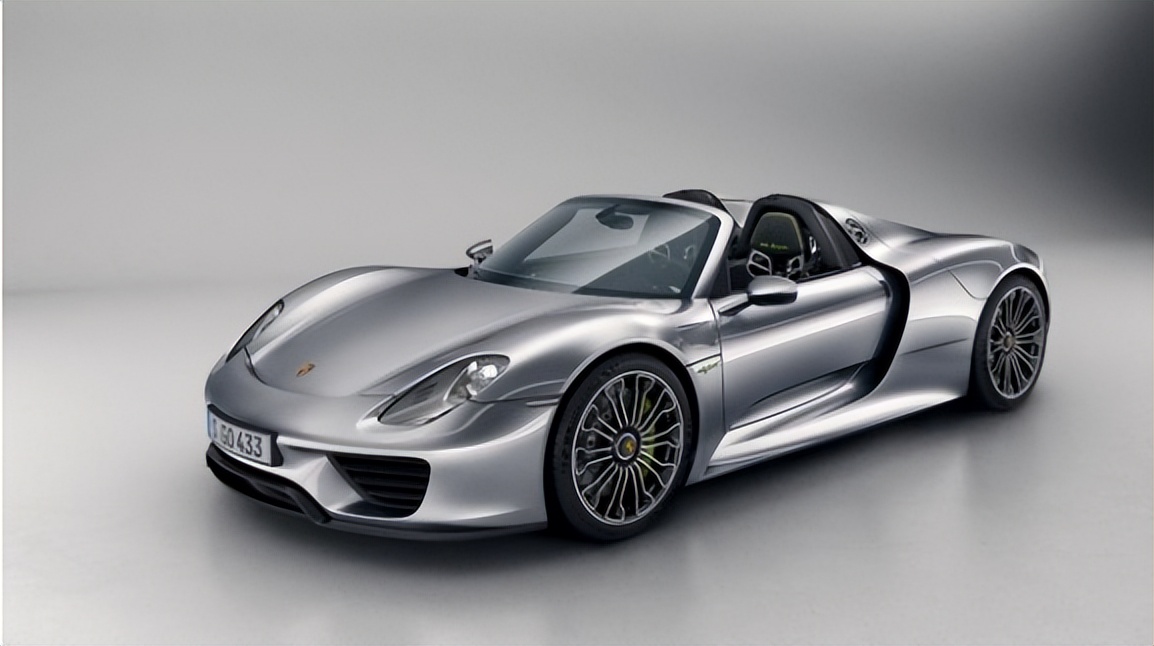
All-wheel-drive supercars master high-horsepower deployment by distributing engine output across all four contact patches, transforming monumental traction limits into accessible acceleration and stable high-speed handling. While traditional supercars relied exclusively on rear-wheel-drive configurations for purist dynamics, contemporary engineering demands all-wheel systems to harness outputs exceeding 1,000 horsepower safely, ensuring precise torque vectoring, blistering off-the-line acceleration, and unyielding wet-weather composure without sacrificing the evocative styling and aerodynamic complexity expected of elite performance machines.
The Paradigm Shift: From Rear-Wheel Purity to All-Wheel Dominance
For decades, the archetype of the supercar was defined by a mid-engine layout driving the rear wheels. This configuration offered balanced weight distribution and communicative steering untainted by mechanical linkage to the front axle. However, as engine technology advanced from naturally aspirated V8s and V12s to heavily turbocharged powerplants and sophisticated hybrid powertrains, rear-wheel-drive layouts encountered fundamental physical limitations. When outputs surpassed the 600-horsepower threshold, rear tires routinely overwhelmed available traction during acceleration, even at highway speeds, necessitating electronic traction control interventions that interrupted power delivery.
The introduction of sophisticated all-wheel-drive (AWD) systems in supercars solved these tractive limits fundamentally. By splitting torque between the front and rear axles, manufacturers could double the contact patch area responsible for transmitting longitudinal acceleration forces to the pavement. Early attempts at AWD supercars—such as the Porsche 959 and the Lamborghini Diablo VT—proved that driven front wheels could enhance stability, but they also introduced mechanical complexity and understeer. Modern AWD supercars have eradicated these compromises through digital torque vectoring, lightweight carbon-fiber architecture, and lightning-fast electro-hydraulic or fully electric clutches that dynamically shift power in milliseconds.
This shift has redefined what drivers expect from high-performance flagships. An AWD supercar is no longer viewed as a heavy, front-biased grand tourer designed solely for poor-weather driving. Instead, elite models utilize intelligent all-wheel-drive hardware to achieve physics-defying launch control times, cornering speeds that pull lateral gs well beyond the capabilities of older rear-drive equivalents, and an unprecedented level of confidence for drivers exploiting high-output machinery across diverse real-world environments.
Powertrain Engineering: Managing Massive Horsepower
Harnessing over 800 horsepower requires meticulous management of mechanical and electrical energy flow. Modern AWD supercars employ varied drivetrain topologies, ranging from traditional mechanical prop-shaft systems with active center differentials to decentralized multi-motor electric architectures that eliminate mechanical connections entirely between the front and rear axles.
Mechanical vs. Electrified All-Wheel-Drive Systems
Conventional AWD supercars, such as the Lamborghini Revuelto or the Porsche 911 Turbo S, rely on internal combustion engines paired with multi-plate clutches or transaxle layouts to send power forward when slip is detected or anticipated. These systems preserve the direct mechanical feedback of a combustion engine while offering instantaneous electronic modulation. In contrast, electrified supercars like the Acura NSX Type S (which uses front electric motors and a rear twin-turbo V6) or fully electric hypercars like the Rimac Nevera use independent motors for each wheel. This setup enables independent torque vectoring—applying positive torque to the outside wheels and regenerative braking or negative torque to the inside wheels—to rotate the car through corners with surgical precision.
Torque Vectoring and Slip Mitigation
The true brilliance of modern AWD systems lies in their predictive software. Wheel-speed sensors, steering angle encoders, yaw sensors, and G-force meters sample vehicle dynamics hundreds of times per second. Algorithms analyze this data to predict traction loss before it occurs. If the rear tires begin to slip during a corner exit, the system instantly routes torque to the front wheels, pulling the car onto the intended line. This capability transforms power delivery from a reactive struggle against wheel spin into a proactive force multiplier.
| Vehicle Architecture | Typical Power Source | Torque Distribution Method | Primary Advantage |
|---|---|---|---|
| Mechanical AWD | Twin-Turbo or V12 Engine + Transaxle | Electro-hydraulic multi-plate clutch / center diff | Direct mechanical engagement, high continuous thermal thresholds |
| Hybrid AWD | Combustion Engine (Rear) + Electric Motors (Front) | Decoupled electric front axle + mechanical rear | Instant torque fill, zero-lag throttle response, torque vectoring |
| Quad-Motor Electric | Four Independent Electric Motors | Independent software-controlled inverter outputs | Absolute per-wheel torque manipulation, zero mechanical drivetrain loss |
Aerodynamics and Exterior Design in AWD Supercars
The integration of all-wheel-drive hardware—such as front differentials, half-shafts, and secondary cooling radiators—places unique demands on the exterior design and aerodynamic packaging of a supercar. Unlike rear-wheel-drive platforms where the front end can be tightly tapered around steering geometry, AWD supercars must balance mechanical packaging constraints with aggressive aerodynamic efficiency.
Cooling Management for Dual-Axle Systems
AWD supercars generate substantial thermal loads. Not only does the primary engine or hybrid system require extensive cooling via side and front air intakes, but the front differential, transfer cases, and power electronics also demand dedicated thermal management circuits. Designers must carve functional cooling ducts into the front fascia without disrupting high-speed aerodynamic downforce. These large intakes and splitter designs often define the predatory aesthetic of modern AWD performance flagships, ensuring air is efficiently routed through low-temperature radiators before exiting through hood vents or wheel arches.
Aerodynamic Balance and High-Speed Stability
Because AWD supercars achieve significantly higher cornering speeds and explosive acceleration out of slow turns, aerodynamic stability is critical. Designers use active aerodynamic elements—such as rear wings that adjust angle of attack under braking or front diffusers with active flaps—to maintain a stable aerodynamic center of pressure. When an AWD system transfers power to the front wheels, the front tires experience simultaneous cornering and acceleration forces (combined slip). Maintaining optimal vertical downforce over the front axle is essential to ensure the steering tires retain bite and directional authority during hard acceleration out of apexes.
Driving Dynamics: Performance on Track and Street
The real-world manifestation of AWD engineering is felt in three distinct operational phases: launch, mid-corner rotation, and power-down exit. Understanding how all-wheel-drive alters these dynamics clarifies why manufacturers have embraced the layout for their halo models.
Launch Control and Acceleration Physics
Off-the-line acceleration is where AWD supercars achieve their most staggering performance metrics. In a rear-wheel-drive vehicle, maximum acceleration is strictly bound by the coefficient of friction of the rear tires and the dynamic weight transfer over the rear axle. AWD systems bypass this constraint by utilizing all four contact patches. When launch control is engaged, the drivetrain locks or tightly pre-loads the clutches, distributing torque to prevent wheel spin while maximizing thrust. This explains why contemporary AWD supercars achieve zero-to-sixty miles per hour times under 2.5 seconds—figures previously restricted to dedicated dragsters.
Conquering Understeer: The Modern AWD Advantage
Historically, critics of AWD supercars cited terminal understeer—the tendency of the car to push wide in tight corners due to the front tires handling both steering inputs and driving forces simultaneously. Modern engineering has systematically eliminated this trait through torque vectoring. By over-driving the outside rear wheel and under-driving or braking the inside wheels, torque vectoring generates a yaw moment that actively pivots the car into the turn. Consequently, modern AWD supercars exhibit neutral handling characteristics that allow drivers to apply throttle much earlier in a corner than would ever be safe in a rear-wheel-drive equivalent.
Practical Considerations: Ownership, Maintenance, and Usability
While track performance is a primary metric, supercars are increasingly evaluated on their usability across varied real-world conditions. The addition of all-wheel-drive fundamentally alters the ownership proposition regarding daily drivability, maintenance requirements, and operational costs.
All-Weather Capability and Daily Drivability
The most tangible benefit of an AWD supercar for the everyday owner is weather versatility. High-performance summer tires demand ambient temperatures above 45°F (7°C) and dry asphalt to generate grip. However, an AWD system paired with high-performance winter or all-season tires transforms a low-slung exotic into a capable machine for cold-weather driving. The computer's ability to modulate power delivery across slippery surfaces prevents sudden spinouts, making high-horsepower exotics far more approachable during adverse weather conditions.
Maintenance Complexity and Long-Term Costs
Owning an AWD supercar involves higher long-term maintenance overhead compared to simpler rear-wheel-drive or front-engine layouts. Key operational factors include:
- Drivetrain Fluid Intervals: Transfer cases, front differentials, and electro-hydraulic clutches require frequent fluid changes using specialized, high-cost synthetic lubricants.
- Tire Wear Synchronization: AWD systems are exceptionally sensitive to rolling circumference differences. If tires wear unevenly, the rotational speed discrepancies can overheat or damage center differentials and transfer cases. Replacing all four tires simultaneously—even if only one is damaged—is often mandatory.
- Component Weight and Complexity: The additional hardware adds mass (typically 150 to 300 pounds over a comparable rear-wheel platform), which places higher continuous loads on suspension bushings, dampers, and carbon-ceramic brake systems.
Frequently Asked Questions
Do all-wheel-drive supercars eliminate the fun of oversteer?
No. Modern AWD systems are heavily rear-biased, often sending 90% or more of engine torque to the rear wheels during normal driving conditions. Furthermore, many modern supercars feature variable drift modes or completely disengageable front axles, allowing drivers to induce oversteer and manage slides on a race track while retaining the safety net of front-axle intervention when needed.
Are AWD supercars significantly heavier than rear-wheel-drive models?
They are heavier, but engineering advancements have minimized the penalty. The inclusion of prop shafts, differentials, and extra actuators typically adds between 150 and 300 pounds. Manufacturers offset this added mass through extensive use of carbon fiber monocoques, aluminum chassis subframes, and lightweight lithium-ion electrical systems.
How do tires affect the performance of an AWD supercar?
Tires are the single most critical component determining an AWD supercar's capabilities. Because all-wheel-drive systems rely entirely on the friction between the rubber and the road to transfer torque, worn or incorrect tires will immediately compromise acceleration, braking distances, and stability control responsiveness. Maintaining precise tire pressures and matching tread depths across all four corners is mandatory.
Can an AWD supercar be driven in snow and heavy rain safely?
Yes, provided it is equipped with appropriate winter or all-weather tires. While the AWD system provides superior traction and stability compared to rear-wheel-drive cars in wet or snowy conditions, ground clearance remains low, and carbon-ceramic brakes can take longer to reach operating temperatures in freezing weather.
Why do some manufacturers offer both RWD and AWD versions of the same supercar?
Offering both configurations allows manufacturers to cater to distinct buyer preferences. Rear-wheel-drive variants are typically lighter, offer purist steering feel, and appeal to track enthusiasts who value progressive breakaway characteristics. AWD variants appeal to buyers seeking maximum off-the-line acceleration, wet-weather usability, and high-speed stability.
Conclusion and Next Actions
All-wheel-drive supercars represent the pinnacle of modern automotive engineering, successfully reconciling the competing demands of monumental power output, track-bred performance, and real-world stability. By intelligently distributing torque across all four contact patches, these machines have redefined the performance envelope without sacrificing the striking design and aerodynamic sophistication expected of the genre. For prospective buyers or enthusiasts evaluating these vehicles, the next logical step is to analyze specific drivetrain architectures, review professional instrumented test data for targeted models, and arrange track-day demonstrations to experience the distinct balance of mechanical grip and dynamic adjustability firsthand.