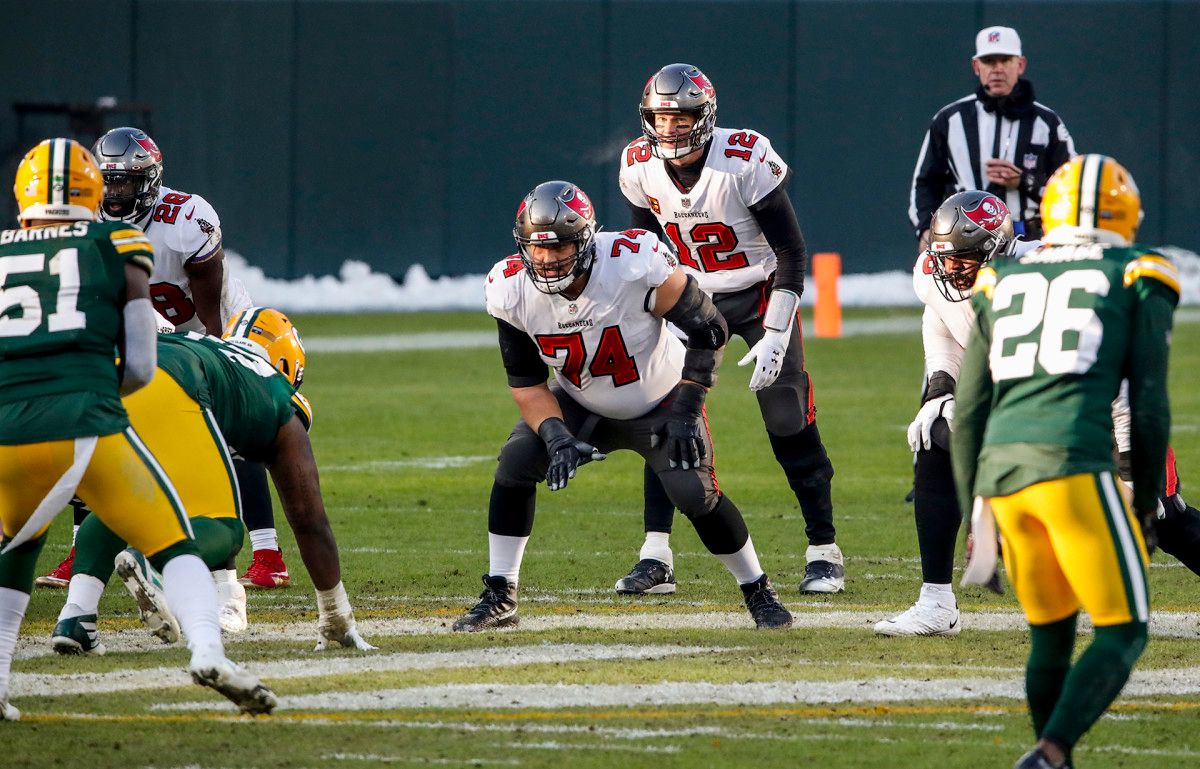
As of 2026, Ali Marpet’s estimated net worth is widely considered to be in the range of $8 million to $12 million. This valuation is primarily derived from his successful seven-year career as an offensive lineman in the National Football League, where he played exclusively for the Tampa Bay Buccaneers from 2015 until his retirement following the 2021 season.
The Professional Foundation: NFL Earnings
To understand Ali Marpet’s financial standing, one must look at his professional trajectory within the NFL. Drafted in the second round (61st overall) of the 2015 NFL Draft out of Hobart College, Marpet represented a rare success story from a Division III program. His entry into the league was marked by immediate professional viability, as he signed a four-year rookie contract valued at approximately $3.5 million.
During his tenure, Marpet transitioned from a guard to a center and back to a guard, establishing himself as a cornerstone of the Tampa Bay Buccaneers’ offensive line. His financial growth accelerated significantly following his rookie contract. In 2018, Marpet signed a five-year, $54.1 million contract extension with the Buccaneers. While the total value of this deal was substantial, it is important to note that actual cash received is influenced by guaranteed money, roster bonuses, and the tax implications associated with professional athlete earnings.
Career Earnings vs. Net Worth Calculations
Calculating the net worth of a former professional athlete requires distinguishing between gross career earnings and actual wealth retention. Between 2015 and 2021, Marpet’s cumulative NFL salary earnings totaled roughly $45 million to $50 million before taxes, agent fees, and lifestyle expenditures.
When analysts estimate his current net worth in 2026, they account for several factors that typically reduce the headline salary figures of NFL players:
- Federal and State Taxes: Professional athletes are subject to high tax brackets. Furthermore, they often pay "jock taxes" in various states where games are played, significantly reducing the take-home pay from each game check.
- Agent and Representation Fees: Standard NFL player representation contracts typically range from 1% to 3% of the player's total contract value.
- Investment and Lifestyle Expenditures: Net worth is a snapshot of assets minus liabilities. While Marpet earned a significant salary, the amount remaining depends on his portfolio performance and personal financial management since his retirement in 2022.
Financial Summary: Contractual Milestones
The following table outlines the major contractual milestones that shaped Marpet’s financial career. These figures represent the total contract value at the time of signing rather than annual take-home pay.
| Contract Phase | Years Active | Estimated Value | Context |
|---|---|---|---|
| Rookie Contract | 2015–2018 | $3.5 Million | Standard 4-year deal for 2nd round pick |
| Contract Extension | 2018–2023 | $54.1 Million | 5-year deal including $27M guaranteed |
| Retirement Status | 2022–Present | N/A | Retired after the 2021-2022 season |
The Impact of Early Retirement
Ali Marpet’s decision to retire at the age of 28, following the 2021 season, is a significant variable in his long-term financial picture. While he walked away from the final years of his contract, he had already secured a substantial portion of his career earnings. Athletes who retire early often do so to mitigate long-term health risks, which in turn preserves their quality of life—an intangible asset that influences how they manage their wealth post-career.
By retiring in his prime, Marpet avoided the physical attrition that often leads to increased medical expenses or decreased earning capacity in the later stages of an NFL career. His transition away from professional sports occurred while he was still a highly regarded player, which is generally viewed as a positive for his long-term financial stability.
Asset Diversification and Financial Management
While specific details of Ali Marpet’s investment portfolio are private, most retired NFL athletes of his stature focus on a mix of wealth preservation and diversified income streams. Post-retirement, athletes typically leverage their earnings into various vehicles:
- Real Estate Holdings: Many NFL players invest in residential or commercial property as a hedge against inflation and a source of passive income.
- Equities and Fixed Income: Wealth managers for former athletes often prioritize diversified portfolios consisting of stocks, bonds, and mutual funds to ensure long-term sustainability.
- Business Ventures: Transitioning into private business or advisory roles is common for players who demonstrate high aptitude during their playing years.
It is important to note that any estimate of "net worth" is an approximation. Without access to private tax returns, investment accounts, or debt obligations, public figures' wealth estimates are derived from verified salary data and estimated market deductions.
Understanding the Limitations of "Net Worth" Estimates
Readers should be cautious when viewing net worth figures on the internet. These numbers are often projections based on public salary data and do not account for:
- Debt obligations: Mortgages, business loans, or personal liabilities.
- Market fluctuations: If a player has a significant portion of wealth in the stock market, their net worth can fluctuate daily.
- Philanthropic giving: Contributions to charities, foundations, or community initiatives, which are significant for many professional athletes.
For legal and financial purposes, one should consult with qualified financial advisors rather than relying on public estimates. Professional athletes are encouraged to utilize structures such as trusts and limited liability companies (LLCs) to protect their assets, which further obscures the public ability to track their true financial position.
Frequently Asked Questions (FAQ)
1. Is Ali Marpet still earning a salary from the NFL? No. Ali Marpet retired in February 2022. He does not earn a salary from the NFL, though he may be eligible for benefits through the NFL Player Pension Plan, which is funded based on years of service and active roster status.
2. Why are net worth estimates for athletes often different? Estimates vary because they are based on different assumptions regarding tax rates, investment strategies, and personal spending habits. Public sources only have visibility into gross salary data, not the actual after-tax, post-expenditure reality.
3. Did Ali Marpet lose money in his retirement? There is no public evidence to suggest that Ali Marpet suffered any significant financial losses. He retired voluntarily at 28, having secured millions in career earnings, which is generally considered a highly successful financial outcome for an NFL player.
4. Does Ali Marpet have endorsement deals that contribute to his net worth? While Marpet was a respected starter, he was not typically associated with high-profile national commercial endorsements compared to star quarterbacks or wide receivers. His wealth is predominantly built on his NFL salary and associated league performance bonuses.
5. How does a Division III background affect a player's earnings? Entering the NFL from a Division III school, as Marpet did, does not impact the standard rookie wage scale, which is dictated by draft position. However, it can influence a player's brand value and marketability, which often plays a role in off-field earnings.
Recommendations for Financial Context
If you are researching the net worth of professional athletes for personal financial education, it is more beneficial to study the structure of NFL contracts—specifically the difference between total contract value and guaranteed money. Understanding how the NFL salary cap works, the impact of "signing bonuses" versus "roster bonuses," and the tax obligations of professional athletes provides a more accurate picture of how wealth is generated in sports than a single, speculative dollar figure.
For those interested in the post-career paths of athletes, monitoring their public philanthropic work or business announcements provides a more concrete understanding of their ongoing professional activities than aggregated wealth estimations.