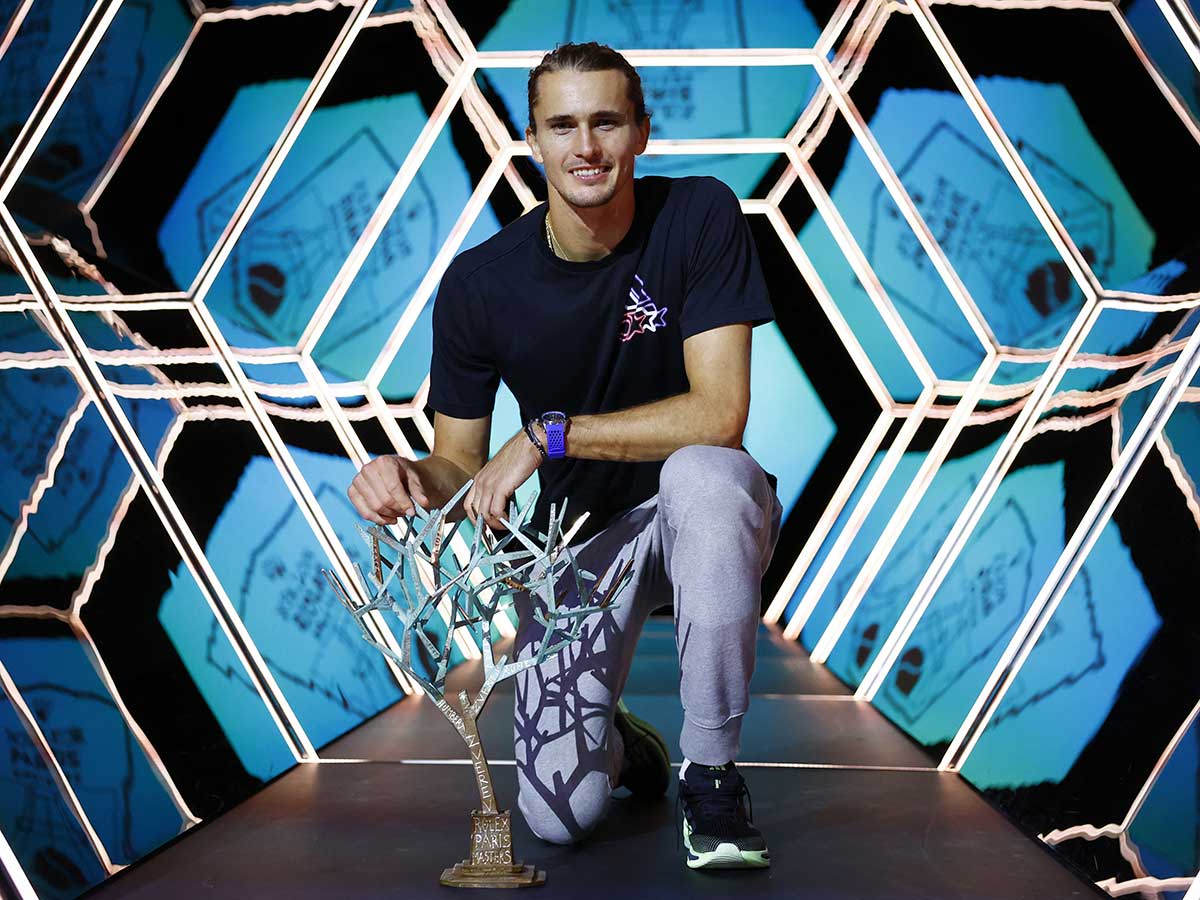
As of early 2026, Alexander Zverev maintains a prominent position within the ATP Top 5, currently solidified as the World No. 2. His ranking reflects a sustained period of high-level consistency across the 52-week rolling calendar, bolstered by deep runs in Grand Slams and multiple ATP Masters 1000 titles, keeping him in the elite tier of professional tennis.
Understanding Alexander Zverev’s Current Ranking Status
In the competitive landscape of the ATP Tour, the world ranking is a dynamic metric that rewards both peak performance and seasonal endurance. Alexander Zverev has masterfully navigated the transition from the "Big Three" era to the current rivalry dominated by Carlos Alcaraz and Jannik Sinner. Entering the 2026 season, Zverev’s position at World No. 2 is the result of a rigorous points-accumulation strategy that minimizes early-round exits and maximizes deep runs in high-value tournaments.
His ranking is currently supported by a significant points base earned during the 2025 season, which saw him reach the latter stages of the Australian Open and Roland Garros, while also claiming a Masters 1000 title on clay. For a player of Zverev’s caliber, maintaining a Top 3 seed is vital for tournament draws, as it ensures he avoids other top-tier seeds until at least the semifinals, thereby protecting his points from premature degradation.
The points gap between Zverev and the World No. 1 remains narrow, yet the primary obstacle to the top spot continues to be the lack of a Grand Slam title. In the ATP system, a Grand Slam winner receives 2,000 points, whereas a runner-up receives 1,300. This 700-point differential is often the deciding factor in the year-end rankings, explaining why Zverev has remained a consistent "shadow leader" without yet capturing the top crown.
The Mechanics of the ATP Ranking System
To understand how Zverev remains at the top, one must analyze the technical structure of the ATP Rankings. The system is based on a 52-week "rolling" window. Points earned at a tournament are dropped exactly one year later, meaning a player must "defend" their points by matching or exceeding their previous year's performance.
The Mandatory Tournaments
Zverev’s ranking is built on the 19 most significant tournament results. For a player of his status, these mandatory events include:
- The 4 Grand Slams: Australian Open, Roland Garros, Wimbledon, and the US Open.
- The 8 Mandatory Masters 1000s: Including Indian Wells, Miami, Madrid, Rome, Montreal/Toronto, Cincinnati, Shanghai, and Paris.
- The ATP Finals: Reserved for the top eight players of the year.
- Best of other events: Typically ATP 500 and ATP 250 tournaments.
Zverev has historically excelled in the Masters 1000 category. His game, characterized by a massive first serve and high-percentage baseline play, is particularly well-suited for the best-of-three format used in these events. His consistency in reaching quarterfinals or better in these mandatory events provides a "floor" for his ranking that few other players can match.
Historical Ranking Trends: 2017 to 2026
The trajectory of Alexander Zverev’s ranking is a study in resilience and technical evolution. He first broke into the Top 10 in 2017 after winning the Italian Open, signaling his arrival as a future star. Unlike many of his contemporaries who experienced volatile ranking swings, Zverev has spent the vast majority of the last nine years inside the Top 10.
The Rise and the 2022 Injury
In early 2022, Zverev reached a then-career high of World No. 2. He was on the verge of overtaking the No. 1 spot during a legendary semifinal match against Rafael Nadal at Roland Garros. However, a catastrophic ankle injury forced him into a long hiatus. His ranking naturally plummeted during late 2022 and early 2023 as he was unable to defend his points, dropping him out of the Top 20 for a brief period.
The Comeback and Stabilization
The 2023 and 2024 seasons were defined by his steady climb back to the elite level. By the end of 2024, Zverev had reclaimed his Top 5 status, proving that his game remained effective even after a major physical setback. His 2025 season was one of his most consistent to date, characterized by a high win percentage on clay and hard courts alike. This stabilization period has led to his current 2026 standing, where he is once again challenging for the summit of the rankings.
Surface Performance and Ranking Impact
A player’s ranking is rarely uniform across the season; it often ebbs and flows based on their preferred surface. Alexander Zverev is a multi-surface threat, which is essential for maintaining a high world ranking.
Clay Court Dominance
Zverev’s height and movement make him particularly dangerous on clay. His ranking typically sees a "surge" during the European clay-court swing (April–June). Success in Madrid, Rome, and Paris provides a massive influx of points. Because clay season points are concentrated in a three-month window, any injury during this time can be devastating for a ranking, as Zverev learned in 2022.
Hard Court Consistency
The majority of the ATP season is played on hard courts, including two Grand Slams and the lucrative end-of-year indoor swing. Zverev’s two titles at the ATP Finals (2018 and 2021) demonstrate his proficiency in these conditions. To maintain his current No. 2 position in 2026, he relies heavily on the North American hard-court swing and the indoor tournaments in Europe, where his serve is most effective.
Grass Court Limitations
Grass remains Zverev’s least productive surface in terms of points. While he has improved his net play and slice, he has historically struggled to reach the final stages of Wimbledon. From a ranking perspective, this is a missed opportunity. If Zverev were to achieve a deep run at Wimbledon, the additional 720 to 1,200 points would likely be enough to bridge the gap to the World No. 1 spot.
Comparative Analysis: ATP Points Distribution
To visualize how Zverev maintains his position, we can compare the point values of various tournament stages. This table illustrates why his consistency in Masters 1000s and Grand Slam semifinals is the engine behind his ranking.
| Tournament Category | Winner Points | Finalist Points | Semifinalist Points | Zverev’s 2025/2026 Average Performance |
|---|---|---|---|---|
| Grand Slam | 2,000 | 1,300 | 800 | Semifinalist / Finalist |
| ATP Masters 1000 | 1,000 | 650 | 400 | Winner / Semifinalist |
| ATP 500 | 500 | 330 | 200 | Finalist |
| ATP 250 | 250 | 165 | 100 | Frequently Skips |
| ATP Finals | 1,500 (max) | Varies | Varies | Qualified (Top 8) |
Note: ATP Finals points are cumulative based on round-robin wins (200 per win).
The Path to World No. 1: What is Missing?
While Alexander Zverev is firmly entrenched at World No. 2, the transition to No. 1 is the most difficult jump in professional tennis. The "No. 1" position requires not just consistency, but "Grand Slam dominance."
Currently, the points distribution favors players who win the major trophies. A player who wins one Grand Slam and loses in the first round of three others still earns 2,030 points. In contrast, a player who reaches four quarterfinals earns 1,600 points (400 per quarterfinal). Zverev’s ranking trend shows he is the "Quarterfinal King," often reaching the final eight or four in almost every event he enters. While this provides a high ranking floor, it lacks the 2,000-point "injection" needed to unseat a rival who wins a Major.
Furthermore, the 2026 landscape is dominated by younger rivals like Carlos Alcaraz and Jannik Sinner, who have demonstrated an ability to win Majors. For Zverev to reach the top, he must defeat these rivals in the final Sunday matches of the biggest tournaments, rather than merely accumulating points in the earlier rounds.
Technical Factors Influencing Future Trends
Several technical and physical factors will dictate whether Zverev’s ranking trends upward or begins a natural decline as he progresses through his late 20s.
- Service Percentage and Second Serve Reliability: Zverev’s ranking has historically been tied to his double-fault count. When his second serve is stable, he wins free points and shortens matches, preserving energy for long tournament runs.
- Physical Longevity: Having recovered from a major ankle surgery, his ability to handle the grueling 11-month ATP calendar is vital. Ranking points are only available to those who play; missing three months of the season usually results in a 10-15 place drop in the rankings.
- The "Next Gen" Pressure: As of 2026, a new wave of players in their early 20s is beginning to challenge the established order. Zverev must adapt his game to counter the aggressive baseline tactics of these younger opponents to prevent point erosion.
FAQ: Frequently Asked Questions
What is Alexander Zverev’s highest ever world ranking?
Alexander Zverev reached a career-high of World No. 2. He first achieved this in June 2022 and has returned to this position several times, including during the current 2026 season. Despite his many titles, he has yet to reach the World No. 1 spot.
Has Alexander Zverev ever been ranked No. 1?
No, as of early 2026, Alexander Zverev has never held the World No. 1 ranking. He has come within a few hundred points of the top spot on several occasions, but the dominance of Novak Djokovic, and subsequently the rise of Alcaraz and Sinner, has kept him in the No. 2 to No. 5 range.
How did the 2022 ankle injury affect his ranking?
The injury sustained at the 2022 French Open caused Zverev to miss the second half of the 2022 season and the start of 2023. Because he could not defend his points from the previous year, his ranking dropped from No. 2 to outside the Top 20. His climb back to the Top 5 took approximately 18 months of consistent play.
Which tournaments contribute the most to Zverev's ranking?
Zverev earns the bulk of his points from the ATP Masters 1000 circuit and the Grand Slams. Specifically, he has high point yields from Roland Garros, the Italian Open, the Madrid Open, and the Paris Masters. He also consistently earns significant points at the year-end ATP Finals.
Is Alexander Zverev’s ranking expected to stay in the Top 5 in 2026?
Based on his current form and the points he is defending, Zverev is highly likely to remain in the Top 5 throughout 2026. He has a very "stable" points profile, meaning he rarely loses in the first or second rounds, which protects him from sudden ranking collapses.
Final Recommendation for Following Zverev’s Progress
For fans and analysts tracking Alexander Zverev’s world ranking, the most critical period to watch is the European Clay Swing (April through June). Because Zverev typically performs exceptionally well during this window, he often has a high number of points to defend. If he performs well, he consolidates his Top 3 status; if he exits early, it creates an opportunity for other Top 10 players to leapfrog him in the standings. Additionally, pay close attention to the ATP Live Rankings during Grand Slams, as these provide a real-time view of how each match victory impacts his standing relative to his immediate rivals.